Glycoscience
Glycoscience is the study of carbohydrates and their derivatives, as well as the interactions and biological functions they participate in. This field of research is crucial for understanding a wide variety of biological processes, including cell recognition, signaling, immune response, and disease development. Glycoscience has important applications in biotechnology, medicine, and the development of new drugs and therapies. At CymitQuimica, we offer a wide selection of high-quality, high-purity products for glycoscience research. Our catalog includes monosaccharides, oligosaccharides, polysaccharides, glycoconjugates, and specific reagents, designed to support researchers in their studies on the structure, function, and applications of carbohydrates in biological systems. These resources are intended to facilitate scientific discoveries and practical applications in various areas of bioscience and medicine.
Subcategories of "Glycoscience"
- Aminosugars(108 products)
- Glyco-Related Antibodies(282 products)
- Glycolipids(46 products)
- Glycosaminoglycans (GAGs)(55 products)
- Glycosides(419 products)
- Monosaccharides(6,624 products)
- Oligosaccharides(3,682 products)
- Polysaccharides(503 products)
Found 11046 products of "Glycoscience"
Sort by
Purity (%)
0
100
|
0
|
50
|
90
|
95
|
100
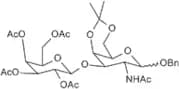
Benzyl 2-acetamido-3-O-(2,3,4,6-tetra-O-acetyl-b-D-galactopyranosyl)-2-deoxy-4,6-O-isopropylidene-D-galactopyranose
<p>This is a custom synthesized, high purity and complex carbohydrate. The synthesis process involves the following steps: 1) Acetylation of a monosaccharide, 2) Fluorination, 3) Methylation, 4) Oligosaccharide formation, 5) Polysaccharide formation with glycosylation and 6) Click modification. <br>Benzyl 2-acetamido-3-O-(2,3,4,6-tetra-O-acetyl-b-D-galactopyranosyl)-2-deoxy-4,6-O-isopropylidene-D-galactopyranose is an oligosaccharide that has been modified by methylation and click chemistry. It has CAS No. 77562-20-0 and can be used as a sugar in various applications.</p>Formula:C32H43NO15Purity:Min. 95%Molecular weight:681.7 g/molKifunensine diacetonide
CAS:<p>Kifunensine diacetonide is a modification of the natural oligosaccharide kifunensine. It is a complex carbohydrate with a high degree of purity, and is synthesized from a monosaccharide methylated and glycosylated with an oxygen-containing group. Kifunensine diacetonide has been shown to have anti-inflammatory effects in mice, which may be due to its ability to inhibit the production of prostaglandins. The molecular weight ranges from 500 to 1000 Daltons.</p>Formula:C14H20N2O6Purity:Min. 95%Color and Shape:PowderMolecular weight:312.32 g/mola-L-Fucose-1-phosphate
<p>a-L-Fucose-1-phosphate is a Glycosylation, complex carbohydrate, Methylation, Click modification, Polysaccharide, Fluorination, saccharide, Modification, sugar, Oligosaccharide and Synthetic product. a-L-Fucose-1-phosphate is available for custom synthesis and can be ordered with high purity.</p>Purity:Min. 95%2-Acetamido-2-deoxy-D-galactopyranose diphospho undecapyrenyl
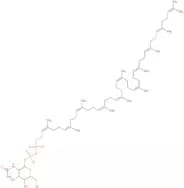
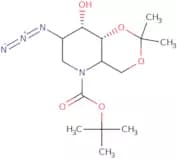
This is a gene product that belongs to the family of histone proteins. It is a bacterial enzyme that participates in the biosynthesis of glycan, which plays an important role in bacterial pathogenicity and antigen expression. The 2-acetamido-2-deoxy-D-galactopyranose diphospho undecaprenyl (AGDP) has been shown to inhibit cancer cells by inhibiting histone protein acetylation. This inhibits DNA methylation, which may lead to tumorigenesis. Structural studies have also shown that AGDP binds to bacterial enzyme with high affinity and specificity, suggesting that it could be used as a potential antibacterial agent.Formula:C63H103NO12P2Purity:Min. 95%Molecular weight:1,128.44 g/mol2-Azido-4,6-O-benzylidene-N-Boc-1,2,5-trideoxy-1,5-imino-D-glucitol
CAS:<p>2-Azido-4,6-O-benzylidene-N-Boc-1,2,5-trideoxy-1,5-imino-D-glucitol is a synthetic carbohydrate that has been modified with fluorine. The modification has been shown to have an inhibitory effect on the growth of cancer cells. 2-Azido-4,6-O-benzylidene can be used for the synthesis of glycosides and polysaccharides. It can also be used as a click modification agent for proteins.</p>Formula:C14H24N4O5Purity:Min. 95%Molecular weight:328.36 g/molChitotetraose tetradecaacetate
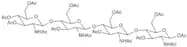
CAS:Chitotetraose tetradecaacetate is a condensation product of chitin and sephadex, which is synthesized from chitin and sodium chloride. It is an acetolysis substrate that has a sensitivity of 3.2 ug/ml in the fluorometric assay. Chitotetraose tetradecaacetate also exhibits high sensitivity to micrococcus, with a minimum inhibitory concentration (MIC) of 0.3 ug/ml.Formula:C52H74N4O31Purity:Min. 95%Molecular weight:1,251.18 g/mol2-Acetamido-1,3,4,6-tetra-O-acetyl-2-deoxy-D-gluconhydroximo-1,5-lactone
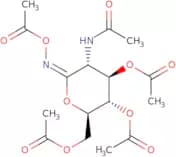
CAS:<p>2-Acetamido-1,3,4,6-tetra-O-acetyl-2-deoxy-D-gluconhydroximo-1,5-lactone is a custom synthesis. It is a modification of natural sugars. It has fluorination and methylation to make the product more stable. The product is an oligosaccharide that is a saccharide with two monosaccharides attached together. It is made up of complex carbohydrates.</p>Formula:C16H22N2O10Purity:Min. 95%Molecular weight:402.35 g/molPropargyl 2,3,4,6-tetra-O-acetyl-a-D-galactopyranoside
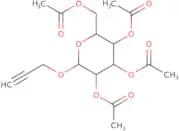
CAS:<p>Propargyl 2,3,4,6-tetra-O-acetyl-a-D-galactopyranoside is a modification of the carbohydrate that is a complex carbohydrate. It is a synthetic oligosaccharide with glycosylation and methylation. This compound has been found to have many potential applications in medicine and biotechnology. The fluorination of this saccharide may be used to create an antiangiogenic drug for cancer treatment.</p>Purity:Min. 95%2-Imino-2-methoxyethyl-1-deoxy-1-thio-a-D-mannopyranoside
CAS:<p>2-Imino-2-methoxyethyl-1-deoxy-1-thio-a-D-mannopyranoside is a carbohydrate that belongs to the group of sugar. It can be custom synthesized and is available in high purity. This compound has been fluorinated and methylated, which means it has been modified with fluorine and methyl groups respectively. Click modification refers to a type of chemical modification to a molecule that occurs through the addition of a thiol group at the alpha carbon of an alcohol or amine group. 2-Imino-2-methoxyethyl-1-deoxy-1-thio-a-Dmannopyranoside can be glycosylated, which means it is able to undergo the process of glycosylation by transferring its saccharide unit onto another saccharide.</p>Formula:C9H17NO6SPurity:Min. 95%Molecular weight:267.3 g/molForssman antigen triaose
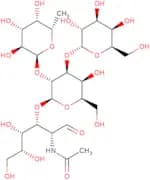
Tumor associated antigen and target for the development of anti-cancer vaccines.Formula:C22H38N2O16Purity:(Hplc-Ms) Min. 90 Area-%Color and Shape:PowderMolecular weight:586.54 g/molBlood Group B type III/IV tetrasaccharide
CAS:<p>The blood group B type III/IV tetrasaccharide is a synthetic, fluorinated carbohydrate that has been custom synthesized for glycosylation and methylation. The monosaccharide of the tetrasaccharide is a hexose, which can be modified with fluorine and click chemistry. The product is a complex carbohydrate with high purity and can be used in pharmaceuticals as an antigen for immunoglobulin G (IgG) production.</p>Formula:C26H45NO20Purity:Min. 95%Molecular weight:691.63 g/mol1,2-13C-D-Mannose
<p>1,2-13C-D-Mannose is a synthetic monosaccharide that is used as a building block for oligosaccharides and polysaccharides. It has been modified with fluorination, methylation, and click chemistry to yield a complex carbohydrate with high purity. The 13C isotope can be labeled in the 2 position of the mannose ring or at the C1 position of the glucose moiety.</p>Formula:C2C4H12O6Purity:Min. 95%Color and Shape:White PowderMolecular weight:182.14 g/molLacto-N-neotetraosa-APD-HSA
<p>Lacto-N-neotetraosa-APD-HSA is a synthetic monosaccharide that is structurally similar to tetrasaccharide and pentasaccharide. It can be synthesized by click chemistry and has been modified by fluorination and acetylation. Lacto-N-neotetraosa-APD-HSA has a high purity and is an excellent candidate for applications in the food industry, such as sugar substitutes.</p>Purity:Min. 95%ADP-4-deoxy-D-glucose
<p>ADP-4-deoxy-D-glucose is a carbohydrate derivative that has been modified with fluorination. ADP-4 is a methylated, custom synthesized oligosaccharide that contains saccharide and polysaccharide chains. It is not commercially available and must be custom synthesized. The modification of the sugar to ADP-4 involves the addition of one or more atoms of fluorine and may be accomplished by click chemistry. This product has high purity and can be used as a research reagent in the synthesis of complex carbohydrates.</p>Purity:Min. 95%Methyl b-D-xylofuranoside
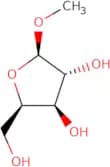
CAS:<p>Methyl b-D-xylofuranoside is a fluorinated monosaccharide that is synthesized by the replacement of hydroxyl groups with fluorine. Methyl b-D-xylofuranoside is used for the synthesis of oligosaccharides and polysaccharides, as well as for glycosylation and methylation reactions. The product has a CAS number of 1824-97-1 and can be custom synthesized to meet specific customer specifications.</p>Purity:Min. 95%Methyl 3-O-(2,3,4,6-tetra-O-acetyl-b-D-glucopyranosyl)-4,6-O-benzylidene-2-O-benzoyl-a-D-glucopyranoside
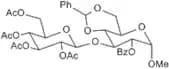
CAS:Methyl 3-O-(2,3,4,6-tetra-O-acetyl-b-D-glucopyranosyl)-4,6-O-benzylidene-2-O-benzoyl-a-D-glucopyranoside is a custom synthesis that has been fluorinated and methylated. This product is a monosaccharide with a CAS No. 7123893 2. It is an oligosaccharide that can be used in the synthesis of saccharides and polysaccharides. Methyl 3 O (2 3 4 6 tetra O acetyl b D glucopyranosyl) 4 6 O benzylidene 2 O benzoyl a D glucopyranoside has been synthesized by glycosylation of sugar. This product can also be used to modify and functionalize complex carbohydrates.Formula:C35H40O16Purity:Min. 95%Molecular weight:716.68 g/molMaltoheptaose
CAS:<p>α 1,4-glucoheptasaccharide derived from starch by hydrolysis and chromatography</p>Formula:C42H72O36Purity:Min. 90.0 Area-%Molecular weight:1,153 g/molParicalcitol 25-b-D-glucuronide
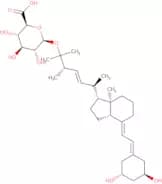
CAS:<p>Paricalcitol 25-b-D-glucuronide is a synthetic analogue of calcitriol, which is the active form of vitamin D. It is a high-purity glycosylate with an average molecular weight of 522.5 Da and a purity of >98%. Paricalcitol 25-b-D-glucuronide has been shown to be effective in prevention or treatment of secondary hyperparathyroidism in patients with chronic kidney disease (CKD). This compound has shown to inhibit calcium absorption in the gut and increase urinary excretion of calcium. It also increases serum phosphate levels, which may lead to increased calcium phosphate deposition in bone. Paricalcitol 25-b-D-glucuronide is methylated at the 25 position, which prevents it from being metabolized by the liver. This modification allows for higher concentrations to be administered without causing toxicity.</p>Formula:C33H52O9Purity:Min. 95%Molecular weight:592.76 g/molb-D-Lactosyltrichloroacetimidate heptaacetate
CAS:<p>b-D-Lactosyltrichloroacetimidate heptaacetate is a glycosylation product of the b-D-lactose and trichloroacetic anhydride. This compound is used in the synthesis of oligosaccharides and polysaccharides. It has been shown to be a fluorinated, methylated, or click modified monosaccharide or disaccharide which can be prepared through custom synthesis, or by modification of existing saccharides. This compound has been found to have high purity with a CAS number of 1142022-76-1.</p>Formula:C28H36Cl3NO18Purity:Min. 95%Molecular weight:780.94 g/mol2- Deoxy-2-[(7-nitro-2,1,3-benzoxadiazol-4-yl)amino]-b-D-glucopyranose
CAS:<p>2-Deoxy-2-[(7-nitro-2,1,3-benzoxadiazol-4-yl)amino]-b-D-glucopyranose is a synthetic sugar that is used as a glycosylate building block in the synthesis of oligosaccharides and polysaccharides. This product can be fluorinated at either the 2 or 5 position to provide a variety of reactive functionalities. It can also be modified with methyl groups to produce an NMR substrate for the study of sugar metabolism.</p>Formula:C12H14N4O8Purity:Min. 95%Molecular weight:342.26 g/mol3-O-tert-Butyldimethylsilyl-D-galactal
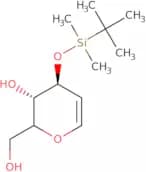
<p>3-O-tert-Butyldimethylsilyl-D-galactal is a synthetic, fluorinated monosaccharide that has been used as a substrate for glycosylation reactions. The compound is synthesized by the reaction of 3,4,6-trichloro-2,5,7,8-tetrafluorohexanal with D-galactal in the presence of a base such as potassium carbonate. The product is purified by column chromatography and recrystallization from methanol to provide a white powder with a melting point of 176 °C.</p>Formula:C12H24O4SiPurity:Min. 95%Molecular weight:260.4 g/mol(2-Hydroxypropyl)-a-cyclodextrin
CAS:<p>Alpha-cyclodextrin (α-CD) derivative with a hydrophilic exterior and lipophilic cavity (smaller than β-CDs and γ-CDs) to allocate certain guest molecules. This structural characteristic enables applications in molecular encapsulation, solubility enhancement, and stabilization across multiple industries. In pharmaceuticals, it serves as a drug delivery vehicle, enhancing the bioavailability and stability of active ingredients. The food industry utilizes it as a stabilizer for flavors, colors, and nutrients, as well as a functional ingredient for its effects on lipid metabolism. In cosmetics, it acts as a complex agent for fragrances and active components. Its applications extend to analytical chemistry for chiral separation and to materials science for developing smart materials and nanosystems.2-hydroxypropyl-alpha-cyclodextrin (HPCD) forms a stable inclusion complex with iodine. It also serves as a co-polymer for gene delivery vectors.</p>Color and Shape:PowderMolecular weight:1.0Lewis A trisaccharide methyl glycoside tetrabenzylether
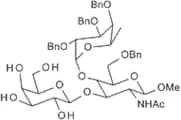
CAS:<p>Lewis A trisaccharide methyl glycoside tetrabenzylether is a synthetic glycosylated oligosaccharide. It is a custom synthesis product that can be modified to the customer's specifications. The modification reaction yields a high-purity, complex carbohydrate with a saccharide content of 95%. This product is soluble in DMSO and DMF and is stable at pH 3-11.</p>Formula:C49H61NO15Purity:Min. 95%Molecular weight:904.01 g/mol4-Methoxyphenyl 3-O-(methyl 5-acetamido-4,7,8,9-tetra-O-acetyl-3,5-dideoxy-D-glycero-a-D-galacto-2-nonulopyranosylonate)-2,6-di-O-be nzyl-b-D-galactopyranoside
<p>4-Methoxyphenyl 3-O-(methyl 5-acetamido-4,7,8,9-tetra-O-acetyl-3,5-dideoxy-D-glycero-a-D-galacto-2-nonulopyranosylonate)-2,6 -di--Obenzyl b--D--galactopyranoside is a synthetic carbohydrate. This compound has been custom synthesized for research purposes. The chemical structure of this compound is a methylated oligosaccharide with the following modifications: click modification and fluorination.</p>Purity:Min. 95%Anthrose
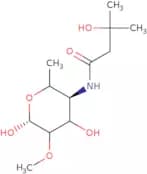
CAS:<p>Anthrose is a natural product that has been isolated from the larvae of Galleria mellonella, an insect. It has been shown to have antiviral activity against anthracis, a bacterium that causes anthrax. Anthrose treatment leads to cell lysis and DNA degradation in both prokaryotic and eukaryotic cells. The mechanism of action of this compound is not yet known, but it may be due to its ability to act as a competitive inhibitor for the enzyme aminotransferase activity. It also has antimicrobial properties and has been shown to inhibit Mycobacterium tuberculosis growth.</p>Formula:C12H23NO6Purity:Min. 95%Color and Shape:PowderMolecular weight:277.31 g/molBenzyl 2-acetamido-2-deoxy-D-glucopyranoside
CAS:Benzyl 2-acetamido-2-deoxy-D-glucopyranoside is a fluorinated glycosylation reagent that has been developed for the synthesis of complex carbohydrates, oligosaccharides, and saccharides. This compound is also useful in the modification of natural products and as a synthetic intermediate. Benzyl 2-acetamido-2-deoxy-D-glucopyranoside is an excellent substrate for Click chemistry, which can be used to modify saccharide units. The purity of this product is high, with no detectable impurities.Formula:C15H21NO6Purity:Min. 95%Molecular weight:311.33 g/mol4-O-(2-O-Methyl-b-D-galactopyranosyl)-D-glucopyranose
CAS:4-O-(2-O-Methyl-b-D-galactopyranosyl)-D-glucopyranose is a disaccharide. The lacto-n-biose unit is a nonreducing sugar that contains an alpha, beta unsaturated 1,6 glycosidic bond and a lactose molecule. 4-O-(2-O-Methyl-b-D-galactopyranosyl)-D-glucopyranose has been found to stimulate the synthesis of galectin in vitro, which may be due to its ability to bind to lectins. This disaccharide can also cause denaturation at high temperatures.Formula:C13H24O11Purity:Min. 95%Molecular weight:356.32 g/mol1,2,3-Tri-O-acetyl-4,6-O-benzylidene-b-D-glucopyranose
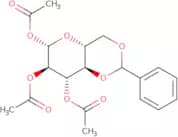
CAS:This is a glycosylation product of 1,2,3-Tri-O-acetyl-4,6-O-benzylidene-b-D-glucopyranose with methyl and acetate groups. It is a synthetic oligosaccharide that has been fluorinated at the 4' position to provide protection from degradation. This product is custom synthesized for customers. It contains saccharides that are related to polysaccharides and complex carbohydrates. The compound is of high purity and does not contain any impurities. Click modification of the glucose moiety provides protection against enzymatic degradation by enzymes such as aminoglycoside N′ acetyltransferase.Formula:C19H22O9Purity:Min. 95%Molecular weight:394.37 g/molGlycerone phosphate hemimagnesium salt hydrate
CAS:<p>Glycerone phosphate hemimagnesium salt hydrate is a substrate molecule that is used in the control analysis of dihydroxyacetone phosphate. Glycerone phosphate hemimagnesium salt hydrate is an optimum concentration for 3T3-L1 preadipocytes and has been shown to have an effect on energy metabolism. Glycerone phosphate hemimagnesium salt hydrate also has enzymatic activity, which can lead to neuronal death or skin cancer. This compound is a monosodium salt that can be found in cytosolic calcium, which is present in cells and helps regulate muscle contraction. Glycerone phosphate hemimagnesium salt hydrate can also be found in basic proteins that are vital for cell function.</p>Formula:C3H5O6P·xH2OMgPurity:Min. 95 Area-%Color and Shape:PowderMolecular weight:180.19 g/mol2-Amino-2-deoxy-D-idose
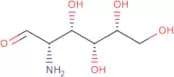
CAS:<p>2-Amino-2-deoxy-D-idose is a sugar that is found in the cell walls of bacteria. It has been shown to be an inhibitor of the enzymes that catalyze the acetylation and methylenecyclopropanes reactions, which are necessary for bacterial growth. 2-Amino-2-deoxy-D-idose binds to copper ions, preventing them from binding with the enzymes. This drug also chelates metals such as zinc, iron, and manganese to prevent their use by bacteria.</p>Formula:C6H13NO5Purity:Min. 95%Molecular weight:179.17 g/molMethyl 3-acetamido-4-O-benzoyl-6-bromo-2,3,6-trideoxy-a-D-ribo-hexopyranoside
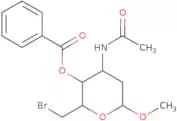
CAS:<p>Methyl 3-acetamido-4-O-benzoyl-6-bromo-2,3,6-trideoxy--aDribohexopyranoside is a Custom synthesis that is classified as an Oligosaccharide. It has a molecular weight of 576.07 and a purity of >99%. The chemical formula for this compound is C22H30BrNO8. Methyl 3-acetamido-4-O-benzoyl-6-bromo-2,3,6--trideoxy--aDribohexopyranoside is used in the modification of saccharides with the purpose of synthesizing polysaccharides. This compound has been shown to be effective for the synthesis of glycosylations and methylations.<br>Methyl 3 acetamido 4 O benzoyl 6 bromo 2,3,6 trideoxy - a D rib</p>Formula:C16H20BrNO5Purity:Min. 95%Molecular weight:386.25 g/mol6-O-Benzoyl-3-O-triisopropylsilyl-D-galactal
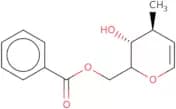
<p>This is a synthetic sugar that can be custom synthesized based on the customer's specifications. 6-O-Benzoyl-3-O-triisopropylsilyl-D-galactal is a monosaccharide and an oligosaccharide that can be modified with a click modification, methylation, and glycosylation. It is a complex carbohydrate that has been shown to have anti-inflammatory properties. The glycosylation of this sugar can also be customized for specific purposes. This product has CAS number 132702-24-2 and is available at 95% purity or higher.</p>Formula:C22H34O5SiPurity:Min. 95%Molecular weight:406.59 g/molLactose-sp-biotin
<p>Lactose-sp-biotin is a complex carbohydrate that has been modified with biotin. It is synthesized by the click modification of lactose and spacer arm, followed by glycosylation with biotin. Lactose-sp-biotin is soluble in water, which makes it suitable for use as a food additive. This product can also be used for labeling and identification of biomolecules in various fields such as fluorescence, immunoassay, or immunohistochemistry.</p>Formula:C31H54N4O14SPurity:Min. 95%Color and Shape:PowderMolecular weight:738.85 g/molIsofagomine hydrochloride
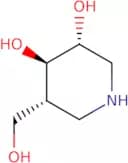
CAS:<p>Inhibitor of lysosomal acid β-glucosidase (GlcCerase/glucocerebrosidase) with IC50 in nanomolar range for wildtype and mutant enzyme. It behaves as pharmacological chaperon by binding to instable GlcCerase active site at neutral pH values and facilitating the protein folding. In acidic lysosomes, isofagomine gets release from the enzyme active site. This results in increased levels of functional glucocerebrosidase and brings therapeutic benefits to patients with Gaucher disease.</p>Formula:C6H13NO3·HClPurity:Min. 95%Color and Shape:PowderMolecular weight:183.63 g/molm-Topolin-9-glucoside
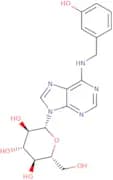
CAS:<p>M-topolin-9-glucoside is a synthetic sugar that has been modified by the introduction of fluorine atoms at C-2, C-3, and C-4. This sugar is used to study the interactions between carbohydrates and proteins. It is also used for the synthesis of oligosaccharides as well as for glycosylation and methylation reactions. M-topolin-9-glucoside is a monosaccharide that has been glycosylated and methylated. It can be used as a replacement for glucose in some reactions due to its stability and low cost.</p>Formula:C18H21N5O6Purity:Min. 95%Color and Shape:PowderMolecular weight:403.39 g/mol6-(4-Azido-2-hydroxybenzamido)-6-deoxy-D-glucopyranose
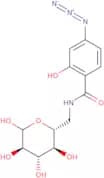
CAS:<p>6-(4-Azido-2-hydroxybenzamido)-6-deoxy-D-glucopyranose (AGB) is a potential photoaffinity label that can be used to identify and characterize the transporter. The photoaffinity label is synthesized by reacting 2,4-dinitrophenylhydrazine with 6-(4-azido-2-hydroxybenzamido)-6-deoxy-D-glucopyranose in the presence of sodium bicarbonate or potassium carbonate. The photolysis of AGB produces an azide radical cation that reacts with amino acid residues on the protein surface, forming a covalent bond. This labeling process is irreversible.</p>Formula:C13H16N4O7Purity:Min. 95%Molecular weight:340.29 g/mol3,4-Di-O-benzyl-L-rhamnal
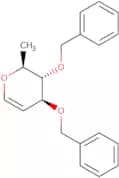
CAS:<p>3,4-Di-O-benzyl-L-rhamnal is a high purity Glycosylation Oligosaccharide with a CAS No. 117249-17-9 that is synthesized by Click modification and methylation. It can be used as a raw material in the synthesis of complex carbohydrate. 3,4-Di-O-benzyl-L-rhamnal is water soluble and has an excellent stability in acidic conditions.</p>Purity:Min. 95%2,3,4,6-Tetra-O-acetyl-N-(b-D-galactopyranosyl)-N'-[(2-methanethiosulfonyl)ethyl]urea
CAS:<p>2,3,4,6-Tetra-O-acetyl-N-(b-D-galactopyranosyl)-N'-[(2-methanethiosulfonyl)ethyl]urea is a glycoside that has been custom synthesized for a sugar. This product is fluorinated and has a purity of 99%. It can be used as an intermediate in the Click modification reaction. It is available in bulk quantities and can be customized to meet customer needs.</p>Formula:C17H26N2O12S2Purity:Min. 95%Molecular weight:514.53 g/molL-Idonic acid-1,4-lactone
CAS:<p>L-Idonic acid-1,4-lactone is a custom synthesis that is a glycoconjugate with a carbohydrate moiety. It can be used for the modification of glycoproteins and glycopeptides, and has shown to have anti-inflammatory properties. L-Idonic acid-1,4-lactone is a sugar that is made up of an idonic acid attached to an alpha (1→4)-linked D-glucose molecule. This product can be methylated or glycosylated and has been shown to have anticancer activity in animal models. L-Idonic acid-1,4-lactone is soluble in water and has been fluorinated at the 4 position on the glucose unit.</p>Formula:C6H10O6Purity:Min. 95%Molecular weight:178.14 g/molRhamnolipids C14-C14
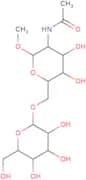
CAS:Rhamnose based 'green' surfactantFormula:C34H64O9Purity:Min. 95%Color and Shape:PowderMolecular weight:616.88 g/molMethyl 2-acetamido-2-deoxy-6-O-(b-D-galactopyranosyl)-a-D-glucopyranoside
CAS:<p>Methyl 2-acetamido-2-deoxy-6-O-(b-D-galactopyranosyl)-a-D-glucopyranoside is a custom synthesis, modification and fluorination of a monosaccharide. The saccharide is modified with methylation and click modification at the 6th carbon position. This product is designed for use in the synthesis of complex carbohydrates.</p>Formula:C15H27NO11Purity:Min. 95%Molecular weight:397.38 g/mol3,4,6-Tri-O-acetyl-a-D-glucopyranose 1,2-(ethyl orthoacetate)
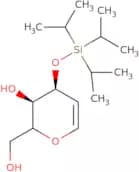
CAS:3,4,6-Tri-O-acetyl-a-D-glucopyranose 1,2-(ethyl orthoacetate) is a custom synthesis that can be used as a fluorination agent or methylating agent. This compound has been modified by the click modification reaction to attach oligosaccharides and saccharides to proteins and polysaccharides. 3,4,6-Tri-O-acetyl-a-D-glucopyranose 1,2-(ethyl orthoacetate) is a high purity synthetic carbohydrate with a purity of 99.5%.Formula:C16H24O10Purity:Min. 95%Molecular weight:376.35 g/mol3-O-Triisopropylsilyl-D-glucal
<p>3-O-Triisopropylsilyl-D-glucal is a modified carbohydrate, which is a saccharide that has been modified by the addition of three isopropyl groups. This modification can be used to synthesize oligosaccharides and polysaccharides in order to obtain desired properties. 3-O-Triisopropylsilyl-D-glucal can also be used as a fluorinating agent in synthesis reactions. The compound is also custom synthesized and can be synthesized with high purity (>98%) or with methylation or glycosylation. 3-O-Triisopropylsilyl-D-glucal will react with nucleophiles like amines and alcohols to form adducts, which are then hydrolyzed to release the product.</p>Formula:C15H30O4SiPurity:Min. 95%Molecular weight:302.48 g/molO-[2-Acetamido-2-deoxy-a-D-galactopyranosyl]-N-Fmoc-L-threonine 2-propen-1-yl ester
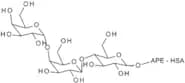
CAS:O-[2-Acetamido-2-deoxy-a-D-galactopyranosyl]-N-Fmoc-L-threonine 2-propen-1-yl ester is a synthetic, high purity, custom synthesis that has been modified with fluorination, glycosylation, and methylation. This product can be used in the Click reaction to make an oligosaccharide or monosaccharide. The CAS number for this compound is 301843-65-2.Formula:C30H36N2O10Purity:Min. 95%Molecular weight:584.61 g/molGlobotriose-APE-HSA
<p>Globotriose conjugated to HSA via an aminophenylethyl spacer (APE)</p>Purity:Min. 95%Acetylsalicylic acid-acyl-β-D-glucuronide
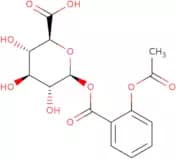
CAS:<p>Acetylsalicylic acid-acyl-b-D-glucuronide is a glycosylation product of acetylsalicylic acid. It is a complex carbohydrate that can be methylated, fluorinated, or modified by click chemistry. Acetylsalicylic acid-acyl-b-D-glucuronide has been shown to be an effective inhibitor of the MMPs metalloproteinases and collagenase in vitro. It also inhibits the growth of Staphylococcus aureus, Streptococcus agalactiae, and Group A Streptococcus. Acetylsalicylic acid-acyl-b-D-glucuronide can be synthesized using monosaccharides, oligosaccharides, or custom synthesis. This product is available in high purity (99%) and CAS No. 24719-72-0.</p>Formula:C15H16O10Purity:Min. 95%Color and Shape:White PowderMolecular weight:356.28 g/molResveratrol-4’-O-(6”-galloyl)glucoside
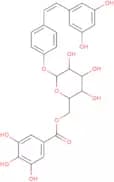
CAS:<p>Resveratrol-4’-O-(6”-galloyl)glucoside is a methylated, saccharide complex carbohydrate. It is an oligosaccharide that has been modified with click chemistry and glycosylation. Resveratrol-4’-O-(6”-galloyl)glucoside is synthesized in high purity through a custom synthesis process that includes fluorination and modification of the sugar. This product can be used as an ingredient in pharmaceuticals, food additives, or dietary supplements.</p>Formula:C27H26O12Purity:Min. 95%Molecular weight:542.49 g/molN-Acetylserotonin β-D-glucuronide
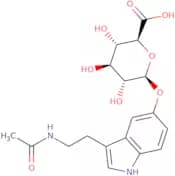
CAS:<p>N-Acetylserotonin β-D-glucuronide is a metabolite of melatonin, which is synthesized in the pineal gland. It is excreted in human urine and can be used as a biomarker for melatonin synthesis. N-Acetylserotonin β-D-glucuronide has been shown to have pharmacologic effects on humans and other species, but its health effects are not well understood. The use of this compound as a biomarker for human melatonin synthesis has been validated in vitro and in vivo. It is also used as a marker for kidney function, particularly chronic kidney disease (CKD). This analysis can be performed using urinary samples that contain glucuronide conjugates of N-acetylserotonin β-D-glucuronide.</p>Formula:C18H22N2O8Purity:Min. 97 Area-%Color and Shape:Off-White PowderMolecular weight:394.38 g/mol1,2-Di-O-acetyl-4-O-allyl-3-O-benzyl-a-L-rhamnpyranose
<p>1,2-Di-O-acetyl-4-O-allyl-3-O-benzyl-a-L-rhamnpyranose is a synthetic monosaccharide that contains an O,O'-diacetyl group on the 2' position. This product is a complex carbohydrate that has been modified with fluorination and methylation. It can be used as a custom synthesis or as a glycosylation or polysaccharide modification. 1,2-Di-O-acetyl-4-O-allyl-3,6'-di(benzoyloxy)-a,a'-dimethyl rhamnopyranose is soluble in water and is of high purity.</p>Formula:C20H26O7Purity:Min. 95%Molecular weight:378.42 g/molBenzyl 4-O-(2-acetamido-2-deoxy-3,4,6-tri-O-acetyl-b-D-glucopyranosyl)-N-acetyl-a-D-muramic acid methyl ester
This substance is a custom synthesis, which is created in the laboratory. The modification of this product has been done by fluorination, methylation, and monosaccharide synthesis. This substance is a synthetic compound that belongs to the group of oligosaccharides. It is a saccharide that contains an oxygen atom and belongs to the group of complex carbohydrates. It has been shown to be effective against cancer cells in vitro and has been used as a diagnostic agent for breast cancer.Formula:C33H46N2O16Purity:Min. 95%Molecular weight:726.72 g/mol






![2- Deoxy-2-[(7-nitro-2,1,3-benzoxadiazol-4-yl)amino]-b-D-glucopyranose](/_next/image/?url=https%3A%2Fstatic.cymitquimica.com%2Fproducts%2F3D%2Fthumb-webp%2FMD146413.webp&w=3840&q=75)




![2,3,4,6-Tetra-O-acetyl-N-(b-D-galactopyranosyl)-N'-[(2-methanethiosulfonyl)ethyl]urea](/_next/image/?url=https%3A%2Fstatic.cymitquimica.com%2Fproducts%2F3D%2Fthumb-webp%2FMT01191.webp&w=3840&q=75)

![O-[2-Acetamido-2-deoxy-a-D-galactopyranosyl]-N-Fmoc-L-threonine 2-propen-1-yl ester](/_next/image/?url=https%3A%2Fstatic.cymitquimica.com%2Fproducts%2F3D%2Fthumb-webp%2FMA30714.webp&w=3840&q=75)