Glycoscience
Glycoscience is the study of carbohydrates and their derivatives, as well as the interactions and biological functions they participate in. This field of research is crucial for understanding a wide variety of biological processes, including cell recognition, signaling, immune response, and disease development. Glycoscience has important applications in biotechnology, medicine, and the development of new drugs and therapies. At CymitQuimica, we offer a wide selection of high-quality, high-purity products for glycoscience research. Our catalog includes monosaccharides, oligosaccharides, polysaccharides, glycoconjugates, and specific reagents, designed to support researchers in their studies on the structure, function, and applications of carbohydrates in biological systems. These resources are intended to facilitate scientific discoveries and practical applications in various areas of bioscience and medicine.
Subcategories of "Glycoscience"
- Aminosugars(108 products)
- Glyco-Related Antibodies(282 products)
- Glycolipids(46 products)
- Glycosaminoglycans (GAGs)(55 products)
- Glycosides(419 products)
- Monosaccharides(6,622 products)
- Oligosaccharides(3,682 products)
- Polysaccharides(503 products)
Found 11041 products of "Glycoscience"
Sort by
Purity (%)
0
100
|
0
|
50
|
90
|
95
|
100
Methyl 2,3,5-tri-O-acetyl-D-ribofuranoside
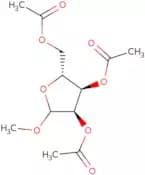
CAS:<p>Methyl 2,3,5-tri-O-acetyl-D-ribofuranoside is a natural product that has been shown to have immunomodulatory effects in vitro and in vivo. It inhibits the proliferation of various cancer cell lines and induces apoptosis. Methyl 2,3,5-tri-O-acetyl-D-ribofuranoside is also able to inhibit the activation of nuclear factor kappa B (NFκB), which is known to induce inflammation. Through its ability to inhibit NFκB activation, methyl 2,3,5-tri-O-acetyl-D-ribofuranoside may be able to reduce the severity of inflammatory skin diseases such as psoriasis.</p>Formula:C12H18O8Purity:Min. 95%Color and Shape:Colorless PowderMolecular weight:290.27 g/mol(8-Ethoxycarbonyloctyl)-2,3,4,6-tetra-O-acetyl-b-D-galactopyranoside
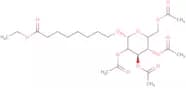
<p>(8-Ethoxycarbonyloctyl)-2,3,4,6-tetra-O-acetyl-b-D-galactopyranoside is a custom synthesis of a complex carbohydrate. It is an Oligosaccharide with CAS No. and has been modified with saccharide, methylation and glycosylation. The molecular weight of this compound is (1,000) g/mol and the purity level is >99%. This product also has fluorination and click modification as modifications.</p>Formula:C24H38O12Purity:Min. 95%Molecular weight:518.55 g/molLosartan N1-glucuronide
CAS:<p>Losartan N1-glucuronide is a glucuronidated metabolite of losartan that is produced naturally in the human body. It is converted from losartan by the enzyme UDP-glucuronosyltransferase, which is found in humans and other animals. The rate of glucuronidation varies between individuals and is determined by genetic factors. Losartan N1-glucuronide has shown to be an effective inhibitor of angiotensin II, with an IC50 value of 1.4 μM. This inhibition can be reversed by dobutamine or recombinant human UGT2B7 enzyme, which are both competitive inhibitors of the enzyme UGT2B7. Magnetic resonance spectroscopy has been used to study the kinetic properties of this inhibitor and its effect on dobutamine-induced changes in cardiac function.</p>Formula:C28H31ClN6O7Purity:Min. 95%Molecular weight:599.03 g/molBenzyl 2-acetamido-4,6-di-O-acetyl-2-deoxy-a-D-glucopyranoside
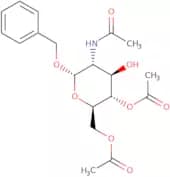
CAS:<p>Benzyl 2-acetamido-4,6-di-O-acetyl-2-deoxy-a-D-glucopyranoside is a custom synthesis that has been modified with fluorination. This product is a white crystalline solid and can be used as an Oligosaccharide, Polysaccharide and saccharide. It has been shown to have high purity and can be used for Carbohydrate Modification.</p>Formula:C19H25NO8Purity:Min. 95%Molecular weight:395.41 g/mol6-Deoxy-1,2:3,4-di-O-isopropylidene-6-nitro-a-D-galactopyranose
CAS:<p>6-Deoxy-1,2:3,4-di-O-isopropylidene-6-nitro-a-D-galactopyranose is a complex carbohydrate that is a polysaccharide. It is custom synthesized and modified with methylation, glycosylation, and fluorination. 6DNG is a high purity product with a CAS number of 90367-90-1. The synthesis of this product makes it an excellent candidate for research in the area of carbohydrate chemistry.</p>Formula:C12H19NO7Purity:Min. 95%Color and Shape:Off-white to pale yellow solid.Molecular weight:289.28 g/mol(5-Hydroxy rosiglitazone)-b-D-glucuronide
CAS:<p>(5-Hydroxy rosiglitazone)-b-D-glucuronide is a custom synthesis of a fluorinated derivative of rosiglitazone. This compound is modified by methylation, monosaccharide, and glycosylation to form a complex carbohydrate. The saccharide structure includes glucose, galactose, xylose, and arabinose. This molecule has CAS number 288853-59-8 and is listed in the Polysaccharides category.</p>Formula:C24H27N3O10SPurity:Min. 95%Color and Shape:Off-white solid.Molecular weight:549.55 g/molEthyl b-D-ribo-hex-3-ulopyranoside
CAS:<p>Ethyl b-D-ribo-hex-3-ulopyranoside is a synthetic, fluorinated monosaccharide that is used as a building block for the synthesis of complex carbohydrates. It is also used in glycosylations, click modifications, and methylations to modify saccharides.</p>Purity:Min. 95%4-Methoxyphenyl 4-O-(2,4,6-tri-O-benzyl-b-D-galactopyranosyl)-2,3,6-tri-O-benzyl-b-D-glucopyranoside
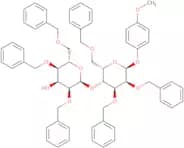
CAS:<p>4-Methoxyphenyl 4-O-(2,4,6-tri-O-benzyl-b-D-galactopyranosyl)-2,3,6-tri-O-benzyl-b-D-glucopyranoside is a suppressor of genes that has been shown to be active in the treatment of leukemia. It suppresses transcription by inhibiting histone H3 acetylation and DNA replication by binding to the dna replication complex at sites of replication. The suppression of genes may be due to its ability to inhibit translation by blocking signal sequences and hybridization with complementary mRNA.</p>Formula:C61H64O12Purity:Min. 95%Molecular weight:989.15 g/mol2,3,4,6-Tetra-O-acetyl-b-D-mannopyranose
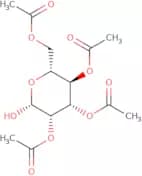
CAS:<p>2,3,4,6-Tetra-O-acetyl-b-D-mannopyranose (2,3,4,6TOA) is a methylated form of b-D-mannopyranose. This compound can be synthesized by the click reaction between an aldehyde group and an amine group. The modification of 2,3,4,6TOA with acetyl groups at the 2-, 3-, 4-, and 6-positions provides a novel carbohydrate that has not been previously reported in the literature. 2,3,4,6TOA is one of many oligosaccharides that are used as building blocks for complex carbohydrate synthesis.<br>2,3,4,6TOA has high purity and is available for custom synthesis. It's potential application includes glycosylation reactions or as a substrate for fluorination reactions.</p>Purity:Min. 95%2-Decyltetradecyl-D-xylopyranoside
CAS:<p>2-Decyltetradecyl-D-xylopyranoside is a synthetic, fluorinated carbohydrate that has been modified to contain a reactive methylene group. This compound can be used as a reactant in Click chemistry, which is an easy and convenient method for modifying the structure of polysaccharides. 2-Decyltetradecyl-D-xylopyranoside may be used for the synthesis of oligosaccharides or carbohydrates. This compound is soluble in water and organic solvents such as methanol and ethanol. It has a CAS number of 446264-02-4.</p>Formula:C29H58O5Purity:Min. 95%Color and Shape:Colourless solid.Molecular weight:486.77 g/mol6-O-Tosyl-2,3-O-isopropylidene-a-L-sorbofuranose
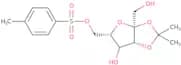
CAS:<p>6-O-Tosyl-2,3-O-isopropylidene-a-L-sorbofuranose is a fluorinated monosaccharide that can be used in the synthesis of oligosaccharides and polysaccharides. It has been shown to react with various nucleophiles to form glycosylation products. 6-O-Tosyl-2,3-O-isopropylidene-a-L-sorbofuranose is commercially available as a white solid.</p>Formula:C16H22O8SPurity:Min. 95%Molecular weight:374.41 g/molHepta-O-acetyl-b-Lactosyl-N-Fmoc-L-threonine
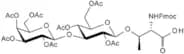
CAS:<p>Hepta-O-acetyl-b-Lactosyl-N-Fmoc-L-threonine is a substance that can be used for the diagnosis of radiation exposure. It is a liquid that is injected into the body, where it accumulates in tissues such as bone marrow. The presence of Hepta-O-acetyl-b-Lactosyl-N-Fmoc-L-threonine in bone marrow cells can be detected using an imaging technique called balloon injury. This liquid also has synergistic effects with radiation and may be useful for the treatment of diseases such as thrombolysis.</p>Formula:C45H53NO22Purity:Min. 95%Molecular weight:959.9 g/mol6-O-tert-Butyldiphenylsilyl-D-glucal
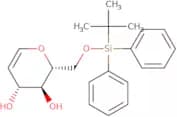
CAS:<p>6-O-tert-Butyldiphenylsilyl-D-glucal is a methylated sugar that can be used for glycosylation. It is an important building block for the synthesis of oligosaccharides and polysaccharides. The compound is readily available in high purity, which makes it suitable for synthesis of complex carbohydrates. In addition to its use as a synthetic reagent, 6-O-tert-Butyldiphenylsilyl-D-glucal can be used as a fluorinating agent. This product is listed as CAS No. 87316-22-1 in the Chemical Abstract Service (CAS) registry.</p>Purity:Min. 95%Phenyl 2,3,4-tri-O-acetyl-6-O-benzyl-b-D-thiogalactopyranoside
CAS:<p>Phenyl 2,3,4-tri-O-acetyl-6-O-benzyl-b-D-thiogalactopyranoside is a complex carbohydrate with an Oligosaccharide and Polysaccharide backbone. This compound can be modified with methylation to produce a saccharide with a specific structure. Phenyl 2,3,4-tri-O-acetyl-6-O-benzylb -D -thiogalactopyranoside is a high purity, synthetic glycosylated material. It has been fluorinated to form the corresponding fluorinated product.</p>Purity:Min. 95%2,3,4,6-Tetra-O-acetyl-a-D-mannopyranosyl isothiocyanate
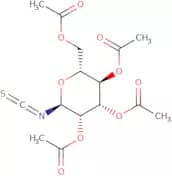
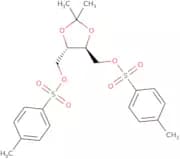
CAS:<p>2,3,4,6-Tetra-O-acetyl-a-D-mannopyranosyl isothiocyanate (TMIT) is a custom synthesis that has been modified to include a fluorine atom. TMIT is a polysaccharide that has been modified by methylation and glycosylation. This compound has been synthesized from the natural carbohydrate D-mannopyranose. TMIT is known for its ability to inhibit protein glycosylation in bacteria cells. It also has high purity with an Oligosaccharide CAS No. 93221-21-7 and modification of saccharides with the addition of methyl groups. The chemical structure of TMIT can be found at 2,3,4,6-Tetra-O-acetyl-a-D-mannopyranosyl isothiocyanate (TMIT).</p>Formula:C15H19NO9SPurity:Min. 95%Molecular weight:389.38 g/mol2,3-O-Isopropylidene-1,4-di-O-tosyl-L-threitol
CAS:<p>2,3-O-Isopropylidene-1,4-di-O-tosyl-L-threitol is a custom synthesis of the sugar 2,3-O-isopropylidene-1,4-di(tosyl)-L-threitol. The monomeric sugar is fluorinated and methylated before glycosylation. This modification prevents enzymatic degradation and increases the stability of the compound.</p>Formula:C21H26O8S2Purity:Min. 95%Molecular weight:470.56 g/mol2-O-Methyl-a-D-N-glycoloylneuraminic acid
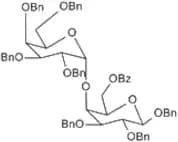
CAS:<p>2-O-Methyl-a-D-N-glycoloylneuraminic acid (2OMG) is a synthetic sugar that is used as a monosaccharide. It can be used to modify the glycosylation of saccharides, such as mono-, oligo-, and polysaccharides. The chemical structure of 2OMG includes one sugar unit and one methyl group in the alpha position, which makes it useful for click chemistry. This product is available in high purity and has a CAS number of 14206-42-9.</p>Formula:C12H21NO10Purity:Min. 95%Molecular weight:339.3 g/mol6-O-Benzoyl-1,2,3-tri-O-benzyl-4-O-(2,3,4,6-tetra-O-benzyl-a-D-galactopyranosyl)-b-D-galactopyranoside
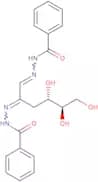
<p>6-O-Benzoyl-1,2,3-tri-O-benzyl-4-O-(2,3,4,6-tetra-O-benzyl-a -D-galactopyranosyl)-b -D -galactopyranoside is an oligosaccharide that has been custom synthesized by our company. It is a complex carbohydrate with a molecular weight of 1,216. The CAS number for this product is 105838-36-5. This product also has a high degree of purity and can be used in Click modification and Modification reactions. 6 O Benzoyl 1 2 3 tri O benzyl 4 O</p>Formula:C68H68O12Purity:Min. 95%Molecular weight:1,077.26 g/mol3-Deoxy-D-glucosone-bis(benzoylhydrazone)
CAS:<p>3-Deoxy-D-glucosone-bis(benzoylhydrazone) is a synthetic compound that has been used in the synthesis of saccharides and oligosaccharides. This reagent can be used for the methylation of glycosyl groups, as well as the modification of carbohydrate chains to produce complex carbohydrates. 3-Deoxy-D-glucosone-bis(benzoylhydrazone) is a white powder with a molecular weight of 239. It is soluble in methanol, ethanol, acetone, and chloroform. The CAS number for this compound is 32443-70-2.</p>Formula:C20H22N4O5Purity:Min. 95%Molecular weight:398.41 g/mol1,2,3,4-Tetra-O-acetyl-6-O-(tert-butyldimethylsilyl)-a-D-mannopyranose
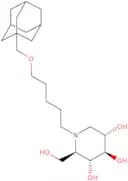
<p>1,2,3,4-Tetra-O-acetyl-6-O-(tert-butyldimethylsilyl)-a-D-mannopyranose is a synthetic sugar that is used in the synthesis of glycosylations. It has been shown to be a substrate for methylation and click modification. This product is also useful in the synthesis of oligosaccharides and polysaccharides. 1,2,3,4-Tetra-O-acetyl-6-O-(tert-butyldimethylsilyl)-a-D-mannopyranose is a high purity carbohydrate with a CAS number.</p>Formula:C20H34O10SiPurity:Min. 95%Molecular weight:462.57 g/molAMP-Deoxynojirimycin - Solution in ethanol
CAS:<p>Potent inhibitor of non-lysosomal glucosylceramidase, without having any effect on glucosylceramide synthase and glucosidases. Anti-inflammatory and immunosuppressive effect of AMP-DNM demonstrated in a model of hapten-induced colitis in vivo. Reduces glycosphingolipids and increases insulin sensitivity in murine models of obesity-related insulin resistance. Induces sterol regulatory element-binding protein (SREBP) target genes in HepG2 cells, activating cholesterol biosynthesis.</p>Formula:C22H39NO5Purity:Min. 95%Color and Shape:Colorless Clear LiquidMolecular weight:397.55 g/molBenzyl 2-(acetylamino)-2-deoxy-3-o-[3,4,6-tri-o-acetyl-2-(acetylamino)-2-deoxy-β-D-glucopyranosyl]-α-D-galactopyranoside 4,6-diaceta te
CAS:<p>Please enquire for more information about Benzyl 2-(acetylamino)-2-deoxy-3-o-[3,4,6-tri-o-acetyl-2-(acetylamino)-2-deoxy-β-D-glucopyranosyl]-α-D-galactopyranoside 4,6-diaceta te including the price, delivery time and more detailed product information at the technical inquiry form on this page</p>Formula:C33H44N2O16Purity:Min. 95%Molecular weight:724.7 g/mol(3S)-3-Hydroxy-L-aspartic acid
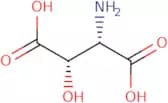
CAS:<p>3-hydroxy-L-aspartic acid is a non-protein amino acid that is found in mammalian tissue and has been shown to have structural and functional similarities to glutamate. It is involved in the metabolism of energy, such as the synthesis of fatty acids and epidermal growth factor. 3-Hydroxy-L-aspartic acid also binds to calcium ions, which may be due to its carboxylate group. This compound does not have a disulfide bond, unlike many other amino acids.<br>3S)-3-Hydroxy-L-aspartic acid can be used as a monoclonal antibody for the detection of pseudobactin, an antibiotic secreted by Pseudomonas bacteria that inhibits protein synthesis in eukaryotes.</p>Formula:C4H7NO5Purity:Min. 95%Molecular weight:149.1 g/mol(S)-Naproxen acyl-b-D-glucuronide
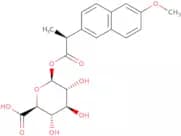
CAS:<p>Naproxen is a non-steroidal anti-inflammatory drug (NSAID) that is used to relieve pain and reduce inflammation. The NSAIDs are metabolized in the liver by oxidation, reduction, hydrolysis, or conjugation with glucuronic acid. Naproxen undergoes a number of metabolic transformations including fragmentation, which can be detected using an MS/MS analyzer. Naproxen acyl-b-D-glucuronide is an oxidative metabolite of naproxen that has been shown to have high uptake into mammalian cells and bioconcentrates in fish. This metabolite has also been shown to be metabolized in the liver by conjugation with glucuronic acid.</p>Formula:C20H22O9Purity:Min. 95%Molecular weight:406.38 g/molGT1c-Oligosaccharide
<p>GT1c oligosaccharide (free acid) has a core tetrasaccharide structure (Galβ1,3GalNAcβ1,4Galβ1,4Glc) with three sialic acid residues (NeuAc) linked α2,8/α2,8/α2,3 to the inner galactose residue (Ledeen, 2009). A monoclonal antibody, established against the chick neural tube, was shown to recognize the trisialosyl residue, NeuAca2-8NeuAca2-8NeuAca2-3-R GT1c ganglioside in the cerebral cortex of fetal rats (Hirabayashi, 1989). This unusual multisialo ganglioside was recognised in chicken optic lobes and cerebrum, during embryonic development (Rosner, 1980) and in fish brains (Yu, 1980).</p>Formula:C59H93N4O45Na3Purity:Min. 95%Molecular weight:1,647.34 g/mol1,2, 4,6-Tetra-O-acetyl-3-O-carbamoyl- D-mannopyranose
CAS:<p>1,2,4,6-Tetra-O-acetyl-3-O-carbamoyl-D-mannopyranose is a synthetic sugar that belongs to the class of glycosides. It can be used in the synthesis of oligosaccharides and polysaccharides. This product is custom synthesized on request and can be modified with fluorination, methylation or click modification. It is available in high purity and has a CAS number of 99748-11-5.</p>Formula:C15H21NO11Purity:Min. 95%Molecular weight:391.33 g/molBenzyl 4-O-(2,3,4,6-tetra-O-benzyl-a-D-galactopyranosyl)-2,3-di-O-benzyl-b-D-galactopyranoside
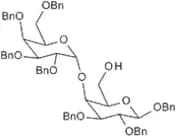
<p>Benzyl 4-O-(2,3,4,6-tetra-O-benzyl-a-D-galactopyranosyl)-2,3-di-O-benzylb -D-galactopyranoside is a Fluorination and Glycosylation product. It is a Custom Synthesis of Monosaccharide and Oligosaccharide. The CAS number for this product is 106835-99-8.</p>Formula:C61H64O11Purity:Min. 95%Molecular weight:973.15 g/mol(2-Pirydyl) 2,3,4,6-tetra-O-acetyl-1-deoxy-a-D-manno-1-C-pyranoside
<p>2-Pyridyl-2,3,4,6-tetra-O-acetyl-1-deoxy-a-D-manno-1Cpyranoside is a glycosylated pyranoside that can be used as a building block to synthesize complex carbohydrate. It has been modified with fluorination and acetylation. The purity of this compound is greater than 98% and it is available for custom synthesis.</p>Purity:Min. 95%Molecular weight:409.39 g/molCarboxymethyl cellulose sodium - Viscosity 4000-6000 mPa·s
CAS:<p>Please enquire for more information about Carboxymethyl cellulose sodium - Viscosity 4000-6000 mPa·s including the price, delivery time and more detailed product information at the technical inquiry form on this page</p>NGA5FB N-Glycan
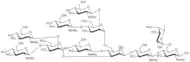
<p>NGA5FB is a custom synthesis, modification, and fluorination of a glycan. It is a monosaccharide with a methylation and click modification on the terminal glucose. This glycan is synthesized with an oligosaccharide saccharide that contains a complex carbohydrate. The CAS No. for this product is 2279-97-0.</p>Purity:Min. 95%4-Methoxyphenyl 2-azido-4,6-O-benzylidene-2-deoxy-b-D-galactopyranose
CAS:<p>4-Methoxyphenyl 2-azido-4,6-O-benzylidene-2-deoxy-b-D-galactopyranose is a synthetic sugar that has been modified with the Click reaction. It is a water soluble white solid and can be used in the synthesis of glycosides. 4MPAPGAL is a complex carbohydrate that can be used to modify saccharides or oligosaccharides. It has been shown to bind to proteins and other biomolecules with high affinity.</p>Formula:C20H21N3O6Purity:Min. 95%Molecular weight:399.4 g/molEthyl 2,3,4,6-tetra-O-benzyl-b-D-galactopyranoside
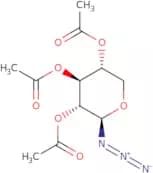
<p>Ethyl 2,3,4,6-tetra-O-benzyl-b-D-galactopyranoside is a custom synthesis. It is a modification of the natural product 6-fluoro-3-indoxyl beta-D-galactopyranoside. The fluorine atoms on the sugar ring are substituted with methyl groups. This modification increases the stability of the molecule against hydrolysis by esterases and glutathione reductase. This compound has not been evaluated for safety or efficacy in humans.</p>Purity:Min. 95%2,3,4-Tri-O-acetyl-β-D-xylopyranosyl azide
CAS:<p>2,3,4-Tri-O-acetyl-b-D-xylopyranosyl azide is a compound that has a linear range of 10 to 500 μM. It has been shown to inhibit the growth of bacteria such as C. perfringens and S. aureus. This compound inhibits the production of toxins in these bacteria by binding to the ribosomes and inhibiting protein synthesis. In addition, this compound has been shown to have high activity at salinity levels up to 15% NaCl and diffraction data was obtained from 2,3,4-tri-O-acetyl-b-D-xylopyranosyl azide crystals using XRD in order to quantify its molecular structure.</p>Formula:C11H15N3O7Purity:Min. 98 Area-%Color and Shape:PowderMolecular weight:301.25 g/molEthyl 3-O-allyl-2-O-benzyl-4,6-O-benzylidene-b-D-thiogalactopyranoside
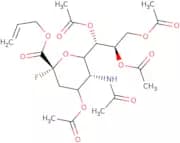
<p>Ethyl 3-O-allyl-2-O-benzyl-4,6-O-benzylidene-b-D-thiogalactopyranoside is a custom synthesized product that is used for the modification of saccharides. It is a white crystalline powder with a melting point of about 180°C. The CAS number for this product is [1]. Ethyl 3-O-allyl-2-O-benzyl-4,6 - O -benzylidene - b - D - thiogalactopyranoside reacts with glycosyl halides to form glycosides and methyl iodide to form methyl glycosides. This product also can be used in click chemistry reactions.<br>Methylation of the sugar moiety can be performed on this product too. It has high purity and fluorescence properties that may be useful in fluorescent labeling experiments.</p>Purity:Min. 95%4,7,8,9-Tetra-O-acetyl-N-acetyl-2-deoxy-2-fluoro-b-D-neuraminic acid allyl ester
CAS:<p>4,7,8,9-Tetra-O-acetyl-N-acetyl-2-deoxy-2-fluoro-b-D-neuraminic acid allyl ester is a custom synthesized chemical that has been modified with fluorination and methylation. This product is an oligosaccharide, saccharide, and polysaccharide. The product also has a high purity.</p>Formula:C22H30FNO12Purity:Min. 95%Molecular weight:519.47 g/molPhenyl 2-O-benzyl-4,6-O-benzylidene-a-D-thiomannopyranoside
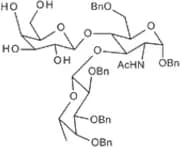
<p>Phenyl 2-O-benzyl-4,6-O-benzylidene-a-D-thiomannopyranoside is a synthetic glycoside with the chemical formula C20H24N2O5. This compound is a fluorinated thioglycoside that has been used in the synthesis of complex carbohydrates. The monosaccharide is synthesized from phenol and benzaldehyde via an aldol reaction, followed by a Claisen condensation. Phenyl 2-O-benzyl-4,6-O-benzylidene-a-D-thiomannopyranoside can be modified to create polysaccharides using methylation or click chemistry on the benzyl ethers.</p>Formula:C26H26O5SPurity:Min. 95%Molecular weight:450.55 g/mol2-Acetamido-1,6-di-O-benzyl-3-O-(2,3,4-tri-O-benzyl-b-L-fucopyranosyl)-2-deoxy-4-O-(b-D-galactopyranosyl)-a-D-glucopyranoside
CAS:<p>CAS No. 71208-05-4 is a complex carbohydrate that belongs to the group of oligosaccharides, polysaccharides and modifications of saccharides. This compound was synthesized by methylation, glycosylation, carbamoylation and fluorination. It is available in high purity and with low impurities.</p>Formula:C55H65NO15Purity:Min. 95%Molecular weight:980.13 g/mol2-Acetamido-2-deoxy-1,4,6-tri-O-acetyl-3-O-(2,3,4-tri-O-acetyl-a-L-fucopyranosyl)-D-glucopyranose
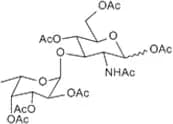
CAS:<p>The chemical name of this product is 2-Acetamido-2-deoxy-1,4,6-tri-O-acetyl-3-O-(2,3,4-tri-O-acetyl-a-L-fucopyranosyl)-D--glucopyranose. This product is a synthetic carbohydrate that has been custom synthesized and modified. It is a complex carbohydrate with an acetamido group on the nonreducing end and an acetylated sugar moiety on the reducing end. This product can be used in methylation or glycosylation processes. The CAS number for this product is 309263-13--6 and it has a molecular weight of 569.</p>Formula:C26H37NO16Purity:Min. 95%Molecular weight:619.57 g/mol6-Azido-6-deoxy-D-mannose
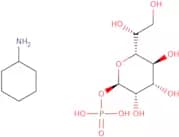
CAS:<p>6-Azido-6-deoxy-D-mannose is a hexose sugar that has been implicated in the binding of lectins to glycoclusters. Lectins are carbohydrate binding proteins found on the surface of cells and some viruses, which bind to specific carbohydrates via their sugar moieties. This process is called lectinosis and it is sometimes used as a form of immune evasion by pathogens. 6-Azido-6-deoxy-D-mannose can be used as a linker to attach affinity ligands or affinity tags to glycoclusters, which are clusters of glycoconjugates that have an important biological function. 6AoDM also has anti-microbial properties, making it an opportunistic pathogen.</p>Formula:C6H11N3O5Purity:Min. 95%Molecular weight:205.17 g/mol(D-Glycero-a-D-manno-heptopyranosyl)-dihydrogenphosphate cyclohexylammonium salt
CAS:<p>The D-Glycero-a-D-manno-heptopyranosyl)-dihydrogenphosphate cyclohexylammonium salt, also known as Glyceroheptaose, is a complex carbohydrate. It is a white powder that can be used in the modification of polysaccharides, oligosaccharides, and saccharides. The CAS number for this substance is 359435-45-3.</p>Formula:C7H15O10P·C6H13NPurity:Min. 95%Molecular weight:389.34 g/mol3,6-Di-O-tert-butyldiphenylsilyl-D-galactal
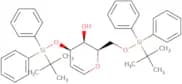
CAS:<p>3,6-Di-O-tert-butyldiphenylsilyl-D-galactal is an oligosaccharide that is a methylated and fluorinated derivative of the natural product D-galactal. The chemical structure of 3,6-di-O-tert-butyldiphenylsilyl-D-galactal is based on a beta-(1->4) linkage of two glucose residues with a terminal alpha-(1->3) linkage to form an alpha-(1->6) linkage. The compound is readily available in high purity, and can be custom synthesized to meet specific customer requirements for glycosylation, modification, or other special requests. 3,6-Di-O-tert-butyldiphenylsilyl--D--galactal has been shown in vitro to inhibit the growth of Mycobacterium tuberculosis and Mycobacterium av</p>Purity:Min. 95%2,3,4,5-Tetra-O-acetyl-1,6-dibromo-1,6-dideoxy-D-mannitol
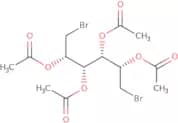
CAS:<p>2,3,4,5-Tetra-O-acetyl-1,6-dibromo-1,6-dideoxy-D-mannitol is a methylated oligosaccharide obtained by the chemical modification of mannitol. This product has a CAS number of 15410-49-8 and can be used as a saccharide in pharmaceuticals. It is also used as a reagent in the synthesis of polysaccharides. This product is also known to have high purity and can be modified to suit specific needs. 2,3,4,5-Tetra-O-acetyl-1,6-dibromo-1,6-dideoxy--D--mannitol may be useful for the treatment of diabetes mellitus type 2 and hyperglycemia.</p>Formula:C14H20Br2O8Purity:Min. 95%Molecular weight:476.11 g/molIso-lactosamine HCl
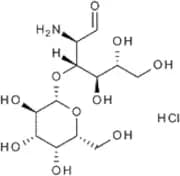
CAS:<p>Iso-lactosamine HCl is a synthetic monosaccharide, glycosylation product of galactose and lactic acid. It is used in the production of oligosaccharides and complex carbohydrates. Iso-lactosamine HCl is a white powder that can be dissolved in water or ethanol.</p>Formula:C12H23NO10·HClPurity:Min. 95%Molecular weight:377.77 g/molPhosphatidyl 1-(D-2,3-dideoxy-myo-inositol)
CAS:<p>Phosphatidyl 1-(D-2,3-dideoxy-myo-inositol) is a cell cycle inhibitor that belongs to the group of apoptosis proteins. It has been shown to induce apoptosis in prostate cancer cells and T-cell leukemia cells. This protein has protease activity and can bind to IGF-I, which is a growth factor that plays a role in tumor development. Phosphatidyl 1-(D-2,3-dideoxy-myo-inositol) also inhibits the growth of certain bacteria through an ester hydrochloride treatment. This protein can cause apoptosis by binding to a response element on the promoter of target genes, which leads to changes in gene expression.</p>Formula:C28H57O9PPurity:Min. 95%Molecular weight:568.72 g/mol2,3,4-Triacetate-β- D- glucopyranosyl bromide
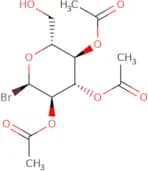
CAS:<p>2,3,4-Triacetate-beta-D-glucopyranosyl bromide is a custom synthesis of an oligosaccharide. It is a complex carbohydrate that can be modified to create a saccharide with methylation and glycosylation. This product has CAS No. 13032-61-6 and can be used in research for the modification of saccharides and carbohydrates.</p>Purity:Min. 95%DL-Arabitol
CAS:<p>DL-Arabitol is the D-isomer of xylitol. It is a sugar alcohol that can be found in the form of a white crystalline powder. DL-Arabitol is an important ingredient in many foods and in some pharmaceuticals. This product has been shown to react with ribitol dehydrogenase, which is an enzyme that catalyzes the conversion of ribose-5-phosphate to ribulose 5-phosphate, and c. glabrata, which is a fungus that causes infection in humans. The analytical method for DL-Arabitol consists of measuring the amount of arabinitol in human serum or urine by gas chromatography with mass spectrometry detection (GCMS).</p>Formula:C5H12O5Purity:Min. 95%Color and Shape:White PowderMolecular weight:152.15 g/molCarboxymethyl cellulose sodium - Viscosity 2000-4000 mPa·s
CAS:<p>Food additive; soil suspension polymer in detergents; thickening agent</p>Purity:Min. 95%Color and Shape:PowderHexyl b-D-thioglucopyranoside
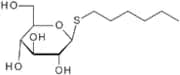
CAS:<p>Hexyl b-D-thioglucopyranoside is an insect pheromone that attracts male mealworms. It can be used for the detection of chiral elements, such as carbon and hydrogen. The profile of hexyl b-D-thioglucopyranoside is dynamically programmable and can be modified to detect different types of insects by changing the carbon skeleton. Hexyl b-D-thioglucopyranoside has been shown to have a strong electromagnetic activity, which may be due to its carbon skeleton.</p>Formula:C12H24O5SPurity:Min. 95%Color and Shape:White To Off-White SolidMolecular weight:280.38 g/molMethyl 2-acetamido-2-deoxy-4,6-(4-methoxybenzylidene)-a-D-galactopyranoside
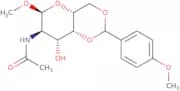
CAS:<p>Methyl 2-acetamido-2-deoxy-4,6-(4-methoxybenzylidene)-a-D-galactopyranoside is a fluorinated sugar that is synthesized from the monosaccharide D-galactose. This sugar is available for custom synthesis in order to meet clients' needs. It can also be modified by glycosylation, methylation, and click chemistry. Methyl 2-acetamido-2-deoxy-4,6-(4-methoxybenzylidene)-a-D-galactopyranoside is a white powder with a molecular weight of 594.26. It has been shown to inhibit the growth of Mycobacterium tuberculosis and Mycobacterium avium complex in culture.</p>Formula:C17H23NO7Purity:Min. 95%Molecular weight:353.37 g/mol








![Benzyl 2-(acetylamino)-2-deoxy-3-o-[3,4,6-tri-o-acetyl-2-(acetylamino)-2-deoxy-β-D-glucopyranosyl]…](/_next/image/?url=https%3A%2Fstatic.cymitquimica.com%2Fproducts%2F3D%2Fthumb-webp%2FKDA05428.webp&w=3840&q=75)