Glycoscience
Glycoscience is the study of carbohydrates and their derivatives, as well as the interactions and biological functions they participate in. This field of research is crucial for understanding a wide variety of biological processes, including cell recognition, signaling, immune response, and disease development. Glycoscience has important applications in biotechnology, medicine, and the development of new drugs and therapies. At CymitQuimica, we offer a wide selection of high-quality, high-purity products for glycoscience research. Our catalog includes monosaccharides, oligosaccharides, polysaccharides, glycoconjugates, and specific reagents, designed to support researchers in their studies on the structure, function, and applications of carbohydrates in biological systems. These resources are intended to facilitate scientific discoveries and practical applications in various areas of bioscience and medicine.
Subcategories of "Glycoscience"
- Aminosugars(108 products)
- Glyco-Related Antibodies(282 products)
- Glycolipids(46 products)
- Glycosaminoglycans (GAGs)(55 products)
- Glycosides(419 products)
- Monosaccharides(6,622 products)
- Oligosaccharides(3,682 products)
- Polysaccharides(503 products)
Found 11041 products of "Glycoscience"
Sort by
Purity (%)
0
100
|
0
|
50
|
90
|
95
|
100
Chitosan - non-animal origin
CAS:<p>Chitosan is the deacetylated form of chitin. The polysaccharide is deacetylated in order to render it soluble, which is then possible at pH values of less than 7 (normally in dilute acid). This then allows the material to be used in a number of industrial applications as a binder and film former.</p>Formula:(C6H11NO4)n2-Acetamido-3,4,6-tri-O-acetyl-2-deoxy-a-D-galactopyranosyl-(N-Fmoc)-L-serine pentafluorophenyl ester
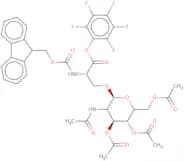
CAS:<p>The 2-acetamido-3,4,6-tri-O-acetyl-2-deoxy-a-D-galactopyranosyl-(N-Fmoc)-L-serine pentafluorophenyl ester is a synthetic sugar that has been modified using the Click chemistry. It is a complex carbohydrate that can be used in the synthesis of oligosaccharides and polysaccharides. This product is custom synthesized to order and has high purity. The 2AA3TA2DO6TFA2DGA2DGAPFPE2SAR2LSE5 is an oligosaccharide with a monosaccharide at the reducing end and methylated at the nonreducing end. The 2AA3TA2DO6TFA2DGA2DGAPFPE2SAR2LSE5 has been fluorinated at the saccharide position on the nonreducing end</p>Formula:C38F5H35N2O13Purity:Min. 95%Molecular weight:822.69 g/mola-Tetrasaccharide-APE-KLH
<p>a-Tetrasaccharide-APE-KLH is a modification of the original tetrasaccharide APE-KLH conjugate. This modified conjugate has increased stability and higher binding affinity to the Fc receptor, which is required for antibody therapy. It is synthesized by custom synthesis and has high purity, with a CAS number of 674797-36-5. The monosaccharides in this conjugate are methylated and glycosylated, with a molecular weight of 1254. The saccharides are fluorinated and saccharide with a molecular weight of 1354.</p>Purity:Min. 95%N-Glycolyl GM1 ganglioside
<p>N-Glycolyl GM1 ganglioside has a core tetrasaccharide structure (Galβ1,3GalNAcβ1,4Galβ1,4Glc) with N-glycolyl sialic acid linked α2,3 to the central galactose residu,e and ceramide linked β to position 1 on the reducing terminal glucose residue (Ledeen, 2009). SV40, Py, and the human BK viruses are unusual among viruses in that they use glycolipids as their major cell surface receptors. SV40 uses the N-glycolylneuraminic acid (NeuGc) analog of the ganglioside GM1 [GM1(Gc)] as the cell surface receptor and it gave markedly stronger binding signals than the NeuAc analog [GM1(Ac)] (Campanero-Rhodes, 2007).</p>Purity:Min. 95%Methyl a-D-mannofuranoside
CAS:<p>Methyl a-D-mannofuranoside is a synthetic sugar that has been modified by the addition of fluorine at C-1 and methylation at C-2. This modification provides the compound with desired physical properties, such as increased stability and solubility. Methyl a-D-mannofuranoside can be used in the synthesis of oligosaccharides, which are complex carbohydrates consisting of three to ten monosaccharides linked together by glycosidic bonds. It is also used for click chemistry modifications.</p>Formula:C7H14O6Purity:Min. 95%Molecular weight:194.18 g/molMethyl 2,3-di-O-acetyl-b-D-xylopyranoside
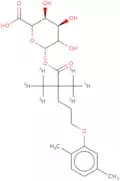
CAS:<p>Methyl 2,3-di-O-acetyl-b-D-xylopyranoside is a high purity synthetic product with custom synthesis and fluorination. This product is a sugar that has been modified by glycosylation and methylation. Methyl 2,3-di-O-acetyl-b-D-xylopyranoside is a complex carbohydrate that contains saccharides, such as monosaccharides and oligosaccharides.</p>Formula:C10H16O7Purity:Min. 95%Molecular weight:248.2 g/molGemfibrozil b-D-glucuronide-D6
Controlled Product<p>Gemfibrozil b-D-glucuronide-D6 is a methylated, saccharide, Polysaccharide. It is a custom synthesis of the synthetic and fluorinated gemfibrozil b-D-glucuronide. The product is purified by HPLC to >98% purity and supplied as a white powder.</p>Formula:C21H24D6O9Purity:Min. 95%Color and Shape:White to off-white solid.Molecular weight:432.49 g/mol5-O-(t-Butyldiphenylsilyl)-1,2-O-isopropylidene-a-D-xylofuranose
CAS:<p>5-O-(t-Butyldiphenylsilyl)-1,2-O-isopropylidene-a-D-xylofuranose is a modification of the sugar xylofuranose. This compound is synthesized from 1,2-O-isopropylidene erythrose using tetrabutyldiphenylsilyl chloride and triethylamine. It is a white solid that can be used as a monosaccharide or polysaccharide in glycosylation reactions. 5-O-(t-Butyldiphenylsilyl)-1,2-O-isopropylidene -a D -xylofuranose has been found to have high purity and can be used for methylation and fluorination reactions.</p>Formula:C24H32O5SiPurity:Min. 95%Molecular weight:428.59 g/mol3,4,6-Tri-O-acetyl-2-azido-2-deoxy-a-D-glucopyranosyl fluoride
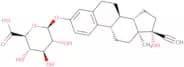
<p>3,4,6-Tri-O-acetyl-2-azido-2-deoxy-a-D-glucopyranosyl fluoride is a custom synthesis that can be synthesized with a range of modifications. It is an azide glycosylation product that has been modified with fluorination and methylation. This compound is high purity and can be used in the synthesis of oligosaccharides or saccharides.</p>Purity:Min. 95%Ethynyl estradiol 3-b-D-glucuronide
CAS:<p>Ethynyl estradiol 3-b-D-glucuronide is a synthetic derivative of the endogenous estrogen, 17β-estradiol. It is a glycosylated, complex carbohydrate with a methylation and fluorination modification. Ethynyl estradiol 3-b-D-glucuronide is synthesized by reacting ethynyl estradiol with β-D-glucuronic acid to form an ester linkage between the sugar and steroid molecules. This process also produces an Oligosaccharide as well as Monosaccharides. The synthesis of this compound can be customized for specific needs and is available in high purity.</p>Formula:C26H32O8Purity:Min. 95%Color and Shape:PowderMolecular weight:472.53 g/molmyo-Inositol 2,3,4,5,6-pentakisphosphate decasodium salt
CAS:<p>Myo-inositol 2,3,4,5,6-pentakisphosphate decasodium salt is an analog of inositol. It has been shown to have physiological functions in the human body. Myo-inositol 2,3,4,5,6-pentakisphosphate decasodium salt is a significant interaction with camp levels that may be due to its uptake by cells and plasma mass spectrometry. It also interacts with cellular organelles such as the mitochondria and endoplasmic reticulum. This compound can bind to myo-inositol and inhibit phosphoinositide 3-kinase activity. It has been shown to have a biological effect in vivo through structural analysis and vivomodel studies.</p>Formula:C6H7Na10O21P5Purity:Min. 95%Molecular weight:799.87 g/molMethyl D-galactopyranoside
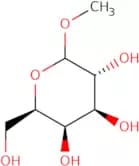
CAS:<p>Methyl D-galactopyranoside is a lectin that binds to galactose residues in the glycosidic linkage of oligosaccharides. Methyl D-galactopyranoside is used in functional theory to determine the number of lysine residues on the dodecyl chain. This lectin has been shown to bind to anomeric linkages, which are different types of sugar molecules that have a carbon atom at the same position. The binding of this lectin to oligosaccharides can be detected by matrix-assisted laser desorption ionization mass spectrometry (MALDI MS). Methyl D-galactopyranoside has also been shown to have high salt and carbohydrate binding properties, as well as binding with galactose, trimethyl, and hydroxymethyl groups.</p>Formula:C7H14O6Purity:Min. 95%Color and Shape:PowderMolecular weight:194.18 g/molN'-Nitrosonornicotine-N-b-D-glucuronide - Mixture Of Diastereomers
CAS:<p>N'-Nitrosonornicotine-N-b-D-glucuronide is a complex carbohydrate that has been modified with fluorination. It is synthesized from N'-nitrosonornicotine, which is a natural product found in tobacco. This synthetic molecule can be used to modify glycosylations and methylations as well as other modifications. The carbonyl group at the C3 position of the glucuronic acid moiety has been modified with an N-nitrosamine functional group. This modification makes it possible for this molecule to be used as a substrate for glycosylation reactions, such as the addition of oligosaccharides or monosaccharides to the sugar moiety. This synthesis is custom and can be ordered in high purity.</p>Formula:C15H19N3O7Purity:Min. 95%Molecular weight:353.33 g/molEthyl 2,3,4-tri-O-acetyl-b-D-glucuronide methyl ester
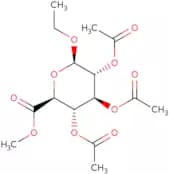
CAS:<p>Ethyl 2,3,4-tri-O-acetyl-b-D-glucuronide methyl ester is a fluorinated monosaccharide. It can be used as a synthetic intermediate for the production of oligosaccharides and polysaccharides. This product is also used in the glycosylation of sugar molecules.</p>Formula:C15H22O10Purity:Min. 95%Molecular weight:362.33 g/mol1,2,5-Tri-O-acetyl-3-deoxy-3-fluoro-D-ribofuranose
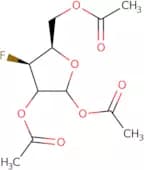
CAS:<p>1,2,5-Tri-O-acetyl-3-deoxy-3-fluoro-D-ribofuranose is a custom synthesis. It is a complex carbohydrate that can be modified with methylation and glycosylation to produce an Oligosaccharide or Polysaccharide. This molecule has been used in click chemistry to modify the sugar moiety and fluorinate the ribose group. 1,2,5-Tri-O-acetyl-3-deoxy--D--ribofuranose has CAS number 1556020-32-6 and has a purity of 99%.</p>Formula:C11H15FO7Purity:Min. 95%Molecular weight:278.23 g/mol1,2-o-Isopropylidene-β-D-fructopyranose
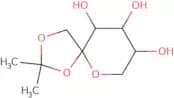
CAS:<p>1,2-O-Isopropylidene-β-D-fructopyranose is a synthetic monosaccharide. It is a fluorinated derivative of fructopyranose. This product is a modification of the alpha anomeric form of β-D-fructopyranose. It has been used as a substrate for various types of glycosylation reactions, such as methylation and click modification.</p>Formula:C9H16O6Purity:Min. 95%Molecular weight:220.22 g/mol5-Deoxy-5-iodo-1,2-o-(1-methylethylidene)pentofuranose
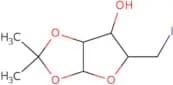
CAS:<p>5-Deoxy-5-iodo-1,2-o-(1-methylethylidene)pentofuranose is a synthetic sugar. It is a complex carbohydrate that can be custom synthesized and has high purity. This compound is an oligosaccharide with methylation, glycosylation, and polysaccharides. 5-Deoxy-5-iodo-1,2-o-(1-methylethylidene)pentofuranose has been fluorinated to give it saccharide properties.</p>Formula:C8H13IO4Purity:Min. 95%Molecular weight:300.09 g/mol2,3,4,6-Tetra-O-acetyl-b-D-glucopyranosyl-(N2-Fmoc)-L-asparagine tert-butyl ester
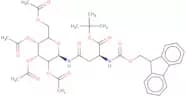
CAS:<p>2,3,4,6-Tetra-O-acetyl-b-D-glucopyranosyl-(N2-Fmoc)-L-asparagine tert-butyl ester is a glycosylation reagent that contains a reactive primary amine. It is used in the synthesis of complex carbohydrates and oligosaccharides. This compound is also used as a fluorinating agent for saccharides and sugars. 2,3,4,6-Tetra-O-acetyl-b-D-glucopyranosyl-(N2-Fmoc)-L-asparagine tert butyl ester can be custom synthesized to meet your needs. This product has CAS number 16041617 1 and it is available in high purity.</p>Formula:C37H44N2O14Purity:Min. 95%Molecular weight:740.75 g/mol3-O-Toluoyl decitabine
CAS:<p>3-O-Toluoyl decitabine is a synthetic, high purity drug that is custom synthesized to order. The synthesis of 3-O-Toluoyl decitabine involves the modification of sugar molecules with fluorination, glycosylation, and methylation. This compound has CAS No. 183016-21-9 and is used in the treatment of cancer by inhibiting ribonucleic acid (RNA) synthesis. 3-O-Toluoyl decitabine inhibits RNA polymerase II and III, which are enzymes that catalyze the transcription of DNA into RNA. It also inhibits protein kinase C, which leads to cell death and tumor shrinkage.</p>Formula:C16H18N4O5Purity:Min. 95%Molecular weight:346.34 g/molNeosamine
<p>Neosamine is an antimicrobial agent that is activated by the addition of fatty acids. It has a low potency and is used to diagnose infections caused by bacteria. Neosamine has been shown to inhibit the growth of bacteria, fungi, and parasites on electron microscopy. Neosamine also inhibits protease activity and may be useful in detergent compositions for removing fats, oils, and greases from surfaces. This chemical is stable in acidic solutions and does not react with carbostyril or other diagnostic agents.</p>Formula:C6H14N2O4Purity:Min. 95%Molecular weight:178.19 g/molEthyl a-L-thiorhamnopyranoside
<p>Ethyl a-L-thiorhamnopyranoside is a synthetic, fluorinated monosaccharide. It is an oligosaccharide with a complex carbohydrate structure and can be used as a building block for the synthesis of glycosides, polysaccharides, and other sugar derivatives. This product can also be modified by methylation, click reactions, or other chemical reactions to produce desired structures. The purity of this product is >98%.</p>Purity:Min. 95%D-Glucose diethyl mercaptal
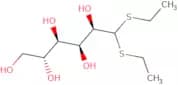
CAS:<p>D-Glucose diethyl mercaptal is a homogeneous catalyst that can be used to acetylate galactitol to produce D-arabinose. It acts as an efficient and selective catalyst for the reaction of nitrous acid with hydrochloric acid, which produces acetyl chloride. Acetyl chloride is a reactive compound that can be used in the synthesis of many other compounds. <br>D-Glucose diethyl mercaptal has been used in chromatographic methods to separate d-arabinose from L-arabinose. The ring-opening polymerization of D-glucopyranose by mercaptals leads to the formation of polyols, which are useful materials for the production of plastics and rubber products. Chloride ions are required for this reaction, while hydrogen chloride is produced as a byproduct.</p>Formula:C10H22O5S2Purity:Min. 95%Molecular weight:286.41 g/molCellobiuronic acid
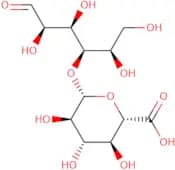
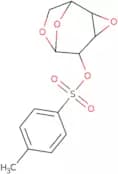
CAS:<p>Cellobiuronic acid is a polysaccharide that contains glucose and uronic acids. It is found in the cell walls of gram-positive bacteria, where it may play an important role in maintaining the structural integrity of the cell wall. Cellobiuronic acid has been shown to be a potent antigen for pneumococcus. Cellobiuronic acid has also been shown to be conjugated with proteins and used as a vaccine adjuvant for inducing antibody responses against pneumococcal antigens. Cellobiuronic acid is synthesized from glucose by bacterial cells, which use it as a carbon source. The biosynthesis of cellobiuronic acid is poorly understood because it does not occur in mammalian cells.</p>Formula:C12H20O12Purity:Min. 95%Molecular weight:356.28 g/mol1,6:3,4-Dianhydro-2-O-p-toluenesulfonyl-β-D-galactopyranose
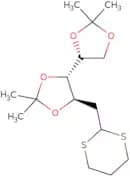
CAS:<p>1,6:3,4-Dianhydro-2-O-p-toluenesulfonyl-b-D-galactopyranose is a fluorinated monosaccharide that can be used in glycosylation reactions. This compound can be custom synthesized and is not available commercially. It has CAS No. 6167-32-4 and its molecular weight is 489.1 g/mol.</p>Formula:C13H14O6SPurity:Min. 95%Color and Shape:PowderMolecular weight:298.31 g/mol2-Deoxy-3,4:5,6-di-O-isopropylidene-D-arabino-hexose propane-1,3-diyl dithioacetal
CAS:<p>The antibiotic 2-deoxy-3,4:5,6-di-O-isopropylidene-D-arabino-hexose propane-1,3-diyl dithioacetal is a shikimate analog that inhibits the shikimate pathway. It prevents the synthesis of aromatic compounds and other nitrogenous substances by inhibiting the enzyme chorismate synthase. Chorismate synthase catalyzes the conversion of 3,4:5,6-di-O-isopropylidene D-arabino hexose to chorismic acid which is then converted to shikimic acid. The antibiotic binds covalently to an active site cysteine residue on the enzyme and inhibits its activity. This inhibition blocks the production of aromatic amino acids and other nitrogenous substances required for protein synthesis in bacteria.</p>Formula:C15H26O4S2Purity:Min. 95%Molecular weight:334.5 g/mol1,4-β-D-Glucosyl-D-mannobiose
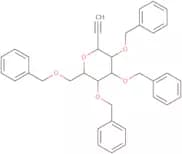
CAS:<p>1,4-β-D-Glucosyl-D-mannobiose is a specialized carbohydrate substrate, which is derived from complex polysaccharides typically found in plant cell walls. It acts as a substrate for endo-1,4-β-mannanase, an enzyme that cleaves specific glycosidic bonds within mannans. This substrate facilitates the investigation of enzymatic activity by allowing the measurement of endo-1,4-β-mannanase efficiency and specificity under controlled conditions.In biochemical enzyme assays, 1,4-β-D-Glucosyl-D-mannobiose serves as a critical component for quantifying mannanase activity. It enables researchers to study the enzyme's role in various biological processes, including polysaccharide degradation. Additionally, this product is invaluable in in vitro diagnostic analyses where precise enzyme activity assessment is crucial for understanding pathological states or the functionality of industrial enzyme preparations. Its applications extend to biotechnology research, where it aids in the formulation of enzyme-based solutions and optimization of enzymatic reactions in diverse biological and industrial contexts.</p>Formula:C18H32O16Purity:Min. 95%Molecular weight:504.4 g/mol2-C-(2,3,4,6-Tetra-O-benzyl-b-D-glucopyranosyl) ethyne
CAS:<p>2-C-(2,3,4,6-Tetra-O-benzyl-b-D-glucopyranosyl) ethyne is a synthetic monosaccharide. It has a molecular formula of C12H14O8 and a molecular weight of 302.24 g/mol. 2-C-(2,3,4,6-Tetra-O-benzyl-b-D-glucopyranosyl) ethyne is used to modify oligosaccharides and polysaccharides in the synthesis of complex carbohydrates. This chemical is also used as an intermediate in the fluorination reaction to produce polyfluorinated molecules with high purity.</p>Formula:C29H30O5Purity:Min. 95%Molecular weight:458.55 g/mol4-Methoxyphenyl 2,3,4,6-tetra-O-acetyl-β-D-glucopyranoside
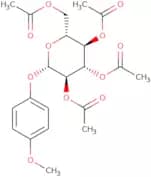
CAS:<p>4-Methoxyphenyl 2,3,4,6-tetra-O-acetyl-b-D-glucopyranoside is a membrane stabilizer that prevents the mesenchymal transition of cells. This compound inhibits the growth of human tumor cells in vitro and has been shown to be an anti-tumor agent. 4-Methoxyphenyl 2,3,4,6-tetra-O-acetyl-b-D-glucopyranoside binds to DNA and RNA and blocks translation or transcription. It also prevents the formation of ternary complex by interfering with the binding between aminoacyl tRNA synthetases and their cognate tRNAs. The compound is activated by intestinal enzymes and is metabolized in human liver microsomes to a more reactive form that can bind to cellular macromolecules such as proteins.</p>Formula:C21H26O11Purity:Min. 95%Color and Shape:PowderMolecular weight:454.42 g/mol2-Acetamido-2-deoxy-6-a-O-sialyl-D-galactopyranose
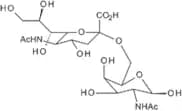
CAS:<p>2-Acetamido-2-deoxy-6-a-O-sialyl-D-galactopyranose is a monosaccharide that is synthesized from D-galactose and acetamide. It has a molecular weight of 388.13 and an empirical formula of C8H14N2O4. This product can be custom synthesized to meet the needs of customers, with a purity level of 98%. 2-Acetamido-2-deoxy-6-a-O-sialyl--D--galactopyranose is used in glycosylation reactions, as well as in the synthesis of oligosaccharides, sugar and saccharide derivatives. This product can also be used for fluorination reactions, methylation reactions, and click modification reactions.</p>Formula:C19H32N2O14Purity:Min. 95%Molecular weight:512.46 g/mol6-O-Triisopropylsilyl-D-galactal
CAS:<p>6-O-Triisopropylsilyl-D-galactal is a thioether that can be used to modify the octane number of petroleum. It can also be used as an analytical reagent for sulfur compounds and as a catalyst in desulfurization reactions. 6-O-Triisopropylsilyl-D-galactal is synthesized by reacting 6,6'-dithiodipyridine with glycerol in the presence of triisopropylsilyl chloride. The reaction is synchronous and the interaction energy between the two molecules is high. The orientation of the components (i.e., sulfoxide and sulfide) are octane and oriented, respectively.</p>Formula:C15H30O4SiPurity:Min. 95%Molecular weight:302.48 g/molL-Daunosamine
CAS:<p>L-Daunosamine is a natural amino sugar that is synthesized from D-glucose by the enzyme daunosamine synthetase. L-Daunosamine is a nucleophilic compound that can form an enolate intermediate as well as an amide, which are reactive intermediates in organic synthesis. This compound is also able to undergo stereoselective reactions. The product of this reaction can be used to produce methyl glycosides, which have been shown to have anticancer properties. L-Daunosamine has been shown to be a substrate for the formation of enolates and amides, which are reactive compounds in organic synthesis. This compound has also been shown to undergo stereoselective reactions. The product of this reaction can be used to produce methyl glycosides, which have been shown to have anticancer properties.</p>Formula:C6H11NO3Purity:Min. 95%Molecular weight:145.16 g/molL-Xylose-BSA
<p>L-Xylose-BSA is a glycosylation product that has been modified with methylation, click modification, and fluorination. The compound is a complex carbohydrate that is classified as a polysaccharide. L-Xylose-BSA is a monosaccharide that has been synthesized using the Custom synthesis and high purity techniques. This saccharide is used in various types of research including glycosylation, methylation, click modification, and fluorination. L-Xylose-BSA can also be found under CAS No. 6525-83-8 or EC No. E 1451/1.</p>Purity:Min. 95%6-Deoxy-L-altrose
CAS:<p>6-Deoxy-L-altrose is a type of sugar that is found in human pathogens. It can be used as a biomarker for the identification of these types of bacteria. 6-Deoxy-L-altrose has been shown to have physiological activities against some bacterial strains, such as pseudotuberculosis and enterocolitica. 6-Deoxy-L-altrose is used as an extracellular metabolite by some bacteria, and has been shown to inhibit the growth of Mycobacterium tuberculosis through its ability to inhibit protein synthesis at the ribosomal level.</p>Formula:C6H12O5Purity:Min. 95%Molecular weight:164.16 g/mol1,3,6-Tri-O-acetyl-2,4-dideoxy-2-phthalimido-b-D-glucopyranose
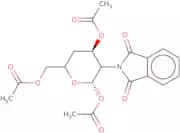
CAS:<p>1,3,6-Tri-O-acetyl-2,4-dideoxy-2-phthalimido-b-D-glucopyranose is a modification of the sugar molecule. This product is a custom synthesis and can be used in research to synthesize complex carbohydrates. It is also a synthetic carbohydrate that has been fluorinated and saccharides have been methylated and glycosylated. It has CAS No. 1260591-45-4 and can be used as a monosaccharide or polysaccharide.</p>Formula:C20H21NO9Purity:Min. 95%Molecular weight:419.38 g/mol1,2,3-Tri-O-acetyl-5-O-benzoyl-4-C-methyl-D-ribofuranose
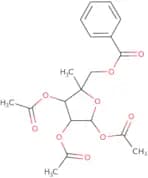
CAS:<p>1,2,3-Tri-O-acetyl-5-O-benzoyl-4-C-methyl-D-ribofuranose is a fluorinated carbohydrate that is synthesized by the click chemistry reaction. It is an oligosaccharide with three acetyl groups and four methyl groups on the sugar. This compound has a molecular weight of 514.92 g/mol and a CAS number of 503543-44-0.</p>Purity:Min. 95%6-Azido-a-D-galactose-1-dihydrogenphosphate
CAS:<p>6-Azido-a-D-galactose-1-dihydrogenphosphate is a custom synthesis that is a complex carbohydrate. It is an Oligosaccharide and CAS No. 1374984-64-1, Polysaccharide with Modification, saccharide and Methylation, Glycosylation, Carbohydrate. This compound can be modified with Click modification, sugar or High purity, Fluorination. 6-Azido-a-D-galactose-1-dihydrogenphosphate is synthesized by Synthetic methods and has high purity.</p>Formula:C6H12N3O8PPurity:Min. 95%Molecular weight:285.15 g/molSodium pectate
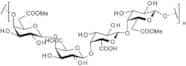
CAS:<p>The characteristic structure of pectin is a linear chain of α-(1,4)-linked D-galacturonic acid that forms the pectin-backbone, a homogalacturonan (pectic acid). The polygalacturonic acid is partly esterified with methyl groups and the free acid groups may be partly or fully neutralized with sodium, potassium or ammonium ions. The ratio of esterified galacturonic acid groups to total galacturonic acid groups - termed the degree of esterification (DE) - has vital influence on the properties of pectin, especially the solubility and the gel forming characteristics. The mechanism for gel formation with calcium ions is known as ‘The egg box’. Into this backbone, there are regions where galacturonic acid is replaced by (1,2)-linked L-rhamnose. From the rhamnose residues, sidechains of various neutral sugars branch off. This type of pectin is called rhamnogalacturonan-I (RG-I). Up to every 25th galacturonic acid in the main chain is replaced with rhamnose. Some stretches consist of alternating galacturonic acid and rhamnose – “hairy regions”, others with lower density of rhamnose – “smooth regions”. The neutral sugars are mainly D-galactose, L-arabinose and D-xylose, the types and proportions of neutral sugars varying with the origin of pectin. Another structural type of pectin is rhamnogalacturonan II (RG-II), which is a less frequent complex, highly branched polysaccharide.</p>Purity:Min. 95%Color and Shape:Powder1,2,4,6-Tetra-O-acetyl-3-O-benzyl-a-D-mannopyranose
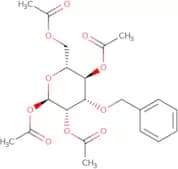
CAS:<p>Tetra-O-acetyl-3-O-benzyl-a-D-mannopyranose is a modification of mannose. It is a complex carbohydrate that belongs to the class of oligosaccharides and has CAS No. 65827-58-9. The molecular weight of this compound is 462.76 g/mol. Tetra-O-acetyl-3-O-benzyl mannopyranose is synthesized for use as an analytical reagent to study the glycosylation and methylation reactions in carbohydrates, as well as for use in diagnostic kits for the detection of penicillinase and erythromycin resistance genes. This product has high purity, custom synthesis, and can be used as a monosaccharide or polysaccharide sugar in glycosylation reactions. Tetra O acetyl 3 O benzyl mannopyranose can also be fluorinated</p>Formula:C21H26O10Purity:Min. 95%Molecular weight:438.43 g/mol2,3-O-Isopropylidene-1,5-di-O-toluoyl-b-D-ribofuranose
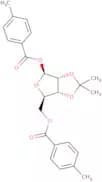
CAS:<p>2,3-O-Isopropylidene-1,5-di-O-toluoyl-b-D-ribofuranose (IPDT) is a saccharide that is modified with a methyl group at the 2' position of the ribose. This modification can be used to control the rate of glycosylation reactions, or to synthesize oligosaccharides and complex carbohydrates. IPDT is also an important precursor for click chemistry reactions, which are used in the synthesis of polymers and other organic compounds.</p>Formula:C24H26NO7Purity:Min. 95%Molecular weight:440.47 g/mol(4-Methoxyphenyl)methylbeta-D-glucopyranoside
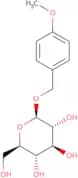
CAS:<p>(4-Methoxyphenyl)methylbeta-D-glucopyranoside is a synthetic sugar that is used for research purposes. It has been modified with fluorine and methyl groups to create a new compound that can be used as a fluorescence probe for DNA. This sugar has been synthesized by glycosylation of 4-methoxyphenol, followed by an oxidation reaction. The molecular weight of this compound is 792.7 g/mol, and it has been assigned the CAS number 81381-72-8.</p>Formula:C14H20O7Purity:Min. 95%Molecular weight:300.3 g/molL-Noviose
CAS:<p>L-Noviose is a glycopeptide antibiotic that has been modified to increase its stability and bioavailability. The modifications have led to an increase in the activity of L-Noviose against gram-negative bacteria, including strains resistant to other antibiotics. This drug also inhibits bacterial biosynthesis by binding to the 30S ribosomal subunit and preventing the initiation of protein synthesis. L-Noviose is used clinically for the treatment of infections caused by Actinomyces, Enterobacter, Erysipelothrix, Haemophilus, Klebsiella, Proteus mirabilis, Pseudomonas aeruginosa and Staphylococcus aureus. The biological function of L-Noviose is to inhibit bacterial protein synthesis by binding to the 30S ribosomal subunit.</p>Purity:Min. 95%a-L-Fucose-1-phosphate
<p>a-L-Fucose-1-phosphate is a Glycosylation, complex carbohydrate, Methylation, Click modification, Polysaccharide, Fluorination, saccharide, Modification, sugar, Oligosaccharide and Synthetic product. a-L-Fucose-1-phosphate is available for custom synthesis and can be ordered with high purity.</p>Purity:Min. 95%D-Glucose 6-phosphate, disodium salt
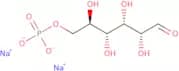
CAS:<p>D-Glucose 6-phosphate, disodium salt is an antibiotic that is used to treat gram-negative bacterial infections. It binds to the bacterial ribosome and inhibits protein synthesis, which leads to cell death by inhibiting the production of proteins vital for cell division. This drug has been shown to be active against a wide range of bacteria, including resistant strains such as Escherichia coli and Salmonella typhimurium. D-Glucose 6-phosphate, disodium salt also has anti-inflammatory properties and can be used as an anti-bacterial agent in the treatment of typhoid fever.</p>Formula:C6H11O9Na2PMolecular weight:304.10 g/molDulcitol
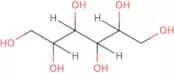
CAS:<p>Dulcitol is a sugar alcohol that is used in the food industry and as an alternative to sucrose. Dulcitol can be found in wastewater treatment and has been shown to be an inhibitor of wild-type strains of Escherichia coli and Bacteroides fragilis. It also inhibits the growth of Gram-positive bacteria, such as Staphylococcus aureus, by inhibiting their ability to synthesize DNA. Dulcitol is metabolized through a number of metabolic transformations, including hydrolysis by esterases or glucuronidases, oxidation by cytochrome P450 enzymes, reduction by glutathione reductase, or conjugation with glucuronic acid. Dulcitol can also inhibit the activity of certain enzymes such as protein kinase C (PKC).</p>Formula:C6H14O6Purity:Min. 99.0 Area-%Molecular weight:182.17 g/molRef: 3D-D-9500
1kgTo inquire5kgTo inquire10kgTo inquire25kgTo inquire2500gTo inquire-Unit-kgkgTo inquire1,6,6'-Tri-O-tritylsucrose pentaacetate
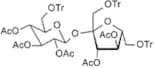
CAS:<p>1,6,6'-Tri-O-tritylsucrose pentaacetate is a sugar that is synthesized by the process of fluorination and monosaccharide. It has a molecular formula of C12H18O9F. This compound can be used as a synthetic sugar in glycosylation reactions or as an Oligosaccharide for complex carbohydrate synthesis. The 1,6,6'-Tri-O-tritylsucrose pentaacetate can also be modified with methylation or click chemistry for high purity.</p>Formula:C79H74O16Purity:Min. 95%Molecular weight:1,279.42 g/mol2-Acetamido-2,4-dideoxy-4-fluoro-6-O-(3-mercaptopropanoyl)-D-glucopyranose
<p>2-Acetamido-2,4-dideoxy-4-fluoro-6-O-(3-mercaptopropanoyl)-D-glucopyranose is a sugar with a molecular formula of C10H14O7F3NO6 and a molecular weight of 441.33. It has high purity and is custom synthesized to order. It is an important building block in the synthesis of oligosaccharides, monosaccharides, saccharides, and complex carbohydrates. 2-Acetamido-2,4-dideoxy-4-fluoro-6-O-(3-mercaptopropanoyl)-D-glucopyranose has many modifications including fluorination, glycosylation, methylation, and modification. This product has CAS number 1778791 and can be found under the name Oligosaccharide (CAS No. 17</p>Purity:Min. 95%Methyl 5,7,8,9-tetra-O-acetyl-4-acylamino-2,6-anhydro-3,4-dideoxy-D-glycero-D-galacto-2-enonate
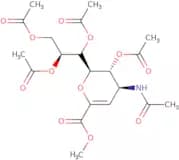
CAS:<p>Methyl 5,7,8,9-tetra-O-acetyl-4-acylamino-2,6-anhydro-3,4-dideoxy-D-glycero-D-galacto-2-enonate is a synthetic sugar that is used as a building block for the synthesis of polysaccharides. This compound can be modified with click chemistry and fluorination to create an array of possible saccharide structures. Methylated sugar derivatives are also used in custom synthesis applications.</p>Formula:C20H27NO12Purity:Min. 95%Molecular weight:473.43 g/mol3-Demethyl thiocolchicine 2-O-(2,3,4-tri-O-acetyl-b-D-glucuronide methyl ester)
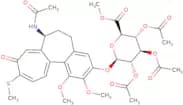
CAS:<p>3-Demethyl thiocolchicine 2-O-(2,3,4-tri-O-acetyl-b-D-glucuronide methyl ester) is a custom synthesis of 3-demethyl thiocolchicine. It is a fluorinated glycoside that can be used to synthesize oligosaccharides and monosaccharides. The modification of this substance with acetyl groups gives it a degree of solubility in organic solvents that is not found in the parent compound.</p>Formula:C34H39NO14SPurity:Min. 95%Molecular weight:717.74 g/mol1-O-Acetyl-2,3,5-tri-O-benzyl-b-D-ribofuranose
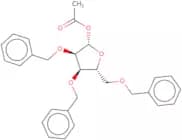
CAS:<p>1-O-Acetyl-2,3,5-tri-O-benzyl-b-D-ribofuranose is a synthetic sugar that has been modified with various chemical groups. It is a methylated saccharide and can be used for the synthesis of oligosaccharides or polysaccharides. 1-O-Acetyl-2,3,5-tri-O-benzyl-b-D-ribofuranose is soluble in water and ethanol. The purity of this product is greater than 98% and the CAS number is 91110–24–6.</p>Formula:C28H30O6Purity:Min. 95%Color and Shape:Colourless syrup.Molecular weight:462.53 g/mol