Glycoscience
Glycoscience is the study of carbohydrates and their derivatives, as well as the interactions and biological functions they participate in. This field of research is crucial for understanding a wide variety of biological processes, including cell recognition, signaling, immune response, and disease development. Glycoscience has important applications in biotechnology, medicine, and the development of new drugs and therapies. At CymitQuimica, we offer a wide selection of high-quality, high-purity products for glycoscience research. Our catalog includes monosaccharides, oligosaccharides, polysaccharides, glycoconjugates, and specific reagents, designed to support researchers in their studies on the structure, function, and applications of carbohydrates in biological systems. These resources are intended to facilitate scientific discoveries and practical applications in various areas of bioscience and medicine.
Subcategories of "Glycoscience"
- Aminosugars(108 products)
- Glyco-Related Antibodies(282 products)
- Glycolipids(46 products)
- Glycosaminoglycans (GAGs)(55 products)
- Glycosides(419 products)
- Monosaccharides(6,622 products)
- Oligosaccharides(3,682 products)
- Polysaccharides(503 products)
Found 11041 products of "Glycoscience"
Sort by
Purity (%)
0
100
|
0
|
50
|
90
|
95
|
100
2,3:5,6-Di-O-isopropylidene-2-C-(tert.butyldimethylsilyloxy)methyl-D-allono-1,4-lactone
<p>2,3:5,6-Di-O-isopropylidene-2-C-(tert.butyldimethylsilyloxy)methyl-D-allono-1,4-lactone is a sugar molecule. It is composed of two monosaccharides, D and L allose. The D allose is an alpha(1→2)-linked glucose with the terminal hydroxyl group on C2 and the L allose is a beta(1→4)-linked galactose with the terminal hydroxyl group on C4. The chemical formula for 2,3:5,6-Di-O-isopropylidene-2-C-(tert.butyldimethylsilyloxy)methyl-D-allono-1,4-lactone is C12H22O11.</p>Purity:Min. 95%Carboxymethyl-dextran sodium salt - Average MW 20,000
CAS:<p>Sodium carboxymethyl dextran is a white, odourless and tasteless powder, which is freely soluble in water or electrolyte solutions. Applications that have been described for carboxymethyl dextran include carriers of paramagnetic contrast agents, preparation of conjugates of pharmacologically active compounds and carboxymethyl dextrans in biosensors. A number of other uses in cosmetics, agriculture, foods, paints and textiles have been the subject of patent applications.</p>Color and Shape:PowderL-Arabinose - Syrup
CAS:<p>L-arabinose is a monosaccharide that is found in many plants, but not in humans. It is metabolized by the liver to produce L-arabinose-1-phosphate and L-ribulose-1,5-bisphosphate. L-Arabinose syrup is used for the treatment of bacterial infections such as escherichia coli or listeria monocytogenes.</p>Formula:C5H10O5Purity:Min. 95%Molecular weight:150.13 g/mol1,2,3,6-Tetra-O-acetyl-α-D-glucopyranose
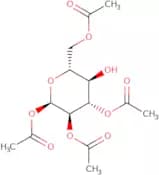
CAS:<p>1,2,3,6-Tetra-O-acetyl-a-D-glucopyranose is a high purity chemical that can be custom synthesized. It is a sugar that has been fluorinated and glycosylated with a Click modification. It is a synthetic compound that contains methylation and modification. It has CAS No. 55286-97-0, which indicates its oligosaccharide and monosaccharide saccharide composition. This product can be used for complex carbohydrate synthesis in the laboratory or for research purposes.</p>Formula:C14H20O10Purity:Min. 98 Area-%Color and Shape:PowderMolecular weight:348.3 g/molMethyl 4-C-Hydroxymethyl-2,3-O-isopropylidene-b-D-ribofuranoside
CAS:<p>Methyl 4-C-Hydroxymethyl-2,3-O-isopropylidene-b-D-ribofuranoside is a modification of the monosaccharide, D-ribose. It is synthesized by the selective methylation of the hydroxymethyl group at position C4. The synthesis of this compound starts with the oxidation of D-ribose to form 2,3'-diisopropylidene boronate ester (1). This compound is then reacted with methyl iodide in the presence of an acid to form 4-(methyloxy)benzaldehyde (2). The final step involves conversion of 2 to 4-(methyloxy)benzylidene boronate ester (3), which is then hydrolyzed to yield methyl 4-C-hydroxymethyl-2,3-O-isopropylidene ribofuranoside.</p>Purity:Min. 95%6-a-D-Maltotriosyl-maltotriose
CAS:<p>Derived from pullulan using pullulanase</p>Formula:C36H62O31Purity:Min. 95%Color and Shape:PowderMolecular weight:990.86 g/mol4-Acetamidophenyl b-D-glucuronide sodium salt
CAS:<p>4-Acetamidophenyl b-D-glucuronide sodium salt is a pharmaceutical drug that is a metabolite of acetaminophen. It can be detected in the urine by biochips, which are microarrays that contain immobilized binding sites for specific analytes. The analysis of 4-acetamidophenyl b-D-glucuronide sodium salt in urine is used to screen for the use of acetaminophen and to identify cytochrome P450 2C19 (CYP2C19) activity. This drug can also be detected by spectrometric methods using biochemical assays on plates or hepatocytes and mass spectrometric detection methods using liquid chromatography/mass spectrometry (LC/MS). Acetaminophen has been shown to have toxic effects on the liver, kidneys, and lungs in humans, as well as on diode photoluminescence.</p>Formula:C14H16NNaO8Purity:Min. 95%Color and Shape:PowderMolecular weight:349.27 g/mol1,2,3,4,6-Penta-O-benzyl-β-D-thiogalactopyranoside
CAS:<p>1,2,3,4,6-Penta-O-benzyl-b-D-thiogalactopyranoside is a custom synthesis that is a complex carbohydrate. It has a CAS number of 210358-01-3 and a molecular weight of 603. It is modified with saccharide, methylation, glycosylation, and carbonyl groups. This product is available in high purity and without fluorination or synthetic modification.</p>Formula:C41H42O5SPurity:Min. 95%Color and Shape:PowderMolecular weight:646.84 g/mol2,3,4,6-Tetra-O-acetyl-b-D-galactopyranosyl ethylxanthate
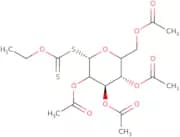
<p>2,3,4,6-Tetra-O-acetyl-b-D-galactopyranosyl ethylxanthate is a carbohydrate that has been modified through the process of fluorination and methylation. It is a synthetic compound that has been custom synthesized to produce high purity. The CAS number for this compound is 56923-48-8. This compound is used in the modification of saccharides and oligosaccharides as well as other sugar compounds. 2,3,4,6-Tetra-O-acetyl-b-D-galactopyranosyl ethylxanthate is also glycosylated and click modified.</p>Formula:C17H24O10S2Purity:Min. 95%Molecular weight:452.5 g/mol1-Chloro-2-deoxy-3,5-di-O-toluoyl-a-D-ribofuranose
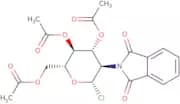
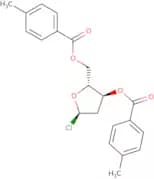
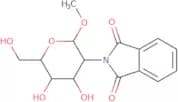
CAS:<p>1-Chloro-2-deoxy-3,5-di-O-toluoyl-a-D-ribofuranose (also known as Hoffer’s chlorosugar) is a synthetic building block used in nucleic acid research to afford an array of both alpha and beta linked 2’-deoxyribose derivatives. Naturally occurring nucleosides are typically beta linked and the efficient synthesis of alpha linked analogues, which are often more stable, offers access to interesting variations in 3D structure and biochemical reactivity.</p>Formula:C21H21ClO5Purity:Min. 90 Area-%Color and Shape:PowderMolecular weight:388.84 g/molMethyl 2-deoxy-2-phthalimido-β-D-glucopyranoside
CAS:<p>Methyl 2-deoxy-2-phthalimido-b-D-glucopyranoside is a synthetic sugar that has been modified with fluorine. It is an important building block for the synthesis of complex carbohydrates.<br>Methyl 2-deoxy-2-phthalimido-b-D-glucopyranoside can be used to modify saccharides and oligosaccharides, as well as to add fluorine atoms to glycosyl units. This modification can be done using a click chemistry reaction with azide functionalized molecules. The chemical structure of Methyl 2-deoxy-2-phthalimido-b-D-glucopyranoside is shown below:</p>Formula:C15H17NO7Purity:Min. 95%Color and Shape:White to off-white solid.Molecular weight:323.3 g/molIsolichenan
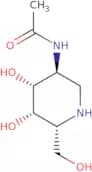
CAS:<p>Isolichenan is a cold-water soluble (1,3)-(1,4)-α-D-glucan isolated from lichen Cetraria islandica to have MW of about 6-8 kDa. Lichens produce isolichenan-type polysaccharides with considerable variation in linkage ratios as well as MW, even within the same species. Occasionally these α-glucans can be branched at O2, O3 or O6. The immunomodulating activity of isolichenan was tested in in vitro phagocytosis and anti-complementary assays, and proved to be active in both cases.<br>The image was kindly provided by Prof Mike Guiry from Cork who runs ‘The Seaweed Site’.</p>Purity:Min. 85%Color and Shape:Powder2-Acetamido-1,2-dideoxy-galactonojirimycin
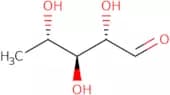
CAS:<p>2-Acetamido-1,2-dideoxy-galactonojirimycin is a microbial infection drug that belongs to the class of chemical species. It has been shown to be a potent inhibitor of sodium carbonate (NaCO) and can be used as a control in analytical studies. This drug also inhibits vasoactive intestinal peptide, which may lead to the development of cancer. 2-Acetamido-1,2-dideoxy-galactonojirimycin is an acyl chain with galacturonic acid and can be used as diagnostic agents for human serum and hepatic steatosis. It has been shown to have anti-inflammatory properties that are useful for the treatment of autoimmune diseases.</p>Formula:C8H16N2O4Purity:Min. 95%Color and Shape:PowderMolecular weight:204.22 g/mol5-Deoxy-L-ribose
CAS:<p>5-Deoxy-L-ribose is found in a variety of organisms, including humans. It is stereoselective, with the (-) form being more common than the (+) form. 5-Deoxy-L-ribose is synthesized by the glycosidic bond between l-arabinose and D-ribose. This compound is an inexpensive way to produce 5-deoxy analogs of other sugars, such as glucose, fructose, and mannose. The biosynthesis of 5-deoxy-L-ribose relies on a molybdenum cofactor and involves oxidation of L-arabinonate by aldehyde oxidase to give L-xylulose. Lactate dehydrogenase converts this into D-xylulose. Dihydroorotate reductase then reduces this to give D-(+)-5--deoxy--D--erythro--pentitol phosphate, which cycl</p>Formula:C5H10O4Purity:Min. 95%Color and Shape:Slightly Yellow Clear LiquidMolecular weight:134.13 g/mol2, 4- Anhydro-5-O-benzyl- 6- deoxy- L- mannonic acid methyl ester
<p>2, 4-Anhydro-5-O-benzyl-6-deoxy-L-mannonic acid methyl ester is a synthetic oligosaccharide that can be used as a fluorinated carbohydrate. It is modified by the addition of methyl groups to the hydroxyl group of an anhydro sugar moiety. It can be used in various applications such as glycosylation and click chemistry. 2, 4-Anhydro-5-O-benzyl-6-deoxy--L--mannonic acid methyl ester has CAS number 167801–91–9 and molecular weight of 538.4 g/mol. It is soluble in water and ethanol.</p>Purity:Min. 95%N- [(Phenylmethoxy) carbonyl] glycylglycyl- 2- amino- 2- deoxy-a- D- manno- 2- heptulofuranosonic acid methyl ester
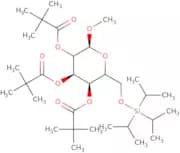
CAS:<p>N- [(Phenylmethoxy) carbonyl] glycylglycyl- 2- amino- 2- deoxy-a- D- manno- 2- heptulofuranosonic acid methyl ester is a custom synthesis of an oligosaccharide, polysaccharide, and a complex carbohydrate. It is modified with methylation, glycosylation, and click modification. The CAS number for this compound is 161086-37-9. This product is highly pure, fluorinated, and synthetic.</p>Purity:Min. 95%Methyl 2,3,4-tri-O-pivaloyl-6-O-triisopropylsilyl-a-D-mannopyranoside
<p>Methyl 2,3,4-tri-O-pivaloyl-6-O-triisopropylsilyl-a-D-mannopyranoside is a custom synthesis of an oligosaccharide with high purity. It is a complex carbohydrate that has been modified to have fluorination. The modification of the saccharide was done by Click chemistry, which is a type of radical reaction. Methyl 2,3,4-tri-O-pivaloyl-6-O-triisopropylsilyl-a-D-mannopyranoside is a monosaccharides and sugar that has been synthesized.</p>Formula:C31H58O9SiPurity:Min. 95%Molecular weight:602.89 g/mol3,4-Di-O-acetyl-D-fucal
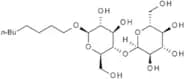
CAS:<p>3,4-Di-O-acetyl-D-fucal is a synthetic carbohydrate with two orientations. It is a synthon for the synthesis of carbohydrates and can be used as a ligand in biomolecular design. The synthetic carbohydrate has been shown to have chemotherapeutic effects, which may be due to its ability to inhibit glycan synthesis. This synthetic carbohydrate also has conformational parameters that are similar to those of natural fucose, which makes it an attractive candidate as a potential drug target.</p>Formula:C10H14O5Purity:Min. 95%Color and Shape:PowderMolecular weight:214.22 g/moln-Octyl β-D-maltoside
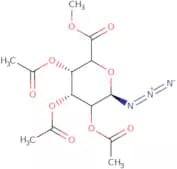
CAS:<p>n-Octyl β-D-maltoside (OBM) is a fatty acid that is used as a sample preparation agent. OBM is chemically stable and has been shown to be non-carcinogenic in mammalian tissue. The structural analysis of OBM revealed that the molecule contains two nitrogen atoms, one on each end. In addition, OBM binds to antimicrobial peptides and inhibits their activity by preventing them from binding to their target site on the bacterial membrane. OBM also has anti-cancer properties due to its ability to prevent the proliferation of cervical cancer cells.</p>Formula:C20H38O11Purity:Min. 98 Area-%Color and Shape:White PowderMolecular weight:454.51 g/molMethyl 2,3,4-tri-O-acetyl-b-D-glucopyranuronosyl azide
CAS:<p>Methyl 2,3,4-tri-O-acetyl-b-D-glucopyranuronosyl azide is a fluorinated carbohydrate. It is a monosaccharide and an oligosaccharide that is synthesized from a synthetic glycosylation reaction. This product can be used in the production of polysaccharides or as a click modification to modify the sugar moiety of other molecules. Methyl 2,3,4-tri-O-acetyl-b-D-glucopyranuronosyl azide has CAS No. 67776-38-9 and is available in high purity.</p>Formula:C13H17N3O9Purity:(%) Min. 98%Color and Shape:White PowderMolecular weight:359.29 g/molEthyl 2,3,4-tri-O-benzyl-β-L-thiofucopyranoside
CAS:<p>Ethyl 2,3,4-tri-O-benzyl-beta-L-thiofucopyranoside is a sugar that is used in the synthesis of complex carbohydrates. It can be custom synthesized to meet your specifications. Ethyl 2,3,4-tri-O-benzyl-beta-L-thiofucopyranoside is a monosaccharide that has been fluorinated and methylated. The CAS number for this compound is 99409-34-4.</p>Formula:C29H34O4SPurity:Min. 98 Area-%Molecular weight:478.64 g/molD-Mannose-6-O-sulphate sodium salt
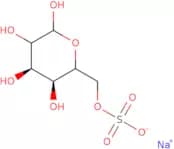
CAS:<p>D-Mannose-6-O-sulphate sodium salt (DMS) is a synthetic sugar that is used in the preparation of biopolymers. It is a complex carbohydrate that is composed of both saccharide and phosphate groups. DMS has been modified to contain methyl groups, which can be used for click chemistry reactions. The CAS number for this compound is 204575-08-6. DMS has been shown to be useful as a fluorination reagent. It has also been synthesized using click chemistry, which allows it to be incorporated into polymers and other organic compounds.</p>Formula:C6H11O9SNaPurity:Min. 95%Color and Shape:PowderMolecular weight:282.2 g/mol2,3-O-Isopropylidene-2-C-methyl-D-ribono-1,4-lactone
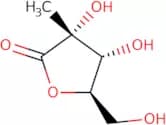
CAS:<p>2,3-O-Isopropylidene-2-C-methyl-D-ribono-1,4-lactone is a crystalline compound that is obtained by the reaction of dimethylamine with epichlorohydrin. The compound has an asymmetric carbon atom and exists in two enantiomeric forms. It can be used as an acceptor in crystallographic analysis. The chemical structure of 2,3-O-Isopropylidene-2-C-methyl-D-ribono-1,4 -lactone is a lactone form of episulfide. Episulfides are lactones with episulfide groups attached to the C2 and C3 positions on the D ring. The episulfide group is formed by the reaction between the alcohol and sulfhydryl group from cysteamine with sulfur trioxide. The chemical formula for this compound is C13H20N2O8S</p>Formula:C9H14O5Purity:Min. 95%Color and Shape:PowderMolecular weight:202.2 g/mol(2R,3R,4S,5S)- 2-[(1R)-1,2-Dihydroxyethyl]-3,4-dihydroxy-1-oxa-6,9-diazaspiro[4.5]decane-7,10-dione
<p>(2R,3R,4S,5S)-2-[(1R)-1,2-Dihydroxyethyl]-3,4-dihydroxy-1-oxa-6,9-diazaspiro[4.5]decane-7,10-dione is a glycosylation agent that can be used in organic synthesis. This compound has been shown to have complex carbohydrate and methylation properties. It is also fluorinated and saccharide modified. (2R,3R,4S,5S)-2-[(1R)-1,2-Dihydroxyethyl]-3,4-dihydroxy-1-oxa-6,9-diazaspiro[4.5]decane-7,10-dione is a custom synthesized product with a CAS number of 17098094.</p>Purity:Min. 95%Ethyl 2,3-di-O-benzoyl-4,6-O-benzylidene-b-D-thiogalactopyranoside - non-animal origin
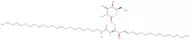
CAS:<p>Ethyl 2,3-di-O-benzoyl-4,6-O-benzylidene-b-D-thiogalactopyranoside - non animal origin is a custom synthesis that is modified to include fluorination and methylation. This product is also an oligosaccharide or saccharide with a complex carbohydrate. The CAS No. for this product is 56119-30-3.</p>Purity:Min. 95%Cerebrosides - Mixture of hydroxy and non-hydroxy fatty acid
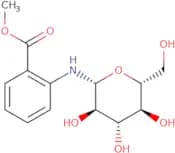
CAS:<p>Cerebrosides are complex carbohydrates that are synthesized by the modification of glycosylations, methylations, or fluorination of sugar molecules. They are used in the synthesis of polysaccharides and as a substitute for natural glycosphingolipids. Cerebrosides are also known to be involved in the synthesis of neuronal lipids, such as myelin and phosphatidylserine.</p>Formula:C48H93NO9Purity:Min. 95%Color and Shape:PowderMolecular weight:828.25 g/molMethylanthranilate glucoside
CAS:<p>Methylanthranilate glucoside is a carbohydrate that is custom synthesized to order. It is a synthetic, high purity, methylated, glycosylated, and click-modified oligosaccharide. This product has CAS No. 1875079-80-3 and can be used in medical research for the identification of saccharides or glycans with a specific modification pattern.</p>Formula:C14H19NO7Purity:Min. 95%Color and Shape:PowderMolecular weight:313.3 g/mol2,3,5-Tri-O-benzoyl-2- C- methyl- D- arabinonic acid γ-lactone
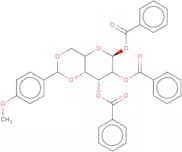
<p>2,3,5-Tri-O-benzoyl-2- C- methyl- D- arabinonic acid gamma-lactone is a modification of an oligosaccharide. It is synthesized by the benzoylation of 2,3,5-trihydroxybenzoic acid with methyl iodide and sodium carbonate in acetic acid. The product is purified by recrystallization from methanol and water to yield a white crystalline solid.<br>The chemical formula for 2,3,5-tri-O-benzoyl-2- C- methyl--D--arabinonic acid gamma lactone is C14H16O8. The molecular weight of the compound is 478.26 g/mol</p>Purity:Min. 95%1,2,3-Tri-O-benzoyl-4,6-O-(4-methoxybenzylidene)-b-D-glucopyranose
<p>1,2,3-Tri-O-benzoyl-4,6-O-(4-methoxybenzylidene)-b-D-glucopyranose is a carbohydrate that has been modified with fluorine atoms. It is a complex carbohydrate that has been synthesized from D-glucose and 4′-(4″′-(4″″-(4″”-(4″”′(2″))ethoxy)phenylamino)phenyl)acetoacetanilide. This product can be used as a custom synthesis or in high purity applications. It is highly pure and has been methylated and glycosylated. This product also contains click modification.</p>Formula:C35H30O10Purity:Min. 95%Molecular weight:610.61 g/mol2-Amino-2-deoxy-D-fucose
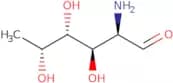
CAS:<p>2-Amino-2-deoxy-D-fucose is a sugar molecule that is found in the cell wall of bacteria, including Staphylococcus aureus. It may be used to treat microbial infections by binding to bacterial cell walls and causing them to lose their ability to adhere to host cells. This sugar molecule may also be effective against Pseudomonas aeruginosa. 2-Amino-2-deoxy-D-fucose has been shown to inhibit the growth of P. aeruginosa in vitro by inhibiting the synthesis of fatty acids and increasing the production of hydrogen fluoride, which leads to cell death.</p>Formula:C6H13NO4Purity:Min. 95%Molecular weight:163.17 g/molEthyl 2-acetamido-2-deoxy-β-D-thioglucopyranoside
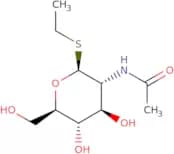
CAS:<p>Ethyl 2-acetamido-2-deoxy-b-D-thioglucopyranoside is a sugar that is used in the synthesis of glycosylates. It has been shown to be modified by Click chemistry, which allows for the introduction of fluorine atoms onto the sugar molecule. This compound can also be modified with methyl groups, which are added to the hydroxyl group on C2. Ethyl 2-acetamido-2-deoxy-b-D-thioglucopyranoside is an oligosaccharide that can be used as a building block for polysaccharides and saccharides. This product is typically used in high purity and in custom synthesis.</p>Formula:C10H19NO5SPurity:Min. 95%Color and Shape:White To Off-White SolidMolecular weight:265.33 g/molD-Mannose-BSA
<p>D-Mannose-BSA is a receptor protein that is endogenous and found in the extracellular fluid. It has been shown to bind to the CD18 receptor on leukocytes and macrophages, which can be used as a diagnostic tool for identifying depression. D-Mannose-BSA has also been shown to bind to mouse macrophages, which may be due to its high affinity for the Fc receptors on these cells. D-Mannose-BSA binds to membranes of biotinylated cells and can be used as a ligand for immunoprecipitation. Antiserum against D-mannose is specific for polymorphonuclear neutrophils (PMN) and monocytes, but not lymphocytes or eosinophils. It can be used postoperatively as an adjunct therapy in wound healing.</p>Color and Shape:PowderLinamarin
CAS:<p>Cyanogenic glycoside</p>Formula:C10H17NO6Purity:Min. 97 Area-%Color and Shape:White PowderMolecular weight:247.25 g/mol1,2,3,4-Tetra-O-acetyl-b-D-glucuronide
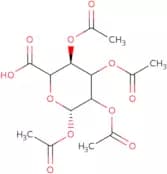
CAS:<p>1,2,3,4-Tetra-O-acetyl-b-D-glucuronide is a chemical compound that is used as an acetylating agent in organic synthesis. It is produced by the reaction of pyridine and acetic anhydride with sodium hydroxide as a catalyst. The acetylation process takes place in two steps: first, the pyridine reacts with the acetic anhydride to form 4-(pyridinium) acetate; second, this intermediate reacts with sodium hydroxide to form 1,2,3,4-tetra-O-acetyl-b-D-glucuronide. Acetylation reactions are important because they can be used to introduce functional groups onto molecules that would not otherwise have them. Acetylated compounds are also often more soluble in water than nonacetylated compounds. This product is used in medicines and other chemical processes.</p>Formula:C14H18O11Purity:Min. 95 Area-%Color and Shape:White Clear LiquidMolecular weight:362.29 g/mol3,4,6-Tri-O-acetyl-2-deoxy-2-fluoro-D-mannopyranosyl fluoride
CAS:<p>3,4,6-Tri-O-acetyl-2-deoxy-2-fluoro-D-mannopyranosyl fluoride is an Oligosaccharide that can be used for Glycosylation. It's a sugar that is Synthetic and Fluorinated. This product has Custom synthesis and Methylation. It is a Monosaccharide and Polysaccharide. It is a saccharide that has been Click modified and it has a high purity of 99%. 3,4,6-Tri-O-acetyl-2-deoxy-2-fluoro-D-mannopyranosyl fluoride is CAS No. 29209981.</p>Formula:C12H16F2O7Purity:Min. 95%Color and Shape:PowderMolecular weight:310.25 g/mol2-C-Methyl- 2, 3- O-isopropylidene)-D- ribofuranose
<p>2-C-Methyl-2,3-O-isopropylidene)-D-ribofuranose is a custom synthesis modified with fluorine and methyl groups. It is an oligosaccharide that can be used to synthesize saccharides. This compound has shown potential for use in the treatment of cancer. 2-C-Methyl-2,3-O-isopropylidene)-D-ribofuranose is a monosaccharide that is synthesized from D Ribose and Methyl Acetate in the presence of sodium bicarbonate and hydrochloric acid.</p>Purity:Min. 95%1,6:2,3-Dianhydro-4-O-(2,3-di-O-benzyl-b-D-glucopyranosyl)-b-D-mannopyranose
<p>This compound is a sugar molecule that is used in the synthesis of complex carbohydrates. It can be custom synthesized to have a desired purity and monomer content. It is also an intermediate for the synthesis of other saccharides. This compound is fluorinated at the 6-position and glycosylated at the 2-position, which makes it water soluble. The CAS number for this compound is 58427-42-6.</p>Formula:C26H30O9Purity:Min. 95%Molecular weight:486.51 g/mol2,5-Anhydro-3-deoxy-6-O-methyl-4-O-tert.butyldimethylsilyl-L-arabino-hexonic acid methyl ester
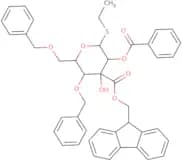
<p>2,5-Anhydro-3-deoxy-6-O-methyl-4-O-tert.butyldimethylsilyl-L-arabinohexonic acid methyl ester (2,5Anh3DMA) is a custom synthesis that is used as an intermediate for the preparation of oligosaccharides and polysaccharides. This compound has a CAS number of 51357-61-1 and is soluble in water. 2,5Anh3DMA can be modified with different groups such as methylation, glycosylation, or fluorination to produce desired products. It can be synthesized by the click reaction between an acetaldehyde and a silyl enolate.</p>Purity:Min. 95%Ethyl 2-O-benzoyl-4,6-di-O-benzyl-3-Fmoc-b-D-thiogalactopyranoside
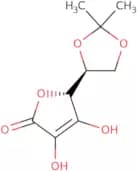
CAS:<p>Ethyl 2-O-benzoyl-4,6-di-O-benzyl-3-Fmoc-b-D-thiogalactopyranoside is a synthetic monosaccharide with a benzoyl protecting group. It belongs to the class of saccharides and is used in the synthesis of oligosaccharides, which are carbohydrates consisting of two or more simple sugars. The chemical name for this compound is 3-(2'-benzoyloxy)-2'-deoxygalactose. This product can be custom ordered in high purity and has been modified with methylation and glycosylation.</p>Purity:Min. 95%5,6-O-Isopropylidene-L-ascorbic acid
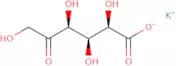
CAS:<p>5,6-O-Isopropylidene-L-ascorbic acid is an access to the vitamin C molecule. It can be synthesized from L-ascorbic acid by reacting with isopropyl iodide and hydrochloric acid. Cryo-electron microscopy has been used to identify the location of 5,6-O-Isopropylidene-L-ascorbic acid in human ganglion cells. This compound has a number of physiological activities and is one of the most powerful antioxidants found in humans. 5,6-O-Isopropylidene-L-ascorbic acid is a precursor to retinoic acid and hydrogen chloride, which are important for erythropoietin production in the kidneys. Dehydroascorbate (DHA) is formed when 5,6-O-Isopropylidene-L-ascorbic acid reacts with hydrogen chloride. D</p>Formula:C9H12O6Purity:Min. 95%Molecular weight:216.19 g/mol5-Keto-D-gluconic acid potassium salt
CAS:<p>Intermediate in L-idonate degradation and ketogluconate metabolism</p>Formula:C6H9KO7Purity:Min. 99.0%Color and Shape:White PowderMolecular weight:232.23 g/mol1,2:5,6-Di-O-isopropylidene-α-D-gulofuranose
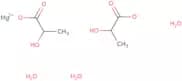
CAS:<p>1,2:5,6-Di-O-isopropylidene-alpha-D-gulofuranose is a sugar molecule that has a carbon and oxygen atoms in the 1,2 positions and an oxygen atom in the 5,6 position. It is an intermediate in the synthesis of lipids. The kinetic and clinical relevance of this compound have not been fully studied. 1,2:5,6-Di-O-isopropylidene-alpha-D-gulofuranose binds to fatty acid receptors on liver cells and initiates a cascade of events that lead to inflammation and cell death. This sugar molecule also inhibits hepatitis C virus RNA replication by binding to specific sequences on the virus’s RNA genome. The molecular interactions between 1,2:5,6-Di-O-isopropylidene alpha D gulofuranose and other molecules are determined by steric interactions with its hydroxyl group as</p>Formula:C12H20O6Purity:Min. 98.0 Area-%Molecular weight:260.28 g/molMagnesium L-lactate
CAS:<p>Magnesium L-lactate is a form of magnesium that is found in the human body, and it is often used to treat women with depressive disorders. This drug works by reducing the synthesis of cholesterol and increasing the level of serotonin in the brain. Magnesium L-lactate is not readily absorbed by the body, so it has low bioavailability. It also has an adverse effect on heart rate and cardiac rhythm, so people who have these conditions should avoid using this drug. The particle size of this drug is high, which can lead to low bioavailability.</p>Formula:C6H10MgO6Purity:Min. 95%Molecular weight:202.45 g/mol2,3,4,6-Tetra-O-acetyl-D-mannopyranosyl fluoride
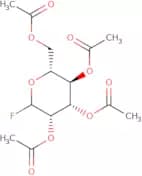
CAS:<p>2,3,4,6-Tetra-O-acetyl-D-mannopyranosyl fluoride is a methylated, fluorinated oligosaccharide. It is a custom synthesis and can be used as a monosaccharide to modify polysaccharides or saccharides. The modification of the sugar with 2,3,4,6-Tetra-O-acetyl-D-mannopyranosyl fluoride increases the water solubility of the complex carbohydrate and its ability to be synthesized into other compounds. This product is high purity and has been modified with fluorine for better stability.</p>Formula:C14H19FO9Purity:Min. 95%Molecular weight:350.29 g/mol4-Methoxyphenyl 4-O-(b-D-galactopyranosyl)-b-D-glucopyranoside
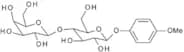
CAS:<p>4-Methoxyphenyl 4-O-(b-D-galactopyranosyl)-b-D-glucopyranoside is a carbohydrate with the CAS number 150412-80-9. It is an Oligosaccharide that is synthesized from monosaccharides and saccharides. This product can be custom synthesized to produce high purity, methylated, glycosylated and fluorinated products. There are many modifications that can be made to this carbohydrate using Click chemistry.</p>Formula:C19H28O12Purity:Min. 95%Color and Shape:PowderMolecular weight:448.42 g/molMethyl 3-O-benzyl-D-glucopyranoside
CAS:<p>Methyl 3-O-benzyl-D-glucopyranoside is a custom synthesis. It is a complex carbohydrate that is an oligosaccharide, polysaccharide, and modified saccharide. Methyl 3-O-benzyl-D-glucopyranoside can be synthesized from glucose with the use of methylation, glycosylation, or carbonylation reactions. The product has been fluorinated to yield a high purity product. This product can be used for click modifications or sugar chemistry experiments.</p>Purity:Min. 95%D-Glucuronic acid methyl ester
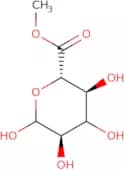
CAS:<p>D-Glucuronic acid methyl ester is an acidic, carbohydrate-binding molecule. It has been shown to bind to sugar residues in proteins and form covalent linkages with ester linkages. D-Glucuronic acid methyl ester has also been shown to be effective for the treatment of pentosan polysulfate sodium (PPS) induced inflammation in animal models. D-Glucuronic acid methyl ester binds to the monoclonal antibodies that are used for structural analysis of glycosidic bonds and oligosaccharides. The hydroxyl group on the molecule can form hydrogen bonds with other molecules, which may explain its usefulness as a magnetic resonance spectroscopy probe.</p>Formula:C7H12O7Purity:Min. 90 Area-%Color and Shape:Yellow PowderMolecular weight:208.17 g/molNeoagarotetraose
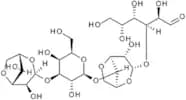
CAS:<p>Agarose is a polysaccharide found in red algae, typically Gelidium and Gracilaria. It is a strictly alternating polysaccharide of α-1,3 linked D-galactose and β-1,4 linked L-3,6 anhydrogalactose with occasional sulfation at position 6 of the anhydrogalactose residue. Agaro-oligosaccharides result from cleavage at galactose residues and neoagaro-oligosaccharides from cleavage at 3,6-anhydro residues. Neoagarotetraose is reported to have potential for novel cosmeceuticals.</p>Formula:C24H38O19Purity:Min. 98 Area-%Color and Shape:White PowderMolecular weight:630.55 g/mol1, 4:3, 6- Dianhydro-D- iditol
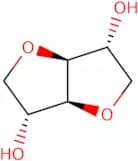
CAS:<p>1,4:3,6-Dianhydro-D-iditol is an organic compound. It is the L-enantiomer of 1,4:3,6-dianhydro-L-iditol. This compound can be used as a substrate for the cytochrome P450 system and soluble guanylate cyclase. 1,4:3,6-Dianhydro-D-iditol has been shown to have an inhibitory effect on both tissues and guanylate cyclase in vitro. This compound also inhibits the production of reactive oxygen species by oxidases.</p>Formula:C6H10O4Purity:Min. 95%Molecular weight:146.14 g/molmyo-Inositol 1,2,4,5,6-pentakisphosphate
<p>Myo-inositol 1,2,4,5,6-pentakisphosphate (IP) is a phosphate of inositol that is found in the cytosol. It is an important component of polyphosphates and can be used for oxygen transport. It has been shown to inhibit the growth of cancer cells by binding to monoclonal antibodies that are targeted against CD20 and CD22 on cancer cells. IP also inhibits the activity of kinases and phosphatases in mammalian cells. This may be due to the inhibition of cytokine release from macrophages treated with IL-1β. Inositol phosphates are involved in many cellular responses including platelet-derived growth factor activation, cell proliferation, and protein synthesis.</p>Formula:C6H17O21P5Purity:Min. 95%Molecular weight:580.06 g/mol





![N- [(Phenylmethoxy) carbonyl] glycylglycyl- 2- amino- 2- deoxy-a- D- manno- 2- heptulofuranosonic …](/_next/image/?url=https%3A%2Fstatic.cymitquimica.com%2Fproducts%2F3D%2Fthumb-webp%2FMP163942.webp&w=3840&q=75)

![(2R,3R,4S,5S)- 2-[(1R)-1,2-Dihydroxyethyl]-3,4-dihydroxy-1-oxa-6,9-diazaspiro[4.5]decane-7,10-dione](/_next/image/?url=https%3A%2Fstatic.cymitquimica.com%2Fproducts%2F3D%2Fthumb-webp%2FMD163941.webp&w=3840&q=75)