Glycoscience
Glycoscience is the study of carbohydrates and their derivatives, as well as the interactions and biological functions they participate in. This field of research is crucial for understanding a wide variety of biological processes, including cell recognition, signaling, immune response, and disease development. Glycoscience has important applications in biotechnology, medicine, and the development of new drugs and therapies. At CymitQuimica, we offer a wide selection of high-quality, high-purity products for glycoscience research. Our catalog includes monosaccharides, oligosaccharides, polysaccharides, glycoconjugates, and specific reagents, designed to support researchers in their studies on the structure, function, and applications of carbohydrates in biological systems. These resources are intended to facilitate scientific discoveries and practical applications in various areas of bioscience and medicine.
Subcategories of "Glycoscience"
- Aminosugars(108 products)
- Glyco-Related Antibodies(282 products)
- Glycolipids(46 products)
- Glycosaminoglycans (GAGs)(55 products)
- Glycosides(419 products)
- Monosaccharides(6,622 products)
- Oligosaccharides(3,682 products)
- Polysaccharides(503 products)
Found 11041 products of "Glycoscience"
Sort by
Purity (%)
0
100
|
0
|
50
|
90
|
95
|
100
Penta-O-acetyl-a-L-idopyranose
CAS:<p>Penta-O-acetyl-a-L-idopyranose is a monosaccharide that is synthesized from D-glucose and acetic anhydride. It has been modified with methylation, fluorination, and saccharide modification. Penta-O-acetyl-a-L-idopyranose is soluble in water, methanol, ethanol, and acetone. This compound has been shown to be useful for glycosylation reactions as well as click chemistry. CAS No. 16299-15-3.</p>Formula:C16H22O11Purity:Min. 95%Color and Shape:PowderMolecular weight:390.34 g/mol3-Deoxy-3-fluoro-D-fructose
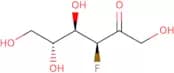
CAS:<p>3-Deoxy-3-fluoro-D-fructose is a monosaccharide that has been used as an inhibitor of glucose uptake and metabolism in the lymphocytic leukemia cell line. This compound has been shown to inhibit the glucose transporter GLUT1, which is responsible for the transport of glucose across the plasma membrane. 3-Deoxy-3-fluoro-D-fructose inhibits cancer cells by inhibiting galactitol production through inhibition of gluconeogenesis. It also inhibits oxidative phosphorylation in lymphocytic leukemia cells, leading to apoptosis. 3-Deoxy-3-fluoro-D-fructose has been shown to inhibit cancer growth by blocking glucose uptake in xenopus oocytes.</p>Purity:Min. 95%Glufosfamide
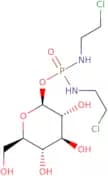
CAS:<p>Glufosfamide is a cytotoxic drug that is used in the treatment of some types of cancer. It is a prodrug that requires conversion to its active form, glufosfamid, by esterase enzymes before it can exert its genotoxic effects. Glufosfamide has shown to be active against platinum-resistant ovarian cancer and solid tumours. This drug also has been shown to inhibit the growth of prostate cancer cells and miapaca-2 cells, which are derived from pancreatic cancer. Glufosfamide has been found to have low toxicity in mice, but there may be adverse reactions when combined with other drugs such as erythromycin or ketoconazole.</p>Formula:C10H21Cl2N2O7PPurity:Min. 95%Molecular weight:383.16 g/mol6-a-D-Glucopyranosylmaltotriose tetradecaacetate
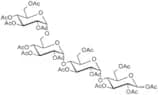
CAS:<p>6-a-D-Glucopyranosylmaltotriose tetradecaacetate is a synthetic carbohydrate that is used as a building block for the synthesis of complex carbohydrates. It is synthesized from maltotriose by glycosylation with 6-a-D-glucopyranose and subsequent enzymatic hydrolysis. 6-a-D-Glucopyranosylmaltotriose tetradecaacetate has been shown to be resistant to modification of its methyl groups, which makes it an ideal candidate for custom synthesis. This compound has been shown to be stable under physiological conditions, which makes it ideal for use in biomedical applications.<br>6-a-D-Glucopyranosylmaltotriose tetradecaacetate can be used in the synthesis of oligosaccharides or polysaccharides due to its high purity, which is comparable to that of dext</p>Formula:C52H70O35Purity:Min. 95%Molecular weight:1,255.09 g/mol2,3:4,5-Di-O-isopropylidene-b-D-fructopyranose-D12
Controlled Product<p>2,3:4,5-Di-O-isopropylidene-b-D-fructopyranose (2,3:4,5-di-OIPF) is a synthetic sugar that has been fluorinated and methylated. 2,3:4,5-Di-OIPF can be used as a building block for the synthesis of oligosaccharides or polysaccharides. It can also be modified with an acetal group to form an acetal sugar.</p>Formula:C12H8D12O6Purity:Min. 95%Molecular weight:272.35 g/molMan5GlcNAc
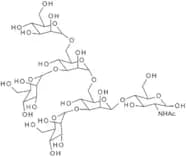
CAS:<p>Man5GlcNAc is a glycoprotein that is expressed in the Golgi apparatus of mammalian cells. It is cleaved by alpha-mannosidase II and alpha-mannosidase I, which are enzymes located in the golgi apparatus. Man5GlcNAc has been shown to be an effective glp-1 analogue, which is a hormone that stimulates insulin secretion. This protein has also been shown to have structural similarities to high mannose type oligosaccharides, which are found on the surface of some bacteria. The protein may also act as a signal peptide for proteins that are exported from the golgi to the cell membrane.</p>Formula:C38H65NO31Purity:Min. 95%Color and Shape:PowderMolecular weight:1,031.91 g/molIsorhamnetin 3-sophoroside-7-rhamnoside
CAS:<p>Isorhamnetin 3-sophoroside-7-rhamnoside is a homogeneous catalyst that has been used in the synthesis of nanoparticles. The catalytic activity of this compound was found to be high, with a reported turnover frequency of up to 5 million turnovers per minute. The Suzuki coupling reaction was used to synthesize nanoparticles by reacting an organic acid with an aryl halide or metal salt. Isorhamnetin 3-sophoroside-7-rhamnoside was one of the catalysts in this process and was shown to have a high yield when combined with palladium. This synthetic method also eliminates the need for organic solvents, which can be toxic and expensive.>>END>></p>Purity:Min. 95%6-O-tert-Butyldimethylsilyl-3,4-O-isopropylidene-D-galactal
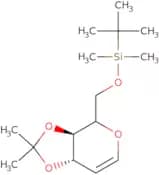
CAS:<p>6-O-tert-Butyldimethylsilyl-3,4-O-isopropylidene-D-galactal is a synthetic carbohydrate that can be used as a building block for preparing complex carbohydrates. It is an analog of D-galactal, which has been shown to have antiviral activity. 6-O-tert-Butyldimethylsilyl-3,4-O-isopropylidene-D-galactal can be used in the synthesis of oligosaccharides and glycosylations.</p>Formula:C15H28O4SiPurity:Min. 95%Molecular weight:300.47 g/mol1,3,4-Tri-O-benzoyl-2-deoxy-b-D-ribopyranose
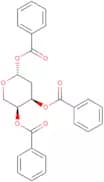
CAS:<p>1,3,4-Tri-O-benzoyl-2-deoxy-b-D-ribopyranose is a synthetic sugar that is used as a methylation substrate for the synthesis of polysaccharides. It is a white solid that can be dissolved in water and organic solvents. This product has been shown to have good reactivity with various polysaccharide templates, including glycosylation and glycosyltransferase.</p>Formula:C26H22O7Purity:Min. 95%Molecular weight:446.45 g/mol1-O-Benzyl-2,3-O-isopropylidene-6-O-tosyl-a-L-sorbofuranoside
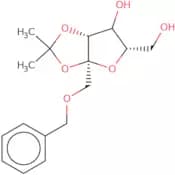
CAS:<p>1-O-Benzyl-2,3-O-isopropylidene-6-O-tosyl-a-L-sorbofuranoside is a modification of the carbohydrate sialic acid. It is synthesized by the methylation and glycosylation of 1,2,3,4,6-pentaacetoxycyclohexane with 2,3,4,6-tetraacetoxybenzaldehyde in the presence of a base. The product is then converted to the corresponding 1-(1'-benzyl)-2-(2',3' or 4'-isopropylidene)-6-(1'-tosyl) derivative with sodium methoxide in methanol. This compound has been used as an intermediate for polysaccharides and sugars.</p>Formula:C23H28O8SPurity:Min. 95%Molecular weight:464.53 g/molD-myo-Inositol-1,3,4,5-tetraphosphate sodium salt
CAS:<p>D-Myo-Inositol-1,3,4,5-tetraphosphate sodium salt (DMIPS) is a naturally occurring form of inositol that has been shown to lower the glycaemic index of foods and increase the absorption of carbohydrates. DMIPS is a chromatographic method for quantifying phytate in food. Phytate is an anion that binds to dietary minerals such as iron and zinc and prevents their absorption. DMIPS can be used to reduce the level of phytate in food by adding it to the meal before cooking or boiling. The use of DMIPS in combination with phytase has been shown to be beneficial for those who are suffering from diabetes and nutrient deficiencies, such as those who have undergone gastric bypass surgery.</p>Formula:C6H8O18P4·8NaPurity:Min. 95%Molecular weight:675.93 g/molHeparin derived dp16 saccharide ammonium salt
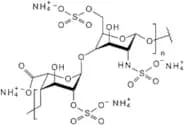
<p>Heparin derived dp16 saccharide ammonium salt is a synthetic oligosaccharide with a molecular weight of approximately 16,000 Da. The compound is an amine-modified heparin sulfate fragment containing 16 saccharides linked in a linear fashion. It has been used for the click modification of proteins, and as a carbohydrate receptor in glycosylation studies. Heparin derived dp16 saccharide ammonium salt can also be custom synthesized to meet specific needs. Click modification and fluorination are two modifications that have been applied to the compound for various purposes.</p>Purity:Min. 95%Color and Shape:PowderFA2G1 N-Glycan
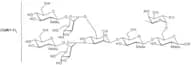
CAS:<p>FA2G1 N-glycan is a custom synthesis that can be modified with fluorination, methylation and click modification. It is a monosaccharide that belongs to the group of saccharides and polysaccharides. Carbohydrates are complex carbohydrates. This glycoprotein is synthesized by the addition of a sugar to an amino acid.</p>Formula:C62H104N4O45Purity:Min. 95%Color and Shape:Solid.Molecular weight:1,625.49 g/molk-Carraheptaose tetrasulfate tetrasodium salt
<p>k-carrageenan derived heptasaccharide tetrasulfate+(3-6 anhydrogalactose)</p>Formula:C42H62O45S4Na4Purity:Min. 95%Molecular weight:1,507.14 g/mol1,3-Di-O-acetyl-2-deoxy-5-O-benzoyl-L-erythro-pentofuranose
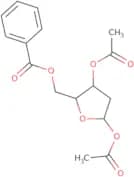
CAS:<p>1,3-Di-O-acetyl-2-deoxy-5-O-benzoyl-L-erythro-pentofuranose is a sugar with a complex carbohydrate structure. It is synthesized by the reaction of 1,3:2,4:5,6:7,8:9,10:11,12:13,14:15,16:17,18:19,20:21 and 22 O acetyl groups with 2 deoxyribose moieties. This product can be used in Click chemistry and glycosylization reactions. The CAS number for this product is 327027-21-4.</p>Formula:C16H18O7Purity:Min. 95%Molecular weight:322.31 g/mol1,2,3,6-Tetra-O-pivaloyl-a-D-galactofuranoside
CAS:<p>Tetra-O-pivaloyl-a-D-galactofuranoside is a carbohydrate that belongs to the group of saccharides and oligosaccharides. It is a synthetic sugar that can be custom synthesized and modified through fluorination, methylation, glycosylation, or click chemistry. Tetra-O-pivaloyl-a-D-galactofuranoside has been shown to inhibit the growth of bacteria in vitro.</p>Formula:C26H44O10Purity:Min. 95%Molecular weight:516.62 g/molGlcNPhth[346Ac]b(1-3)Gal[246Bn]-b-MP
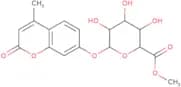
<p>GlcNPhth[346Ac]b(1-3)Gal[246Bn]-b-MP is a complex carbohydrate that is derivatized with methyl, click, and fluorination. It has been modified with saccharides, oligosaccharides, and monosaccharides to create a custom synthesis. This product is available for purchase at the desired purity level. GlcNPhth[346Ac]b(1-3)Gal[246Bn]-b-MP is Glycosylated, Methylated, Clicked, Polysaccharide Fluorinated Saccharide Modified with Oligosaccharide Synthetic CAS No Monosaccharide Custom Synthesis High Purity.</p>Formula:C54H55NO16Purity:Min. 95%Molecular weight:974.01 g/mol4-Methylumbelliferyl α-L-idopyranosiduronic acid methyl ester
CAS:<p>Please enquire for more information about 4-Methylumbelliferyl α-L-idopyranosiduronic acid methyl ester including the price, delivery time and more detailed product information at the technical inquiry form on this page</p>Formula:C17H18O9Purity:Min. 95%Molecular weight:366.3 g/mol1,2,4,6-Tetra-O-acetyl-3-deoxy-D-glucopyranose
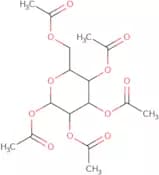
CAS:<p>1,2,4,6-Tetra-O-acetyl-3-deoxy-D-glucopyranose is a compound that can inhibit the activity of the NOD1 and NOD2 receptors. It has been shown to be active against bone marrow macrophages and can be used as a potential treatment for inflammatory disorders. 1,2,4,6-Tetra-O-acetyl-3-deoxy-D-glucopyranose binds to the conformation of the NOD1 and NOD2 receptors in an uncompetitive manner. This binding prevents phosphorylation of the receptor and results in reduced NFkappaB activation.</p>Formula:C14H20O9Purity:Min. 95%Molecular weight:332.3 g/mol





![GlcNPhth[346Ac]b(1-3)Gal[246Bn]-b-MP](/_next/image/?url=https%3A%2Fstatic.cymitquimica.com%2Fproducts%2F3D%2Fthumb-webp%2FOG60594.webp&w=3840&q=75)