Glycoscience
Glycoscience is the study of carbohydrates and their derivatives, as well as the interactions and biological functions they participate in. This field of research is crucial for understanding a wide variety of biological processes, including cell recognition, signaling, immune response, and disease development. Glycoscience has important applications in biotechnology, medicine, and the development of new drugs and therapies. At CymitQuimica, we offer a wide selection of high-quality, high-purity products for glycoscience research. Our catalog includes monosaccharides, oligosaccharides, polysaccharides, glycoconjugates, and specific reagents, designed to support researchers in their studies on the structure, function, and applications of carbohydrates in biological systems. These resources are intended to facilitate scientific discoveries and practical applications in various areas of bioscience and medicine.
Subcategories of "Glycoscience"
- Aminosugars(108 products)
- Glyco-Related Antibodies(282 products)
- Glycolipids(46 products)
- Glycosaminoglycans (GAGs)(55 products)
- Glycosides(419 products)
- Monosaccharides(6,622 products)
- Oligosaccharides(3,682 products)
- Polysaccharides(503 products)
Found 11041 products of "Glycoscience"
Sort by
Purity (%)
0
100
|
0
|
50
|
90
|
95
|
100
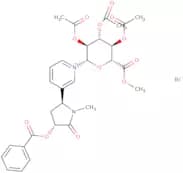
trans-3'-Benzoyloxy cotinine 2,3,4-tri-O-acetyl-N-b-D-glucuronide methyl ester bromide
CAS:<p>Cotinine is a toxic alkaloid found in tobacco, which is used in the synthesis of a variety of drugs and other substances. Cotinine is used to prepare a range of modified and unmodified oligosaccharides, complex carbohydrates and polysaccharides. It can be synthesized by combining 3-benzoyloxy cotinine with glycosylation, methylation, or fluorination. The chemical structure of cotinine consists of a complex carbohydrate that contains an acidic sugar. Cotinine bromide can be used for the synthesis of saccharides with various chemical modifications.</p>Formula:C30H33BrN2O12Purity:Min. 95%Molecular weight:693.49 g/molClerosterol glucoside
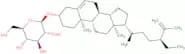
CAS:<p>Leaves are a part of the vascular system of a plant. They are typically large, flattened, and have parallel veins. Leaves can be either simple or compound. The leaves of most plants have serrated edges and a single vein or rib that runs along the center of each leaf.</p>Purity:Min. 95%A2 N-Glycan
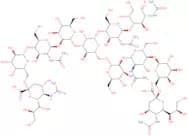
CAS:<p>A2 N-glycan is a complex carbohydrate that is found in invertebrates and mammals. The A2 N-glycan was found to be the most abundant of all glycoproteins in invertebrates, with a relative abundance of over 50%. It has been shown that the A2 N-glycan can be modified by covalent linking to proteins, differentiating it from other glycans. These modifications may have an effect on the structural stability of the molecule and its susceptibility to environmental degradation. The A2 N-glycan also plays an important role in immunity, as it is immunogenic and can stimulate antibody production. This carbohydrate is uniquely found in humans, which suggests that it may have some importance in human physiology.</p>Formula:C84H138N6O62Purity:Min. 95%Color and Shape:SolidMolecular weight:2,224 g/molPhenyl 2,3,4-tri-O-methyl-a-L-thiorhamnopyranoside
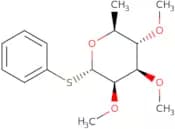
CAS:<p>Phenyl 2,3,4-tri-O-methyl-a-L-thiorhamnopyranoside is a custom synthesis. It is an Oligosaccharide, Polysaccharide, saccharide, Carbohydrate that is Fluorinated and has a high purity. Phenyl 2,3,4-tri-O-methyl-a-L-thiorhamnopyranoside is also Modification and has Monosaccharides as well as sugar. It was synthetically made in the lab.</p>Formula:C15H22O4SPurity:Min. 95%Color and Shape:White solid.Molecular weight:298.4 g/molMethyl a-D-laminarabioside heptaacetate
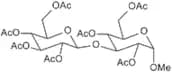
CAS:<p>Methyl a-D-Lamarabioside heptaacetate is a synthetic, fluorinated monosaccharide derived from the natural compound D-Lamarabioside. It is used as a building block for the synthesis of novel oligosaccharides and glycosylated proteins. This product also has applications in medical research and development, such as for the design of new drugs and vaccines, as well as in biotechnology and chemical engineering. Methyl a-D-laminarabioside heptaacetate is soluble in water with a melting point of 230°C. It can be used to modify proteins with high purity by introducing glycosylation sites. This product is also useful for click chemistry reactions.</p>Formula:C27H38O18Purity:Min. 95%Molecular weight:650.58 g/molBenzyl 2-acetamido-3-O-(2,3,4,6-tetra-O-acetyl-b-D-galactopyranosyl)-2-deoxy-a-D-galactopyranoside
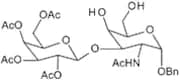
CAS:<p>Benzyl 2-acetamido-3-O-(2,3,4,6-tetra-O-acetyl-b-D-galactopyranosyl)-2-deoxy-a-D-galactopyranoside is a modification of an oligosaccharide. This product is synthesized by custom synthesis and is available in high purity. It has CAS No. 90754-57-7 and a monosaccharide methylation pattern. This product can be used in the synthesis of complex carbohydrates, as well as glycosylation and polysaccharide synthesis. It can also be used as a sugar or fluorination reagent for saccharides.</p>Formula:C29H39NO15Purity:Min. 95%Molecular weight:641.62 g/mol5-O-(5-Amino-5-deoxy-b-D-ribofuranosyl)-1-N-[(S)-4-amino-2-hydroxy-butanoyl]paromamine
<p>5-O-(5-Amino-5-deoxy-b-D-ribofuranosyl)-1-N-[(S)-4-amino-2-hydroxybutanoyl]paromamine is a Glycosylation agent that is used in the synthesis of oligosaccharides and polysaccharides. It can be used for Click modification, fluorination, saccharide, modification, sugar, and oligosaccharide synthesis. This product is CAS No. 51417-97-9 and has purity >99% (HPLC).</p>Purity:Min. 95%1,4-b-D-Cellohexaitol
CAS:<p>1,4-B-D-cellobiohexaitol is a potent inhibitor of cellobiose phosphorylase and has been shown to inhibit the activity of this enzyme in a competitive manner. 1,4-B-D-cellobiohexaitol binds to cellulose and other sugars, which may be related to its toxicity. It is not toxic to animals because they do not have the same sugar binding sites as bacteria. 1,4-B-D-cellobiohexaitol has been shown to be effective against Streptomyces lividans and S. coelicolor. This substance inhibits Streptomyces growth by binding to glucose and galactose present in the cell wall of these organisms.</p>Formula:C36H64O31Purity:Min. 95%Molecular weight:992.87 g/molBenzyl 3-O-(2-acetamido-2-deoxy-b-D-glucopyranosyl)-2-O-benzyl-4,6-O-benzylidene-a-D-mannopyranoside
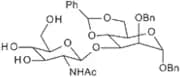
<p>Benzyl 3-O-(2-acetamido-2-deoxy-b-D-glucopyranosyl)-2-O-benzyl-4,6-O-benzylidene-a-D-mannopyranoside is a monosaccharide that is used in the synthesis of glycosylated proteins and peptides. It is a complex carbohydrate with an Oligosaccharide chain. This product has been fluorinated and custom synthesized to be high purity and available for immediate shipping.</p>Formula:C35H41NO11Purity:Min. 95%Molecular weight:651.72 g/mol3,4,6-Tri-O-(tert-butyldimethylsilyl)-D-glucal
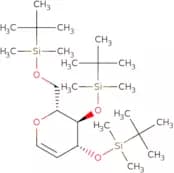
CAS:<p>3,4,6-Tri-O-(tert-butyldimethylsilyl)-D-glucal is a spiroketal that has been synthesized for the first time. It is an antifungal agent that inhibits the growth of fungi by inhibiting the synthesis of glucose in the cell wall. 3,4,6-Tri-O-(tert-butyldimethylsilyl)-D-glucal binds to carbanions and alcohols in the cell membrane by π–π interactions and prevents them from forming new cross links between polysaccharides and proteins. This compound also prevents glucose from being transported into the cell wall. The antifungal properties of 3,4,6-tri-O-(tert-butyldimethylsilyl)-D-glucal are due to its ability to inhibit carbohydrate metabolism in fungi.</p>Formula:C24H52O4Si3Purity:Min. 95%Molecular weight:488.92 g/mola-D-Fucose-1-phosphate
<p>a-D-Fucose-1-phosphate is a complex carbohydrate. It is an Oligosaccharide with CAS No. that can be modified by methylation, glycosylation, or click modification. Carbohydrates are saccharides that can be modified by fluorination or synthesis. a-D-Fucose-1-phosphate has high purity and a custom synthesis can be ordered from the company.</p>Purity:Min. 95%1,2-Dipalmitoyl-3-(N-palmitoyl-6'-amino-6'-deoxy-a-D-glucosyl)-sn-glycerol
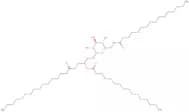
CAS:<p>Dipalmitoyl-3-(N-palmitoyl-6'-amino-6'-deoxy-a-D-glucosyl)-sn-glycerol is a marine glycoglycerolipid that has been shown to have potent inhibitory activity against human and bacterial enzymes. This molecule was synthesized using multistep, stereoselective synthetic methods. It is a lipid molecule with two domains: the first domain is palmitic acid and the second domain is a glycosylated amino acid. The first domain has been shown to inhibit human and bacterial enzyme activity.</p>Formula:C57H109NO10Purity:Min. 95%Molecular weight:968.48 g/mol2-(Benzyloxycarbonylamino)-2-deoxy-D-mannose
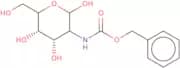
CAS:<p>2-(Benzyloxycarbonylamino)-2-deoxy-D-mannose is a sugar that is linked to other molecules through glycosylation. It is an important component of the complex carbohydrate called glycogen. This product can be used in methylation, click modification, polysaccharide, fluorination and saccharide modification reactions. 2-(Benzyloxycarbonylamino)-2-deoxy-D-mannose has CAS No. 1174233-24-9 and is available in high purity.</p>Formula:C14H19NO7Purity:Min. 95%Molecular weight:313.31 g/molGangliotriose
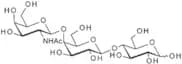
CAS:<p>Gangliotriose is the core trisaccharide structure in gangliosides, such as, GD2 (GalNAcβ1,4Galβ1,4Glc) (Ledeen, 2009). GD2 ganglioside is expressed at a low concentration in the central nervous system, nerves, skin melanocytes and stem cells in healthy adults. On the other hand, GD2 ganglioside is overexpressed in a number of tumors including: neuroblastoma, melanoma, small cell lung carcinoma and brain tumors. Recently, GD2 ganglioside has been found in low concentrations on breast cancer stem cells (CSC) that posess: self-renewal properties (division without disrupting the undifferentiated state), and tumor-initiating capabilities. It has been suggested that GD2 ganglioside may be developed as an effective target antigen for CSC immunotherapy (Fleurence, 2017).</p>Formula:C20H35NO16Purity:90%MinColor and Shape:PowderMolecular weight:545.49 g/molGlobotriose 2-(2-carboxyethylthio)ethane
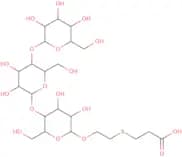
<p>Globo series antigen</p>Formula:C23H40O18SPurity:Min. 95%Molecular weight:636.62 g/mol6-Amino-6-deoxy-D-fructose
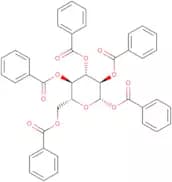
CAS:<p>6-Amino-6-deoxy-D-fructose is a custom synthesis that has a methylation at the C1 position. This product is a modified sugar that has the ability to be used as an intermediate in the synthesis of oligosaccharides, polysaccharides, and saccharides. It can also be used as a substitute for glucose in carbohydrate metabolism studies. 6-Amino-6-deoxy-D-fructose is also suitable for fluorination and complex carbohydrate modification experiments. The purity of this product is high, with no detectable impurities. 6-Amino-6-deoxy-D-fructose is a monosaccharide sugar that can be used in synthetic chemistry applications.</p>Purity:Min. 95%1,2,3,4,6-Penta-O-benzoyl-b-D-glucopyranose
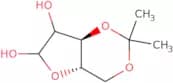
CAS:<p>1,2,3,4,6-Penta-O-benzoyl-b-D-glucopyranose is a synthetic substrate that has been validated for use in heparin assays. It is an inhibitor of the enzyme sulfate protease and can be used to study the role of this enzyme in inflammation. 1,2,3,4,6-Penta-O-benzoyl-b-D-glucopyranose has also been shown to inhibit the activity of neutrophils (a type of white blood cell) and monocytes (a type of white blood cell). This compound has been shown to have antitumor activity as well as antiinflammatory activities.</p>Formula:C41H32O11Purity:Min. 95%Molecular weight:700.69 g/mol3,5-O-Isopropylidene-L-arabinose
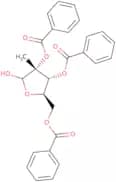
<p>3,5-O-Isopropylidene-L-arabinose is used as a synthetic sugar that is often used in the production of glycoproteins. It is also a component of complex carbohydrates and polysaccharides. 3,5-O-Isopropylidene-L-arabinose may be modified with methylation or fluorination to create derivatives that are more reactive than the parent compound. This product is available in high purity and can be custom synthesized to meet your specifications.</p>Purity:Min. 95%2,3,5-Tri-O-benzoyl-2-C-methyl-D-ribofuranose
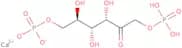
CAS:<p>2,3,5-Tri-O-benzoyl-2-C-methyl-D-ribofuranose is a custom synthesis of a complex carbohydrate. This product is an Oligosaccharide with CAS No. 30361-17-2 and Polysaccharide with Modification and Methylation. It is a saccharide with Methylation and Glycosylation. 2,3,5-Tri-O-benzoyl-2-C-methyl-D-ribofuranose is a Carbohydrate with Click modification and Fluorination. This product has High purity and Synthetic properties.</p>Formula:C27H24O8Purity:Min. 95%Molecular weight:476.47 g/molD-Fructose-1,6-diphosphate monocalcium salt
CAS:<p>D-Fructose-1,6-diphosphate monocalcium salt is a complex carbohydrate that is produced by methylation of D-fructose 1,6-diphosphate. This compound belongs to the class of saccharides and has been modified using fluorination. It is also an important glycosylation site for many proteins. In addition, it can be used as a synthetic substrate in click chemistry and as a building block for oligosaccharides or polysaccharides.</p>Formula:C6H12O12P2·CaPurity:Min. 95%Molecular weight:378.18 g/mol

![5-O-(5-Amino-5-deoxy-b-D-ribofuranosyl)-1-N-[(S)-4-amino-2-hydroxy-butanoyl]paromamine](/_next/image/?url=https%3A%2Fstatic.cymitquimica.com%2Fproducts%2F3D%2Fthumb-webp%2FOA32030.webp&w=3840&q=75)