


Glycoscience
Glycoscience is the study of carbohydrates and their derivatives, as well as the interactions and biological functions they participate in. This field of research is crucial for understanding a wide variety of biological processes, including cell recognition, signaling, immune response, and disease development. Glycoscience has important applications in biotechnology, medicine, and the development of new drugs and therapies. At CymitQuimica, we offer a wide selection of high-quality, high-purity products for glycoscience research. Our catalog includes monosaccharides, oligosaccharides, polysaccharides, glycoconjugates, and specific reagents, designed to support researchers in their studies on the structure, function, and applications of carbohydrates in biological systems. These resources are intended to facilitate scientific discoveries and practical applications in various areas of bioscience and medicine.
Subcategories of "Glycoscience"
- Aminosugars(108 products)
- Glyco-Related Antibodies(282 products)
- Glycolipids(46 products)
- Glycosaminoglycans (GAGs)(55 products)
- Glycosides(419 products)
- Monosaccharides(6,622 products)
- Oligosaccharides(3,682 products)
- Polysaccharides(503 products)
Found 11041 products of "Glycoscience"
Sort by
Purity (%)
0
100
|
0
|
50
|
90
|
95
|
100
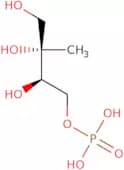
2-C-Methyl-D-erythritol 4-phosphate
CAS:<p>2-C-Methyl-D-erythritol 4-phosphate is a natural product that can be found in plants. It has been used as a substrate molecule for kinetic study of phosphorolytic enzymes and as an antimicrobial agent in cell culture.</p>Purity:Min. 95%Benzyl 2-acetamido-4,6-O-benzylidene-2-deoxy-a-D-galactopyranoside
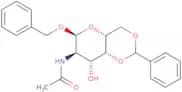
CAS:<p>Benzyl 2-acetamido-4,6-O-benzylidene-2-deoxy-a-D-galactopyranoside is a synthetic fluorinated carbohydrate that has been custom synthesized and modified with a click modification. This high purity product is available in the form of an oligosaccharide or a complex carbohydrate. It can be used in glycosylation and polysaccharide synthesis.</p>Formula:C22H25NO6Purity:Min. 95%Molecular weight:399.44 g/molDi-a-D-galactosyl-mannopentaose
<p>Di-a-D-galactosyl-mannopentaose is a mannopentaose derivative that has been modified with a methyl group at the C2 position and fluorinated at the C6 position. This compound can be used as an intermediate in the production of oligosaccharides and polysaccharides, which are complex carbohydrates that contain many sugar molecules. The product is of high purity, with no detectable impurities. It was synthesized using a custom synthesis approach, which allows for modification of the chemical structure to produce desired properties. This product is stable when stored at room temperature and does not require refrigeration. It does not contain any organic solvents or volatile compounds and is free from endotoxins or heavy metals.</p>Purity:Min. 95%Molecular weight:1,153 g/mol5-Deoxy-1,2-O-isopropylidene-5-[(2S-pyridin-4-yl-pyrrolidine)-1-yl]-a-D-xylofuranose
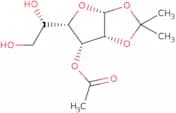
CAS:<p>5-Deoxy-1,2-O-isopropylidene-5-[(2S-pyridin-4-yl-pyrrolidine)-1-yl]-a-D-xylofuranose is a synthetic glycoside that can be used in the synthesis of complex carbohydrates. The compound is fluorinated and has been custom synthesized to include methylation and click modification. 5DIOXFURANOSE can be used in the synthesis of saccharides and oligosaccharides with various applications, including drug development and medical research.</p>Formula:C17H24N2O4Purity:Min. 95%Molecular weight:320.39 g/mol3-O-Acetyl-1,2-O-isopropylidene-a-D-galactofuranose
CAS:<p>3-O-Acetyl-1,2-O-isopropylidene-a-D-galactofuranose is a modification of the carbohydrate structure galactofuranose. It has been custom synthesized and is available in high purity with a monosaccharide content of >99%. 3-O-Acetyl-1,2-O-isopropylidene-a-D-galactofuranose can be methylated or glycosylated and is used as a building block for the synthesis of complex carbohydrates. 3-O-Acetyl-1,2,3,4,6,7,8,-octahydrobenzo[b]naphtho[2,1b][1]benzopyran (CAS No. 109680) is also known as 3-(acetamido)-1,2:3',4'-diisopropyl</p>Formula:C11H18O7Purity:Min. 95%Molecular weight:262.26 g/molLuteolin 7,3'-di-O-glucuronide
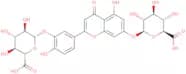
CAS:<p>Luteolin 7,3'-di-O-glucuronide is a flavonoid that is structurally similar to luteolin. It has been characterized by deglycosylation and the technique of fluitans. The deglycosylation step was carried out using glycosidase from liverwort, which cleaves the glycosidic linkage between the sugar and the aglycone. Luteolin 7,3'-di-O-glucuronide has been found in Chrysoeriol and Fluitans, which are flavonoid glycosides from Liverwort. Luteolin 7,3'-di-O-glucuronide also exhibits antiplatelet activity due to its ability to inhibit platelet aggregation and thrombus formation.</p>Formula:C27H26O18Purity:Min. 95%Color and Shape:PowderMolecular weight:638.48 g/molFluorescein isothiocyanate-carboxymethyl-dextran - Average MW 70,000
<p>Fluorescein isothiocyanate carboxymethyl dextran (FITC-CM Dextran) has been reported to provide a valuable carrier for nanoparticles of iron oxide. These products provide a potent tool for contrast enhancement in magnetic resonance imaging.</p>Purity:Min. 95%2,3,4,6-Tetra-O-acetyl-a-D-glucopyranose
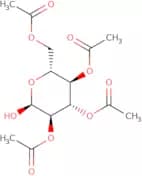
CAS:<p>2,3,4,6-Tetra-O-acetyl-a-D-glucopyranose is a chemical compound that is the product of the reaction between metabisulfite and anhydrous acetone in a refluxing process. The reaction can be done in two ways: one with thiourea and sodium metabisulfite or another with recycled acetone. The yield of this compound is dependent on the reaction time and process. 2,3,4,6-Tetra-O-acetyl-a-D-glucopyranose has been used as a raw material for the production of pharmaceuticals such as steroids and antibiotics.</p>Formula:C14H20O10Purity:Min. 95%Molecular weight:348.3 g/molHydroxypropyl cellulose - Average MW 200,000
CAS:<p>In water, hydroxypropyl cellulose forms liquid crystals with many mesophases depending on concentration. These mesophases include isotropic, anisotropic, nematic and cholesteric, the latter resulting in many colors such as violet, green and red. Pharmaceutical applications include treatments for medical conditions such as dry eye syndrome (keratoconjunctivitis sicca), recurrent corneal erosions, decreased corneal sensitivity, exposure and neuroparalytic keratitis. It is also used as a binder in tablets. Hydroxypropylcellulose is also used as a thickener, a binder and emulsion stabiliser in foods with E number E463. HPC is used as a support matrix for DNA separations by capillary and microchip electrophoresis.</p>Color and Shape:Powder3,5-Di-O-benzyl-4-C-hydroxymethyl-1,2-O-isopropylidene-a-D-ribofuranose
<p>3,5-Di-O-benzyl-4-C-hydroxymethyl-1,2-O-isopropylidene-a-D-ribofuranose is a modification of D(+)-ribofuranose. It is a white to off white solid that is soluble in water and ethanol. 3,5-Di-O--benzyl--4--C--hydroxymethyl--1,2--O--isopropylidene--a-(D)--ribofuranose has an odorless taste and is used as a carbohydrate for use in pharmaceuticals. This oligosaccharide has been shown to be synthesized using the following methods: Custom synthesis, Synthetic, and High purity. 3,5-Di--O---benzyl---4---C---hydroxymethyl-----1,2----O-----isopropylidene----a-(D)----ribofuran</p>Purity:Min. 95%Benzyl 3,4,6-tri-O-acetyl-2-deoxy-2-phthalimido-b-D-glucopyranoside
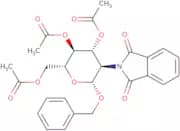
CAS:<p>Benzyl 3,4,6-tri-O-acetyl-2-deoxy-2-phthalimido-b-D-glucopyranoside is a carbohydrate compound that is used in the synthesis of complex carbohydrates and glycoproteins. This product can be custom synthesized to customer specifications using our unique capabilities. It is a high purity, methylated, glycosylated, and click modified sugar.</p>Formula:C27H27NO10Purity:Min. 95%Molecular weight:525.52 g/mol3-(Hepta-O-acetyl-b-lactopyranosyl)thio-propanoic acid
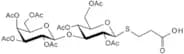
CAS:<p>3-(Hepta-O-acetyl-b-lactopyranosyl)thio-propanoic acid is a synthetic glycosylate that has been subjected to a click reaction with 4-iodo-1,1,3,3,-tetramethyluronium tetrafluoroborate. This glycoside has a purity of >98% and is offered at a price of $6.00/g.</p>Formula:C29H40O19SPurity:Min. 95%Molecular weight:724.69 g/mol3-[(2,3,4,6-Tetra-O-acetyl-b-D-glucopyranosyl)thio]-propanoic acid
CAS:<p>3-[(2,3,4,6-Tetra-O-acetyl-b-D-glucopyranosyl)thio]-propanoic acid is a modification of an oligosaccharide. It is a complex carbohydrate that has been modified with methylation and glycosylation. This product is synthesized from the raw material, which is a high purity monosaccharide or polysaccharide. 3-[(2,3,4,6-Tetra-O-acetyl-b-D-glucopyranosyl)thio]-propanoic acid has CAS No. 325410 2 and Mw of 835.5 g/mol. The molecular weight and purity are determined by high performance liquid chromatography (HPLC). The product is soluble in water and ethanol.</p>Formula:C17H24O11SPurity:Min. 95%Molecular weight:436.43 g/molUlvan - Ulva rotondata-Summer
CAS:<p>Ulvans are structural polysaccharides present in the cell walls of green algae such as Ulva armoricana, Ulva rotondata, Ulva rigida, Ulva lacterca and Ulva pertusa. They are highly sulphated and contain rhamnose 3-sulphate, xylose, xylose 2-sulphate, glucuronic acid and iduronic acid residues. Ulvan has several potentially valuable functionalities such as gel formation for agricultural and food applications. It has also an anticoagulant, antioxidant, antihyperlipidemic and antitumor activities that are attractive for pharmaceutical applications.<br>The image was kindly provided by Prof Mike Guiry from Cork who runs ‘The Seaweed Site’.</p>Purity:Min. 95%Color and Shape:Powderβ-Cyclodextrin polymer crosslinked with epichlorohydrin
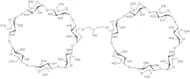
<p>β-Cyclodextrin polymer crosslinked with epichlorohydrin (β-CD-EP) is a high molecular weight, water-insoluble compound that combines the advantageous properties of cyclodextrins and polymers. It is synthesized by crosslinking β-cyclodextrin molecules with epichlorohydrin (either the R- or S-isomer, although is normally a racemic mixture) under strongly alkaline conditions. This material retains the host-guest complex formation ability of cyclodextrins while offering enhanced stability and physicochemical properties. In pharmaceuticals, β-CD-EP serves as an effective drug carrier, improving the solubility and bioavailability of poorly water-soluble drugs, masking unpleasant tastes, and enabling controlled release of active ingredients. Its insoluble nature makes it particularly useful in environmental applications for removing organic pollutants and heavy metals from water. In analytical chemistry, β-CD-EP is employed for the extraction and concentration of target substances, such as mycotoxins from beverages. The polymer's unique structure, featuring a dense, hydrophobic cross-linked core and a more hydrophilic surface, contributes to its dual adsorption mechanism through the inclusion of complex formation and physical adsorption. Recent advancements have led to β-CD-EP variants with ionic functional groups, expanding its potential in water treatment and pharmaceutical formulations.</p>Color and Shape:Powder3-Amino-2,3,6-trideoxy-β-L-lyxo-hexopyranose hydrochloride
CAS:<p>Please enquire for more information about 3-Amino-2,3,6-trideoxy-β-L-lyxo-hexopyranose hydrochloride including the price, delivery time and more detailed product information at the technical inquiry form on this page</p>Formula:C6H13NO3•HClPurity:Min. 95%Molecular weight:183.63 g/mol2-Acetamido-4-O-[2,4-di-O-acetyl-3,6-di-O-(2,3,4,6-tetra-O-acetyl-a-D-mannopyranosyl)-b-D-glucopyranosyl]-1,3,6-tri-O-acetyl-2-deoxy -b-D-glucopyranose
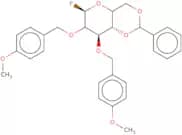
<p>2-Acetamido-4-O-[2,4-di-O-acetyl-3,6-di-O-(2,3,4,6-tetra-O-acetyl aDmannopyranosyl)-bDglucopyranosyl]-1,3,6triOacetyl2deoxybDglucopyranose is a modification of the sugar 2 acetamido 4 O-[2,4diO acetyl 3,6diO (2,3,4,6 tetra O acetyl a D mannopyranoside) b D glucopyranoside] 1 3 6 tri O acetyl 2 deoxy b D glucopyranose. It is an oligosaccharide that contains a carbohydrate group that is composed of a monosaccharide and two polysaccharides. This modification has been shown to be synthesized by methylating the 6</p>Formula:C52H71NO34Purity:Min. 95%Color and Shape:Brown solid.Molecular weight:1,254.11 g/mol4,6-O-Benzylidene-2,3-di-O-(4-methoxybenzyl)-a-D-galactopyranosyl fluoride
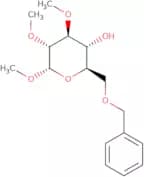
<p>4,6-O-Benzylidene-2,3-di-O-(4-methoxybenzyl)-a-D-galactopyranosyl fluoride is a glycosylation reagent that is used in the synthesis of complex carbohydrates. This product is a fluorinated sugar with a CAS number and a high purity. It can be custom synthesized to order.</p>Formula:C29H31FO7Purity:Min. 95%Molecular weight:510.55 g/molMethyl 6-O-benzyl-2,3-di-O-methyl-a-D-glucopyranoside
CAS:<p>Methyl 6-O-benzyl-2,3-di-O-methyl-a-D-glucopyranoside is a custom synthesis that is fluorinated and modified. This product is an oligosaccharide with a molecular weight of 906. It has CAS No. 106220-89-7 and can be used in the modification of saccharides, carbohydrates, and polysaccharides. Methyl 6-O-benzyl-2,3-di-O-methyl -a -D -glucopyranoside has a purity greater than 99%. It is composed of a single monosaccharide sugar that has been synthesized and modified.</p>Formula:C16H24O6Purity:Min. 95%Molecular weight:312.37 g/mol5-Deoxy-5-[di-(2-hydroxyethyl)-amino]-1,2-O-isopropylidene-a-D-xylofuranose
CAS:<p>5-Deoxy-5-[di-(2-hydroxyethyl)-amino]-1,2-O-isopropylidene-a-D-xylofuranose is a custom synthesis that is a complex carbohydrate. It is an Oligosaccharide, Polysaccharide, and Modification of saccharides. This product has been synthesized using the Click modification of sugars, Carbohydrate and Methylation or Glycosylation. It has been Fluorinated and Synthetic. 5-Deoxy-5-[di-(2-hydroxyethyl)-amino]-1,2-O-isopropylidene-a-D-xylofuranose is a high purity product that is Monosaccharide and has been modified with methyl groups and glycosyl groups.</p>Formula:C12H23NO6Purity:Min. 95%Molecular weight:277.32 g/mol

![5-Deoxy-1,2-O-isopropylidene-5-[(2S-pyridin-4-yl-pyrrolidine)-1-yl]-a-D-xylofuranose](/_next/image/?url=https%3A%2Fstatic.cymitquimica.com%2Fproducts%2F3D%2Fthumb-webp%2FMD07489.webp&w=3840&q=75)



![3-[(2,3,4,6-Tetra-O-acetyl-b-D-glucopyranosyl)thio]-propanoic acid](/_next/image/?url=https%3A%2Fstatic.cymitquimica.com%2Fproducts%2F3D%2Fthumb-webp%2FMT01467.webp&w=3840&q=75)


![5-Deoxy-5-[di-(2-hydroxyethyl)-amino]-1,2-O-isopropylidene-a-D-xylofuranose](/_next/image/?url=https%3A%2Fstatic.cymitquimica.com%2Fproducts%2F3D%2Fthumb-webp%2FMD07492.webp&w=3840&q=75)