Glycoscience
Glycoscience is the study of carbohydrates and their derivatives, as well as the interactions and biological functions they participate in. This field of research is crucial for understanding a wide variety of biological processes, including cell recognition, signaling, immune response, and disease development. Glycoscience has important applications in biotechnology, medicine, and the development of new drugs and therapies. At CymitQuimica, we offer a wide selection of high-quality, high-purity products for glycoscience research. Our catalog includes monosaccharides, oligosaccharides, polysaccharides, glycoconjugates, and specific reagents, designed to support researchers in their studies on the structure, function, and applications of carbohydrates in biological systems. These resources are intended to facilitate scientific discoveries and practical applications in various areas of bioscience and medicine.
Subcategories of "Glycoscience"
- Aminosugars(108 products)
- Glyco-Related Antibodies(282 products)
- Glycolipids(46 products)
- Glycosaminoglycans (GAGs)(55 products)
- Glycosides(419 products)
- Monosaccharides(6,622 products)
- Oligosaccharides(3,682 products)
- Polysaccharides(503 products)
Found 11041 products of "Glycoscience"
Sort by
Purity (%)
0
100
|
0
|
50
|
90
|
95
|
100
Hyaluronate fluorescein - Molecular Weight - 250kDa
<p>Hyaluronate fluorescein is a large molecular weight, high-molecular weight, high-purity, highly modified carbohydrate. It is a synthetic oligosaccharide that has been chemically modified with methylation and saccharide. Hyaluronate fluorescein is synthesized using Click chemistry to add a fluorescent tag at the reducing end of the molecule. This product can be used for custom synthesis and glycosylation. Hyaluronate fluorescein is available in various sizes including 250kDa.</p>Purity:Min. 95%Daunorubicin
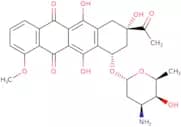
CAS:<p>Anthracycline antibiotic with potent anti-tumoral activity. The compound interferes with DNA replication and RNA transcription since it intercalates between the base pairs of nucleic acids. It also inhibits the topoisomerase II, proteasome and generates free radicals, which leads to cell death of treated cells. Moreover, daunorubicin triggers apoptosis trough the stimulation of ceramide synthesis. It has been used as chemotherapy agent for the treatment of myeloid leukaemia (AML) and acute lymphocytic leukaemia (ALL).</p>Formula:C27H29NO10Purity:Min. 95%Molecular weight:527.52 g/molNA3 N-Glycan
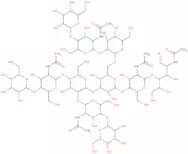
CAS:<p>NA3 N-glycan is a base that forms glycosidic bonds with other molecules. It has been shown to be pharmacologically active in tissues and has a safety profile. NA3 N-glycan is metabolized by the serine protease, which cleaves it from its glycosylated protein. The resulting molecule lacks a reactive group, which prevents it from forming toxic reactions with other molecules. NA3 N-glycan has been used for pharmacokinetic modeling and for mass spectrometric measurements of proteins in human serum and plasma.</p>Formula:C76H127N5O56Purity:Min. 95%Color and Shape:Solid.Molecular weight:2,006.82 g/molRhein acyl-b-D-glucuronide
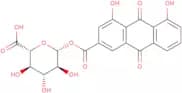
CAS:<p>Rhein acyl-b-D-glucuronide is a fluorinated monosaccharide, which can be synthesized from glucose. This product is a complex carbohydrate that is synthesized from glucose and has been modified with methyl groups to provide high purity. It is also an oligosaccharide and can be custom synthesized for your needs. The chemical formula for Rhein acyl-b-D-glucuronide is C6H14O5F2O4.</p>Formula:C21H16O12Purity:Min. 95%Molecular weight:460.34 g/molFluoxetine D-glucuronide (mixture of isomers)
CAS:<p>Fluoxetine D-glucuronide is a glycosylated, fluorinated, custom-synthesized compound. It is composed of the methyl ester and glucuronide moiety of fluoxetine. The synthesis of this compound starts with the oxidation of fluoxetine to form an aldehyde intermediate. This intermediate is then condensed with chloroacetic acid to form the desired product. Fluoxetine D-glucuronide has shown efficacy in animal models for its ability to inhibit serotonin reuptake and block 5HT2A receptors. This drug is also used as a tracer in positron emission tomography (PET) imaging studies for serotonin transporters.</p>Purity:Min. 95%1,3-O-Benzylidene-L-erythritol
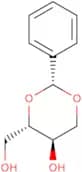
CAS:<p>1,3-O-Benzylidene-L-erythritol is a potent inhibitor of the intestinal maltase. It has two diastereomers, one of which is more potent than the other. The more potent diastereomer inhibits both the maltase and L-arabinose isomerase enzymes in the intestine. This inhibition prevents digestion of complex carbohydrates such as starch and sucrose into simple sugars that can be absorbed by the body. 1,3-O-Benzylidene-L-erythritol also inhibits salacinol synthase and thiosugar synthetases from bacteria and plants, preventing synthesis of these important compounds.</p>Purity:Min. 95%Methyl 4-O-(a-D-mannopyranosyl)-a-D-mannopyranoside
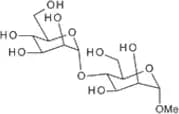
CAS:<p>Methyl 4-O-(a-D-mannopyranosyl)-a-D-mannopyranoside is a custom synthesis, complex carbohydrate. It is an Oligosaccharide, Polysaccharide, Modification and a Carbohydrate. Methyl 4-O-(a-D-mannopyranosyl)-a-D-mannopyranoside has CAS No. 70427-91-7 and it is Fluorinated and Synthetic. This compound has high purity, Methylation, Glycosylation and Click modification.</p>Formula:C13H24O11Purity:Min. 95%Color and Shape:SolidMolecular weight:356.32 g/molOctadecylthioethyl 4-O-(a-D-galactopyranosyl)-b-D-galactopyranoside
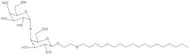
CAS:<p>Octadecylthioethyl 4-O-(a-D-galactopyranosyl)-b-D-galactopyranoside is a synthetic carbohydrate with the CAS number 87019-34-9. It is a non-reducing sugar and has the molecular formula C18H36O22. The chemical structure of Octadecylthioethyl 4-O-(a-D-galactopyranosyl)-b-D-galactopyranoside is: The chemical name for Octadecylthioethyl 4-O-(a-D-galactopyranosyl)-b-D-galactopyranoside is Oligosaccharide, Custom synthesis, Glycosylation, High purity, Carbohydrate, sugar, Synthetic. The molecular weight of Octadecylthioethyl 4 -O-(a-[3]-Galactopyranosyl)-b-[2]-Galactopyr</p>Formula:C32H62O11SPurity:Min. 95%Molecular weight:654.89 g/molUndecyl b-D-thiomaltopyranoside
CAS:<p>Undecyl b-D-thiomaltopyranoside is a high purity, custom synthesis, methylated and glycosylated carbohydrate that can be used as a fluorinated sugar. It is an oligosaccharide with 4 glucose units, 1 of which has been modified by the addition of an undecyl group. This modification inhibits the enzyme maltase from hydrolyzing the saccharide. Undecyl b-D-thiomaltopyranoside has CAS No. 148565-57-5 and can be synthesized in high purity for research purposes.</p>Formula:C23H44O10SPurity:Min. 95%Color and Shape:PowderMolecular weight:512.66 g/molL-Rhodinose
CAS:<p>L-Rhodinose is a sugar that can be found in plants, bacteria, and fungi. It has been shown to have many biological properties, including activation of the receptor binding site. L-Rhodinose is used as a model system for studying glycosidic bonds. The effective dose of L-rhodinose is not yet known. Studies have shown that L-rhodinose may be useful in treating cancer cells or preventing tumor growth. L-rhodinose has also been shown to have anti-inflammatory effects and can induce apoptosis.</p>Formula:C6H12O3Purity:Min. 95%Molecular weight:132.16 g/molOctyl 2-acetamido-2-deoxy-3-O-(b-D-galactopyranosyl)-b-D-glucopyranoside
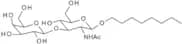
CAS:<p>Octyl 2-acetamido-2-deoxy-3-O-(b-D-galactopyranosyl)-b-D-glucopyranoside is a monosaccharide that is custom synthesized by our company. It is modified with fluorination, methylation, and click modification to generate the desired product. Octyl 2-acetamido-2-deoxy-3-O-(b-D-galactopyranosyl)-b-D-glucopyranoside also has saccharide and polysaccharide groups attached to it. This product can be used as a sugar in the production of complex carbohydrates.</p>Formula:C22H41NO11Purity:Min. 95%Molecular weight:495.56 g/mola-Cyclodextrin sulfate sodium salt
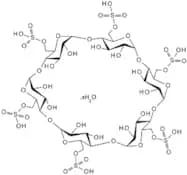
CAS:<p>Alpha-cyclodextrin (α-CD) derivative with a hydrophilic exterior and lipophilic cavity (smaller than β-CDs and γ-CDs) to allocate certain guest molecules. This structural characteristic enables applications in molecular encapsulation, solubility enhancement, and stabilization across multiple industries. In pharmaceuticals, it serves as a drug delivery vehicle, enhancing the bioavailability and stability of active ingredients. The food industry utilizes it as a stabilizer for flavors, colors, and nutrients, as well as a functional ingredient for its effects on lipid metabolism. In cosmetics, it acts as a complex agent for fragrances and active components. Its applications extend to analytical chemistry for chiral separation and to materials science for developing smart materials and nanosystems.</p>Purity:Min. 95%Color and Shape:White PowderLevofloxacin acyl-b-D-glucuronide
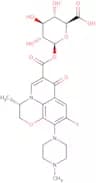
CAS:<p>Levofloxacin acyl-b-D-glucuronide is a metabolite of levofloxacin and belongs to the class of fluoroquinolone antibiotics. It has been shown to be effective against rhesus monkeys in efficacy studies. Levofloxacin acyl-b-D-glucuronide is eliminated via the urine, with >90% excreted within 24 hours. The majority of this drug is excreted as an active n-oxide form with a half-life of 8 hours.</p>Formula:C24H28FN3O10Purity:Min. 95%Molecular weight:537.49 g/molChondroitin sulfate A sodium from bovine trachea
CAS:<p>Chondroitin sulfate A sodium from bovine trachea is a natural substance that has been found to have potential anticancer properties. It has been shown to inhibit the growth of cancer cells in Chinese hamster ovary cells and human urine tumor cell lines. Chondroitin sulfate A sodium from bovine trachea works by inhibiting kinases, which are proteins that play a key role in cell growth and division. This inhibition leads to apoptosis, or programmed cell death, in cancer cells. Additionally, chondroitin sulfate A sodium from bovine trachea has been found to enhance the anticancer activity of artesunate analogs, making it a promising candidate for combination therapy in cancer treatment.</p>Purity:Min. 95%Color and Shape:Powder1,6:2,3-Dianhydro-4-O-(methyl 2,3-di-O-benzyl-b-D-glucopyranosyluronate)-b-D-mannopyranose
CAS:<p>1,6:2,3-Dianhydro-4-O-(methyl 2,3-di-O-benzyl-b-D-glucopyranosyluronate)-b-D-mannopyranose is a sugar that can be synthetically produced from methylated saccharides. The compound is a complex carbohydrate with a number of functional groups including hydroxyl and methyl groups. The compound is also known as Methyl 2,3:di:O:benzyl b(1→4)-D-glucopyranoside (2→3) -4→6)-b(1→4) -mannopyranose. This product has CAS No. 87907-24-2 and can be custom synthesized to order on request.</p>Formula:C27H30O10Purity:Min. 95%Molecular weight:514.52 g/molR,S-Equol 7-b-D-glucuronide sodium salt
CAS:<p>R,S-equol 7-b-D-glucuronide sodium salt is a Methylated, Custom synthesis, Click modification, CAS No. 38482-82-5, Oligosaccharide, Polysaccharide, saccharide, Carbohydrate with high purity and modifiction.</p>Formula:C21H21NaO9Purity:Min. 95%Color and Shape:PowderMolecular weight:440.38 g/molUndecyl 2-acetamido-2-deoxy-b-D-glucopyranoside
CAS:<p>Undecyl 2-acetamido-2-deoxy-b-D-glucopyranoside is a cell surface glycosaminoglycan (GAG) that binds to the proteoglycan receptor, which is a GAG binding protein. Undecyl 2-acetamido-2-deoxy-b-D-glucopyranoside has been shown to be involved in signaling pathways and gene expression regulation, as well as having an effect on the activity of other proteins. This glycosaminoglycan has been used to profile gene expression levels in cells and tissues. The high density microarray technique can be used to analyze the expression profile of many genes simultaneously.</p>Formula:C19H37NO6Purity:Min. 95%Molecular weight:375.5 g/mol4-O-b-(2,3,4,6-Tetra-O-acetyl-D-galactopyranosyl)-1,6-anhydro-D-mannopyranoside
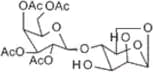
<p>This high purity, custom synthesis, sugar and Click modification, fluorination, Glycosylation, Synthetic, Methylation, Modification is a CAS No. 4-O-b-(2,3,4,6-Tetra-O-acetyl-D-galactopyranosyl)-1,6-anhydro-D-mannopyranoside. This is an Oligosaccharide and Monosaccharide that is a Carbohydrate. This complex carbohydrate has been synthesized from the following monosaccharides: D-mannose (CAS No. 5914) and D-galactose (CAS No. 5632). The molecular weight of this carbohydrate is 591. The chemical formula of this carbohydrate is C36H60O24.</p>Formula:C20H28O14Purity:Min. 95%Molecular weight:492.43 g/mol4-Aminobutyl β-D-galactopyranoside
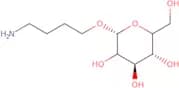
CAS:<p>4-Aminobutyl b-D-galactopyranoside is a methylated saccharide that is also a glycosylation reaction product of 4-aminobutyl b-D-galactopyranoside. It has been modified with Click chemistry and fluorinated for use in carbohydrate research, including glycoprotein synthesis, carbohydrate modification, and oligosaccharide synthesis. 4-Aminobutyl b-D-galactopyranoside has been shown to be a potent inhibitor of the enzyme aminoglycoside adenyltransferase 1 (AGT1), which is involved in the synthesis of bacterial cell wall peptidoglycan. This compound has been used as a model for glycosylation reactions as it contains both an amino and sugar moiety.</p>Formula:C10H21NO6Purity:Min. 95%Molecular weight:251.28 g/mol1,2,3,4-Tetra-O-acetyl-L-lyxopyranose
CAS:<p>1,2,3,4-Tetra-O-acetyl-L-lyxopyranose is a sugar that is modified with a click reaction to create an acetal. The acetal can be used for glycosylation or methylation in order to produce complex carbohydrates. This carbohydrate has been shown to be useful for the synthesis of oligosaccharides and monosaccharides.</p>Formula:C13H18O9Purity:Min. 95%Molecular weight:318.28 g/mol