Glycoscience
Glycoscience is the study of carbohydrates and their derivatives, as well as the interactions and biological functions they participate in. This field of research is crucial for understanding a wide variety of biological processes, including cell recognition, signaling, immune response, and disease development. Glycoscience has important applications in biotechnology, medicine, and the development of new drugs and therapies. At CymitQuimica, we offer a wide selection of high-quality, high-purity products for glycoscience research. Our catalog includes monosaccharides, oligosaccharides, polysaccharides, glycoconjugates, and specific reagents, designed to support researchers in their studies on the structure, function, and applications of carbohydrates in biological systems. These resources are intended to facilitate scientific discoveries and practical applications in various areas of bioscience and medicine.
Subcategories of "Glycoscience"
- Aminosugars(108 products)
- Glyco-Related Antibodies(282 products)
- Glycolipids(46 products)
- Glycosaminoglycans (GAGs)(55 products)
- Glycosides(419 products)
- Monosaccharides(6,622 products)
- Oligosaccharides(3,682 products)
- Polysaccharides(503 products)
Found 11041 products of "Glycoscience"
Sort by
Purity (%)
0
100
|
0
|
50
|
90
|
95
|
100
Phenyl 2,3,4,6-tetra-O-acetyl-b-D-glucopyranoside
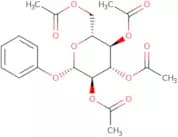
CAS:<p>Phenyl 2,3,4,6-tetra-O-acetyl-b-D-glucopyranoside is an imidate that can be synthesized from glycosides and derivatized with a variety of groups. This molecule is reactive and can be used to form glycosides by the reaction of a saccharide with phenyl 2,3,4,6-tetra-O-acetyl-b-D-glucopyranoside in the presence of acid or base. The resulting compounds are called glycosides because they contain both a sugar and phenyl 2,3,4,6-tetra-O-acetyl-b-D-glucopyranoside. Phenyl 2,3,4,6 tetra O acetyl b D glucopyranoside can also react with disaccharides to form glycosides.</p>Purity:Min. 95%3,4,6-Tri-O-benzyl-a-D-galactopyranose 1,2-(methyl orthoacetate)
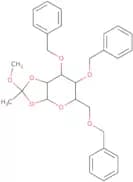
CAS:<p>3,4,6-Tri-O-benzyl-a-D-galactopyranose 1,2-(methyl orthoacetate) is a synthetic glycoside. It is a triaryl ether of D-galactopyranose and a methyl orthoacetate. This product can be used for the modification of saccharides and oligosaccharides. It also has high purity.</p>Formula:C30H34O7Purity:Min. 95%Molecular weight:506.59 g/mol2,4:3,5-Di-O-benzylidene-L-iditol
CAS:<p>2,4:3,5-Di-O-benzylidene-L-iditol is a custom synthesis that has been modified with methylation and glycosylation. It is a complex carbohydrate consisting of an oligosaccharide and polysaccharide. This product is a modification of saccharides by Methylation and Glycosylation. 2,4:3,5-Di-O-benzylidene-L-iditol is fluorinated at the C2 position. It has high purity with less than 1% impurities. The product is synthetic and consists of one monosaccharide</p>Formula:C20H22O6Purity:Min. 95%Molecular weight:358.39 g/molIsopropyl 2,3,4,6-tetra-O-acetyl-b-D-thioglucopyranoside
CAS:<p>Isopropyl 2,3,4,6-tetra-O-acetyl-b-D-thioglucopyranoside is a custom synthesis of a monosaccharide with four acetates and two fluorines. The molecule is synthesized in the laboratory by modifying the sugar with methyl groups and then fluorinating it. This synthetic product can be used in biochemistry to study glycosylation reactions and complex carbohydrate structures.</p>Formula:C17H26O9SPurity:Min. 95%Molecular weight:406.45 g/mol6-O-Tosyl-D-mannose
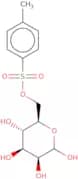
CAS:<p>6-O-Tosyl-D-mannose is a Carbohydrate, Modification, saccharide, Oligosaccharide with CAS No. 105265-64-3. It is fluorinated on the 6th carbon atom and methylated on the 3rd carbon atom. It can be used in custom synthesis and also has high purity and a custom synthesis. It can be synthesized by glycosylation or click modification.</p>Formula:C13H18O8SPurity:Min. 95%Color and Shape:PowderMolecular weight:334.34 g/molMethyl 4-O-(a-D-galactopyranosyl)-b-D-galactopyranoside
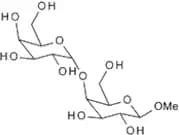
<p>Methyl 4-O-(a-D-galactopyranosyl)-b-D-galactopyranoside is a modification of a sugar molecule. It is an oligosaccharide that is a complex carbohydrate. This product can be custom synthesized to order with high purity and CAS number. The chemical name for this product is methyl 4-O-(a-D-galactopyranosyl)-b-D-galactopyranoside, which is a monosaccharide. Methyl 4-O-(a-D-galactopyranosyl)-b-D-galactopyranoside has glycosylation and polysaccharides. This product can be fluorinated or saccharified with methylation.</p>Formula:C13H24O11Purity:Min. 95%Molecular weight:356.32 g/molPhenyl 3,4,6-tri-O-acetyl-2-deoxy-1-thio-2-(2,2,2-trichloroethoxyformamido)-b-D-galactopyranoside
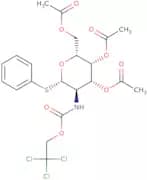
CAS:<p>Phenyl 3,4,6-tri-O-acetyl-2-deoxy-1-thio-2-(2,2,2-trichloroethoxyformamido)-b-D-galactopyranoside is a high purity and custom synthesis sugar that has been modified with fluorination and glycosylation. This product is also methylated and modified with an oligosaccharide. Phenyl 3,4,6-tri-O-acetyl-2-deoxy-1-thio - 2-(2,2,2 trichloroethoxyformamido)-b - D - galactopyranoside is used as a saccharide in the synthesis of complex carbohydrates.</p>Formula:C21H24Cl3NO9SPurity:Min. 95%Color and Shape:PowderMolecular weight:572.84 g/molFenirofibrate O-b-D-glucuronide
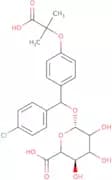
CAS:<p>Fenirofibrate O-b-D-glucuronide is a custom synthesis of saccharides. It is a fluorinated, methylated and monosaccharide modification of fenofibrate. Fenirofibrate O-b-D-glucuronide is also known as CAS No. 168844-26-6.</p>Formula:C23H25ClO10Purity:Min. 95%Molecular weight:496.9 g/molD-Ribal
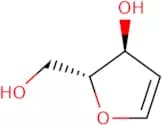
CAS:<p>D-Ribal is a drug that inhibits the growth of tumor cells by binding to epidermal growth factor receptor (EGFR), which is found on the surface of most cells in the body. This binding prevents EGFR from binding to epidermal growth factor, which is needed for cell division and proliferation. The effect of D-Ribal can be enhanced if used in combination with other drugs that inhibit EGFR signaling pathways. D-Ribal has been shown to be effective against urothelial carcinoma and bladder cancer, but not against primary tumors such as breast cancer or prostate cancer.</p>Formula:C5H8O3Purity:Min. 95%Molecular weight:116.12 g/molSertraline carbamoyl glucuronide
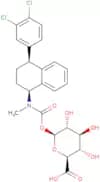
CAS:<p>Sertraline is a selective serotonin reuptake inhibitor (SSRI) that is used primarily in the treatment of depression and anxiety. It inhibits the serotonin transporter protein, making more serotonin available for binding to postsynaptic receptors. Sertraline also has a minor inhibitory effect on norepinephrine and dopamine reuptake, but its primary function is as a selective serotonin reuptake inhibitor. The major metabolite of sertraline is sertraline carbamoyl glucuronide, which is formed through glucuronidation by UGT2B7. This metabolite has been found to be bifurcated with one half being excreted in urine and the other half being excreted in faeces. The half that undergoes urinary excretion has been shown to have a half-life of 24 hours whereas the other half has a much shorter half-life of 2 hours. Carbamoylation of sertraline may</p>Formula:C24H25Cl2NO8Purity:Min. 95%Molecular weight:526.36 g/molN-Acetylneuraminic acid pentamer penta sodium
<p>N-Acetylneuraminic acid pentamer penta sodium is a modification of the N-acetylneuraminic acid monomer. It is a carbohydrate that is made up of five saccharide units linked by glycosidic bonds. The first four saccharides are N-acetylneuraminic acid and the fifth unit is D-mannose. This molecule has been synthesized for use as a vaccine adjuvant to increase the body's immune response to vaccines.</p>Formula:C55H82N5O41Na5Purity:Min. 95.0 Area-%Color and Shape:PowderMolecular weight:1,584.2 g/molD-myo-Inositol-2,3-O-cyclohexylidene
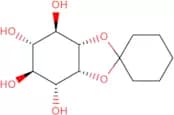
CAS:<p>D-myo-Inositol-2,3-O-cyclohexylidene is a lipase. It hydrolyzes esters and triglycerides, which are found in many natural and synthetic products. D-myo-Inositol-2,3-O-cyclohexylidene is more effective at hydrolyzing fats than porcine pancreatic lipase. This enzyme has been shown to be enantioselective for some solvents, such as vinyl acetate. D-myo-Inositol-2,3-O-cyclohexylidene also has the ability to produce butyrate from fatty acids.</p>Formula:C12H20O6Purity:Min. 95%Molecular weight:260.28 g/molMethyl 2-acetamido-3-O-(2,3,4,6-tetra-O-acetyl-b-D-galactopyranosyl)-2-deoxy-4,6-O-(4-methoxybenzylidene)-a-D-galactopyranoside
CAS:<p>Methyl 2-acetamido-3-O-(2,3,4,6-tetra-O-acetyl-b-D-galactopyranosyl)-2-deoxy-4,6-O-(4-methoxybenzylidene)-a-D-galactopyranoside is a custom synthesis of an oligosaccharide with a polysaccharide. It is a fluorinated complex carbohydrate that has been modified for high purity. Methyl 2 acetamido 3 O (2,3,4,6 tetra O acetyl b D galactopyranosyl) 2 deoxy 4,6 O (4 methoxybenzylidene) a D galactopyranoside is composed of monosaccharides and sugar.</p>Formula:C31H41NO16Purity:Min. 95%Molecular weight:683.65 g/molL-Threitol
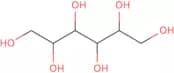
CAS:<p>L-threitol is a white crystalline powder that is soluble in water and alcohol. It is a natural carbohydrate that is found in many plants and animals. The chemical formula for L-threitol is C4H10O4. This molecule consists of four carbon atoms, ten hydrogen atoms, and four oxygen atoms. L-threitol has been used as a sweetener and an excipient in the pharmaceutical industry. L-threitol can be modified by fluorination or saccharide modification to create other compounds.<br>L-Threitol has been shown to have high purity and is used as a starting material for the synthesis of other carbohydrates such as oligosaccharides and polysaccharides.</p>Purity:Min. 95%1,2,3,6-Tetra-O-benzoyl-a-D-talose
<p>1,2,3,6-Tetra-O-benzoyl-a-D-talose is a modified sugar that can be used as a saccharide or oligosaccharide. It can be synthesized by the Click reaction with 1,2,3,6-tetra-O-benzoyl-D-talose and methyl iodide. The product can also be obtained from the reaction of methyl acetate with glycerol in the presence of hydrochloric acid. This compound has been shown to have good solubility and is available in high purity.</p>Formula:C34H28O10Purity:Min. 95%Molecular weight:596.58 g/mol2,3,4,6-Tetra-O-acetyl-b-D-glucopyranosyl (1,3-benzylidene)glycerol
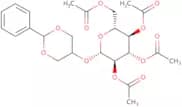
CAS:<p>2,3,4,6-Tetra-O-acetyl-b-D-glucopyranosyl (1,3-benzylidene)glycerol is a complex carbohydrate that was synthesized by modifying the glycosylation of 2,3,4,6-tetra-O-acetylmannitol. The chemical modification and fluorination of this carbohydrate were performed with an aim to introduce the acetal functionality. This modification was achieved by reacting the 1,3-benzylidene moiety with dimethylsulfonium methylide. This product is not known to have any other CAS number for this compound.</p>Formula:C24H30O12Purity:Min. 95%Molecular weight:510.49 g/mol6-Amino-6-deoxy-1,2-O-isopropylidene-a-D-glucofuranose HCl
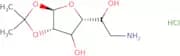
CAS:<p>6-Amino-6-deoxy-1,2-O-isopropylidene-a-D-glucofuranose HCl is a custom synthesis product that can be used in the synthesis of oligosaccharides and polysaccharides. It has a CAS No. of 24384-88-1 and can be used to modify saccharides, carbohydrates, and sugars. This product is also fluorinated and is made from high purity raw materials. The chemical name for this product is 6-(amino)-6-(deoxy)-1,2:5,6:9,10:4′,5′:4′′,5′′′-[3H]isopropylidenea D glucofuranose hydrochloride.</p>Formula:C9H17NO5·HClPurity:Min. 95%Molecular weight:255.7 g/molEthyl 4,6-O-(4-methoxybenzylidene)-b-D-thiogalactopyranoside
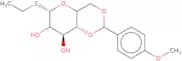
<p>Ethyl 4,6-O-(4-methoxybenzylidene)-b-D-thiogalactopyranoside is a custom synthesis of a carbohydrate. It is a high purity product with a purity of at least 99.0%. It has the following properties: Custom synthesis, sugar, Click modification, Fluorination, Glycosylation, Synthetic, Methylation, Modification.<br>This product is registered under CAS No. 100735-66-8 and has the molecular formula C51H75NO17. The molecular weight is 905.1 g/mol and the structural formula is as follows:</p>Formula:C16H22O6SPurity:Min. 95%Molecular weight:342.41 g/molGT2-Oligosaccharide
<p>GT2 oligosaccharide (free acid) has a core trisaccharide structure (GalNAcβ1,4Galβ1,4Glc) with three sialic acid residues (NeuAc) linked α2,8/α2,8/α2,3 to the inner galactose residue (Ledeen, 2009). GT2 oligosaccharide is the carbohydrate moiety in the GT2 ganglioside. A key role has been reported for gangliosides, such as, GT1b and GT2 as modulators in the interaction between microglia (resident cells of the brain that regulate brain development) and brain tumors. It is possible that they will be important targets for therapeutical intervention in the near future (Daniele, 2020). In addition, C-series gangliosides, such as GT3, GT2, GQ1c, and CP1c are expressed in normal pancreatic tissue but are practically lost in the pancreas of diabetic animals (Saito, 1999).</p>Formula:C53H83N4O40Na3Purity:Min. 95%Molecular weight:1,485.2 g/mol22-Dehydroclerosterol glucoside
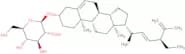
CAS:<p>22-Dehydroclerosterol glucoside is a biochemical that has been shown to have antihepatotoxic activity. It has been shown to inhibit the production of glutamate and oxaloacetate in the liver, as well as phosphatase activity, which may be due to its ability to inhibit glutamate oxaloacetate transaminase. 22-Dehydroclerosterol glucoside can be extracted from clerodendrum species or synthesized from 22-dehydrocholesterol. This product is an alkaline substance with a chemical structure similar to that of cholesterol. It is used in parameters for determining glutamic oxaloacetic transaminase (GOT).</p>Purity:Min. 95%