Glycoscience
Glycoscience is the study of carbohydrates and their derivatives, as well as the interactions and biological functions they participate in. This field of research is crucial for understanding a wide variety of biological processes, including cell recognition, signaling, immune response, and disease development. Glycoscience has important applications in biotechnology, medicine, and the development of new drugs and therapies. At CymitQuimica, we offer a wide selection of high-quality, high-purity products for glycoscience research. Our catalog includes monosaccharides, oligosaccharides, polysaccharides, glycoconjugates, and specific reagents, designed to support researchers in their studies on the structure, function, and applications of carbohydrates in biological systems. These resources are intended to facilitate scientific discoveries and practical applications in various areas of bioscience and medicine.
Subcategories of "Glycoscience"
- Aminosugars(108 products)
- Glyco-Related Antibodies(282 products)
- Glycolipids(46 products)
- Glycosaminoglycans (GAGs)(55 products)
- Glycosides(419 products)
- Monosaccharides(6,622 products)
- Oligosaccharides(3,682 products)
- Polysaccharides(503 products)
Found 11041 products of "Glycoscience"
Sort by
Purity (%)
0
100
|
0
|
50
|
90
|
95
|
100
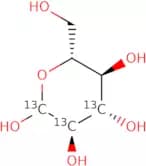
D-Glucose-1,2,3-13C3
CAS:<p>D-Glucose-1,2,3-13C3 is a synthetic monosaccharide that has been fluorinated at the 1, 2 and 3 positions. The 13C isotope has been used to study the glycosylation of this compound. This product is available in custom synthesis quantities.</p>Formula:C3C3H12O6Purity:Min. 95%Molecular weight:183.16 g/mol2-Deoxy-D-ribose-anilide
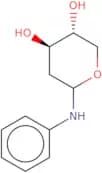
CAS:<p>2-Deoxy-D-ribose-anilide is a fluorinated monosaccharide that is used as a synthetic building block for the synthesis of oligosaccharides, polysaccharides, and other complex carbohydrates. This compound has been modified with methyl groups and click chemistry to form new types of sugars. 2-Deoxy-D-ribose-anilide is also available in high purity and can be used for glycosylation reactions.</p>Formula:C11H15NO3Purity:Min. 95%Color and Shape:Off-White To Light (Or Pale) Yellow SolidMolecular weight:209.24 g/molMethyl D-galactopyranoside
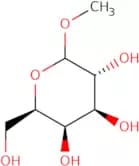
CAS:<p>Methyl D-galactopyranoside is a lectin that binds to galactose residues in the glycosidic linkage of oligosaccharides. Methyl D-galactopyranoside is used in functional theory to determine the number of lysine residues on the dodecyl chain. This lectin has been shown to bind to anomeric linkages, which are different types of sugar molecules that have a carbon atom at the same position. The binding of this lectin to oligosaccharides can be detected by matrix-assisted laser desorption ionization mass spectrometry (MALDI MS). Methyl D-galactopyranoside has also been shown to have high salt and carbohydrate binding properties, as well as binding with galactose, trimethyl, and hydroxymethyl groups.</p>Formula:C7H14O6Purity:Min. 95%Color and Shape:PowderMolecular weight:194.18 g/molEthynyl estradiol 3-b-D-glucuronide
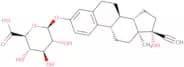
CAS:<p>Ethynyl estradiol 3-b-D-glucuronide is a synthetic derivative of the endogenous estrogen, 17β-estradiol. It is a glycosylated, complex carbohydrate with a methylation and fluorination modification. Ethynyl estradiol 3-b-D-glucuronide is synthesized by reacting ethynyl estradiol with β-D-glucuronic acid to form an ester linkage between the sugar and steroid molecules. This process also produces an Oligosaccharide as well as Monosaccharides. The synthesis of this compound can be customized for specific needs and is available in high purity.</p>Formula:C26H32O8Purity:Min. 95%Color and Shape:PowderMolecular weight:472.53 g/molMethyl 2,3-di-O-acetyl-b-D-xylopyranoside
CAS:<p>Methyl 2,3-di-O-acetyl-b-D-xylopyranoside is a high purity synthetic product with custom synthesis and fluorination. This product is a sugar that has been modified by glycosylation and methylation. Methyl 2,3-di-O-acetyl-b-D-xylopyranoside is a complex carbohydrate that contains saccharides, such as monosaccharides and oligosaccharides.</p>Formula:C10H16O7Purity:Min. 95%Molecular weight:248.2 g/mol6-O-(a-D-Maltotriosyl)-D-glucopyranose tetradecaacetate
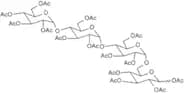
<p>6-O-(a-D-Maltotriosyl)-D-glucopyranose tetradecaacetate is a carbohydrate that belongs to the class of saccharides. It is synthesized from D-glucose by glycosylation and methylation. 6-O-(a-D-Maltotriosyl)-D-glucopyranose tetradecaacetate is a complex carbohydrate with a high purity and custom synthesis. It can be used in click chemistry, due to its reactive group on the C6 position.</p>Formula:C52H70O35Purity:Min. 95%Molecular weight:1,255.09 g/mol2-Azidoethyl β-lactopyranoside
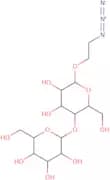
CAS:<p>2-Azidoethyl β-lactopyranoside is a modification of a carbohydrate that can be used for the synthesis of oligosaccharides, glycoconjugates and polysaccharides. The 2-azidoethyl group can be used to introduce fluorine atoms into complex carbohydrates, which can improve their physical properties. It can also be used as a protecting group for glycosylation reactions in the synthesis of saccharides. This product has been shown to have high purity, monosaccharide content, and methylated sugar moieties. It is also readily available in large quantities due to its custom synthesis.<br>2-Azidoethyl β-lactopyranoside has been shown to have high purity and monosaccharide content, making it an ideal product for use in glycosylation reactions in the synthesis of saccharides.</p>Formula:C14H25N3O11Purity:Min. 95%Molecular weight:411.36 g/molChitosan - non-animal origin
CAS:<p>Chitosan is the deacetylated form of chitin. The polysaccharide is deacetylated in order to render it soluble, which is then possible at pH values of less than 7 (normally in dilute acid). This then allows the material to be used in a number of industrial applications as a binder and film former.</p>Formula:(C6H11NO4)n2-Acetamido-6-O-(2-acetamido-2-deoxy-b-D-glucopyranosyl)-3-O-(b-D-galactopyranosyl)-2-deoxy-a-D-galactopyranose
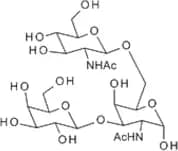
CAS:<p>2-Acetamido-6-O-(2-acetamido-2-deoxy-β-D-glucopyranosyl)-3-O-(β-D-galactopyranosyl)-2,6-dideoxy--a,D--galactopyranose is a trisaccharide that is anomeric with n acetylglucosamine and a residue.</p>Formula:C22H38N2O16Purity:Min. 95%Molecular weight:586.54 g/molMethyl 2,3,4-tri-O-benzyl-b-L-thiofucopyranoside
CAS:<p>Methyl 2,3,4-tri-O-benzyl-b-L-thiofucopyranoside is a glycosyl acceptor that can be used in the synthesis of oligosaccharides. It is also an intermediate for the production of antifungal drugs such as fluconazole.</p>Formula:C28H32O4SPurity:Min. 95%Molecular weight:464.62 g/mol1,6-Di-O-acetyl-2,3,4-tri-O-benzyl-α-D-mannopyranose
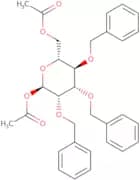
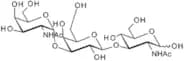
CAS:<p>1,6-Di-O-acetyl-2,3,4-tri-O-benzyl-a-D-mannopyranose is a carbohydrate that has been synthetically prepared. The sugar was synthesized by the solid phase synthesis of an acetate derivative of 2,3,4-tri-O-benzylglucal and 1,6 diacetate benzil. The conformation of the sugar was determined from X-ray crystallography to be anomeric. The structure consists of a six membered ring with two oxygen atoms on opposite sides. This hexagonal ring is composed of four methylene groups and two oxygens. One oxygen atom is bonded to one carbon atom in the adjacent six membered ring with a single bond and the other oxygens are bonded to carbons in the adjacent six membered rings with double bonds. This results in three rings that are not fully interlocked as they have different degrees of freedom</p>Formula:C31H34O8Purity:Min. 95%Molecular weight:534.6 g/molBlood Group A type I linear trisaccharide
CAS:<p>GalNAca1-3Galb1-3GlcNAc</p>Formula:C22H38N2O16Purity:Min. 95%Molecular weight:586.54 g/mol(-)-Lyoniresinol 9'-O-glucoside
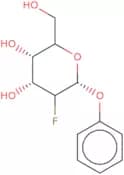
CAS:<p>This chemical is a custom synthesis of (-)-Lyoniresinol 9'-O-glucoside. The chemical is a modification of (-)-Lyoniresinol 9'-O-glucoside and fluorinated at the C2 position. It is also methylated on the C3 position. The chemical is synthesized by click chemistry, which involves the use of copper(II) ions as catalysts to generate covalent bonds between two molecules. This chemical has been shown to be an oligosaccharide with saccharide chains that are linked together by glycosylation. There are six sugar residues in this compound: glucose, galactose, rhamnose, xylose, glucuronic acid, and mannitol. This compound has CAS number 143236-02-6 and molecular weight of 881.5 g/mol (CAS No.).</p>Formula:C28H38O13Purity:Min. 95%Molecular weight:582.59 g/molPhenyl 2-deoxy-2-fluoro-a-D-glucopyranoside
<p>Phenyl 2-deoxy-2-fluoro-a-D-glucopyranoside is a sugar that belongs to the group of saccharides. It is a synthetic compound and is often used as an intermediate in the synthesis of complex carbohydrates, such as glycosides. Phenyl 2-deoxy-2-fluoro-a-D-glucopyranoside has been shown to have high purity, which makes it suitable for custom synthesis. This compound can be methylated and glycosylated, which increases its biological activity. The structure of this sugar can also be modified by fluorination, making it suitable for use in fluorescence studies.</p>Formula:C12H15FO5Purity:Min. 95%Molecular weight:258.24 g/mol1,2,3,4-Tetra-O-isobutyryl-b-D-glucuronide methyl ester
CAS:<p>1,2,3,4-Tetra-O-isobutyryl-b-D-glucuronide methyl ester is a custom synthesis that is used to modify oligosaccharides and polysaccharides. It is a high purity product with a purity of >99%. This product has been fluorinated and modified to create a complex carbohydrate. 1,2,3,4-Tetra-O-isobutyryl-b-D-glucuronide methyl ester is an example of a sugar that has been synthesized in the lab.</p>Formula:C23H36O11Purity:Min. 95%Color and Shape:White PowderMolecular weight:488.53 g/molHyaluronate fluorescein - Molecular Weight - 50kDa
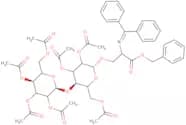
<p>Hyaluronate fluorescein is a synthetic, high purity, custom-synthesized molecular weight of 50kDa. It is a complex carbohydrate with a sugar backbone and many attached monosaccharides. Hyaluronate fluorescein has been modified by methylation and glycosylation. This product can be used for fluorescent labeling of oligosaccharides and carbohydrates.</p>Purity:Min. 95%N-Diphenylmethylene-O-(2,3,6,2',3',4',6'-hepta-O-acetyl-b-D-lactosyl)-L-serine, benzyl ester
CAS:<p>N-Diphenylmethylene-O-(2,3,6,2',3',4',6'-hepta-O-acetyl-b-D-lactosyl)-L-serine, benzyl ester is a complex carbohydrate that is used for the modification of saccharides. This compound has been synthesized using Click chemistry and NMR spectroscopy. It has a CAS number of 337903-59-0 and is an off white solid with a melting point of 155°C to 158°C.</p>Formula:C49H55NO20Purity:Min. 95%Molecular weight:977.96 g/molN-(1-Deoxy-D-fructos-1-yl)-L-serine
CAS:<p>The N-glycation of proteins is a process that occurs when protein reacts with glucose, which is called glycation. This process can lead to the formation of reactive oxygen species and subsequent oxidative stress. The oxidation of proteins can also lead to the formation of advanced glycation end products (AGEs), which are associated with complications such as diabetes, atherosclerosis, and cataracts. This product is an example of a protein that has undergone glycation. It has been shown to react with glucose in an enzymatic reaction and form glucose-derivatives called fructosamines, which are used for monitoring the level of glycation in humans. Fructosamines have been correlated with basic treatments such as medications or insulin therapy.</p>Formula:C9H17NO8Purity:Min. 95%Molecular weight:267.23 g/molAllyl 2-acetamido-4,6,-O-benzylidene-2-deoxy-a-D-glucopyranoside
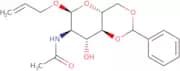
CAS:<p>Allyl 2-acetamido-4,6,-O-benzylidene-2-deoxy-a-D-glucopyranoside is a sugar that is used as a custom synthesis or modification. It is also called allyl 2-(1,3-dioxo-1,3,4,-thiadiazolidinium)acetamido 4,6,-O-(benzylidene)-2 deoxy erythro -a D glucopyranoside. Allyl 2 acetamido 4,6,-O -benzylidene -2 deoxy erythro -a D glucopyranoside is used in the glycosylation of proteins and oligosaccharides and in the synthesis of saccharides. This compound has been shown to be useful in identifying glycosaminoglycan chains in complex carbohydrates.</p>Formula:C18H23NO6Purity:Min. 95%Molecular weight:349.39 g/molBenzyl 2-acetamido-3-O-(2,3,4-tri-O-benzyl-a-L-fucopyranosyl)-4,6-O-benzylidene-2-deoxy-a-D-glucopyranoside
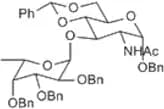
CAS:<p>Benzyl 2-acetamido-3-O-(2,3,4-tri-O-benzyl-a-L-fucopyranosyl)-4,6-O-benzylidene-2-deoxy-a-D-glucopyranoside is a high purity custom synthesis sugar. This compound has been synthesized by Click modification of the amino acid glycoside and fluorination of the sugar. It is an Oligosaccharide with a saccharide chain composed of Monosaccharides and Carbohydrates. The CAS number for this compound is 196941 – 73 – 8.</p>Formula:C49H53NO10Purity:Min. 95%Molecular weight:815.95 g/mol