Glycoscience
Glycoscience is the study of carbohydrates and their derivatives, as well as the interactions and biological functions they participate in. This field of research is crucial for understanding a wide variety of biological processes, including cell recognition, signaling, immune response, and disease development. Glycoscience has important applications in biotechnology, medicine, and the development of new drugs and therapies. At CymitQuimica, we offer a wide selection of high-quality, high-purity products for glycoscience research. Our catalog includes monosaccharides, oligosaccharides, polysaccharides, glycoconjugates, and specific reagents, designed to support researchers in their studies on the structure, function, and applications of carbohydrates in biological systems. These resources are intended to facilitate scientific discoveries and practical applications in various areas of bioscience and medicine.
Subcategories of "Glycoscience"
- Aminosugars(108 products)
- Glyco-Related Antibodies(282 products)
- Glycolipids(46 products)
- Glycosaminoglycans (GAGs)(55 products)
- Glycosides(419 products)
- Monosaccharides(6,622 products)
- Oligosaccharides(3,682 products)
- Polysaccharides(503 products)
Found 11041 products of "Glycoscience"
Sort by
Purity (%)
0
100
|
0
|
50
|
90
|
95
|
100
a-D-[2-13C]-Galactopyranosyl 1-phosphate dipotassium salt
CAS:<p>a-D-[2-13C]-Galactopyranosyl 1-phosphate dipotassium salt is a synthetic, fluorinated monosaccharide. It is used as a fluorine probe for glycosylation reactions and for the synthesis of oligosaccharides with novel properties. This product is also used in click chemistry to attach methyl groups to sugars and in methylation studies.</p>Formula:C6H13O9P·2KPurity:Min. 95%Color and Shape:PowderMolecular weight:339.33 g/mol2-Acetamido-2-deoxy-b-D-galactopyranosyl serine
<p>2-Acetamido-2-deoxy-b-D-galactopyranosyl serine is a glycosylation agent that can be used as a sugar donor in glycoprotein synthesis. This product is available as custom synthesis and has been modified with fluorination, saccharide, and modification. It also has CAS number: 3897-78-5. 2 Acetamido-2 deoxy b D galactopyranosyl serine is a monosaccharide that is synthesized from D galactose and L serine. It can be used to produce complex carbohydrates for Methylations, Click modifications, Polysaccharides, or Fluorinations.</p>Purity:Min. 95%4-Nitrobenzyl 2,3,4,6-tetra-O-acetyl-b-D-thiogalactopyranoside
<p>4-Nitrobenzyl 2,3,4,6-tetra-O-acetyl-b-D-thiogalactopyranoside is a synthetic glycoside that can be used as the precursor to other carbohydrate derivatives. It is an efficient and economical method for the synthesis of 4-nitrobenzyl 2,3,4,6-tetra-O-acetyl-b-D-thiogalactopyranoside. This product has been shown to be stable in water and in organic solvents. The purity of this compound is greater than 99%.</p>Formula:C21H25NO11SPurity:Min. 95%Molecular weight:499.49 g/mol3-Deoxy-D-glucosone-bis(benzoylhydrazone)
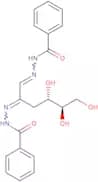
CAS:<p>3-Deoxy-D-glucosone-bis(benzoylhydrazone) is a synthetic compound that has been used in the synthesis of saccharides and oligosaccharides. This reagent can be used for the methylation of glycosyl groups, as well as the modification of carbohydrate chains to produce complex carbohydrates. 3-Deoxy-D-glucosone-bis(benzoylhydrazone) is a white powder with a molecular weight of 239. It is soluble in methanol, ethanol, acetone, and chloroform. The CAS number for this compound is 32443-70-2.</p>Formula:C20H22N4O5Purity:Min. 95%Molecular weight:398.41 g/mol3-Deoxy-D-arabinose
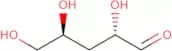
CAS:<p>3-Deoxy-D-arabinose is a sugar that is synthesized by the biochemical process of de novo synthesis. It is a structural component of glycoproteins and lipopolysaccharides, which are essential for bacterial growth. 3-Deoxy-D-arabinose is also used in the regulation of gene expression. The efficient method for its production was discovered by enzymatic dehydrogenation of glucose with the enzyme dehydrogenase, which is encoded by corynebacterium glutamicum. This discovery has led to an unraveling of the wild-type strain's metabolic pathways.</p>Formula:C5H10O4Purity:Min. 95%Molecular weight:134.13 g/mol2-O-Carboxymethyl-D-glucose
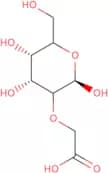
CAS:<p>2-O-Carboxymethyl-D-glucose is a reaction product of D-glucose and chloroacetate. It is often used in the production of sulfoxide and fibre. 2-O-Carboxymethyl-D-glucose can be used as a precursor for other chemical compounds, such as functional groups, acidic monomers, or reactive monomers. It has been shown to react with anhydroglucose at a rate of 1:1. The reaction time for this process is dependent on the concentration of the reactants.</p>Formula:C8H14O8Purity:Min. 95%Color and Shape:White Off-White PowderMolecular weight:238.19 g/mol3,4-Di-O-acetyl-5-azido-5-deoxy-1,2-O-isopropylidene-b-D-fructose
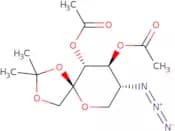
CAS:<p>3,4-Di-O-acetyl-5-azido-5-deoxy-1,2-O-isopropylidene--b-D--fructose is a custom synthesis of 5,6′,7′,8′,9′,10′,11′,12′diOacetylated bromo glycoside. It is a synthetic polysaccharide with a high degree of purity and a wide range of applications. The compound has been shown to have antihypertensive activities in vivo and in vitro. This product can be modified to suit the needs of customers.</p>Formula:C13H19N3O7Purity:Min. 95%Molecular weight:329.31 g/mol1-(4-methoxy-phenoxy)-a-D-talopyranose
<p>Methylation: The process of adding a methyl group to a molecule.<br>Saccharide: A carbohydrate that is composed of sugar units, such as glucose or sucrose.<br>Polysaccharide: A carbohydrate consisting of many sugar units linked together. <br>CAS No.: Chemical Abstracts Service number assigned to a chemical compound, which provides unique identification and allows for the tracking of chemical substances. <br>Modification: The process of altering the physical properties of an organic molecule by adding or removing functional groups. <br>Oligosaccharide: A carbohydrate consisting of three to ten sugar units linked together.<br>Carbohydrate: One type of macronutrient that contains carbon, hydrogen, and oxygen atoms in a ratio of 1:2:1 and can be classified as either simple or complex carbohydrates. <br>Sugar: Carbohydrates that are composed solely of one type of monosaccharide unit and typically have a sweet taste.</p>Purity:Min. 95%Methyl b-D-thioxylopyranoside
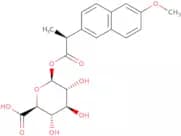
CAS:<p>Methyl b-D-thioxylopyranoside is a synthetic sugar that is used in the synthesis of saccharides and oligosaccharides. It is also used to modify saccharides, such as glucosamine, by adding methyl groups to the sugar's hydroxyl group. Methyl b-D-thioxylopyranoside can be used for glycans with high purity and high yield. This product does not contain any other substances except for water and ethanol. The chemical formula for this product is C6H8O6.</p>Purity:Min. 95%(S)-Naproxen acyl-b-D-glucuronide
CAS:<p>Naproxen is a non-steroidal anti-inflammatory drug (NSAID) that is used to relieve pain and reduce inflammation. The NSAIDs are metabolized in the liver by oxidation, reduction, hydrolysis, or conjugation with glucuronic acid. Naproxen undergoes a number of metabolic transformations including fragmentation, which can be detected using an MS/MS analyzer. Naproxen acyl-b-D-glucuronide is an oxidative metabolite of naproxen that has been shown to have high uptake into mammalian cells and bioconcentrates in fish. This metabolite has also been shown to be metabolized in the liver by conjugation with glucuronic acid.</p>Formula:C20H22O9Purity:Min. 95%Molecular weight:406.38 g/molMethyl 2-deoxy-5-O-[(1,1-dimethylethyl)diphenylsilyl]-β-D-erythro-pentofuranoside
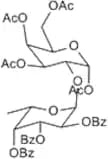
CAS:<p>Methyl 5-O-(tert-butyldiphenylsilyl)-2-deoxy-b-D-ribofuranoside is a modified sugar that is used in the synthesis of oligosaccharides. This compound has been shown to be easily synthesized from 2,3,4,6-tetraacetylbenzoyl chloride and methyl 5-hydroxyisophthalate. Methyl 5-O-(tert-butyldiphenylsilyl)-2-deoxy-b-D-ribofuranoside is not found in nature and can be used as a precursor for glycosylation reactions.</p>Formula:C22H30O4SiPurity:Min. 95%Molecular weight:386.56 g/mol1,3,4,6-Tetra-O-acetyl-2-O-(2,3,4-tri-O-benzoyl-a-L-fucopyranosyl)-a-D-galactopyranose
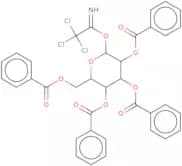
CAS:<p>1,3,4,6-Tetra-O-acetyl-2-O-(2,3,4-tri-O-benzoyl-a-L-fucopyranosyl)-a-D-galactopyranose is a high purity, custom synthesis of an oligosaccharide consisting of a complex carbohydrate. The saccharide is modified with methylation and glycosylation. This product has been fluorinated and synthesized through the Click chemistry.</p>Formula:C41H42O17Purity:Min. 95%Molecular weight:806.76 g/mol2,3,4,6-Tetra-O-benzoyl-D-galactopyranosyl trichloroacetimidate
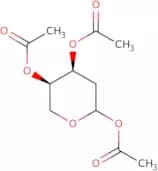
CAS:<p>2,3,4,6-Tetra-O-benzoyl-D-galactopyranosyl trichloroacetimidate is a fluorinated carbohydrate that can be used for synthesis of complex carbohydrates. It is a monosaccharide with an O-benzoyl group at the 2 position and a glycosylation at the 4 position. The chemical structure has been modified by a reaction with trichloroacetimidate to form an acetal linker. This product is available in both custom synthesis and high purity.</p>Formula:C36H28Cl3NO10Purity:Min. 95%Color and Shape:White To Yellow SolidMolecular weight:740.97 g/mol1,3,4-Tri-O-acetyl-2-deoxy-D-ribopyranose
CAS:<p>1,3,4-Tri-O-acetyl-2-deoxy-D-ribopyranose is a custom synthesis of a complex carbohydrate. It is an Oligosaccharide with a molecular weight of 534.88 g/mol. The chemical modification includes the methylation and glycosylation of this saccharide. This carbohydrate has fluorination at the 2' position and has been synthesized using Click chemistry. The purity of this compound is high and it can be used for research purposes.</p>Formula:C11H16O7Purity:Min. 95%Molecular weight:260.24 g/molAllyl 4,6-O-benzylidene-a-L-glucopyranoside
<p>Allyl 4,6-O-benzylidene-a-L-glucopyranoside is a glycosylation agent that is used in the synthesis of oligosaccharides. It is a synthetic compound that can be modified to produce complex carbohydrates. Allyl 4,6-O-benzylidene-a-L-glucopyranoside has been shown to be effective for the fluorination and methylation of sugar chains. It also has high purity and CAS number, which makes it an excellent choice for custom synthesis.</p>Purity:Min. 95%Ondansetron 6-D-glucuronide (mixture of isomers)
<p>Ondansetron 6-D-glucuronide is a modified form of the active drug, ondansetron. It is a mixture of two isomers: (2S,3R)-2-(4-methoxybenzoyl) 3-hydroxy-1,6-diphenylhexane and (2S,3S)-2-(4-methoxybenzoyl) 3-hydroxy-1,6-diphenylhexane. Ondansetron 6-D-glucuronide is used as an antiemetic in the prevention of nausea and vomiting caused by cancer chemotherapy and radiation therapy. This compound is custom synthesized for high purity and efficacy in preventing nausea and vomiting. Ondansetron 6D glucuronide binds to the serotonin 5HT3 receptor on the nerve cells in the gastrointestinal tract and brain that control vomiting.</p>Purity:Min. 95%Sulpho Lewisa Na
<p>Sulpho Lewisa Na is a complex carbohydrate that has been modified with fluorination and methylation. This product is custom synthesized, high purity, and has a CAS number. It is available for synthesis in various lengths of saccharides with a variety of modifications. Sulpho Lewisa Na can be used in the following applications: glycosylations, click modification, and methylation.</p>Formula:C20H34NNaO18SPurity:Min. 95%Molecular weight:631.54 g/molButyl 2-acetamido-2-deoxy-b-D-glucopyranoside
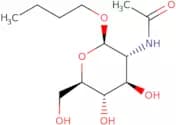
CAS:<p>Butyl 2-acetamido-2-deoxy-β-D-glucopyranoside is a photosynthetic organism that functions as an anti-EGFR antibody. It binds to the EGFR receptor on cancer cells and blocks its activation, preventing tumor growth. This product has been shown to be effective against a wide variety of cancers, including lung, breast, head and neck, ovarian, prostate and bladder cancers.</p>Formula:C12H23NO6Purity:Min. 95%Molecular weight:277.31 g/molG-NGA2F N-Glycan
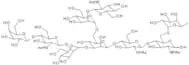
CAS:<p>G-NGA2F N-Glycan is a methylated, saccharide containing oligosaccharide. It is a custom-synthesized, high purity carbohydrate and sugar that can be modified with fluorination. G-NGA2F N-Glycan has been shown to have complex carbohydrate properties with a CAS No. of 84825-26-3.</p>Formula:C62H104N4O46Purity:Min. 95%Color and Shape:SolidMolecular weight:1,641.49 g/mol6-O-Benzoyl-3-O-triisopropylsilyl-D-glucal
<p>6-O-Benzoyl-3-O-triisopropylsilyl-D-glucal is a saccharide that contains an O-benzoyl group and a triisopropylsilyl protecting group. It is also referred to as benzoylglucal. 6-O-Benzoyl-3-O-triisopropylsilyl-D-glucal can be used as a Click modification, which is the addition of a carbon atom in the form of a methylene bridge using copper catalysis in the presence of azide or acetate. In this synthesis, an O6 ether from the glycosylation reaction reacts with an activated carbon atom from the Click modification. This product may be used for glycosylation, which is the process by which sugars are added to proteins or other molecules. 6-O-Benzoylglycosides can be synthesized to modify carbohydrates</p>Formula:C22H34O5SiPurity:Min. 95%Molecular weight:406.59 g/mol
![a-D-[2-13C]-Galactopyranosyl 1-phosphate dipotassium salt](/_next/image/?url=https%3A%2Fstatic.cymitquimica.com%2Fproducts%2F3D%2Fthumb-webp%2FMG138862.webp&w=3840&q=75)



![Methyl 2-deoxy-5-O-[(1,1-dimethylethyl)diphenylsilyl]-β-D-erythro-pentofuranoside](/_next/image/?url=https%3A%2Fstatic.cymitquimica.com%2Fproducts%2F3D%2Fthumb-webp%2FMM06067.webp&w=3840&q=75)