Glycoscience
Glycoscience is the study of carbohydrates and their derivatives, as well as the interactions and biological functions they participate in. This field of research is crucial for understanding a wide variety of biological processes, including cell recognition, signaling, immune response, and disease development. Glycoscience has important applications in biotechnology, medicine, and the development of new drugs and therapies. At CymitQuimica, we offer a wide selection of high-quality, high-purity products for glycoscience research. Our catalog includes monosaccharides, oligosaccharides, polysaccharides, glycoconjugates, and specific reagents, designed to support researchers in their studies on the structure, function, and applications of carbohydrates in biological systems. These resources are intended to facilitate scientific discoveries and practical applications in various areas of bioscience and medicine.
Subcategories of "Glycoscience"
- Aminosugars(108 products)
- Glyco-Related Antibodies(282 products)
- Glycolipids(46 products)
- Glycosaminoglycans (GAGs)(55 products)
- Glycosides(419 products)
- Monosaccharides(6,622 products)
- Oligosaccharides(3,682 products)
- Polysaccharides(503 products)
Found 11041 products of "Glycoscience"
Sort by
Purity (%)
0
100
|
0
|
50
|
90
|
95
|
100
1-D-a-Galactopyranosyl-4-O-[1-(2-octadecylthioethyl)-(b-D-galactopyranoside)]
<p>1-D-a-Galactopyranosyl-4-O-[1-(2-octadecylthioethyl)-(b-D-galactopyranoside)] is a complex carbohydrate that contains a fluorinated sugar. It is synthesized from a monosaccharide and an oligosaccharide and glycosylated with a polysaccharide. The compound has been modified to include methylation and click modification. 1-D-a-Galactopyranosyl-4-O-[1-(2-octadecylthioethyl)-(b-D-galactopyranoside)] can be purchased in high purity from the CAS registry number of 538570–75–6.</p>Purity:Min. 95%D-Threonic acid calcium
CAS:<p>Please enquire for more information about D-Threonic acid calcium including the price, delivery time and more detailed product information at the technical inquiry form on this page</p>Formula:(C4H8O5)2•CaPurity:Min. 95%Molecular weight:312.29 g/molrac-Lotaustralin
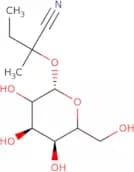
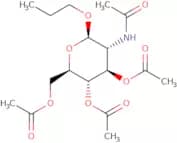
<p>Lotaustralin is a glycosylated, fluorinated, methylated, and modified synthetic compound. Lotaustralin has been shown to inhibit the growth of bacteria by binding to the ribosomes in bacterial cells. It also inhibits the production of inflammatory cytokines and lipopolysaccharide in mice. Lotaustralin is made synthetically through custom synthesis and modification. The purity of the drug exceeds 99%.</p>Formula:C11H19NO6Purity:Min. 95%Molecular weight:261.27 g/molPropyl 2-acetamido-3,4,6-tri-O-acetyl-2-deoxy-b-D-glucopyranoside
CAS:<p>Propyl 2-acetamido-3,4,6-tri-O-acetyl-2-deoxy-b-D-glucopyranoside is a synthetic glycosylamine that has been fluorinated at the C2 position and modified with a methyl group. It is used in the synthesis of complex carbohydrates for use as antigens or vaccines. This product can be custom synthesized to order and is available in high purity form.</p>Formula:C17H27NO9Purity:Min. 95%Molecular weight:389.4 g/mol6,6'-Di-O-tert-butyldimethylsilyl-lactal
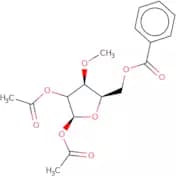
CAS:<p>6,6'-Di-O-tert-butyldimethylsilyl-lactal is a synthetic glycosylation reagent that has been used in the synthesis of oligosaccharides and sugar derivatives. This compound is known to have a high purity and can be custom synthesized to meet your specifications. The fluorination reaction of this compound yields 6,6'-di-O-tert-butyldimethylsilyl-lactal, which can be methylated to yield 6,6'-di-O-methyl-lactal. The methylation reaction can be used to introduce a click modification onto the molecule. A complex carbohydrate is formed by the reaction of 6,6'-di-O-methyl lactal with other monosaccharide or polysaccharide. The saccharide group can also be modified with a click modification.</p>Purity:Min. 95%1,2-O-Di-O-acetyl-5-O-benzoyl-3-O-methyl-D-ribofuranose
CAS:<p>1,2-O-Di-O-acetyl-5-O-benzoyl-3-O-methyl -D-ribofuranose is a custom synthesis of a fluorinated sugar. It has been modified through fluorination at the C5 position and methylation at the O1 and O2 positions. This product can be used in the synthesis of oligosaccharides and saccharides that are glycosylated with sugars.</p>Formula:C17H20O8Purity:Min. 95%Molecular weight:352.34 g/mol6-Azido-a-D-galactose-1-dihydrogenphosphate
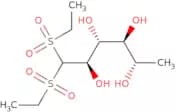
CAS:<p>6-Azido-a-D-galactose-1-dihydrogenphosphate is a custom synthesis that is a complex carbohydrate. It is an Oligosaccharide and CAS No. 1374984-64-1, Polysaccharide with Modification, saccharide and Methylation, Glycosylation, Carbohydrate. This compound can be modified with Click modification, sugar or High purity, Fluorination. 6-Azido-a-D-galactose-1-dihydrogenphosphate is synthesized by Synthetic methods and has high purity.</p>Formula:C6H12N3O8PPurity:Min. 95%Molecular weight:285.15 g/molL-Rhamnose bis(ethylsulfone)
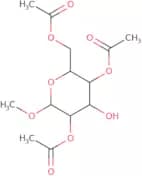
CAS:<p>L-Rhamnose bis(ethylsulfone) is a custom synthesis that belongs to the class of saccharides. L-Rhamnose bis(ethylsulfone) is often used in the production of complex carbohydrates, such as polysaccharides and glycosylation. It has been modified with fluorination, methylation, and click modification. L-Rhamnose bis(ethylsulfone) can be used for the synthesis of oligosaccharides or saccharides by glycosylation.</p>Formula:C10H22O8S2Purity:Min. 95%Molecular weight:334.41 g/molMethyl 2,4,6-tri-O-acetyl-b-D-glucopyranoside
CAS:<p>Methyl 2,4,6-tri-O-acetyl-b-D-glucopyranoside is a modified sugar that is synthesized by a click reaction. This compound has been shown to be an efficient glycosylide donor for the synthesis of complex carbohydrates. Methyl 2,4,6-tri-O-acetyl-b-D-glucopyranoside has been used in the synthesis of oligosaccharides and glycosylated proteins.</p>Purity:Min. 95%2,3,4,6-Tetra-O-acetyl-1,5-anhydro-D-mannitol
CAS:<p>2,3,4,6-Tetra-O-acetyl-1,5-anhydro-D-mannitol is a high yield precursor for the production of the drug 2,3,4,6-tetraacetoxybenzoin. The anomers are selectively formed by reacting with chlorides and iodides at elevated temperatures. The reaction yields the diastereomeric mixture of tetraacetoxybenzoin in a ratio of about 1:2. This product also reacts with acetobromoglucose to produce acrylonitrile (ACN). 2,3,4,6-Tetra-O-acetyl-1,5-anhydro-D-mannitol is a catalytic precursor for the production of the drug 2-(pyranosyl)-1-[2-(chloro)acetylamino]-2-(nitrophenyl)ethanol (PAN). This product can be</p>Formula:C14H20O9Purity:Min. 95%Molecular weight:332.3 g/molCellulose acetate hydrogen phthalate
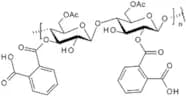
CAS:<p>Cellulose acetate phthalate (CAP) finds use in the formulation of pharmaceuticals, such as the enteric coating of tablets or capsules and for controlled release formulations, where it is often used with other coating agents such as ethyl cellulose. It contains about 50% acetate and 25% as the phthalate ester with the rest as free hydroxyl groups. Enteric coatings based on CAP are resistant to acidic gastric fluids, but easily soluble in mildly basic medium of the intestine. The pH-sensitive solubility of CAP is mainly determined (as are other properties of this mixed ester) by the degree of substitution and by the molar ratio (acetyl and phthaloyl groups).</p>Purity:Min. 95%N-Acetyl-D-[UL-13C6]glucosamine
CAS:<p>N-Acetyl-D-[UL-13C6]glucosamine is a complex carbohydrate that contains a sugar at the end of a glycosidic bond. This product is modified with methylation, glycosylation, and fluorination. It has CAS No. 127959-06-2, High purity, and is custom synthesized for your specific needs.</p>Formula:C6C2H15NO6Purity:Min. 95%Molecular weight:227.21 g/molHydroxypropyl cellulose - Average MW 100,000
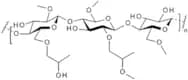
CAS:<p>In water, hydroxypropyl cellulose forms liquid crystals with many mesophases depending on concentration. These mesophases include isotropic, anisotropic, nematic and cholesteric, the latter resulting in many colors such as violet, green and red. Pharmaceutical applications include treatments for medical conditions such as dry eye syndrome (keratoconjunctivitis sicca), recurrent corneal erosions, decreased corneal sensitivity, exposure and neuroparalytic keratitis. It is also used as a binder in tablets. Hydroxypropylcellulose is also used as a thickener, a binder and emulsion stabiliser in foods with E number E463. HPC is used as a support matrix for DNA separations by capillary and microchip electrophoresis.</p>Purity:Min. 95%2-Acetamido-2,4-dideoxy-4-fluoro-6-O-(3-mercaptopropanoyl)-D-glucopyranose
<p>2-Acetamido-2,4-dideoxy-4-fluoro-6-O-(3-mercaptopropanoyl)-D-glucopyranose is a sugar with a molecular formula of C10H14O7F3NO6 and a molecular weight of 441.33. It has high purity and is custom synthesized to order. It is an important building block in the synthesis of oligosaccharides, monosaccharides, saccharides, and complex carbohydrates. 2-Acetamido-2,4-dideoxy-4-fluoro-6-O-(3-mercaptopropanoyl)-D-glucopyranose has many modifications including fluorination, glycosylation, methylation, and modification. This product has CAS number 1778791 and can be found under the name Oligosaccharide (CAS No. 17</p>Purity:Min. 95%3-Deoxy-1,2:5,6-di-O-isopropylidene-a-D-gulofuranose
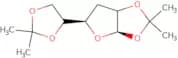
<p>3-Deoxy-1,2:5,6-di-O-isopropylidene-a-D-gulofuranose is a synthetic sugar that is used in the production of glycoproteins. It is an important component of glycosaminoglycans, which are complex carbohydrates that are responsible for the formation and maintenance of connective tissue. 3DG has been modified by fluorination, glycosylation, methylation, and modification. It can be used to synthesize oligosaccharides and monosaccharides. It can also be used as a raw material for the synthesis of saccharides. 3DG has been shown to inhibit tumor growth in animal models because it decreases protein synthesis in cancer cells.</p>Formula:C12H20O5Purity:Min. 95%Molecular weight:244.28 g/molb-Estradiol 3-(b-D-glucuronide) sodium salt
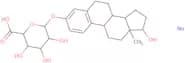
CAS:<p>B-Estradiol 3-(β-D-glucuronide) sodium salt is a conjugate of estradiol and glucuronic acid. Estrogens are hormones that regulate the development and maintenance of female external genitalia, secondary sexual characteristics, and reproductive function. B-Estradiol 3-(β-D-glucuronide) sodium salt is a metabolite of estradiol. It has been shown to be effective in wastewater treatment plants for the removal of estrogenic compounds from wastewater. This compound has also been validated for monitoring 17β-estradiol with high sensitivity and specificity. The enhanced detection limit of this compound can be used to monitor estrone levels in environmental samples.</p>Formula:C24H31O8NaPurity:Min. 95%Molecular weight:470.49 g/mol5-O-Trityl-D-ribose
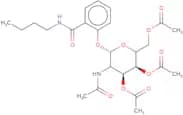
CAS:<p>5-O-Trityl-D-ribose is a sugar derivative that is used in the chemical synthesis of pharmaceuticals, natural products, and other compounds. It is an important intermediate in the synthesis of various nucleosides and nucleotides.</p>Purity:Min. 95%2'-(N-Butylcarboamido)phenyl-2-acetamido-3,4,6-tri-O-acetyl-2-deoxy-b-D-glucopyranoside
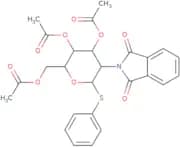
<p>2'-(N-Butylcarboamido)phenyl-2-acetamido-3,4,6-tri-O-acetyl-2-deoxy-b-D-glucopyranoside is a glycosylation product that is custom synthesized for use in fluoroquinolone drug development. It is an acetamido derivative of 2'-phenylglycosides that undergoes fluorination and methylation to produce the desired compound. This product has been shown to be a potent inhibitor of bacterial cell wall synthesis by glycosylation of the peptidoglycan strands.</p>Formula:C25H34N2O10Purity:Min. 95%Molecular weight:522.54 g/molPhenyl-3,4,6-tri-O-acetyl-2-deoxy-2-phthalimido-b-D-thioglucopyranoside
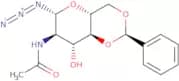
CAS:<p>Phenyl-3,4,6-tri-O-acetyl-2-deoxy-2-phthalimido-b-D-thioglucopyranoside is a glycosylation reagent that is used in the synthesis of complex carbohydrates. It reacts with an activated monosaccharide to form a glycosidic linkage between the sugar and the phenol group of the sugar. Phenyl 3,4,6 triacetate 2 deoxy 2 phthalimido B D thioglucopyranoside can be used for modifying polysaccharides and saccharides by fluorination or methylation. The compound has CAS No. 79528 49 7 and is available as custom synthesis. It is also available in high purity.</p>Purity:Min. 95%2-Acetamido-4,6-O-benzylidene-2-deoxy-b-D-glucopyranosyl azide
CAS:<p>2-Acetamido-4,6-O-benzylidene-2-deoxy-b-D-glucopyranosyl azide is a synthetic carbohydrate that has been modified with an azide group. This modification allows for the introduction of a variety of different functional groups to be incorporated into the carbohydrate. This synthetic carbohydrate can be used as a sugar or glycosylation acceptor in chemical synthesis, and it is soluble in water. The CAS number for this compound is 168397-51-1.</p>Formula:C15H18N4O5Purity:Min. 95%Molecular weight:334.33 g/mol
![1-D-a-Galactopyranosyl-4-O-[1-(2-octadecylthioethyl)-(b-D-galactopyranoside)]](/_next/image/?url=https%3A%2Fstatic.cymitquimica.com%2Fproducts%2F3D%2Fthumb-webp%2FOG12060.webp&w=3840&q=75)





![N-Acetyl-D-[UL-13C6]glucosamine](/_next/image/?url=https%3A%2Fstatic.cymitquimica.com%2Fproducts%2F3D%2Fthumb-webp%2FMA44797.webp&w=3840&q=75)