Glycoscience
Glycoscience is the study of carbohydrates and their derivatives, as well as the interactions and biological functions they participate in. This field of research is crucial for understanding a wide variety of biological processes, including cell recognition, signaling, immune response, and disease development. Glycoscience has important applications in biotechnology, medicine, and the development of new drugs and therapies. At CymitQuimica, we offer a wide selection of high-quality, high-purity products for glycoscience research. Our catalog includes monosaccharides, oligosaccharides, polysaccharides, glycoconjugates, and specific reagents, designed to support researchers in their studies on the structure, function, and applications of carbohydrates in biological systems. These resources are intended to facilitate scientific discoveries and practical applications in various areas of bioscience and medicine.
Subcategories of "Glycoscience"
- Aminosugars(108 products)
- Glyco-Related Antibodies(282 products)
- Glycolipids(46 products)
- Glycosaminoglycans (GAGs)(55 products)
- Glycosides(419 products)
- Monosaccharides(6,622 products)
- Oligosaccharides(3,682 products)
- Polysaccharides(503 products)
Found 11041 products of "Glycoscience"
Sort by
Purity (%)
0
100
|
0
|
50
|
90
|
95
|
100
Methyl 2,3,4-tri-O-benzyl ribopyranose
CAS:<p>Methyl 2,3,4-tri-O-benzyl ribopyranose is a glycosylation product of Riboflavin. It is an oligosaccharide that is used in the synthesis of saccharides and polysaccharides. Methyl 2,3,4-tri-O-benzyl ribopyranose has a CAS number of 20787-20-6. It can be modified with fluorination or methylation. This product can be custom synthesized to meet your requirements.</p>Purity:Min. 95%Gala1-3Galb1-4Glc-HSA
<p>Gala1-3Galb1-4Glc-HSA is a high purity, synthetic galactosylated glycosaminoglycan. Gala1-3Galb1-4Glc-HSA is an important component of the mucin layer that coats the gastrointestinal tract and protects it from infection. It also has a role in promoting epithelial cell growth and repair. The product is available in custom synthesis or can be modified to meet specific requirements.</p>Purity:Min. 95%2,3,4-Tri-O-benzoyl-1-bromo-D-glucuronide methyl ester
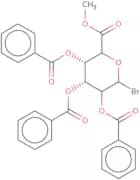
<p>2,3,4-Tri-O-benzoyl-1-bromo-D-glucuronide methyl ester is a modification of an oligosaccharide. The oligosaccharide is a complex carbohydrate that has been modified by the introduction of a bromine atom at the 2 position of the glucuronic acid moiety. This modification was accomplished through custom synthesis and high purity. This compound has CAS No. 61257-07-6 and is monosaccharide with a methyl group at the 2 position of the glucose moiety.</p>Formula:C28H23BrO9Purity:Min. 95%Molecular weight:583.38 g/molMemantine N-b-D-glucuronide
CAS:<p>Memantine N-b-D-glucuronide is a monosaccharide. The methylation of the amine group on memantine with methanethiol in the presence of sodium iodide gives the corresponding methylated compound, which is then hydrolyzed to give memantine N-b-D-glucuronide. Memantine N-b-D-glucuronide has been shown to be an inhibitor of polysaccharides and saccharides. It is also fluorinated at position 2 by means of a click modification reaction. This product is available for custom synthesis and modification.</p>Formula:C18H29NO6Purity:Min. 95%Color and Shape:PowderMolecular weight:355.43 g/mol9-Amino-N-acetylneuraminic acid
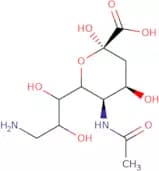
CAS:<p>9-Amino-N-acetylneuraminic acid (9AAN) is a neuraminidase inhibitor. It blocks the activity of neuraminidase, which is an enzyme that hydrolyzes sialic linkages in glycoproteins and glycolipids. 9AAN prevents the release of influenza virus particles from infected cells. This drug can also inhibit toxins that target the nervous system, such as botulinum neurotoxin and tetanus toxin. 9AAN has been shown to have a stabilizing effect on the conformation of proteins and has been used to study conformational changes in enzymes involved in metabolism. 9AAN is synthesized by recombinant DNA technology and acts as a competitive inhibitor for the enzymatic reaction.</p>Formula:C11H20N2O8Purity:Min. 95%Color and Shape:PowderMolecular weight:308.29 g/molOctyl 4-O-acetyl-2,3-O-isopropylidene-a-L-rhamnopyranoside
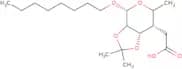
CAS:<p>Octyl 4-O-acetyl-2,3-O-isopropylidene-a-L-rhamnopyranoside is a monosaccharide that is synthesized from the glycosylation of octyl β-D-glucopyranoside and L-rhamnose by means of an acetal exchange reaction. The product is a complex carbohydrate with a molecular weight of 578. This compound can be fluorinated at the hydroxyl group to produce octyl 4-[4-(trifluoromethoxy)phenyl]butanoate, which has been shown to have significant antiinflammatory activities in animal models.</p>Formula:C19H34O6Purity:Min. 95%Molecular weight:358.47 g/mol1,5-a-L-Arabinoheptaose
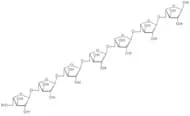
CAS:<p>1,5-a-L-Arabinoheptaose is a sugar that is found in the cell walls of bacteria. The chemical modification of this sugar has been studied extensively. The modification of this sugar with methyl groups and click chemistry has been shown to alter its properties, such as binding affinity and solubility. This modified sugar can be used for glycosylation reactions or custom synthesis. 1,5-a-L-Arabinoheptaose is also available in high purity and with a custom synthesis.</p>Formula:C35H58O29Purity:Min. 95%Color and Shape:PowderMolecular weight:942.82 g/molGD1b-Ganglioside ammonium
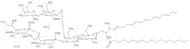
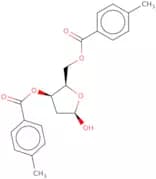
CAS:<p>GD1b ganglioside (shown as ammonium salt) is one of the major gangliosides in neuronal and glial membranes. It has a core tetrasaccharide structure (Galβ1,3GalNAcβ1,4Galβ1,4Glc) with its two sialic acids linked α2,3/α2,8 to the inner galactose residue, and ceramide linked β to position 1 on the reducing terminal glucose residue (Ledeen, 2009). GD1b ganglioside acts as a receptor for BK virus, as well as for heat-labile LTII-a toxin, produced by enteropathogenicâ¯E. coli. GD1b ganglioside also interacts with tetanus neurotoxin (TeNT) and is crucial for its entry into cells (Kolter, 2012). The functional significance of ammonia in the brain is not yet fully understood: see (Modi 1994).</p>Purity:Min. 95%2-Deoxy-3,5-di-O-toluoyl-D-ribofuranose
CAS:<p>2-Deoxy-3,5-di-O-toluoyl-D-ribofuranose is a sugar that can be custom synthesized. This product is a white to off-white crystalline solid with a melting point of approximately 200°C. It is soluble in water and ethanol, but not in ether or chloroform. The chemical structure of this sugar includes an oxygen atom at the 3 position of the anomeric carbon and a chlorine atom at the 5 position of the anomeric carbon. 2-Deoxy-3,5-di-O-toluoyl-D-ribofuranose has been shown to inhibit glycosylation, methylation, and modification reactions in both nucleic acids and proteins. This product also has been shown to be helpful in understanding complex carbohydrate synthesis by reducing the size of oligosaccharides and monosaccharides into smaller fragments for analysis.</p>Formula:C21H22O6Purity:Min. 95%Molecular weight:370.4 g/molHeparin disaccharide III-H disodium salt
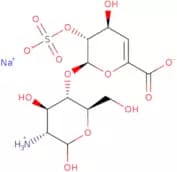
CAS:<p>Heparin is a polysaccharide consisting of repeating units of glucosamine and glucuronic acid that has been shown to have anti-coagulant, antithrombotic, and anti-inflammatory properties. Heparin disaccharide III-H disodium salt is a heparin disaccharide that has been modified by the addition of sodium ions. This heparin disaccharide has been shown to inhibit the proliferation of leukaemia cells in vitro, which may be due to its inhibition of DNA synthesis or cell cycle progression. The mechanism by which this heparin disaccharide inhibits cell growth is not yet known. Research into this mechanism could lead to new treatments for cancer and other diseases.</p>Formula:C12H18NNaO13SPurity:Min. 95%Molecular weight:439.33 g/molallo-Inositol
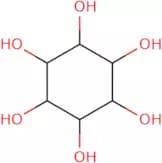
CAS:<p>Allo-inositol is a naturally occurring molecule that is classified as a vitamin. It is a member of the B-complex group of vitamins and has been shown to inhibit growth of cells in the HL-60 cell line. The optimum concentration for allo-inositol was found to be at 100 μM, with an IC50 value of 67 μM. Allo-inositol also has inhibitory properties against ovarian cancer cells and has been investigated as a potential treatment for ovarian cancer. Allo-inositol can be converted into myo-inositol in mammalian cells and may have anticancer effects through this conversion.</p>Formula:C6H12O6Purity:Min. 95%Molecular weight:180.16 g/mol3,4,6-Tri-O-acetyl-b-L-idopyranose 1,2-(methyl orthoacetate)
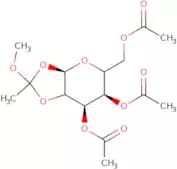
CAS:<p>3,4,6-Tri-O-acetyl-b-L-idopyranose 1,2-(methyl orthoacetate) is a methylated saccharide that is used as a building block for the synthesis of complex carbohydrates. It is synthesized by the reaction of 3,4,6-tri-O-acetyl-b-L-idopyranose with methyl orthoacetate in presence of acid catalyst. 3,4,6-Tri-O-acetyl - b - L - idopyranose 1,2-(methyl orthoacetate) has been shown to have antihyperglycemic effects when administered orally to mice and rats. The compound also has an inhibitory effect on the glycosaminoglycan production in human chondrocytes.</p>Formula:C15H22O10Purity:Min. 95%Molecular weight:362.33 g/molb-D-Galactopyranosyl-(1,4)-O-b-D-glucopyranosyl-(1,4)-D-glucose
<p>This custom synthesis complex carbohydrate has a CAS number and is a polysaccharide. It is modified by methylation, glycosylation, click modification, and fluorination. This carbohydrate has high purity and is synthesized synthetically.</p>Purity:Min. 95%4-O-[3-O-(2-Acetamido-2-deoxy-a-D-galactopyranosyl)-b-D-galactopyranosyl]-D-glucose
CAS:<p>4-O-[3-O-(2-Acetamido-2-deoxy-a-D-galactopyranosyl)-b-D-galactopyranosyl]-D-glucose is a saccharide that is modified with a methyl group at the C4 position. It can be used for the synthesis of other saccharides, oligosaccharides and polysaccharides. The molecular weight of this compound is 564.47 g/mol and its chemical formula is C44H62O30Glu. This product has CAS No. 96623-71-1 and can be purchased from custom synthesis companies with high purity and good quality.</p>Formula:C20H35NO16Purity:Min. 95%Color and Shape:PowderMolecular weight:545.5 g/mol5-O-(5-Amino-5-deoxy-b-D-ribofuranosyl)-1-N-[(S)-4-amino-2-hydroxy-butanoyl]paromamine
<p>5-O-(5-Amino-5-deoxy-b-D-ribofuranosyl)-1-N-[(S)-4-amino-2-hydroxybutanoyl]paromamine is a Glycosylation agent that is used in the synthesis of oligosaccharides and polysaccharides. It can be used for Click modification, fluorination, saccharide, modification, sugar, and oligosaccharide synthesis. This product is CAS No. 51417-97-9 and has purity >99% (HPLC).</p>Purity:Min. 95%4-Hydroxyestradiol-3-O-b-D-glucuronide
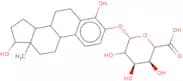
CAS:<p>4-Hydroxyestradiol-3-O-b-D-glucuronide is a synthetic compound that is custom synthesized using click chemistry. It is a methylated derivative of estradiol with a sugar moiety and a glucuronide group attached to the b carbon. This product is soluble in water and ethanol. Chemical modification of 4-hydroxyestradiol-3-O-b-D-glucuronide can be achieved by fluorination, saccharide conjugation, or carbonylation. The CAS number for this compound is 90746-94-4.</p>Formula:C24H32O9Purity:Min. 95%Molecular weight:464.51 g/mol5-(Acetylamino)-5-deoxy-3-S-phenyl-3-thio-D-erythro-a-L-gluco-2-nonulopyranosonic acid methyl ester 2,4,7,8,9-pentaacetate
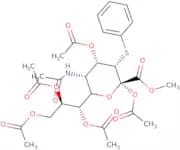
CAS:<p>5-(Acetylamino)-5-deoxy-3-S-phenyl-3-thio-D-erythro-a-L-gluco-2-nonulopyranosonic acid methyl ester 2,4,7,8,9-pentaacetate is a synthetic monosaccharide that can be used for glycosylation and polysaccharide modification. It can also be used as a click chemistry building block to modify sugars. This product has been custom synthesized for the specific needs of our customers. The purity of this compound is greater than 98%.</p>Formula:C28H35NO14SPurity:Min. 95%Molecular weight:641.64 g/molR,S-Ambrisentan-acyl-b-D-glucuronide
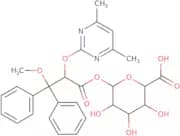
CAS:<p>Ambrisentan is a synthetic, complex carbohydrate that belongs to the group of glycosylations. It has been shown to have anti-inflammatory and vasodilatory effects in animal studies. Ambrisentan is an inhibitor of angiotensin II type 1 receptor (AT1). It binds to the AT1 receptor and blocks the binding of angiotensin II, resulting in reduced blood pressure. The drug also inhibits the activity of sodium channels in vascular smooth muscle cells, which leads to decreased heart rate. Ambrisentan is used for the treatment of pulmonary hypertension.</p>Formula:C28H30N2O10Purity:Min. 95%Molecular weight:554.55 g/mol4-Methylphenyl 2,3,4-tri-O-benzyl-b-D-thioglucopyranoside
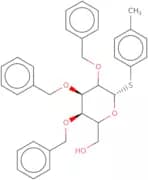
CAS:<p>4-Methylphenyl 2,3,4-tri-O-benzyl-b-D-thioglucopyranoside is a custom synthesis of a fluorinated glycoside that is used as an intermediate for the production of saccharides. This compound has been modified by methylation, monosaccharide, and click chemistry. It is available in high purity and has undergone extensive purification to remove impurities.</p>Formula:C34H36O5SPurity:Min. 95%Molecular weight:556.71 g/molMethyl 2-deoxy-3,5-di-O-benzoyl-D-ribofuranoside
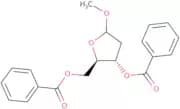
CAS:<p>Methyl 2-deoxy-3,5-di-O-benzoyl-D-ribofuranoside is a custom synthesis that is a complex carbohydrate. It is an Oligosaccharide, Polysaccharide and Modification of saccharides. Methyl 2-deoxy-3,5-di-O-benzoyl-D-ribofuranoside can be used in the modification of sugars and carbohydrates. This product is also fluorinated to increase its purity.</p>Formula:C20H20O6Purity:Min. 95%Molecular weight:356.37 g/mol


![4-O-[3-O-(2-Acetamido-2-deoxy-a-D-galactopyranosyl)-b-D-galactopyranosyl]-D-glucose](/_next/image/?url=https%3A%2Fstatic.cymitquimica.com%2Fproducts%2F3D%2Fthumb-webp%2FOA10409.webp&w=3840&q=75)
![5-O-(5-Amino-5-deoxy-b-D-ribofuranosyl)-1-N-[(S)-4-amino-2-hydroxy-butanoyl]paromamine](/_next/image/?url=https%3A%2Fstatic.cymitquimica.com%2Fproducts%2F3D%2Fthumb-webp%2FOA32030.webp&w=3840&q=75)