Glycoscience
Glycoscience is the study of carbohydrates and their derivatives, as well as the interactions and biological functions they participate in. This field of research is crucial for understanding a wide variety of biological processes, including cell recognition, signaling, immune response, and disease development. Glycoscience has important applications in biotechnology, medicine, and the development of new drugs and therapies. At CymitQuimica, we offer a wide selection of high-quality, high-purity products for glycoscience research. Our catalog includes monosaccharides, oligosaccharides, polysaccharides, glycoconjugates, and specific reagents, designed to support researchers in their studies on the structure, function, and applications of carbohydrates in biological systems. These resources are intended to facilitate scientific discoveries and practical applications in various areas of bioscience and medicine.
Subcategories of "Glycoscience"
- Aminosugars(108 products)
- Glyco-Related Antibodies(282 products)
- Glycolipids(46 products)
- Glycosaminoglycans (GAGs)(55 products)
- Glycosides(419 products)
- Monosaccharides(6,622 products)
- Oligosaccharides(3,682 products)
- Polysaccharides(503 products)
Found 11041 products of "Glycoscience"
Sort by
Purity (%)
0
100
|
0
|
50
|
90
|
95
|
100
Ethyl 2-O-benzoyl-4,6-O-benzylidene-D-thiomannopyranoside
CAS:<p>Ethyl 2-O-benzoyl-4,6-O-benzylidene-D-thiomannopyranoside is a glycosylation reagent that is used in the synthesis of oligosaccharides. This product has been fluorinated and methylated to provide high purity. The chemical name for this product is ethyl 2-O-benzoyl-4,6-O-(1,1'-biphenyl)-2,3,4,5,6 tetrahydroxy thiomannopyranoside. The CAS number for this compound is 153062-23-8.</p>Formula:C22H24O6SPurity:Min. 95%Color and Shape:PowderMolecular weight:416.49 g/molN-Boc-1,5-imino-D-glucitol
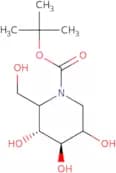
CAS:<p>N-Boc-1,5-imino-D-glucitol is a complex carbohydrate that is synthesized by the N-Boc protection group. It is an oligosaccharide with a molecular weight of about 190 daltons and it can be modified at the C1 position to produce various saccharides. N-Boc-1,5-imino-D-glucitol has been shown to be effective as a glycosylation agent for protein modification and for its ability to form stable complexes with other complex carbohydrates. This compound has also been used in the synthesis of polysaccharides and as a fluorination reagent.</p>Formula:C11H21NO6Purity:Min. 95%Molecular weight:263.29 g/mol32-β-D-Glucosyl-cellobiose
CAS:Controlled Product<p>32-β-D-Glucosyl-cellobiose is a fluorinated carbohydrate that is custom synthesized to meet the needs of the customer. It is a complex carbohydrate that can be modified by methylation, glycosylation, or click modification. It is made of one monosaccharide and two sugars. This product is highly pure and can be used in various applications such as pharmaceuticals, agrochemicals, and food production.</p>Formula:C18H32O16Purity:Min. 95%Molecular weight:504.4 g/mol2-Deoxy-3,5-di-O-toluoyl-b-D-ribofuranosyl cyanide
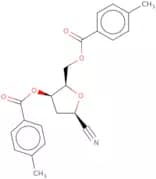
<p>2-Deoxy-3,5-di-O-toluoyl-b-D-ribofuranosyl cyanide is a fluorinated sugar that is synthesized from 2,6-dichloro-1,4,5,8,-tetraoxybenzene and 3,5-di-O-toluoyl bromide. It is a carbohydrate that belongs to the family of oligosaccharides.</p>Formula:C22H21NO5Purity:Min. 95%Molecular weight:379.41 g/mol8-Methoxycarbonyloctyl 2-deoxy-4,6-O-(4-methoxybenzylidene)-2-phthalimido-b-D-glucopyranoside
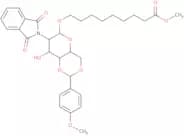
CAS:<p>8-Methoxycarbonyloctyl 2-deoxy-4,6-O-(4-methoxybenzylidene)-2-phthalimido-b-D-glucopyranoside is a sugar that is found in plants. It can be used as a custom synthesis for pharmaceutical purposes. The CAS number of this product is 359436-88-7 and it has a purity of >99%.</p>Formula:C32H39NO10Purity:Min. 95%Molecular weight:597.65 g/mol2,3,4,6-Tetra-O-benzyl-a-D-talopyranose
<p>2,3,4,6-Tetra-O-benzyl-a-D-talopyranose is a glycoside that has been modified with methyl groups at C2 and C6. It also has been fluorinated at the C1 position and saccharified with 2,3,4,6 trihydroxypentane. This product is a custom synthesis for research purposes only.</p>Purity:Min. 95%Ketoprofen acyl-β-D-glucuronide
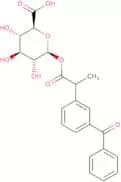
CAS:<p>Ketoprofen acyl-β-D-glucuronide is a nonsteroidal anti-inflammatory drug that inhibits prostaglandin synthesis. It binds to the enzyme cyclooxygenase, which prevents the formation of prostaglandins and thromboxanes. The binding constants have been measured using radiolabeled ketoprofen acyl-β-D-glucuronide in urine samples from patients taking ketoprofen. Ketoprofen acyl-β-D-glucuronide has also been shown to be stereoselective for liver cells and fatty acid metabolism in humans. This drug has not been shown to produce covalent adducts with DNA or RNA.</p>Formula:C22H22O9Purity:Min. 97 Area-%Color and Shape:White Off-White PowderMolecular weight:430.4 g/mol5-Azido-5-deoxy-2,3-O-isopropylidene-D-lyxono-1,4-lactone
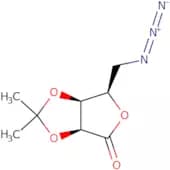
CAS:<p>5-Azido-5-deoxy-2,3-O-isopropylidene-D-lyxono-1,4-lactone is a synthetic monosaccharide. It is used in the synthesis of glycosylated saccharides and oligosaccharides. This product can be custom synthesized at high purity.</p>Formula:C8H11N3O4Purity:Min. 95%Color and Shape:PowderMolecular weight:213.19 g/molBlood Group H-BSA - 15 atom spacer
<p>The H-BSA-15-atom spacer is a synthetic polymer that can be modified to create a glycolipid or glycopeptide. The H-BSA-15-atom spacer is an oligosaccharide with a molecular weight of 3,500 daltons and has been custom synthesized for this use. This product is highly purified and does not contain any other substances, such as proteins. It has been fluorinated to increase its resistance to degradation by enzymes. Glycosylation and click modification have also been performed on the H-BSA-15 atom spacer.</p>Purity:Min. 95%Color and Shape:Powder6-O-Acetyl-1,2:3,5-di-O-methylidene-a-D-glucofuranose
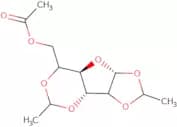
CAS:<p>6-O-Acetyl-1,2:3,5-di-O-methylidene-a-D-glucofuranose is a methylated saccharide that is a member of the polysaccharides. The compound has been modified using click chemistry to produce a fluorescent derivative. 6-O-Acetyl-1,2:3,5-di-O-methylidene-a-D-glucofuranose is also used for glycosylation and can be synthesized to provide high purity carbohydrates or sugars. It has an CAS number of 3244800 and may be used as a fluorinated complex carbohydrate.</p>Formula:C12H18O7Purity:Min. 95%Color and Shape:White to off-white solid.Molecular weight:274.27 g/molAllyl 4,6-O-benzylidene-b-D-glucopyranoside
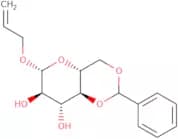
CAS:<p>Allyl 4,6-O-benzylidene-b-D-glucopyranoside is a custom synthesis molecule that can be modified to suit your needs. It has been used in the synthesis of oligosaccharides and polysaccharides. Allyl 4,6-O-benzylidene-b-D-glucopyranoside is a high purity product that has been fluorinated with allyl bromide and benzoyl chloride. This product is a monosaccharide and sugar that can be synthesized from a variety of raw materials.</p>Formula:C16H20O6Purity:Min. 95%Molecular weight:308.33 g/molBenzyl N-acetyl-6-O-benzyl-a-D-muramic acid methyl ester
CAS:<p>Benzyl N-acetyl-6-O-benzyl-a-D-muramic acid methyl ester is a synthetic glycosylation that is custom synthesized for the purpose of modifying glycoproteins. This compound can be used to add a fluorinated sugar to the glycan chain, which can help increase the drug's bioavailability. The synthesis of this compound is achieved through a click modification reaction.</p>Formula:C26H33NO8Purity:Min. 95%Molecular weight:487.54 g/mol1,2,3,5-Tetra-O-acetyl-D-ribofuranose
CAS:<p>1,2,3,5-Tetra-O-acetyl-D-ribofuranose is a dietary supplement that can be found in the form of palladium complexes. This compound has been shown to have anti-inflammatory properties and may be effective against cancer cells. 1,2,3,5-Tetra-O-acetyl-D-ribofuranose is an acetylated pyridazine derivative with antimicrobial and antibacterial effects. It has also been shown to inhibit the synthesis of purines and pyrimidines by cleaving the 6th carbon from ribose. 1,2,3,5-Tetra-O-acetyl-D-ribofuranose is synthesized by chlorination of 2,6-, 3-, 5-, or 7-(chloropurinomethyl)pyridine with mercuric chloride or nitrosyl chloride. The cleavage products are hydroxyl group</p>Purity:Min. 95%5-Deoxy α-L-arabinose and 5-Deoxy β-L-arabinose
CAS:<p>5-Deoxy alpha-L-arabinose and 5-Deoxy beta-L-arabinose are enantiopure compounds that are used in the synthesis of 5-deoxy-l-ribose, which is a precursor to nucleic acids. The reaction products are produced by hydrolyzing rhamnan with hydrochloric acid. This product can be used as a substrate for DNA polymerase and RNA polymerase, which are enzymes involved in the synthesis of nucleic acids. This product also has an acidic nature, which makes it suitable for use in phase chromatography. It has been shown to have stereoselective properties and can be used as an acid catalyst for other reactions.</p>Formula:C5H10O4Purity:Min. 95 Area-%Molecular weight:134.13 g/molRef: 3D-W-201034
1gTo inquire5gTo inquire10gTo inquire500mgTo inquire2500mgTo inquire-Unit-ggTo inquire1-O-Tosyl-2,3:4,5-di-O-isopropylidene-L-arabinitol
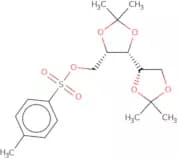
CAS:<p>1-O-Tosyl-2,3:4,5-di-O-isopropylidene-L-arabinitol is a sugar that is used in the synthesis of oligosaccharides and complex carbohydrates. This product can be custom synthesized to meet your needs. It has been shown to react with fluorine at high temperatures and with CH3OH/NaOH at low temperatures. 1-O-Tosyl-2,3:4,5-di-O-isopropylidene arabinitol can also be glycosylated or methylated. The CAS number for this product is 1241674-36-1.</p>Formula:C18H26O7SPurity:Min. 95%Color and Shape:SolidMolecular weight:386.46 g/molMethyl β-D-glucuronide sodium
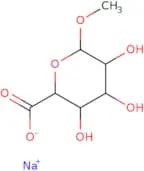
CAS:<p>Methyl β-D-glucuronide sodium is a synthetic sugar that is used as a building block for the synthesis of glycoconjugates. This compound has been shown to be an efficient reagent for the introduction of click modifications into saccharides and oligosaccharides in order to produce glycosylations. Methyl β-D-glucuronide sodium is also used in the modification of polysaccharides, such as starch, cellulose, and chitin.</p>Formula:C7H11NaO7Purity:Min. 95%Color and Shape:PowderMolecular weight:230.15 g/mol1,5-α-L-Arabinotetraose
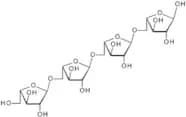
CAS:<p>1,5-alpha-L-Arabinotetraose is a methylated and glycosylated tetrasaccharide with a molecular weight of 720. It is a custom synthesis product with high purity and it can be used for the modification of proteins, polysaccharides, or other compounds. 1,5-alpha-L-Arabinotetraose has been shown to have fluoroquinolone resistance due to its methylation and glycosylation. The compound is an oligosaccharide that is synthesized from arabinose. It can be modified by click chemistry to introduce fluorine atoms at desired positions.</p>Formula:C20H34O17Purity:(%) Min. 95%Color and Shape:Clear Viscous LiquidMolecular weight:546.47 g/molN-Benzyl-2,3,4,6-tetra-O-benzyl-1,5-dideoxy-imino-L-iditol
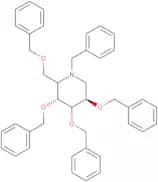
CAS:<p>N-Benzyl-2,3,4,6-tetra-O-benzyl-1,5-dideoxy-imino-L-iditol is a synthetic oligosaccharide with the formula CH(CH)COH. It can be used in the synthesis of glycosides and polysaccharides. This compound has been shown to have antihypertensive activity.</p>Formula:C41H42NO4Purity:Min. 95%Molecular weight:613.8 g/molN-(3,4,6-Tri-O-acetyl-b-D-glucopyranosyl)piperidine
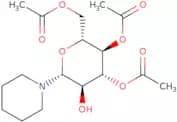
CAS:<p>N-(3,4,6-Tri-O-acetyl-b-D-glucopyranosyl)piperidine is a glycosylation agent that can be used to modify saccharides and oligosaccharides. This compound is used in the synthesis of complex carbohydrates, such as glycogen and starch. It can also be used to modify the sugar chains on glycoproteins and glycolipids. N-(3,4,6-Tri-O-acetyl-b-D-glucopyranosyl)piperidine is a white powder that has not been tested for toxicity.</p>Formula:C17H27NO8Purity:Min. 95%Molecular weight:373.4 g/molBlood Group B trisaccharide-APE,Biotin-BSA
<p>Gala1-3(Fuca1-2)Gal Conjugated to BSA via Biotin & an aminophenyl ethyl spacer</p>Purity:Min. 95%