Glycoscience
Glycoscience is the study of carbohydrates and their derivatives, as well as the interactions and biological functions they participate in. This field of research is crucial for understanding a wide variety of biological processes, including cell recognition, signaling, immune response, and disease development. Glycoscience has important applications in biotechnology, medicine, and the development of new drugs and therapies. At CymitQuimica, we offer a wide selection of high-quality, high-purity products for glycoscience research. Our catalog includes monosaccharides, oligosaccharides, polysaccharides, glycoconjugates, and specific reagents, designed to support researchers in their studies on the structure, function, and applications of carbohydrates in biological systems. These resources are intended to facilitate scientific discoveries and practical applications in various areas of bioscience and medicine.
Subcategories of "Glycoscience"
- Aminosugars(108 products)
- Glyco-Related Antibodies(282 products)
- Glycolipids(46 products)
- Glycosaminoglycans (GAGs)(55 products)
- Glycosides(419 products)
- Monosaccharides(6,622 products)
- Oligosaccharides(3,682 products)
- Polysaccharides(503 products)
Found 11041 products of "Glycoscience"
Sort by
Purity (%)
0
100
|
0
|
50
|
90
|
95
|
100
Carboxymethyl cellulose sodium - Viscosity 2000-4000 mPa·s
CAS:<p>Food additive; soil suspension polymer in detergents; thickening agent</p>Purity:Min. 95%Color and Shape:PowderAMP-Deoxynojirimycin - Solution in ethanol
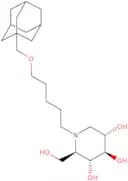
CAS:<p>Potent inhibitor of non-lysosomal glucosylceramidase, without having any effect on glucosylceramide synthase and glucosidases. Anti-inflammatory and immunosuppressive effect of AMP-DNM demonstrated in a model of hapten-induced colitis in vivo. Reduces glycosphingolipids and increases insulin sensitivity in murine models of obesity-related insulin resistance. Induces sterol regulatory element-binding protein (SREBP) target genes in HepG2 cells, activating cholesterol biosynthesis.</p>Formula:C22H39NO5Purity:Min. 95%Color and Shape:Colorless Clear LiquidMolecular weight:397.55 g/mol1,2,3,5-Tetra-O-acetyl-D-ribofuranose
CAS:<p>1,2,3,5-Tetra-O-acetyl-D-ribofuranose is a dietary supplement that can be found in the form of palladium complexes. This compound has been shown to have anti-inflammatory properties and may be effective against cancer cells. 1,2,3,5-Tetra-O-acetyl-D-ribofuranose is an acetylated pyridazine derivative with antimicrobial and antibacterial effects. It has also been shown to inhibit the synthesis of purines and pyrimidines by cleaving the 6th carbon from ribose. 1,2,3,5-Tetra-O-acetyl-D-ribofuranose is synthesized by chlorination of 2,6-, 3-, 5-, or 7-(chloropurinomethyl)pyridine with mercuric chloride or nitrosyl chloride. The cleavage products are hydroxyl group</p>Purity:Min. 95%5-Deoxy α-L-arabinose and 5-Deoxy β-L-arabinose
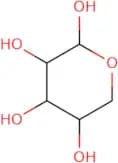
CAS:<p>5-Deoxy alpha-L-arabinose and 5-Deoxy beta-L-arabinose are enantiopure compounds that are used in the synthesis of 5-deoxy-l-ribose, which is a precursor to nucleic acids. The reaction products are produced by hydrolyzing rhamnan with hydrochloric acid. This product can be used as a substrate for DNA polymerase and RNA polymerase, which are enzymes involved in the synthesis of nucleic acids. This product also has an acidic nature, which makes it suitable for use in phase chromatography. It has been shown to have stereoselective properties and can be used as an acid catalyst for other reactions.</p>Formula:C5H10O4Purity:Min. 95 Area-%Molecular weight:134.13 g/molRef: 3D-W-201034
1gTo inquire5gTo inquire10gTo inquire500mgTo inquire2500mgTo inquire-Unit-ggTo inquireCetearyl glucoside
CAS:<p>Cetearyl glucoside is a fatty alcohol that is used as a skin conditioning agent and emollient. It has been shown to be stable in vivo and in vitro, with a phase transition temperature of around 34°C. Cetearyl glucoside is also soluble in water, making it suitable for use in products that have a high water content, such as lotions. Cetearyl glucoside can be used as an excipient or carrier to increase the bioavailability of active ingredients (e.g., vitamins) and offers protection against chemical degradation. This product is also non-comedogenic, meaning it will not clog pores and cause acne breakouts. The fatty acid component of cetearyl glucoside can be derived from soybean oil or from other sources such as castor oil or coconut oil. The fatty acid component can also be derived from animal sources such as lanolin or wool fat.</p>Purity:Min. 95%NBD-Fructose
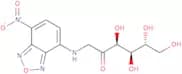
CAS:<p>Fluorescent substrate used to monitor fructose uptake</p>Formula:C12H14N4O8Purity:Min. 95%Molecular weight:342.26 g/molGM1-Pentasaccharide, APD-HSA conjugate
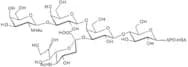
<p>GM1 pentasaccharide, APD-HSA has a core tetrasaccharide structure (Galβ1,3GalNAcβ1,4Galβ1,4Glc) with a single sialic acid residue linked α2,3 to the inner galactose residue. Human serum albumin (HSA) is attached β to position 1 of the reducing glucose moiety via an acetylphenylenediamine (APD)â¯linker (Ledeen, 2009). This type of conjugate has been useful in the study of the role of GM1 ganglioside in the diarrheal response caused by cholera toxin (Cervin, 2018).</p>Purity:Min. 95%D-Mannono-D-lactam
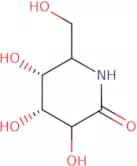
CAS:<p>D-Mannono-D-lactam is a synthetic, sugar-based molecule. The compound is an antibiotic that inhibits bacterial growth by binding to the 50S ribosomal subunit of bacteria. It is active against a wide range of Gram-positive and Gram-negative bacteria, including methicillin resistant Staphylococcus aureus (MRSA), as well as Mycobacterium tuberculosis and Mycobacterium avium complex. D-Mannono-D-lactam has shown antiinflammatory properties, which may be due to its inhibition of prostaglandin synthesis.</p>Formula:C6H11NO5Purity:Min. 95%Color and Shape:White SolidMolecular weight:177.16 g/mol1,5-α-L-Arabinotetraose
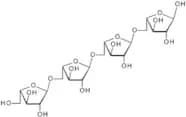
CAS:<p>1,5-alpha-L-Arabinotetraose is a methylated and glycosylated tetrasaccharide with a molecular weight of 720. It is a custom synthesis product with high purity and it can be used for the modification of proteins, polysaccharides, or other compounds. 1,5-alpha-L-Arabinotetraose has been shown to have fluoroquinolone resistance due to its methylation and glycosylation. The compound is an oligosaccharide that is synthesized from arabinose. It can be modified by click chemistry to introduce fluorine atoms at desired positions.</p>Formula:C20H34O17Purity:(%) Min. 95%Color and Shape:Clear Viscous LiquidMolecular weight:546.47 g/molRhamnolipids C14-C14
CAS:<p>Rhamnose based 'green' surfactant</p>Formula:C34H64O9Purity:Min. 95%Color and Shape:PowderMolecular weight:616.88 g/molEthyl 2,3,4,6-tetra-O-benzyl-b-D-galactopyranoside
<p>Ethyl 2,3,4,6-tetra-O-benzyl-b-D-galactopyranoside is a custom synthesis. It is a modification of the natural product 6-fluoro-3-indoxyl beta-D-galactopyranoside. The fluorine atoms on the sugar ring are substituted with methyl groups. This modification increases the stability of the molecule against hydrolysis by esterases and glutathione reductase. This compound has not been evaluated for safety or efficacy in humans.</p>Purity:Min. 95%N-(3,4,6-Tri-O-acetyl-b-D-glucopyranosyl)piperidine
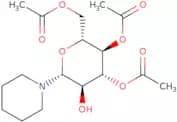
CAS:<p>N-(3,4,6-Tri-O-acetyl-b-D-glucopyranosyl)piperidine is a glycosylation agent that can be used to modify saccharides and oligosaccharides. This compound is used in the synthesis of complex carbohydrates, such as glycogen and starch. It can also be used to modify the sugar chains on glycoproteins and glycolipids. N-(3,4,6-Tri-O-acetyl-b-D-glucopyranosyl)piperidine is a white powder that has not been tested for toxicity.</p>Formula:C17H27NO8Purity:Min. 95%Molecular weight:373.4 g/molBlood Group B trisaccharide-APE,Biotin-BSA
<p>Gala1-3(Fuca1-2)Gal Conjugated to BSA via Biotin & an aminophenyl ethyl spacer</p>Purity:Min. 95%2,3,4-Tri-O-acetyl-β-D-xylopyranosyl azide
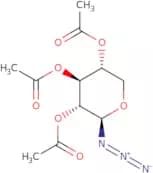
CAS:<p>2,3,4-Tri-O-acetyl-b-D-xylopyranosyl azide is a compound that has a linear range of 10 to 500 μM. It has been shown to inhibit the growth of bacteria such as C. perfringens and S. aureus. This compound inhibits the production of toxins in these bacteria by binding to the ribosomes and inhibiting protein synthesis. In addition, this compound has been shown to have high activity at salinity levels up to 15% NaCl and diffraction data was obtained from 2,3,4-tri-O-acetyl-b-D-xylopyranosyl azide crystals using XRD in order to quantify its molecular structure.</p>Formula:C11H15N3O7Purity:Min. 98 Area-%Color and Shape:PowderMolecular weight:301.25 g/molD-Xylose-2-C-D
CAS:<p>Please enquire for more information about D-Xylose-2-C-D including the price, delivery time and more detailed product information at the technical inquiry form on this page</p>Formula:C5H10O5Purity:Min. 95%Molecular weight:151.14 g/mol1,2:3,4-Di-O-isopropylidene-b-D-arabinopyranose
CAS:<p>1,2:3,4-Di-O-isopropylidene-b-D-arabinopyranose is a synthetic carbohydrate that can be modified with fluorination or methylation. It is a high purity and custom synthesis product.</p>Formula:C11H18O5Purity:Min. 95%Molecular weight:230.26 g/molEthyl 3-O-allyl-2-O-benzyl-4,6-O-benzylidene-b-D-thiogalactopyranoside
<p>Ethyl 3-O-allyl-2-O-benzyl-4,6-O-benzylidene-b-D-thiogalactopyranoside is a custom synthesized product that is used for the modification of saccharides. It is a white crystalline powder with a melting point of about 180°C. The CAS number for this product is [1]. Ethyl 3-O-allyl-2-O-benzyl-4,6 - O -benzylidene - b - D - thiogalactopyranoside reacts with glycosyl halides to form glycosides and methyl iodide to form methyl glycosides. This product also can be used in click chemistry reactions.<br>Methylation of the sugar moiety can be performed on this product too. It has high purity and fluorescence properties that may be useful in fluorescent labeling experiments.</p>Purity:Min. 95%7-b,17-a-Dimethyl-5-b-androstane-3-a,17-b-diol glucuronide
<p>7-b,17-a-Dimethyl-5-b-androstane-3-a,17-b-diol glucuronide is a custom synthesis that can be modified in the fluorination, methylation, and monosaccharide. This compound has a CAS No. and it is a polysaccharide with a glycosylation of sugar. It is also an oligosaccharide with saccharides. 7-b,17-a Dimethyl 5 b androstane 3 a,17 b diol glucuronide is classified as a complex carbohydrate.</p>Formula:C27H43O8·NaPurity:Min. 95%Molecular weight:518.62 g/mol(4R)-Benzyl-4-deoxy-4-C-nitrophenyl-b-D-arabinopyranoside
<p>(4R)-Benzyl-4-deoxy-4-C-nitrophenyl-b-D-arabinopyranoside is a synthetic glycoside that has been modified by fluorination and saccharide. It is a custom synthesis, which means it can be synthesized to order with high purity. This compound is used in the modification of glycoconjugates and polysaccharides, as well as the synthesis of oligosaccharides. It is also used in click chemistry, which involves the use of copper and azide ions.</p>Formula:C19H21NO6Purity:Min. 95%Molecular weight:359.37 g/mol4,7,8,9-Tetra-O-acetyl-N-acetyl-2-deoxy-2-fluoro-b-D-neuraminic acid allyl ester
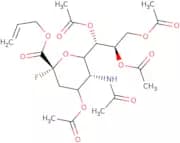
CAS:<p>4,7,8,9-Tetra-O-acetyl-N-acetyl-2-deoxy-2-fluoro-b-D-neuraminic acid allyl ester is a custom synthesized chemical that has been modified with fluorination and methylation. This product is an oligosaccharide, saccharide, and polysaccharide. The product also has a high purity.</p>Formula:C22H30FNO12Purity:Min. 95%Molecular weight:519.47 g/mol