Glycoscience
Glycoscience is the study of carbohydrates and their derivatives, as well as the interactions and biological functions they participate in. This field of research is crucial for understanding a wide variety of biological processes, including cell recognition, signaling, immune response, and disease development. Glycoscience has important applications in biotechnology, medicine, and the development of new drugs and therapies. At CymitQuimica, we offer a wide selection of high-quality, high-purity products for glycoscience research. Our catalog includes monosaccharides, oligosaccharides, polysaccharides, glycoconjugates, and specific reagents, designed to support researchers in their studies on the structure, function, and applications of carbohydrates in biological systems. These resources are intended to facilitate scientific discoveries and practical applications in various areas of bioscience and medicine.
Subcategories of "Glycoscience"
- Aminosugars(108 products)
- Glyco-Related Antibodies(282 products)
- Glycolipids(46 products)
- Glycosaminoglycans (GAGs)(55 products)
- Glycosides(419 products)
- Monosaccharides(6,622 products)
- Oligosaccharides(3,682 products)
- Polysaccharides(503 products)
Found 11041 products of "Glycoscience"
Sort by
Purity (%)
0
100
|
0
|
50
|
90
|
95
|
100
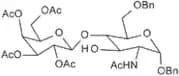
2-Acetamido-4-O-(2,3,4,6-tetra-O-acetyl-b-D-galactopyranosyl)-1,6-di-O-benzyl-2-deoxy-a-D-glucopyranoside
CAS:<p>The glycoconjugate is a glycosylation of an oligosaccharide with a monosaccharide. It is synthesized by the reaction of an activated saccharide with an alcohol or amine, and is modified by methylation, click modification, fluorination or acetylation. The glycoconjugate has been shown to be used as a potential treatment for cancer.</p>Formula:C36H45NO15Purity:Min. 95%Molecular weight:731.74 g/mol5-Azido-6-O-(tert-butyldimethylsilyl)-2,3-O-isopropylidene L-gulono-1,4-lactone
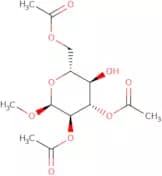
CAS:<p>5-Azido-6-O-(tert-butyldimethylsilyl)-2,3-O-isopropylidene L-gulono-1,4-lactone is a custom synthesis carbohydrate that has been modified by methylation and glycosylation. This carbohydrate is also fluorinated. It is a complex carbohydrate that has been synthesized using the click modification to form an azide on the C5 position of the sugar. The product has high purity and can be used in a variety of applications including as a fluorescence probe for DNA sequencing or as a fluorescent labeling agent for proteins or other biomolecules.</p>Formula:C15H27N3O5SiPurity:Min. 95%Color and Shape:White PowderMolecular weight:357.48 g/molMethyl 2,3,6-tri-O-acetyl-a-D-glucopyranoside
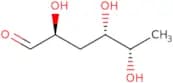
CAS:<p>Methyl 2,3,6-tri-O-acetyl-a-D-glucopyranoside is a fluorinated monosaccharide that can be used in the synthesis of oligosaccharides, polysaccharides and complex carbohydrates. This product is custom synthesized for customers with specific needs. The modification of Methyl 2,3,6-tri-O-acetyl-a-D-glucopyranoside can also be done to provide desired properties. The purity of this product is high and suitable for various applications.</p>Formula:C13H20O9Purity:Min. 95%Molecular weight:320.29 g/molColitose
CAS:<p>Colitose is a sugar that has antimicrobial properties. It is a monosaccharide, which means it contains six carbon molecules. Colitose has been shown to inhibit bacterial growth and to prevent the development of resistant mutants in human serum. Colitose has also been shown to have therapeutic potential for infectious diseases such as bowel disease and other inflammatory bowel diseases. The structural analysis of colitose revealed that it contains terminal residues at the end of each chain, which are composed of glucose, galactose, and mannose. The glycan chains are linked together by alpha-1,6-glycosidic bonds. These terminal residues serve as a receptor for Toll-like receptors (TLRs), which are found on cells in the bowel wall and help regulate inflammation.</p>Formula:C6H12O4Purity:Min. 95%Color and Shape:PowderMolecular weight:148.16 g/molα-D-Glucosamine 1-phosphate
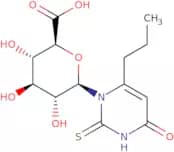
CAS:<p>α-D-Glucosamine 1-phosphate is a methylated and glycosylated carbohydrate that is synthesized from glucose. It can be used as a building block for the synthesis of polysaccharides, such as chitin and cellulose. α-D-Glucosamine 1-phosphate can also be modified by fluorination to produce an active form with potent anticancer activity.</p>Formula:C6H14NO8PPurity:Min. 95%Molecular weight:259.15 g/molPropylthiouracil N-b-D-glucuronide
CAS:<p>Propylthiouracil N-b-D-glucuronide is a glycosylation product of propylthiouracil, which is the active form of this drug. It has been shown to inhibit thyroid hormone synthesis by binding to the enzyme thyroid peroxidase. Propylthiouracil N-b-D-glucuronide is used in the treatment of thyrotoxicosis, and can also be used as an antithyroid agent for hyperthyroidism. It is chemically synthesized from propylthiouracil with a glycosyl group added at the C3 position on the thiourea ring by glycosyltransferases. This compound has also been fluorinated and polysaccharided, modified and saccharided, oligosaccharided or sugar, synthetic or monosaccharide, custom synthesis or high purity.</p>Formula:C13H18N2O7SPurity:Min. 95%Molecular weight:346.36 g/molO-(2-Acetamido-2-deoxy-3,4,6-tri-O-acetyl-D-glucopyranosylidene)amino N-(4-nitrophenyl)carbamate
CAS:<p>O-(2-Acetamido-2-deoxy-3,4,6-tri-O-acetyl-D-glucopyranosylidene)amino N-(4-nitrophenyl)carbamate is a synthetic compound that has been modified with fluorine. The compound is an example of a glycosylation reaction, which is the process of joining two sugars to form a complex carbohydrate. It has been modified with Methylation and Click modification. O-(2-Acetamido-2-deoxy-3,4,6-tri-O-acetyl)-D glucopyranosylidene)amino N-(4 nitrophenyl)carbamate also has a saccharide component and is classified as Polysaccharide. This compound can be custom synthesized for customers who need high purity or oligosaccharides.</p>Formula:C21H24N4O12Purity:Min. 95%Molecular weight:524.44 g/molMethyl 3,4-O-isopropylidene-a-D-galactopyranoside
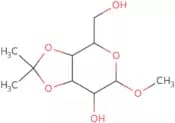
CAS:<p>Methyl 3,4-O-isopropylidene-a-D-galactopyranoside is a white crystalline powder that is soluble in water. This product is used in the synthesis of complex carbohydrate and glycosylation. It has CAS No. 40269-01-0 and can be custom synthesized to meet your requirements. The purity of this product is over 99%.</p>Formula:C10H18O6Purity:Min. 95%Molecular weight:234.25 g/molMethyl 3-O-benzyl-a-L-rhamnopyranoside
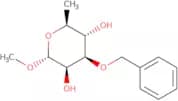
CAS:<p>Methyl 3-O-benzyl-a-L-rhamnopyranoside is a synthetic, fluorinated sugar that is used as a glycosylation and methylation reagent. It can be used for the synthesis of oligosaccharides, polysaccharides, and saccharides in the laboratory. Methyl 3-O-benzyl-a-L-rhamnopyranoside is not found in any natural sources.</p>Formula:C14H20O5Purity:Min. 95%Molecular weight:268.31 g/molMethyl 2,3-di-O-acetyl-4,6-O-benzylidene-a-D-glucopyranoside
CAS:<p>Methyl 2,3-di-O-acetyl-4,6-O-benzylidene-a-D-glucopyranoside is a glycosylation agent that is used to attach sugars to proteins, polysaccharides, and other biological molecules. This compound can be synthesized in custom quantities with high purity. It is often used for the modification of saccharides and oligosaccharides. Methyl 2,3-di-O-acetyl-4,6-O-benzylidene-a -D glucopyranoside has been shown to react with a variety of functional groups including amines, alcohols, carboxylic acids, thiols and sulfhydryls.</p>Formula:C18H22O8Purity:Min. 95%Molecular weight:366.37 g/mol4,5,7-Tri-O-acetyl-2,6-anhydro-3-deoxy-D-lyxo-hept-2-enonamide
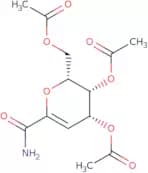
CAS:<p>4,5,7-Tri-O-acetyl-2,6-anhydro-3-deoxy-D-lyxo-hept-2-enonamide is a carbohydrate that belongs to the group of oligosaccharides. It is a synthetic compound that has been modified with fluorination and methylation. This compound has been synthesized with high purity and custom synthesis. The modification process includes glycosylation and click chemistry.</p>Formula:C13H17NO8Purity:Min. 95%Molecular weight:315.28 g/molMethyl 3-O-benzyl-2-deoxy-D-arabinopyranoside
<p>Methyl 3-O-benzyl-2-deoxy-D-arabinopyranoside is a custom synthesis that belongs to the class of complex carbohydrates. It can be used as a modification of saccharides and polysaccharides, in addition to being methylated and glycosylated. This product is also fluorinated for use in click chemistry. Methyl 3-O-benzyl-2-deoxy-D-arabinopyranoside has high purity, which makes it suitable for use in pharmaceuticals, biochemistry, and other research applications.</p>Formula:C13H18O4Purity:Min. 95%Molecular weight:238.28 g/mol3-Deoxy-D-arabinose
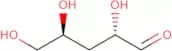
CAS:<p>3-Deoxy-D-arabinose is a sugar that is synthesized by the biochemical process of de novo synthesis. It is a structural component of glycoproteins and lipopolysaccharides, which are essential for bacterial growth. 3-Deoxy-D-arabinose is also used in the regulation of gene expression. The efficient method for its production was discovered by enzymatic dehydrogenation of glucose with the enzyme dehydrogenase, which is encoded by corynebacterium glutamicum. This discovery has led to an unraveling of the wild-type strain's metabolic pathways.</p>Formula:C5H10O4Purity:Min. 95%Molecular weight:134.13 g/mol1-O-Benzyl-2,3-O-isopropylidene-6-O-tosyl-a-L-sorbofuranoside
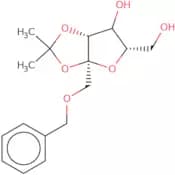
CAS:<p>1-O-Benzyl-2,3-O-isopropylidene-6-O-tosyl-a-L-sorbofuranoside is a modification of the carbohydrate sialic acid. It is synthesized by the methylation and glycosylation of 1,2,3,4,6-pentaacetoxycyclohexane with 2,3,4,6-tetraacetoxybenzaldehyde in the presence of a base. The product is then converted to the corresponding 1-(1'-benzyl)-2-(2',3' or 4'-isopropylidene)-6-(1'-tosyl) derivative with sodium methoxide in methanol. This compound has been used as an intermediate for polysaccharides and sugars.</p>Formula:C23H28O8SPurity:Min. 95%Molecular weight:464.53 g/molrac cis-Moxifloxacin acyl-b-D-glucuronide
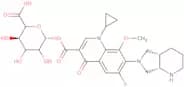
CAS:<p>Moxifloxacin is a fluoroquinolone antibiotic that inhibits bacterial DNA gyrase and topoisomerase IV, which are enzymes that maintain the integrity of bacterial DNA. Moxifloxacin forms an acyl-b-D-glucuronide metabolite (rac) which has a lower risk of drug resistance than moxifloxacin itself. Rac-moxifloxacin acyl-b-D-glucuronide also has a higher affinity for bacterial 16S ribosomal RNA, leading to better inhibition of protein synthesis and cell death. This drug is synthesized by modification of sugar moieties on the racemic compound with glycals to form oligosaccharides and polysaccharides. It is then methylated with a methyl group from S-adenosyl methionine (SAM). The resulting product is purified by crystallization or column chromatography to remove impurities. Rac cis</p>Formula:C27H32FN3O10Purity:Min. 95%Color and Shape:SolidMolecular weight:577.56 g/molNefopam glucuronide
<p>Nefopam is a compound that has been used as an analgesic and antipyretic. It is structurally related to the benzodiazepine class of drugs, but is not chemically equivalent to any other known drug. Nefopam has a low therapeutic index and can cause severe toxic effects in overdose. The most common adverse effects of nefopam are dizziness, drowsiness, headache, nausea and vomiting. An overdose can lead to death by respiratory paralysis or cardiac arrest.</p>Formula:C23H27NO7Purity:Min. 95%Molecular weight:429.46 g/molD-Mannose- 4- 13C
CAS:<p>D-Mannose is a sugar that is found in many plants and animals. It can be extracted from natural sources or synthesized with the use of Click modification, fluorination, glycosylation, and methylation. D-Mannose has been shown to inhibit bacterial adhesion and prevent the formation of biofilms. In addition, it has been shown to have anti-inflammatory activities. D-Mannose is a complex carbohydrate that is composed of saccharides joined together in chains and rings.</p>Purity:Min. 95%Molecular weight:181.15 g/molMyo-inositol-d6
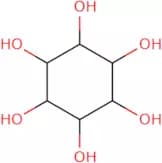
CAS:<p>Myo-inositol-d6 is a stable isotope of myo-inositol. It is used to monitor the biosynthesis of myo-inositol in yeast cells. Myo-inositol is a carbohydrate that has regulatory functions in yeast cells. Myo-inositol-d6 can be used as an extracellular bioassay for determining the uptake and intracellular distribution of myo-inositol in mammalian cells.</p>Formula:C6H12O6Purity:Min. 95%Color and Shape:PowderMolecular weight:186.19 g/mol1,3,4-Tri-O-acetyl-2-deoxy-D-ribopyranose
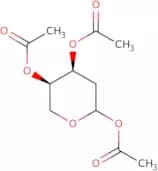
CAS:<p>1,3,4-Tri-O-acetyl-2-deoxy-D-ribopyranose is a custom synthesis of a complex carbohydrate. It is an Oligosaccharide with a molecular weight of 534.88 g/mol. The chemical modification includes the methylation and glycosylation of this saccharide. This carbohydrate has fluorination at the 2' position and has been synthesized using Click chemistry. The purity of this compound is high and it can be used for research purposes.</p>Formula:C11H16O7Purity:Min. 95%Molecular weight:260.24 g/mol6-O-Benzoyl-3-O-triisopropylsilyl-D-glucal
<p>6-O-Benzoyl-3-O-triisopropylsilyl-D-glucal is a saccharide that contains an O-benzoyl group and a triisopropylsilyl protecting group. It is also referred to as benzoylglucal. 6-O-Benzoyl-3-O-triisopropylsilyl-D-glucal can be used as a Click modification, which is the addition of a carbon atom in the form of a methylene bridge using copper catalysis in the presence of azide or acetate. In this synthesis, an O6 ether from the glycosylation reaction reacts with an activated carbon atom from the Click modification. This product may be used for glycosylation, which is the process by which sugars are added to proteins or other molecules. 6-O-Benzoylglycosides can be synthesized to modify carbohydrates</p>Formula:C22H34O5SiPurity:Min. 95%Molecular weight:406.59 g/mol