Glycoscience
Glycoscience is the study of carbohydrates and their derivatives, as well as the interactions and biological functions they participate in. This field of research is crucial for understanding a wide variety of biological processes, including cell recognition, signaling, immune response, and disease development. Glycoscience has important applications in biotechnology, medicine, and the development of new drugs and therapies. At CymitQuimica, we offer a wide selection of high-quality, high-purity products for glycoscience research. Our catalog includes monosaccharides, oligosaccharides, polysaccharides, glycoconjugates, and specific reagents, designed to support researchers in their studies on the structure, function, and applications of carbohydrates in biological systems. These resources are intended to facilitate scientific discoveries and practical applications in various areas of bioscience and medicine.
Subcategories of "Glycoscience"
- Aminosugars(108 products)
- Glyco-Related Antibodies(282 products)
- Glycolipids(46 products)
- Glycosaminoglycans (GAGs)(55 products)
- Glycosides(419 products)
- Monosaccharides(6,622 products)
- Oligosaccharides(3,682 products)
- Polysaccharides(503 products)
Found 11041 products of "Glycoscience"
Sort by
Purity (%)
0
100
|
0
|
50
|
90
|
95
|
100
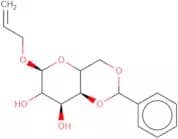
Allyl 4,6-O-benzylidene-a-D-glucopyranoside
CAS:<p>Allyl 4,6-O-benzylidene-a-D-glucopyranoside is a custom synthesis of an oligosaccharide. It is a complex carbohydrate that belongs to the group of saccharides. This product is methylated and glycosylated, and contains a hexose sugar (glucose) at its reducing end. Allyl 4,6-O-benzylidene-a-D-glucopyranoside has been fluorinated with hydrogen fluoride gas in order to increase its purity. This product is synthesized by click chemistry and has CAS number 65987-12-4.</p>Formula:C16H20O6Purity:Min. 95%Molecular weight:308.33 g/molNeocarrabiose (b anomer, crystalline)
CAS:<p>Neocarrabiose is a complex carbohydrate that is synthesized by the methylation of carrageenan. It has a molecular weight of about 1,000 Daltons and consists of a linear chain of alternating units of D-galactose and D-glucuronic acid. Neocarrabiose is used in the production of polysaccharides such as heparin, glycosaminoglycans, and polysulfated glycosaminoglycans. The enzyme modification process converts the anomeric configuration to L-arabinofuranose in order to produce polysaccharides with high purity.</p>Formula:C12H20O10Purity:Min. 95%Molecular weight:324.28 g/mol5-Deoxy-3,4-di-O-methyl-D-arabinose
<p>5-Deoxy-3,4-di-O-methyl-D-arabinose is a custom synthesis that is a complex carbohydrate. It has been modified by methylation and glycosylation. This product is soluble in water and can be used as a saccharide or sugar. The product has been fluorinated and modified with click chemistry to provide high purity.</p>Purity:Min. 95%Rhein D-Glucuronide (mixture of 1 & 8 Isomers)
<p>Rhein D-Glucuronide is a mixture of 1 and 8 isomers. It is a natural product that has been modified by methylation and saccharide modification. The CAS number for Rhein D-Glucuronide is 7062-00-2. This product can be custom synthesized to meet your needs. Rhein D-Glucuronide has the following properties: Polysaccharides, Click modification, Modification, Oligosaccharides, Custom synthesis, Glycosylation, High purity, Carbohydrate sugar, Synthetic and Fluorination. Rhein D-Glucuronide is a complex carbohydrate with high purity.</p>Purity:Min. 95%H Type II-APD-BSA
<p>H Type II-APD-BSA is a custom synthetic sugar that is used as an electron acceptor to reduce a variety of electron-deficient aromatic compounds. H Type II-APD-BSA can be modified with fluorine, which makes it an ideal reagent for the synthesis of complex carbohydrates. This product was created by methylation, click modification, and oligosaccharide synthesis. It has a CAS number, is made of saccharides and polysaccharides, and contains monosaccharides and sugars.</p>Purity:Min. 95%Entecavir 3''-O-b-D-glucuronide
<p>Entecavir 3''-O-b-D-glucuronide is a synthetic compound that is a methylated, fluorinated, and modified oligosaccharide. It has CAS number 68655-87-8 and it is a high purity, complex carbohydrate with a saccharide unit. Entecavir 3''-O-b-D-glucuronide can be used in the synthesis of monosaccharides and polysaccharides.</p>Formula:C18H23N5O9Purity:Min. 95%Color and Shape:SolidMolecular weight:453.4 g/mol1,4-Dideoxy-1,4-imino-D-xylitol HCl
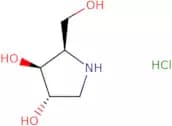
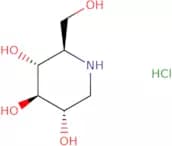
CAS:<p>1,4-Dideoxy-1,4-imino-D-xylitol HCl (DDX) is a potent inhibitor of the enzyme carboxypeptidase A2. DDX has been shown to inhibit the growth of HIV in vitro and in vivo. DDX also inhibits the production of proinflammatory cytokines and neurotrophic factors from HL60 cells. It has been shown to be a potential drug target for the treatment of infectious diseases such as alphaviruses, which produce a severe neuroinvasive disease in humans. DDX binds to dna with high affinity and specificity, but does not bind to RNA or proteins. DDX inhibits mitochondrial membrane potential by binding to ATP synthase and blocking the synthesis of ATP. DDX has also been shown to have an anti-oxidative injury effect on mitochondria, which may contribute to its inhibition of viral replication.</p>Formula:C5H11NO3·HClPurity:Min. 95%Molecular weight:169.61 g/molLacto-N-fucopentaose II-BSA
<p>Lacto-N-fucopentaose II-BSA is a glycosylation agent that is derived from the natural substrate N-acetylgalactosamine. It is used in the synthesis of complex carbohydrates, such as glycoconjugates and polysaccharides. Lacto-N-fucopentaose II-BSA can be modified with methyl groups or fluorine atoms to generate derivatives, which are useful for studying glycosylation reactions. The CAS number for this product is 46645-96-8. This product is synthesized using custom methods and has been purified to high purity levels.</p>Purity:Min. 95%cis-Resveratrol 4'-O-b-D-glucuronide
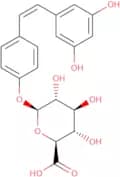
CAS:<p>cis-Resveratrol 4'-O-b-D-glucuronide is a synthetic compound that is a sugar, with a molecular weight of 598. It is an oligosaccharide and has been modified with fluorination on the C2 position. cis-Resveratrol 4'-O-b-D-glucuronide is the methylated form of resveratrol. It has been shown to have anti-inflammatory properties and can be used for the treatment of inflammation associated with arthritis, psoriasis, or septic shock. cis-Resveratrol 4'-O-b-D-glucuronide binds to polysaccharides in the body and inhibits their ability to bind to glycoproteins on cell surfaces. This results in a decrease in inflammation and other inflammatory responses that are mediated by these cells.</p>Formula:C20H20O9Purity:Min. 95%Molecular weight:404.37 g/mol1-Deoxy-L-ribose
CAS:<p>1-Deoxy-L-ribose is a metabolite of acetone. It is a monosaccharide that contains one less oxygen atom than its parent compound. 1-Deoxy-L-ribose is found in the urine and blood of humans and animals. In animals, it can be synthesized from glucose by the enzyme ribose 1-phosphate reductase. This reaction requires an energy source such as ATP or NADH to reduce ribose 1,5-bisphosphate to 1,4-dihydroxyacetone phosphate, which then undergoes spontaneous dehydration to form 1-deoxy-D-ribose.</p>Formula:C5H10O4Purity:Min. 95%Molecular weight:134.13 g/mol1-Deoxy-L-altronojirimycin hydrochloride
CAS:<p>L-altronojirimycin is a diterpene glycoside that belongs to the group of natural products that have inhibitory properties against lipid peroxidation. It has been shown to decrease the concentration of 1,2-dipalmitoylglycerophosphocholine (DPPC) in primary cells and reduce the rate of lipid peroxidation in a concentration-dependent manner. L-altronojirimycin inhibits the activity of enzymes such as acetylcholinesterase and phospholipase A2, which are involved in inflammation. This drug has also been shown to have cardioprotective effects and inhibit mutations in cardiac muscle cells. L-altronojirimycin has been tested for its long-term efficacy and shown to be effective against both bowel disease and cardiac effects.</p>Formula:C6H13NO4•HClPurity:Min. 95%Color and Shape:PowderMolecular weight:199.63 g/molMethyl 3-acetamido-4,6-O-benzylidene-2,3-dideoxy-a-D-ribo-hexopyranoside
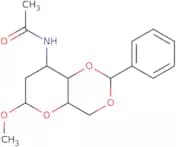
CAS:<p>Methyl 3-acetamido-4,6-O-benzylidene-2,3-dideoxy-a-D-ribohexopyranoside is an organic compound. It is a fluorescent glycosylation reagent used in the synthesis of oligosaccharides and polysaccharides. The modification of this product can be customized to suit your needs. This product is available in high purity and with a CAS No. 23819-31-0.</p>Formula:C16H21NO5Purity:Min. 95%Molecular weight:307.35 g/mol4,6-O-(2-Naphthylidene)-D-glucal
<p>4,6-O-(2-Naphthylidene)-D-glucal is a complex carbohydrate that is synthesized by the modification of a polysaccharide. It has been modified by a methylation reaction, glycosylation, and click chemistry. It is an Oligosaccharide with CAS No., and has a high purity. 4,6-O-(2-Naphthylidene)-D-glucal has been fluorinated to increase its stability in the presence of water as well as to prevent it from reacting with other molecules.</p>Purity:Min. 95%Valienamine HCl
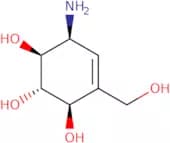
CAS:<p>Glucosidase Inhibitor</p>Formula:C7H13NO4Purity:Min. 95%Color and Shape:White to off-white solid.Molecular weight:175.18 g/molMethyl (methyl 3-deoxy-D-arabino-hept-2-ulopyranosid)onate-7-(diphenyl phosphate)
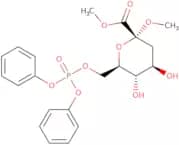
CAS:<p>Methyl (methyl 3-deoxy-D-arabino-hept-2-ulopyranosid)onate-7-(diphenyl phosphate) is a carbohydrate that belongs to the group of oligosaccharides. It is synthesized from an alditol acetate precursor and can be modified with fluorination, methylation, glycosylation, or click chemistry. Methyl (methyl 3-deoxy-D-arabino-hept-2-ulopyranosid)onate-7-(diphenyl phosphate) is used in various industrial applications as a reagent for the synthesis of complex carbohydrates. This compound has CAS No. 91382–79–5.</p>Formula:C21H25O10PPurity:Min. 95%Molecular weight:468.39 g/molMethyl 2,3,4-tri-O-acetyl-b-D-glucuronide methyl ester
CAS:<p>Methyl 2,3,4-tri-O-acetyl-b-D-glucuronide methyl ester is a custom synthesis chemical. It has a molecular weight of 342.13 g/mol and the abbreviation CAS No. 34213-34-8. Methyl 2,3,4-tri-O-acetyl-b-D-glucuronide methyl ester is used as a Modification chemical in Fluorination reactions and can be used to synthesize Oligosaccharides and Polysaccharides. This chemical reacts with Glycosylation reactions to form complex carbohydrates such as saccharides and sugar.</p>Formula:C14H20O10Purity:Min. 95%Molecular weight:348.31 g/mol2-Acetamido-1,3-di-O-benzyl-4,6-O-benzylidene-2-deoxy-b-D-glucopyranoside
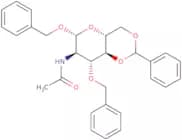
CAS:<p>2-Acetamido-1,3-di-O-benzyl-4,6-O-benzylidene-2-deoxy-b-D-glucopyranoside is a modification of a carbohydrate. It is a complex carbohydrate that has been synthesized by custom synthesis. It is an oligosaccharide with high purity and monosaccharides methylated at the hydroxyl group. The glycosylation and polysaccharide have been synthesized with fluorination and saccharides.</p>Formula:C29H31NO6Purity:Min. 95%Molecular weight:489.56 g/molAsialo-GM1-pentasaccharide-APD-HSA
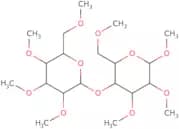
<p>Asialo-GM1-pentasaccharide-APD-HSA is a complex carbohydrate that is custom synthesized. It has high purity and CAS No. This product is a monosaccharide, methylated, glycosylated, polysaccharide with sugar and fluorinated saccharides.</p>Purity:Min. 95%Methyl cellulose - USP testing specifications, viscosity: 1,500 cP
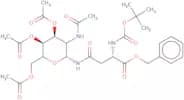
CAS:<p>Methyl cellulose is a synthetic polymer of cellulose. It is prepared by treating the natural polymer with a methylating agent, such as dimethyl sulfate. Methylation is carried out in the presence of an acid catalyst to produce mainly methyl ethers and methyl esters. The degree of substitution may be controlled by the amount of catalyst. Methyl cellulose is used as a thickener, emulsifier, or stabilizer in many food products, including ice cream and toothpaste.</p>Purity:Min. 95%2N-Boc-4N-(2-acetamido-2-deoxy-3,4,6-tri-O-acetyl-b-D-glucopyranosyl)-L-asparagine-O-benzyl ester
<p>Glycosylation is the process of adding glycosyl groups to a molecule. This process is essential for the synthesis of complex carbohydrates, which are essential in cell membranes and other biological structures. Methylation is the addition of one or more CH3 groups to a compound. Click chemistry is a type of chemical reaction that is used when an orthogonal protection strategy is required. Polysaccharides are long chains of sugar molecules linked together by glycosidic bonds. Fluorination is the introduction of fluorine into organic molecules to modify their properties. Saccharide refers to any sugar, especially monosaccharides and oligosaccharides. Modification refers to the altering of a molecule by adding or removing functional groups, such as methyl groups or glycosyl groups. Sugar refers to any carbohydrate that contains two hydroxyl (OH) groups on adjacent carbons and includes monosaccharides and oligosaccharides. Synthetic means artificially made by humans</p>Formula:C30H41N3O13Purity:Min. 95%Molecular weight:651.67 g/mol