Glycoscience
Glycoscience is the study of carbohydrates and their derivatives, as well as the interactions and biological functions they participate in. This field of research is crucial for understanding a wide variety of biological processes, including cell recognition, signaling, immune response, and disease development. Glycoscience has important applications in biotechnology, medicine, and the development of new drugs and therapies. At CymitQuimica, we offer a wide selection of high-quality, high-purity products for glycoscience research. Our catalog includes monosaccharides, oligosaccharides, polysaccharides, glycoconjugates, and specific reagents, designed to support researchers in their studies on the structure, function, and applications of carbohydrates in biological systems. These resources are intended to facilitate scientific discoveries and practical applications in various areas of bioscience and medicine.
Subcategories of "Glycoscience"
- Aminosugars(108 products)
- Glyco-Related Antibodies(282 products)
- Glycolipids(46 products)
- Glycosaminoglycans (GAGs)(55 products)
- Glycosides(419 products)
- Monosaccharides(6,622 products)
- Oligosaccharides(3,682 products)
- Polysaccharides(503 products)
Found 11042 products of "Glycoscience"
Sort by
Purity (%)
0
100
|
0
|
50
|
90
|
95
|
100
Methyl 3,4-isopropylidene-b-L-arabinopyranoside
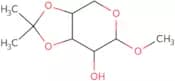
CAS:<p>Methyl 3,4-isopropylidene-b-L-arabinopyranoside is a synthetic saccharide that has been modified by the Click chemistry. Click modification is a method of modifying a complex carbohydrate with a reactive group (e.g., an azide) at one end of the molecule and an electrophile at the other end of the molecule. The resulting product can be used in glycosylation reactions to form complex carbohydrates with various properties. Methyl 3,4-isopropylidene-b-L-arabinopyranoside is used as a precursor for the synthesis of oligosaccharides and polysaccharides. It also has been shown to be effective as an inhibitor of bacterial growth in vitro by inhibiting protein synthesis.</p>Formula:C9H16O5Purity:Min. 95%Molecular weight:204.22 g/mol4,6-O-Benzylidene-N-Boc-2-O-p-toluenesulfonyl-1,5-imino-D-glucitol
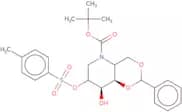
CAS:<p>4,6-O-Benzylidene-N-Boc-2-O-p-toluenesulfonyl-1,5-imino-D-glucitol is a monosaccharide that is used in the synthesis of complex carbohydrates. This compound can be custom synthesized and has a high purity. It is also available as a CAS number 1219116-88-7. 4,6-O-Benzylidene can be modified with methylation, click modification, fluorination, saccharide modification, or polysaccharide modification.</p>Formula:C25H31NO8SPurity:Min. 95%Molecular weight:505.58 g/mol1,3,4,6-Tetra-O-acetyl-2-benzoylamino-2-deoxy-D-glucopyranoside
CAS:<p>1,3,4,6-Tetra-O-acetyl-2-benzoylamino-2-deoxy-D-glucopyranoside is a synthetic carbohydrate with a fluorinated sugar that has been custom synthesized for use in click chemistry. The fluorination at the 2 position of the sugar provides an additional site for modification and has been shown to increase stability. This product is available in high purity, and can be used for oligosaccharide synthesis.</p>Formula:C21H25NO10Purity:Min. 95%Molecular weight:451.42 g/molIvermectin monosaccharide
CAS:<p>Ivermectin monosaccharide is a molecule that has been shown to have an inhibitory effect on the uptake of glucose by cyathostomes. This molecule does not bind to inulin, but it does bind to the receptor binding site for ivermectin. Ivermectin monosaccharide has been shown to have a high affinity for the receptor binding site and can be used as an alternative method for detecting low concentrations of ivermectin.</p>Formula:C41H62O11Purity:Min. 95%Molecular weight:730.92 g/molMan-2a N-Glycan
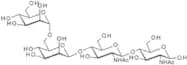
CAS:<p>Man-2a N-glycan is a modification of the oligosaccharide mannose that is an important component of many glycoproteins. This product can be custom synthesized, and has been shown to have high purity. It is a carbohydrate that contains a monosaccharide and a polysaccharide. The glycan may also contain methylation, glycosylation, or fluorination. It has CAS No. 491845-49-9, which is the number assigned by the Chemical Abstracts Service (CAS) division of the American Chemical Society to identify substances.</p>Formula:C28H48N2O21Purity:Min. 95%Molecular weight:748.68 g/molEthyl 2,3,4,6-tetra-O-acetyl-b-D-galactopyranoside
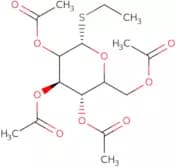
Ethyl 2,3,4,6-tetra-O-acetyl-b-D-galactopyranoside is a modified sugar that is synthesized from the natural sugar galactose. This modification can be done using different methods such as click chemistry or fluorination. The product is available in a range of purities and quantities.Formula:C16H24O10Purity:Min. 95%Molecular weight:376.36 g/mol6-O-Benzyl-D-glucose
CAS:<p>6-O-Benzyl-D-glucose is an aglycon of 6-O-benzylglycosides, which are synthesized from glucose by alkaline hydrolysis in the presence of silver oxide. The benzyl group can be removed by a variety of methods, including treatment with hydrogen chloride gas. 6-O-Benzyl-D-glucose has been used in research to demonstrate that carbohydrates have a common structural feature that can be identified by looking at their molecular structure. This molecule has also been used to study the synthesis and reactivity of benzyl groups.</p>Formula:C13H18O6Purity:Min. 95%Molecular weight:270.28 g/molMethyl-2,3,6-tri-O-benzoyl-a-D-mannopyranose monohydrate
<p>Methyl-2,3,6-tri-O-benzoyl-a-D-mannopyranose monohydrate is a carbohydrate compound with the formula CHO. It is an Oligosaccharide made of three α-(1→2) linked mannose residues and one α-(1→3) linked mannose residue. This modification has been shown to be important for glycosylation and polysaccharide synthesis. Methyl-2,3,6-tri-O-benzoyl-a-D-mannopyranose monohydrate has high purity and CAS No.</p>Purity:Min. 95%4,5-O-Isopropylidene-b-D-fructopyranose
CAS:<p>4,5-O-Isopropylidene-b-D-fructopyranose is a fluorinated monosaccharide that is synthesized by the glycosylation of an aldonic acid with an appropriate sugar. It is soluble in water and many organic solvents. 4,5-O-Isopropylidene-b-D-fructopyranose can be used to synthesize a variety of oligosaccharides and polysaccharides. This product has been modified with methyl groups at various positions on the sugar ring. The chemical name for this product is 4,5-O-[2-(1,1,3,3,-tetramethylbutyl)phenoxy]isopropylidene b-[2-(2,2,6,6,-tetramethylpiperidiniumoxy)ethoxy] D-[beta]-D -fructopyran</p>Formula:C9H16O6Purity:Min. 95%Molecular weight:220.22 g/molAllyl 2,3,4,6-tetra-O-benzyl-a-D-glucopyranoside
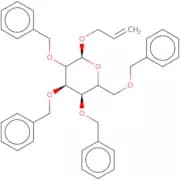
CAS:<p>Allyl 2,3,4,6-tetra-O-benzyl-a-D-glucopyranoside is a synthetic monosaccharide. It can be used in the synthesis of complex carbohydrates by glycosylation and polysaccharide modification. It can also be used for click chemistry modification, methylation, and sugar modifications. Allyl 2,3,4,6-tetra-O-benzyl-a-D-glucopyranoside is of high purity and is available for custom synthesis.</p>Formula:C37H40O6Purity:Min. 95%Molecular weight:580.71 g/mol3,4,6-Tri-O-acetyl-2-deoxy-2-phthalimido-a-D-glucopyranosyl fluoride
CAS:<p>3,4,6-Tri-O-acetyl-2-deoxy-2-phthalimido-a-D-glucopyranosyl fluoride is a synthetic saccharide that has been modified with the Click chemistry. It is an acetylated derivative of 2,3,4,6-trihydroxybenzoic acid and was prepared by the fluorination of 3,4,6-trihydroxybenzoic acid followed by glycosylation with 4-(N-(1-(ethoxycarbonyl)ethyl)amino)-benzeneboronic acid. The product is a white to off white powder that is soluble in water and low solvents. The purity of this product is >98% as determined by HPLC analysis.</p>Formula:C20H20FNO9Purity:Min. 95%Molecular weight:437.37 g/molDextran 70 - MW 64,000 to 76,000, EP
CAS:<p>Complex glucan (a 1-6) from Leuconostoc spp.; extender in blood transfusions.</p>Purity:Min. 95%Tri-O-acetyl-4,6-O-benzylidene-D-glucopyranose
CAS:<p>Tri-O-acetyl-4,6-O-benzylidene-D-glucopyranose is a synthetic oligosaccharide that is used as an intermediate in the preparation of triacetylated glycosaminoglycans. This compound is also useful for studying glycosylation reactions and for measuring sugar binding affinity. Tri-O-acetyl-4,6-O-benzylidene-D-glucopyranose has been custom synthesized by our chemists to meet your specific requirements.</p>Formula:C19H22O9Purity:Min. 95%Molecular weight:394.4 g/molGM1-Lysoganglioside sodium
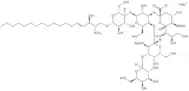
CAS:<p>GM1-Lysoganglioside (sodium salt) has the core tetrasaccharide structure (Galβ1,3GalNAcβ1,4Galβ1,4Glc) with sialic acid linked α2,3 to the inner galactose residue and sphingosine linked β to position 1 on the reducing terminal glucose residue (Ledeen, 2009). GM1 lysoganglioside has been shown that it is capable of binding amyloid-β proteins and can act as a seed for amyloid fibril formation, in early stages of Alzheimerâs disease (Chiricozzi, 2020).</p>Formula:C55H97N3O30·xNaPurity:Min. 95%Color and Shape:White PowderMolecular weight:1,280.36 g/molMethyl 3,4-O-isopropylidene-L-threonate
CAS:<p>Methyl 3,4-O-isopropylidene-L-threonate is a chromatographic chiral compound that is synthesized by the reaction of malonate and aspartyl amide. This product can be used to determine the stereochemistry of other chiral compounds. It is an endocannabinoid that has been found to have anti-inflammatory activities in animals. Methyl 3,4-O-isopropylidene-L-threonate has also been shown to have antiobesity effects in mice fed a high fat diet and may be used as a synthetic carbohydrate replacement for diabetics.</p>Formula:C8H14O5Purity:Min. 95%Molecular weight:190.19 g/mol4-Methylphenyl 1-thio-2,3,4,6-tetra-O-(trimethylsilyl)-b-D-glucopyranoside
CAS:<p>4-Methylphenyl 1-thio-2,3,4,6-tetra-O-(trimethylsilyl)-b-D-glucopyranoside is a carbohydrate that can be made in custom synthesis. This product is a high purity and has a CAS number of 942043-17-6. The chemical name for this product is 4-(methylphenyl)-1-[(trimethylsilyl)oxy]-2,3,4,6-tetra‑O‑benzoyl--b‑D‑glucopyranoside. It has been fluorinated and methylated.</p>Purity:Min. 95%Benzyl 2-acetamido-3,4-di-O-benzyl-2-deoxy-a-D-galactopyranoside
<p>Benzyl 2-acetamido-3,4-di-O-benzyl-2-deoxy-a-D-galactopyranoside is a custom synthesis. It is an oligosaccharide with a CAS number and a complex carbohydrate. The modification of the saccharide includes methylation, glycosylation, and click modification. Carbohydrates are sugar molecules that are polymers of monosaccharides.</p>Purity:Min. 95%Methyl D-glucofuranoside
CAS:<p>Methyl D-glucofuranoside is a model compound of a sugar that has been modified with an acyl group. The hydroxy group in this molecule is the site of attachment for other molecules that can modify the sugar. In impure samples, methyl glycosides are frequently observed due to their high solubility in water. Methyl glycosides have been used as a synthetic intermediate in the production of empagliflozin, an anti-diabetic drug. Protocatechuic acid and nucleophilic reagents are often used during synthesis to convert the hydroxyl group into an ether or ester linkage. This modification makes methyl D-glucofuranoside more soluble in organic solvents. Methyl D-glucofuranoside has two stereoisomers: (S) and (R). The erythro form is most common, but there are also traces of the threo form present in some samples.</p>Formula:C7H14O6Purity:Min. 95%Color and Shape:SolidMolecular weight:194.18 g/molUzarigenin digitaloside
CAS:<p>Uzarigenin digitaloside is a glycoside that belongs to the group of cardiac glycosides. It is derived from digitoxigenin and uzarigenin, which are present in the roots of Digitalis lanata. Uzarigenin digitaloside has been shown to have effects on cardiac muscle tissue, inhibiting the production of cAMP and cGMP and thereby reducing the activity of protein kinases and phosphodiesterase. This leads to an increase in intracellular levels of calcium ions, which in turn activates the myofilaments that contract the heart muscle cells.</p>Purity:Min. 95%Diosmetin-d3-3,7-O-di-Glucuronide
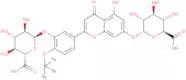
CAS:Controlled Product<p>Diosmetin-d3-3,7-O-di-Glucuronide is a white to off-white powder that is soluble in water. It is a synthetic compound that can be used as a sugar or carbohydrate modification. It has been shown to be useful for the synthesis of complex carbohydrates and polysaccharides. This product can also be used in click chemistry, methylation, and fluoroination.</p>Formula:C28H25D3O18Purity:Min. 95%Molecular weight:655.53 g/mol