Glycoscience
Glycoscience is the study of carbohydrates and their derivatives, as well as the interactions and biological functions they participate in. This field of research is crucial for understanding a wide variety of biological processes, including cell recognition, signaling, immune response, and disease development. Glycoscience has important applications in biotechnology, medicine, and the development of new drugs and therapies. At CymitQuimica, we offer a wide selection of high-quality, high-purity products for glycoscience research. Our catalog includes monosaccharides, oligosaccharides, polysaccharides, glycoconjugates, and specific reagents, designed to support researchers in their studies on the structure, function, and applications of carbohydrates in biological systems. These resources are intended to facilitate scientific discoveries and practical applications in various areas of bioscience and medicine.
Subcategories of "Glycoscience"
- Aminosugars(108 products)
- Glyco-Related Antibodies(283 products)
- Glycolipids(46 products)
- Glycosaminoglycans (GAGs)(55 products)
- Glycosides(419 products)
- Monosaccharides(6,619 products)
- Oligosaccharides(3,711 products)
- Polysaccharides(505 products)
Found 11027 products of "Glycoscience"
Sort by
Purity (%)
0
100
|
0
|
50
|
90
|
95
|
100
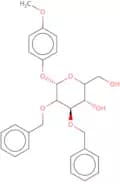
4-Methoxyphenyl 2,3-di-O-benzyl-b-D-galactopyranoside
4-Methoxyphenyl 2,3-di-O-benzyl-b-D-galactopyranoside is a high purity synthetic compound that can be custom synthesized to your specifications. This product is a carbohydrate with the molecular formula C7H8O6 and molecular weight of 232.14. The CAS number for this compound is 51878-93-5.Formula:C27H30O7Purity:Min. 95%Molecular weight:466.52 g/mol2,3-Anhydro-4,6-O-benzylidene-N-Boc-1,5-deoxy-1,5-imino-D-glucitol
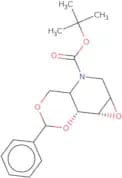
CAS:2,3-Anhydro-4,6-O-benzylidene-N-Boc-1,5-deoxy-1,5-imino-D-glucitol is a fluorinated monosaccharide that is synthesized by reacting 2,3-anhydro-4,6-(O)-benzylidene glucose with Boc anhydride in the presence of triethylamine. It is an oligosaccharide derived from D-(+)-glucose and consists of a 1,5 anhydro ring linked to a 1,5 imino sugar. 2,3 Anhydro 4,6 O benzylidene N Boc 1 5 deoxy 1 5 imino D glucitol has been used as a building block for glycosylation reactions and has been shown to be useful in click chemistry. This compound is also available in various purity levels.Formula:C18H23NO5Purity:Min. 95%Molecular weight:333.38 g/mol1,2-O-Isopropylidene-a-D-xylofuranuronic acid
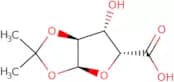
CAS:1,2-O-Isopropylidene-a-D-xylofuranuronic acid is a methylated form of the sugar xylofuranose. It is also known as 1,2-di-O-methylxylofuranuronic acid. The compound belongs to the class of oligosaccharides and polysaccharides. It has CAS number 35522-89-5 and molecular weight of 206.24 g/mol. It is soluble in water and ethanol but insoluble in ether. It can be used for chemical synthesis and modification of saccharide chains.Formula:C8H12O6Purity:Min. 95%Molecular weight:204.18 g/mol3-Amino-3-deoxy-b-D-fructofuranose
CAS:3-Amino-3-deoxy-b-D-fructofuranose is a custom synthesis, Modification, Fluorination, Methylation, Monosaccharide, Synthetic, Click modification, Oligosaccharide, saccharide, Polysaccharide, Glycosylation, sugar. 3-Amino-3-deoxy-b-D-fructofuranose is a high purity with a purity of at least 98%.
Formula:C6H13NO5Purity:Min. 95%Molecular weight:179.17 g/mol3-O-Acetyl-6-O-benzoyl-5-O-methylsulfonyl-1,2-O-isopropylidene-α-D-glucofuranose
CAS:3-O-Acetyl-6-O-benzoyl-5-O-methylsulfonyl-1,2-O-isopropylidene-a-D-glucofuranose is a custom synthesis that can be methylated, glycosylated, or modified with click chemistry. It is a polysaccharide that can be used as an intermediate for saccharide and oligosaccharide synthesis. 3-O-Acetyl 6 - O - benzoyl - 5 - O - methylsulfonyl - 1,2 - O - isopropylidene - a D glucofuranose has high purity and can be obtained in large quantities through custom synthesis.Formula:C19H24O10SPurity:Min. 95%Molecular weight:444.45 g/molMethyl 3-O-benzyl-6-deoxy-2-O-methyl-a-D-galactopyranoside
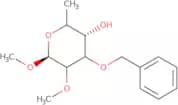
CAS:Methyl 3-O-benzyl-6-deoxy-2-O-methyl-a-D-galactopyranoside is a custom synthesis that has been modified by fluorination, methylation and click modification. This product is a monosaccharide that can be used in the synthesis of oligosaccharides and polysaccharides. It has been shown to have many applications including glycosylation, sugar, and carbohydrate.Formula:C15H22O5Purity:Min. 95%Molecular weight:282.34 g/molβ-Rutinose
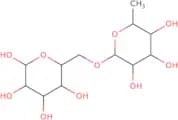
CAS:Beta-rutinose is a potent kinase inhibitor that has shown anti-tumor activity in Chinese hamster ovary (CHO) cells. It inhibits the activity of cyclin-dependent kinases, which are essential for cell division and proliferation. Beta-rutinose has been shown to induce apoptosis in human cancer cells, making it a promising candidate for anticancer therapy. This compound is an analog of rutin, a flavonoid found in many plants, and has been shown to have potent anticancer effects in vitro and in vivo. Beta-rutinose inhibits the growth of cancer cells by blocking the activity of specific kinases involved in tumor progression, making it an attractive target for developing new cancer therapies. Additionally, this compound has been found to be effective at reducing protein levels associated with cancer cell growth and proliferation.Formula:C12H22O10Purity:Min. 95%Molecular weight:326.3 g/molTetragalacturonic acid
CAS:Tetragalacturonic acid (α-1,4 galacturonotetraose) is derived from pectin or pectic acid by enzymatic or partial acid hydrolysis (Combo, 2012). It is used inâ¯galacturonic acidâ¯metabolism research as a substrate to identify, differentiate, and characterize endo- and exopolygalacturonase(s), and gluconase(s) (Jayani, 2005). The addition of very short fragments of homogalacturonan, tri-galacturonate, and tetra-galacturonate oligosaccharides restores development in dark-grown, de-etiolated seedling mutants, suggesting that they are unable to generate de-methylesterified pectin fragments. A model of spatiotemporally separated photoreceptive and signal-responsive cell types has been proposed, that contains overlapping subsets of the regulatory network of light-dependent seedling development (Sinclair, 2017).Formula:C24H34O25Purity:(%) Min. 95%Color and Shape:White PowderMolecular weight:722.51 g/molD-Glucosamine-3,4,6-tri-O-sulphate trisodium salt
CAS:D-Glucosamine-3,4,6-tri-O-sulphate trisodium salt is a high purity and custom synthesis of D-glucosamine. It is a sugar with click modification and fluorination. It has CAS No. 157297-03-5 and it is synthesized from glycosylation, methylation, and modification. It has a molecular weight of 517.85 g/mol and the chemical formula C9H14N2O12S3NaO6. Glucosamine is an oligosaccharide that can be found in many complex carbohydrates such as chitin or cellulose.Formula:C6H10NO14S3Na3Purity:Min. 95%Color and Shape:PowderMolecular weight:485.31 g/molGalacto-RGD trifluoroacetate salt
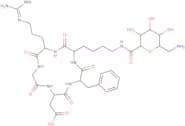
CAS:Please enquire for more information about Galacto-RGD trifluoroacetate salt including the price, delivery time and more detailed product information at the technical inquiry form on this pageFormula:C34H52N10O12Purity:Min. 95%Color and Shape:PowderMolecular weight:792.84 g/mol2,3,4,6-Tetra-O-benzyl-5-thio-D-glucono-1,5-lactone
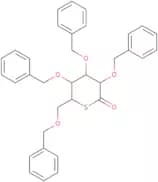
CAS:2,3,4,6-Tetra-O-benzyl-5-thio-D-glucono-1,5-lactone is a complex carbohydrate that can be modified with methylation and glycosylation. It is a saccharide that can be modified by fluorination and click modification. This compound is synthesized by the polymerization of allose in the presence of an enzyme to produce 2,3,4,6-tetra-O-(benzyloxymethyl)-5-thio--D--glucono--1,5--lactone.Formula:C34H34O5SPurity:Min. 95%Molecular weight:554.7 g/molGlucose dehydrogenase
CAS:Glucose Dehydrogenase is an enzyme, which is typically derived from microbial sources such as bacteria and fungi. It functions by catalyzing the oxidation of glucose to gluconolactone, concurrently reducing a cofactor such as NAD⁺ or PQQ. This biochemical reaction is critical in various analytical applications due to its specificity and efficiency in glucose detection.Glucose Dehydrogenase is widely employed in the development of biosensors and diagnostic assays. Its primary application is in blood glucose monitoring devices, where its ability to accurately quantify glucose levels is crucial for managing diabetes. Additionally, it is utilized in research and development settings for biochemical assays that require precise glucose measurements. The enzyme's rapid and specific action on glucose molecules makes it an indispensable tool in both clinical and laboratory environments, contributing to advancements in biosensing technologies and metabolic studies.Lipid IVa
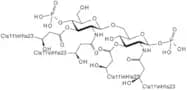
CAS:Lipid IVA is a tetra-acylated precursor molecule of lipid A which is a component of lipopolysaccharides (LPS) on the outer membrane of gram-negative bacteria. On the innate immune cells of hosts there are toll-like receptor 4 (TLR4) and MD-2 which recognize LPS. This recognition event ultimately leads to the activation of NFκB which in turn results in pro-inflammatory cytokine production. Studies have suggested lipid A in Escherichia coli to be an agonist for both mouse and human TLR4, while lipid IVA can induce species specific TLR4 responses. For example for horse and mouse TLR4 and MD-2, Lipid IVA is an agonist where as it is an antagonist for TLR4 and MD-2 in humans.Formula:C68H130N2O23P2Purity:One Main SpotColor and Shape:White PowderMolecular weight:1,405.7 g/molHeparin derived disaccharide sodium salt
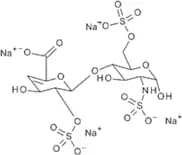
CAS:Heparin derived disaccharide sodium salt is a salt form of heparin. It is a heterogenous mixture of low molecular weight compounds that are composed of sugar residues and sulfation. Heparin derived disaccharide sodium salt has been used for the treatment of thrombocytopenic purpura, thrombotic thrombocytopenic purpura, and other bleeding disorders. This drug also has been used to prevent blood coagulation in patients undergoing surgery.Formula:C12H15NO19S3·Na4Purity:Min. 95%Color and Shape:PowderMolecular weight:665.4 g/mol1-Deoxy-D-glucitol
CAS:1-Deoxy-D-glucitol is a sugar alcohol that is a reduction product of glucose. It can be produced by the reduction of glucose 6-phosphate in muscle cells. The enzyme dehydrogenase catalyzes this reaction, which is influenced by the presence of gemini surfactants such as DMSO. 1-Deoxy-D-glucitol has been shown to have anti-fungal properties against Aspergillus parasiticus and other organisms. This activity may be due to its ability to inhibit phosphofructokinase, hexokinases, or other enzymes that are involved in the metabolism of glucose by these organisms.Formula:C6H14O5Purity:Min. 95%Molecular weight:166.17 g/molBlood Group H type II trisaccharide-PAA-biotin
Blood group antigen conjugated to spacer and biotinPurity:Min. 95 Area-%Color and Shape:PowderMolecular weight:586.6 g/molMefenamic acid-acyl-b-D-glucuronide
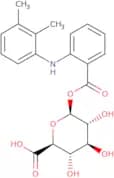
CAS:Mefenamic acid-acyl-b-D-glucuronide is a synthetic drug that binds to albumin and human serum albumin. It has been shown to irreversibly inhibit human UDP-glucuronosyltransferase, an enzyme in the human liver that catalyzes the addition of glucuronic acid to drugs and other xenobiotics. Mefenamic acid-acyl-b-D-glucuronide has also been shown to inhibit the activity of a wide range of enzymes in humans, including isoenzyme UGT1A6, which is found in the liver and kidney. This drug has been studied as a potential treatment for pain and inflammation in humans.Formula:C21H23NO8Purity:Min. 95%Color and Shape:White To Off-White SolidMolecular weight:417.41 g/molGT3-Oligosaccharide
GT3 oligosaccharide (free acid) is a disaccharide (Galβ1,4Glc) with three sialic acid residues (NeuAc) linked α2,8/α2,8/α2,3 to the galactose residue (Ledeen, 2009). The GT3 ganglioside is the carbohydrate moiety in the GT3 ganglioside, which is implicated in type 1 diabetes. GT3 ganglioside is expressed on pancreatic cells and is the target antigen of anti-GM3-antibodies, which contribute to the autoimmune destruction of pancreatic beta cells (Misasi, 1997). GT3 ganglioside is also abundant in lung tissues and the nervous system.Formula:C45H70N3O35Na3Purity:Min. 90%Color and Shape:PowderMolecular weight:1,282.01 g/mol5-Thio-L-fucose
CAS:5-Thio-L-fucose is a sugar that is found in a variety of tissues and organs. It has been shown to inhibit the antibody-dependent cellular cytotoxicity (ADCC) by binding to the Fc portion of IgG antibodies, which are used to target and destroy cancer cells. 5-Thio-L-fucose has also been shown to modulate the effector functions of natural killer cells and enhance the glycan profile of dendritic cells. It may be useful as a supplement for patients undergoing chemotherapy or radiation therapy, where it may help inhibit the growth of tumor cells. 5-Thio-L-fucose inhibits ADCC activity by binding to IgG antibodies, preventing them from attaching to immune cells, which would otherwise act as effectors in destroying tumor cells. This inhibition can be reversed with a competitive inhibitor such as D-arabinose.Formula:C6H12O4SPurity:Min. 95%Molecular weight:180.22 g/molγ-Cyclodextrin hydrate
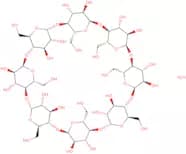
CAS:Gamma-cyclodextrin (γ-CD) is a cyclic oligosaccharide composed of eight glucose units, featuring a larger cavity size than α- and β-cyclodextrins. This structural characteristic allows γ-CDs to form inclusion complexes with a wider range of guest molecules, making it particularly versatile in various industries. In the food sector, it is used as a carrier and stabilizer for flavors, fat-soluble vitamins, and polyunsaturated fatty acids, protecting volatile compounds from evaporation. In pharmaceuticals, it enhances the solubility and bioavailability of poorly water-soluble drugs and, thanks to its larger ring size, allows for the encapsulation of larger molecules or even entire drug molecules. γ-CDs and derivatives are also used for environmental remediation and, in analytical chemistry, for the extraction and concentration of target substances.Formula:C48H80O40•(H2O)xPurity:Min. 95%Color and Shape:PowderMolecular weight:1,297.12 g/mol