Glycoscience
Glycoscience is the study of carbohydrates and their derivatives, as well as the interactions and biological functions they participate in. This field of research is crucial for understanding a wide variety of biological processes, including cell recognition, signaling, immune response, and disease development. Glycoscience has important applications in biotechnology, medicine, and the development of new drugs and therapies. At CymitQuimica, we offer a wide selection of high-quality, high-purity products for glycoscience research. Our catalog includes monosaccharides, oligosaccharides, polysaccharides, glycoconjugates, and specific reagents, designed to support researchers in their studies on the structure, function, and applications of carbohydrates in biological systems. These resources are intended to facilitate scientific discoveries and practical applications in various areas of bioscience and medicine.
Subcategories of "Glycoscience"
- Aminosugars(108 products)
- Glyco-Related Antibodies(282 products)
- Glycolipids(46 products)
- Glycosaminoglycans (GAGs)(55 products)
- Glycosides(419 products)
- Monosaccharides(6,622 products)
- Oligosaccharides(3,682 products)
- Polysaccharides(503 products)
Found 11041 products of "Glycoscience"
Sort by
Purity (%)
0
100
|
0
|
50
|
90
|
95
|
100
Hexyl 2-acetamido-3,4,6-tri-O-acetyl-2-deoxy-b-D-glucopyranoside
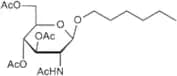
CAS:<p>Hexyl 2-acetamido-3,4,6-tri-O-acetyl-2-deoxy-b-D-glucopyranoside is a compound that is used in the research of cellular biology. It was found to have a significant effect on gene expression levels. This compound has been shown to be able to alter the expression profile of cells and may be useful for understanding how different genes affect cell function. The high density microarray provides a highly sensitive and accurate way to measure changes in gene expression levels.</p>Formula:C20H33NO9Purity:Min. 95%Molecular weight:431.48 g/molGlycyl-lacto-N-tetraose
<p>Glycyl-lacto-N-tetraose is an oligosaccharide that is modified with lactose. The structure of this carbohydrate is a glycosyl linkage between two glucose residues, plus a galactose residue at the non-reducing end of the chain. This sugar has been custom synthesized and purified to be free of other carbohydrates or contaminants. Glycyl-lacto-N-tetraose has a CAS number of 55719-02-1 and can be used in many applications including as a pharmaceutical ingredient, food additive, or cosmetic ingredient.</p>Formula:C28H49N3O21Purity:Min. 95%Molecular weight:763.7 g/molGNA2 N-Glycan
<p>GNA2 N-glycan is a custom-synthesized modified oligosaccharide that is a complex carbohydrate. It is a high purity, methylated and glycosylated polysaccharide sugar with fluorination. GNA2 N-glycan has CAS No. 1295-70-1 and is monosaccharide. It has a molecular weight of 266.</p>Purity:Min. 95%[UL-13C18]Maltotriose hydrate
<p>Maltotriose hydrate is a synthetic glycosylation product that is synthesized by the fluorination of maltotriose. Maltotriose hydrate is a sugar with a 3-D structure that is similar to maltodextrin, but with one less glucose residue. Maltotriose hydrate can be used in the synthesis of oligosaccharides and polysaccharides and has been shown to have high purity. Maltotriose hydrate can be modified by a variety of reactions, such as methylation, monosaccharide modification, or click chemistry. It has an CAS number and can be custom synthesized for clients' needs.</p>Formula:C18H32O16·xH2OPurity:Min. 95%Color and Shape:White SolidMolecular weight:522.3 g/mol1-Deoxy-D-glucitol
CAS:<p>1-Deoxy-D-glucitol is a sugar alcohol that is a reduction product of glucose. It can be produced by the reduction of glucose 6-phosphate in muscle cells. The enzyme dehydrogenase catalyzes this reaction, which is influenced by the presence of gemini surfactants such as DMSO. 1-Deoxy-D-glucitol has been shown to have anti-fungal properties against Aspergillus parasiticus and other organisms. This activity may be due to its ability to inhibit phosphofructokinase, hexokinases, or other enzymes that are involved in the metabolism of glucose by these organisms.</p>Formula:C6H14O5Purity:Min. 95%Molecular weight:166.17 g/molUDP-D-galactosamine disodium salt
CAS:<p>UDP-D-galactosamine disodium salt is a type of sugar that is a substrate for UDP-glucuronosyltransferase (UGT), which catalyzes the transfer of galactose from UDP-D-galactose to other molecules. The product of this reaction is UDP-D-galacturonic acid. It is produced in the liver, where it participates in the synthesis of glycoproteins, glycolipids, and glycosaminoglycans. In addition, it can be found in the distal tubule of the kidney and in leukemia cells. The histological analysis of rat liver tissue showed that UDP-D-galactosamine disodium salt is present in hepatocytes. This sugar also helps with protein synthesis and activates uridine, which can be used as a carbon source. Histological analysis also revealed that UDP-D-galactosamine disodium salt plays an important role in glucose metabolism, as well as</p>Formula:C15H23N3O16P2Na2Purity:Min. 95%Color and Shape:PowderMolecular weight:609.28 g/molD3-Ethyl β-D-glucuronide
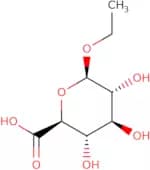
CAS:<p>D3-Ethyl β-D-glucuronide is a metabolite of ethanol. Detection of this compound may be used to diagnose alcohol consumption during pregnancy. The detection time is approximately 5 hours after a single drink. D3-Ethyl β-D-glucuronide can be reliably detected in maternal blood using solid phase microextraction and LC-MS/MS methods. The body mass index (BMI) can be used to determine the risk for alcohol consumption during pregnancy, with higher BMIs indicating an increased risk. Logistic regression models were created to estimate the probability of D3-Ethyl β-D glucuronide being present in maternal blood and the probability of alcohol consumption during pregnancy given a positive result. These models were then used to create diagnostic tools that are sensitive enough for clinical use.</p>Formula:C8H11D3O7Purity:Min. 95%Color and Shape:White Off-White PowderMolecular weight:225.21 g/molPalbociclib N-glucuronide
<p>Palbociclib N-glucuronide is a synthetic, modified sugar that is used in the synthesis of carbohydrates. It has a molecular weight of 542.34 and was originally synthesized by glycosylation and methylation of palbociclib. The chemical formula for Palbociclib N-glucuronide is C10H18N4O5•C6H7O6•2HCOOH.</p>Formula:C30H37N7O8Purity:Min. 95%Molecular weight:623.66 g/molS-Hydroxy topiramate
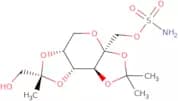
CAS:<p>S-Hydroxy topiramate is a modification of topiramate, which is a sugar. The chemical name for this compound is carbamic acid, N-[(1R,2S)-2-[[(3S)-3-methyl-4-(2,2,2-trifluoroethoxy)piperidin-1-yl]carbonyl]cyclopentyl]-3-[(phenylmethoxy)methyl]-, monosodium salt. It has the following properties: CAS No. 198215-62-2; Carbohydrate; complex carbohydrate; Custom synthesis; Oligosaccharide; High purity; Synthetic; Monosaccharide; Methylation; Glycosylation; Polysaccharide. This product can be used in the following applications: Fluorination, saccharide.</p>Formula:C12H21NO9SPurity:Min. 95%Molecular weight:355.36 g/mol1,6-Anhydro-4-O-b-D-galactopyranosyl-b-D-glucopyranose
CAS:<p>N-acetyllactosamine is a monosaccharide that belongs to the group of n-acetyllactosamine. It can be found in the form of an agglutinin, lactose, and lectin. The conformation of this molecule is an equilibrium between its alpha and beta forms. The pyridine can act as an acid catalyst for the alpha conformation. There are two forms of this molecule: one synthesized from D-glucose and one synthesized from D-galactose. 1,6-Anhydro-4-O-b-D-galactopyranosyl-b-D-glucopyranose is synthesized from D-glucose. Oligosaccharides containing this molecule have been expressed in Saccharomyces cerevisiae cells and purified by affinity chromatography on columns that contain immobilized antibody to human serum albumin. This molecule has been shown</p>Formula:C12H20O10Purity:Min. 95%Molecular weight:324.28 g/mola-D-Galactose-PAA-biotin
<p>a-D-Galactose-PAA-biotin is a carbohydrate compound that has been modified by the addition of a PAA group and biotin. This compound can be synthesized with high purity and is available for custom synthesis. It is an oligosaccharide, a sugar, and a saccharide. The CAS number for this compound is 97320-93-4.</p>Purity:Min. 95%Color and Shape:Solid4-Amino-4-deoxy-fructose
<p>4-Amino-4-deoxy-fructose is a catalyzed product of ribulose. Its reaction with an aldehyde produces tagatose, which is a carbohydrate that has been shown to have therapeutic properties in mice. Tagatose can be used to produce dihydroxyacetone phosphate, an intermediate in the glycolytic pathway. 4-Amino-4-deoxy-fructose also accelerates the reaction between the ketoses and acceptors in the presence of an enzyme called enolase. This process is known as enantioselective reduction. The aminosugar 4-amino-4-deoxyglucose was synthesized using this methodology, and it has been shown to inhibit bacterial growth by binding to DNA gyrase, preventing DNA replication and transcription.</p>Purity:Min. 95%Topiramate didesacetal impurity
CAS:<p>Topiramate didesacetal impurity is a Custom synthesis, Modification, Fluorination, Methylation, Monosaccharide, Synthetic compound. It is used in the production of saccharides and polysaccharides. The Carbohydrate has a variety of uses including food additives and sweeteners.</p>Formula:C6H13NO8SPurity:Min. 95%Molecular weight:259.24 g/molAldehydo-D-glucose phthalazin-1-yl hydrazone
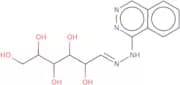
CAS:<p>Aldehydo-D-glucose phthalazin-1-yl hydrazone is a synthetic glycosylation agent that can be used in the synthesis of complex carbohydrates, such as polysaccharides, saccharides and oligosaccharides. It has been shown to be useful for the modification of saccharides and oligosaccharides. This compound can also be used for fluorination reactions, fluoroalkylations, click chemistry reactions, methylations and polymerizations. Aldehydo-D-glucose phthalazin-1-yl hydrazone has not yet been assigned CAS number.</p>Formula:C14H18N4O5Purity:Min. 95%Molecular weight:322.32 g/molAllo-3a-tetrahydro cortisol 21-O-b-D-glucuronide
CAS:<p>Allo-3a-tetrahydro cortisol 21-O-b-D-glucuronide (A4C21) is a complex carbohydrate with a high degree of modification. The A4C21 is synthesized by the glycosylation and methylation of 3,5,6,7,8,9,10,11-hexahydrodehydrocortisol 21-O-b-D-glucuronide. The synthesis starts with the formation of an acetal between the two hydroxyl groups on one side of the steroid nucleus and two chloroform molecules in order to protect the reactant from further reactions. The reaction product is then subjected to a ketalization reaction with thioglycolic acid to yield an alpha/beta unsaturated ketone which is then reacted with ethylene diamine to produce an amide linkage. This amide linkage is then cleaved to yield an aldol condensation product</p>Formula:C27H42O11Purity:Min. 95%Molecular weight:542.62 g/mol17b-Estradiol 3-O-benzyl 17-(2,3,4-tri-O-acetyl-b-D-glucuronide methyl ester)
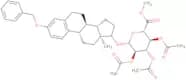
CAS:<p>17b-Estradiol 3-O-benzyl 17-(2,3,4-tri-O-acetyl-b-D-glucuronide methyl ester) is a modification of estradiol with an attached sugar. It is synthesized from the carbohydrate complex oligosaccharide. The synthesis starts by attaching an acetyl group to the sugar at the 3 position and then reacting it with benzyl alcohol to form a glycosidic linkage. The synthesis ends with a fluorination and saccharide cleavage.</p>Formula:C38H46O11Purity:Min. 95%Molecular weight:678.77 g/mol3,4,6-Tri-O-acetyl-2-deoxy-D-galactopyranose
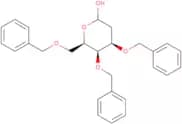
<p>3,4,6-Tri-O-acetyl-2-deoxy-D-galactopyranose is a methylated saccharide that is the product of the reaction between 3,4,6-triacetyl-2,3,4,6-tetrapropionyl D galactopyranose and formaldehyde. It has been modified by Click chemistry and can be used for glycosylation reactions. This product is available in high purity and yields a complex carbohydrate that can be synthesised from various carbohydrates.</p>Formula:C12H18O8Purity:Min. 95%Molecular weight:290.27 g/molHyaluronate rhodamine - Molecular Weight - 20kDa
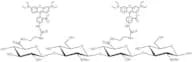
<p>Fluorogenic substrate is used for detection of hyaluronidase activity. Urinary hyaluronidase activity is elevated in patients with intermediate and high grade bladder cancer; the expression of hyaluronidase and hyaluronan synthase-1 mRNA in malignant tissue can predict bladder cancer metastasis and disease recurrence (Kramer, 2011). These findings underscore the potential utility of the hyaluronidases to serve as biomarkers for bladder cancer. A novel fluorescent substrate labelled with two dyes: fluorescein as a green donor fluorophore, and rhodamine B as a red acceptor fluorophore, was therefore developed to measure hyaluronidase enzyme kinetics (Zhang, 2008). It was then demonstrated that simultaneous measurements of green and red emission of HAâFRET could be used to measure hyaluronidase presence and activity (Fudala, 2011).</p>Purity:Min. 95%GD2-Oligosaccharide-desthiobiotin
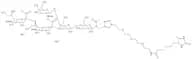
<p>Desthiobiotin is a modified form of biotin that binds less tightly to biomolecules like proteins and carbohydrates than it does biotin, while still providing excellent specificity in affinity purification methods (Hirsch, 2002). The structure of GD2-oligosaccharide-desthiobiotin (sodium salt) comprises (GalNAcβ1,4Galβ1,4Glc) of its two sialic acids linked α2,3/α2,8 to the central galactose residue (Ledeen, 2009). The desthiobiotin is attached β to position 1 of the reducing glucose moiety. GD2 ganglioside is expressed at a low concentration in the central nervous system, nerves, skin melanocytes and stem cells in healthy adults. On the other hand, GD2 ganglioside is overexpressed in a number of tumors including: neuroblastoma, melanoma, small cell lung carcinoma and brain tumors. Recently, GD2 ganglioside has been found in low concentration on breast cancer stem cells (CSC) that possess: self-renewal properties (division without disrupting the undifferentiated state) and tumor-initiating capabilities. It has been suggested that GD2 ganglioside may be developed as an effective target antigen for CSC immunotherapy (Fleurence, 2017).</p>Formula:C65H106N10O37·2NaPurity:Min. 95%Color and Shape:PowderMolecular weight:1,665.56 g/mol1,3,5-Tri-O-acetyl-2-deoxy-a-D-ribofuranose
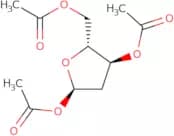
CAS:<p>1,3,5-Tri-O-acetyl-2-deoxy-a-D-ribofuranose is a monosaccharide with a modified sugar residue that is obtained by the fluorination of 1,3,5-triacetyl-2,6'-dideoxyglucose. It is a complex carbohydrate that can be used as an additive in food and beverage products. The chemical formula for 1,3,5-triacetyl-2,6'-dideoxyglucose is C10H14O8 and the molecular weight is 392.24 g/mol.</p>Formula:C11H16O7Purity:Min. 95%Molecular weight:260.24 g/mol

![[UL-13C18]Maltotriose hydrate](/_next/image/?url=https%3A%2Fstatic.cymitquimica.com%2Fproducts%2F3D%2Fthumb-webp%2FOM45239.webp&w=3840&q=75)