Glycoscience
Glycoscience is the study of carbohydrates and their derivatives, as well as the interactions and biological functions they participate in. This field of research is crucial for understanding a wide variety of biological processes, including cell recognition, signaling, immune response, and disease development. Glycoscience has important applications in biotechnology, medicine, and the development of new drugs and therapies. At CymitQuimica, we offer a wide selection of high-quality, high-purity products for glycoscience research. Our catalog includes monosaccharides, oligosaccharides, polysaccharides, glycoconjugates, and specific reagents, designed to support researchers in their studies on the structure, function, and applications of carbohydrates in biological systems. These resources are intended to facilitate scientific discoveries and practical applications in various areas of bioscience and medicine.
Subcategories of "Glycoscience"
- Aminosugars(108 products)
- Glyco-Related Antibodies(282 products)
- Glycolipids(46 products)
- Glycosaminoglycans (GAGs)(55 products)
- Glycosides(419 products)
- Monosaccharides(6,622 products)
- Oligosaccharides(3,682 products)
- Polysaccharides(503 products)
Found 11041 products of "Glycoscience"
Sort by
Purity (%)
0
100
|
0
|
50
|
90
|
95
|
100
3,2',3',4'-Tetra-O-acetyl-6,6'-di-O-tert-butyldiphenylsilyl-lactal
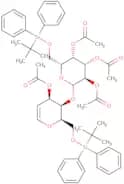
CAS:<p>3,2',3',4'-Tetra-O-acetyl-6,6'-di-O-tert-butyldiphenylsilyl-lactal is a modification of the oligosaccharide. The structure of this compound is an alpha-(1→4)-linked beta-D-galactopyranosyl residue, which is attached to a 3,2',3',4'-tetra-O-acetyl 6,6'-di-O-[ tert -butyldiphenylsilyl] lactal residue. This compound has been shown to be synthesized by methylation and glycosylation of the monosaccharide maltose. This modification has also been shown to inhibit the growth of bacteria. CAS No. 308103-45-9</p>Purity:Min. 95%2,3,6-Tri-O-acetyl-4-O-(2,3,4,6-tetra-O-acetyl-a-D-mannopyranosyl)-D-mannopyranose
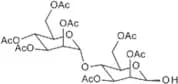
CAS:<p>This product is a fatty acid that binds to the carbohydrate binding sites in the cell membrane of Caco-2 cells. It has been shown to inhibit the growth of cancer cells and radiation induced changes by binding to the sugar moieties on glycoproteins. This product also inhibits the production of glycoconjugates, which are important for cell-cell interactions and biological function. The disaccharide form has been found to be a diagnostic agent for cancer cells, with a structural formula that can be seen in the figure below.</p>Formula:C26H36O18Purity:Min. 95%Molecular weight:636.55 g/molEthyl 2,3,4-tri-O-benzyl-L-fucopyranoside
<p>Ethyl 2,3,4-tri-O-benzyl-L-fucopyranoside is a polysaccharide that is modified by the addition of benzyl groups to the hydroxyl group at C2. This modification increases the resistance of this compound to degradation by glycosidases and also prevents any undesired reactions with other saccharides. Ethyl 2,3,4-tri-O-benzyl-L-fucopyranoside is a custom synthesis that can be made in high purity and with high carbohydrate content. The CAS number for this compound is 61721–76–8.</p>Formula:C29H34O5Purity:Min. 95%Molecular weight:462.58 g/mol2-Acetamido-2-deoxy-D-galactopyranose diphospho undecapyrenyl
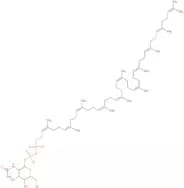
<p>This is a gene product that belongs to the family of histone proteins. It is a bacterial enzyme that participates in the biosynthesis of glycan, which plays an important role in bacterial pathogenicity and antigen expression. The 2-acetamido-2-deoxy-D-galactopyranose diphospho undecaprenyl (AGDP) has been shown to inhibit cancer cells by inhibiting histone protein acetylation. This inhibits DNA methylation, which may lead to tumorigenesis. Structural studies have also shown that AGDP binds to bacterial enzyme with high affinity and specificity, suggesting that it could be used as a potential antibacterial agent.</p>Formula:C63H103NO12P2Purity:Min. 95%Molecular weight:1,128.44 g/mol2-Azidoethyl b-D-glucopyranosiduronic acid
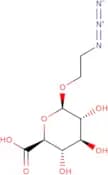
CAS:<p>2-Azidoethyl b-D-glucopyranosiduronic acid is a synthetic, fluorinated sugar that is used as a click modification to saccharides. It has the ability to be modified with methyl groups and glycosylation, which provide potential for synthesis of complex carbohydrates. The CAS number for 2-azidoethyl b-D-glucopyranosiduronic acid is 128095-64-7.</p>Formula:C8H13N3O7Purity:Min. 95%Molecular weight:263.2 g/mol2-Azido-4,6-O-benzylidene-N-Boc-1,2,5-trideoxy-1,5-imino-D-glucitol
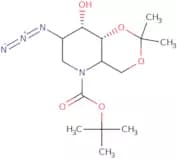
CAS:<p>2-Azido-4,6-O-benzylidene-N-Boc-1,2,5-trideoxy-1,5-imino-D-glucitol is a synthetic carbohydrate that has been modified with fluorine. The modification has been shown to have an inhibitory effect on the growth of cancer cells. 2-Azido-4,6-O-benzylidene can be used for the synthesis of glycosides and polysaccharides. It can also be used as a click modification agent for proteins.</p>Formula:C14H24N4O5Purity:Min. 95%Molecular weight:328.36 g/mol2,4-O-Ethylidene-D-erythrose
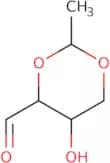
CAS:<p>2,4-O-Ethylidene-D-erythrose is a trimerization product of glyoxal and acetaldehyde. It is an aldehyde that can be used as a precursor to other compounds. The hydrated form of 2,4-O-ethylidene-D-erythrose has been rationalized by the mesoxalic acid and water molecules to form the trimer. This compound can be produced from the glycolaldehyde and sulfoxide in an oxidation reaction with hydrogen peroxide. The acetylation of 2,4-O-ethylidene-D-erythrose produces isoxazolidines which are stereoselective.</p>Formula:C6H10O4Purity:Min. 95%Molecular weight:146.14 g/molBlood group H tetraose type II
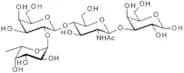
CAS:<p>Core antigen fragment in ABO blood group system</p>Formula:C26H45NO20Purity:Min. 95%Color and Shape:PowderMolecular weight:691.63 g/molD-Galactose-2-D
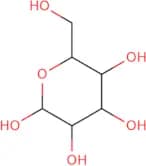
CAS:<p>D-Galactose-2-D is an anticancer agent that has been shown to inhibit the activity of kinases, which are enzymes involved in cell signaling pathways. It is a derivative of D-galactose and has been found in human urine. D-Galactose-2-D has demonstrated potent antitumor effects against various cancer cell lines, including Chinese hamster ovary cells and human colon carcinoma cells. This compound induces apoptosis, or programmed cell death, in cancer cells by inhibiting the activity of key proteins involved in cell survival. Additionally, D-Galactose-2-D has been found to be a potent inhibitor of capsaicin-induced activation of kinase, suggesting its potential as a therapeutic agent for inflammatory conditions.</p>Formula:C6H12O6Purity:Min. 95%Molecular weight:181.16 g/molEthyl 3-O-benzyl-4,6-O-benzylidene-2-deoxy-2-N-phthalamido-a-D-thioglucopyranoside
CAS:<p>Ethyl 3-O-benzyl-4,6-O-benzylidene-2-deoxy-2-N-phthalamido-a-D-thioglucopyranoside is a custom synthesis of a complex carbohydrate made up of saccharides. This compound is an oligosaccharide with four monosaccharides and two other saccharides. It has been shown to be a potent inhibitor of bacterial growth in the presence of various antibiotics, including penicillin G, erythromycin, tetracycline, and ampicillin. It also inhibits the growth of fungi by binding to their cell walls and disrupting membrane integrity.</p>Purity:Min. 95%Chitotetraose tetradecaacetate
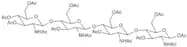
CAS:<p>Chitotetraose tetradecaacetate is a condensation product of chitin and sephadex, which is synthesized from chitin and sodium chloride. It is an acetolysis substrate that has a sensitivity of 3.2 ug/ml in the fluorometric assay. Chitotetraose tetradecaacetate also exhibits high sensitivity to micrococcus, with a minimum inhibitory concentration (MIC) of 0.3 ug/ml.</p>Formula:C52H74N4O31Purity:Min. 95%Molecular weight:1,251.18 g/molD-Glucose-(toluene-4-sulfonylhydrazone)
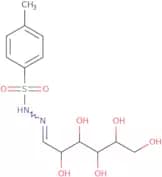
CAS:<p>D-Glycose-(Toluene-4-sulfonylhydrazone) is a modified sugar that is used as a building block for glycosylation. It has been used in the synthesis of complex carbohydrates, methylation, click chemistry and polysaccharides. The sulfonyl group on the toluene ring makes this compound a good candidate for fluorination, saccharide modification and Oligosaccharide synthesis. This product can be custom synthesized with high purity and CAS No. 5328-51-8.</p>Purity:Min. 95%1,2,6-Tri-O-benzyl-2-deoxy-4-O-[phenoxy(thiocarbonyl)]-2-phthalimido-b-D-glucopyranoside
<p>This compound is a modification of a complex carbohydrate, which is a saccharide with one or more sugar molecules. It has been synthesized by custom synthesis and is pure, but not monosaccharide. It has been fluorinated and methylated and glycosylated. The CAS number for this compound is</p>Formula:C42H37NO8SPurity:Min. 95%Molecular weight:715.81 g/molMaltotetradecaose
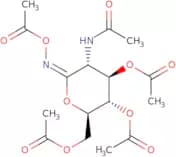
CAS:<p>1,4-glucotetradecaose derived from starch by hydrolysis and chromatography</p>Formula:C84H142O71Purity:Min. 95%Molecular weight:2,287.98 g/mol2-Acetamido-1,3,4,6-tetra-O-acetyl-2-deoxy-D-gluconhydroximo-1,5-lactone
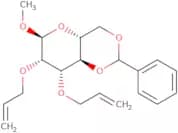
CAS:<p>2-Acetamido-1,3,4,6-tetra-O-acetyl-2-deoxy-D-gluconhydroximo-1,5-lactone is a custom synthesis. It is a modification of natural sugars. It has fluorination and methylation to make the product more stable. The product is an oligosaccharide that is a saccharide with two monosaccharides attached together. It is made up of complex carbohydrates.</p>Formula:C16H22N2O10Purity:Min. 95%Molecular weight:402.35 g/molMethyl 2,3-di-O-allyl-4,6-O-benzylidene-a-D-mannopyranoside
CAS:<p>Methyl 2,3-di-O-allyl-4,6-O-benzylidene-a-D-mannopyranoside is a high purity and custom synthesis of a sugar. It can be used for the modification of the carbohydrate and saccharide. Methyl 2,3-di-O-allyl-4,6-O-benzylidene-a-Dmannopyranoside is an oligosaccharide that has been modified with fluorination. It is also a polysaccharide that contains saccharides.</p>Formula:C20H26O6Purity:Min. 95%Molecular weight:362.42 g/molMethyl 3,4-di-O-benzyl-a-D-mannopyranoside
CAS:<p>Methyl 3,4-di-O-benzyl-a-D-mannopyranoside is a synthetic compound that belongs to the class of oligosaccharides. It is a sugar that has a complex carbohydrate structure with a glycosylated and methylated sugar. The compound is custom synthesized and is used as a reagent in glycosylation reactions. Methyl 3,4-di-O-benzyl-a-D-mannopyranoside can be used for click modification of proteins, polypeptides, and carbohydrates.</p>Formula:C21H26O6Purity:Min. 95%Molecular weight:374.43 g/molAllyl 6-o-allyl-α-D-galactopyranoside
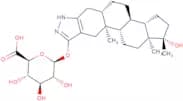
CAS:<p>Allyl 6-o-allyl-α-D-galactopyranoside is a medicinal compound with potential anticancer properties. It is an analog of α-D-galactopyranoside and has been shown to inhibit the activity of protein kinases, which are enzymes involved in cell signaling and regulation. This inhibition can lead to apoptosis, or programmed cell death, in cancer cells. Allyl 6-o-allyl-α-D-galactopyranoside has been studied extensively in Chinese medicine as a potential inhibitor of tumor growth and has also been found in human urine. This compound holds great promise as a natural alternative for cancer treatment and warrants further investigation into its therapeutic potential.</p>Formula:C12H20O6Purity:Min. 95%Molecular weight:260.28 g/mol3-Hydroxystanozolol glucuronide
CAS:<p>3-Hydroxystanozolol glucuronide is a metabolite of stanozolol that has been found in human urine. 3-Hydroxystanozolol glucuronide is formed as an intermediate during the metabolic conversion of stanozolol to its active form, which then is hydrolyzed by erythrocyte esterases or glucuronidases to form 3-hydroxystanozolol. This metabolite has been validated as an analytical marker for monitoring the use of stanozolol in sport and population studies.</p>Formula:C26H38N2O8·C2H6Purity:Min. 95%Molecular weight:536.66 g/mol




![1,2,6-Tri-O-benzyl-2-deoxy-4-O-[phenoxy(thiocarbonyl)]-2-phthalimido-b-D-glucopyranoside](/_next/image/?url=https%3A%2Fstatic.cymitquimica.com%2Fproducts%2F3D%2Fthumb-webp%2FMT07405.webp&w=3840&q=75)