Glycoscience
Glycoscience is the study of carbohydrates and their derivatives, as well as the interactions and biological functions they participate in. This field of research is crucial for understanding a wide variety of biological processes, including cell recognition, signaling, immune response, and disease development. Glycoscience has important applications in biotechnology, medicine, and the development of new drugs and therapies. At CymitQuimica, we offer a wide selection of high-quality, high-purity products for glycoscience research. Our catalog includes monosaccharides, oligosaccharides, polysaccharides, glycoconjugates, and specific reagents, designed to support researchers in their studies on the structure, function, and applications of carbohydrates in biological systems. These resources are intended to facilitate scientific discoveries and practical applications in various areas of bioscience and medicine.
Subcategories of "Glycoscience"
- Aminosugars(108 products)
- Glyco-Related Antibodies(282 products)
- Glycolipids(46 products)
- Glycosaminoglycans (GAGs)(55 products)
- Glycosides(419 products)
- Monosaccharides(6,622 products)
- Oligosaccharides(3,682 products)
- Polysaccharides(503 products)
Found 11041 products of "Glycoscience"
Sort by
Purity (%)
0
100
|
0
|
50
|
90
|
95
|
100
Isofagomine hydrochloride
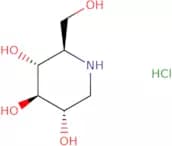
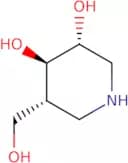
CAS:<p>Inhibitor of lysosomal acid β-glucosidase (GlcCerase/glucocerebrosidase) with IC50 in nanomolar range for wildtype and mutant enzyme. It behaves as pharmacological chaperon by binding to instable GlcCerase active site at neutral pH values and facilitating the protein folding. In acidic lysosomes, isofagomine gets release from the enzyme active site. This results in increased levels of functional glucocerebrosidase and brings therapeutic benefits to patients with Gaucher disease.</p>Formula:C6H13NO3·HClPurity:Min. 95%Color and Shape:PowderMolecular weight:183.63 g/molm-Topolin-9-glucoside
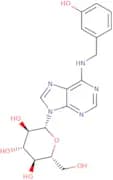
CAS:<p>M-topolin-9-glucoside is a synthetic sugar that has been modified by the introduction of fluorine atoms at C-2, C-3, and C-4. This sugar is used to study the interactions between carbohydrates and proteins. It is also used for the synthesis of oligosaccharides as well as for glycosylation and methylation reactions. M-topolin-9-glucoside is a monosaccharide that has been glycosylated and methylated. It can be used as a replacement for glucose in some reactions due to its stability and low cost.</p>Formula:C18H21N5O6Purity:Min. 95%Color and Shape:PowderMolecular weight:403.39 g/mol4-Amino-2,6-anhydro-3,4-dideoxy-D-glycero-D-galacto-non-2-enoic acid
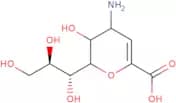
CAS:<p>4-Amino-2,6-anhydro-3,4-dideoxy-D-glycero-D-galacto-non-2-enoic acid is a modified oligosaccharide that is used in biochemical and medicinal research. This product can be custom synthesized to order and may be available as an off the shelf product. It has high purity and is available with a monosaccharide or methylated glycosylated saccharide. The CAS number for this product is 263155-12-0.</p>Formula:C9H15NO7Purity:Min. 95%Molecular weight:249.22 g/molBlood Group B trisaccharide-b-allyl glycoside
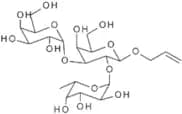
<p>Useful glycosylation donor</p>Formula:C21H36O15Purity:Min. 95%Molecular weight:528.5 g/molO-[2-Acetamido-2-deoxy-a-D-galactopyranosyl]-N-Fmoc-L-threonine 2-propen-1-yl ester
CAS:<p>O-[2-Acetamido-2-deoxy-a-D-galactopyranosyl]-N-Fmoc-L-threonine 2-propen-1-yl ester is a synthetic, high purity, custom synthesis that has been modified with fluorination, glycosylation, and methylation. This product can be used in the Click reaction to make an oligosaccharide or monosaccharide. The CAS number for this compound is 301843-65-2.</p>Formula:C30H36N2O10Purity:Min. 95%Molecular weight:584.61 g/mol1,4:3,6-Dianhydro-2,5-di-O-methyl-L-mannitol
<p>1,4:3,6-Dianhydro-2,5-di-O-methyl-L-mannitol is a carbohydrate that belongs to the group of polysaccharides. It is a methylated saccharide that can be modified with Click chemistry or glycosylsation. This product has high purity and can be custom synthesized for specific applications. It is also available in fluorinated form and as a complex carbohydrate.</p>Formula:C8H14O4Purity:Min. 95%Molecular weight:174.19 g/molMaltosyl-ascorbic acid
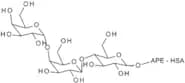
<p>Maltosyl-ascorbic acid is a glycosylated form of ascorbic acid that has been shown to have synergistic effects with thiobarbituric acid and ethanal. Maltosyl-ascorbic acid also exhibits antioxidative activity and is able to inhibit the formation of thiobarbituric acid-reactive substances and α-tocopherol in lipids. Maltosyl-ascorbic acid has been shown to have antioxidant effects in stearothermophilus, which may be due to its ability to reduce lipid peroxidation. Maltosyl-ascorbic acid is also able to inhibit the transfer of alpha-tocopherol from lipoproteins into cells, which may be due to its antioxidative effect.</p>Purity:Min. 95%Globotriose-APE-HSA
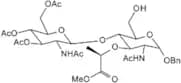
<p>Globotriose conjugated to HSA via an aminophenylethyl spacer (APE)</p>Purity:Min. 95%Benzyl 4-O-(2-acetamido-2-deoxy-3,4,6-tri-O-acetyl-b-D-glucopyranosyl)-N-acetyl-a-D-muramic acid methyl ester
<p>This substance is a custom synthesis, which is created in the laboratory. The modification of this product has been done by fluorination, methylation, and monosaccharide synthesis. This substance is a synthetic compound that belongs to the group of oligosaccharides. It is a saccharide that contains an oxygen atom and belongs to the group of complex carbohydrates. It has been shown to be effective against cancer cells in vitro and has been used as a diagnostic agent for breast cancer.</p>Formula:C33H46N2O16Purity:Min. 95%Molecular weight:726.72 g/molDisialylated pentaose type I
<p>Disialylated pentaose type I (DSI-1) is a disaccharide sugar that is synthesized in high purity by custom synthesis. It is a complex carbohydrate that consists of five monosaccharides: glucose, galactose, mannose, fucose and N-acetylneuraminic acid. DSI-1 has been shown to have glycosylation and methylation activity. This product has been modified with fluorination and saccharide modification, as well as Click chemistry. Disialylated pentaose type I is used in the pharmaceutical industry as an intermediate for the production of glycoconjugates and in the food industry to produce artificial sweeteners.</p>Formula:C42H67N3O32Na2Purity:Min. 95%Molecular weight:1,171.96 g/molFluorescein isothiocyanate-dextran - Average MW 10,000
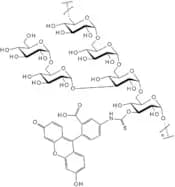
CAS:<p>Fluorescein dextran (FD) is widely used as both an anterograde and retrograde tracer in neurons and for numerous other applications. It is biologically rather inert having α-1,6-linked glucose residues resistant to cleavage by most endogenous cellular glycosidases. It has low immunogenicity and makes an ideal long-term tracer for live cells. FD also serves as a valuable marker for cell loading of macromolecules by micro-injection, vesicular fusion, and electroporation, as well as for the uptake and internal processing of exogenous materials by phagocytotic and endocytic pathways.</p>Purity:Min. 95%1-Deoxy-L-altronojirimycin hydrochloride
CAS:<p>L-altronojirimycin is a diterpene glycoside that belongs to the group of natural products that have inhibitory properties against lipid peroxidation. It has been shown to decrease the concentration of 1,2-dipalmitoylglycerophosphocholine (DPPC) in primary cells and reduce the rate of lipid peroxidation in a concentration-dependent manner. L-altronojirimycin inhibits the activity of enzymes such as acetylcholinesterase and phospholipase A2, which are involved in inflammation. This drug has also been shown to have cardioprotective effects and inhibit mutations in cardiac muscle cells. L-altronojirimycin has been tested for its long-term efficacy and shown to be effective against both bowel disease and cardiac effects.</p>Formula:C6H13NO4•HClPurity:Min. 95%Color and Shape:PowderMolecular weight:199.63 g/mol5-Amino-5-deoxy-1,2-O-isopropylidene-6-O-trityl-a-D-galactofuranose
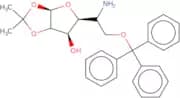
CAS:<p>5-Amino-5-deoxy-1,2-O-isopropylidene-6-O-trityl-a-D-galactofuranose is a fluorinated analog of the natural sugar galactose. This compound has been used as a substrate for the synthesis of modified oligosaccharides and polysaccharides. It is also used in research for its ability to act as a methylation reagent. 5ADOGF has been modified with click chemistry to form 5-(2,3,4,5,6,7,8,9,10) -aminopropylidene-[beta]-D-[alpha]-D-[beta]-D-[alpha]-D-[beta]-D-[alpha] -galactofuranose (APGDF). The CAS number for this compound is 109681-00-7.</p>Formula:C18H31NO5Purity:Min. 95%Molecular weight:461.55 g/molEmodin-1-O-b-D-glucopyranoside
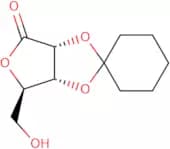
<p>Emodin-1-O-b-D-glucopyranoside is a synthetic, fluorinated, glycosylated oligosaccharide. It can be used as a high purity, non-fluorinated carbohydrate for research purposes. Emodin-1-O-b-D-glucopyranoside has been modified via Click chemistry to provide the desired functional group and is available in various sizes.</p>Purity:Min. 95%D-Ribonolactone 2,3-cyclohexyl ketal
CAS:<p>D-Ribonolactone 2,3-cyclohexyl ketal is a custom synthesis. It is a synthetic modification of the natural D-ribose sugar molecule. It has been modified by methylation and glycosylation to yield a complex carbohydrate with a high degree of purity. The fluorination process has been used to introduce fluorine atoms into the molecule.</p>Formula:C11H16O5Purity:Min. 95%Molecular weight:228.24 g/mol4,6-O-(2-Naphthylidene)-D-glucal
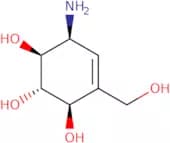
<p>4,6-O-(2-Naphthylidene)-D-glucal is a complex carbohydrate that is synthesized by the modification of a polysaccharide. It has been modified by a methylation reaction, glycosylation, and click chemistry. It is an Oligosaccharide with CAS No., and has a high purity. 4,6-O-(2-Naphthylidene)-D-glucal has been fluorinated to increase its stability in the presence of water as well as to prevent it from reacting with other molecules.</p>Purity:Min. 95%Valienamine HCl
CAS:<p>Glucosidase Inhibitor</p>Formula:C7H13NO4Purity:Min. 95%Color and Shape:White to off-white solid.Molecular weight:175.18 g/molLevofloxacin acyl-b-D-glucuronide
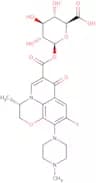
CAS:<p>Levofloxacin acyl-b-D-glucuronide is a metabolite of levofloxacin and belongs to the class of fluoroquinolone antibiotics. It has been shown to be effective against rhesus monkeys in efficacy studies. Levofloxacin acyl-b-D-glucuronide is eliminated via the urine, with >90% excreted within 24 hours. The majority of this drug is excreted as an active n-oxide form with a half-life of 8 hours.</p>Formula:C24H28FN3O10Purity:Min. 95%Molecular weight:537.49 g/molGalnacβ(1-3)GlcNAc-β-PNP
CAS:<p>Galnacβ(1-3)GlcNAc-β-PNP is a modification of galactose. Galnacβ(1-3)GlcNAc-β-PNP is used in the synthesis of complex carbohydrates, including oligosaccharides and polysaccharides. It is also used as a glycosylation or methylation site for the synthesis of sugar chains on proteins and glycoproteins. This product has been fluorinated to increase its stability and solubility in organic solvents.</p>Formula:C22H31N3O13Purity:Min. 95%Molecular weight:545.5 g/molMethyl 2-O-allyl-3-O-(2,3,4,6-tetra-O-acetyl-a-D-mannopyranosyl)-a-D-mannopyranoside
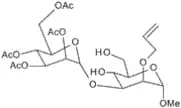
CAS:<p>Methyl 2-O-allyl-3-O-(2,3,4,6-tetra-O-acetyl-a-D-mannopyranosyl)-a-D-mannopyranoside is a modification of the carbohydrate that is synthesized by an acetylation of the mannose residue. It has been synthesized as a potential therapeutic agent for cancer treatment. Methyl 2-O-allyl 3,4,6 tetra O acetyl a D mannoside (MAA) is an oligosaccharide which consists of three monosaccharides: mannose (1), allose (2) and glucose (3). The modification of MAA involves the addition of methyl groups to the allyl group on position 1. This modification can be done through fluorination or methylation. Methylated derivatives have shown anti tumor activity in vivo and in vitro studies. The complex carbohydrate has high purity and</p>Formula:C24H36O15Purity:Min. 95%Molecular weight:564.53 g/mol

![O-[2-Acetamido-2-deoxy-a-D-galactopyranosyl]-N-Fmoc-L-threonine 2-propen-1-yl ester](/_next/image/?url=https%3A%2Fstatic.cymitquimica.com%2Fproducts%2F3D%2Fthumb-webp%2FMA30714.webp&w=3840&q=75)