Glycoscience
Glycoscience is the study of carbohydrates and their derivatives, as well as the interactions and biological functions they participate in. This field of research is crucial for understanding a wide variety of biological processes, including cell recognition, signaling, immune response, and disease development. Glycoscience has important applications in biotechnology, medicine, and the development of new drugs and therapies. At CymitQuimica, we offer a wide selection of high-quality, high-purity products for glycoscience research. Our catalog includes monosaccharides, oligosaccharides, polysaccharides, glycoconjugates, and specific reagents, designed to support researchers in their studies on the structure, function, and applications of carbohydrates in biological systems. These resources are intended to facilitate scientific discoveries and practical applications in various areas of bioscience and medicine.
Subcategories of "Glycoscience"
- Aminosugars(108 products)
- Glyco-Related Antibodies(282 products)
- Glycolipids(46 products)
- Glycosaminoglycans (GAGs)(55 products)
- Glycosides(419 products)
- Monosaccharides(6,622 products)
- Oligosaccharides(3,682 products)
- Polysaccharides(503 products)
Found 11041 products of "Glycoscience"
Sort by
Purity (%)
0
100
|
0
|
50
|
90
|
95
|
100
Furosemide acyl-b-D-glucuronide
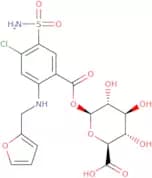
CAS:<p>Furosemide acyl-b-D-glucuronide is a derivative of Furosemide. It is a potent diuretic that has been used in the treatment of hypertension and congestive heart failure. The drug is excreted by the kidney, and its clearance is dependent on urine flow rate. Furosemide acyl-b-D-glucuronide can be detected in human serum and urine samples following oral administration, but its detection in urine may be delayed due to its low solubility. This active form of the drug may also cause drug reactions, such as nausea and vomiting, which are most likely due to the acidic nature of this form. Hydrochloric acid increases the absorption of Furosemide acyl-b-D-glucuronide, so it is recommended to take this medication with an acidic beverage containing hydrochloric acid or food high in pyridinium content. The elimination half life for this active</p>Formula:C18H19ClN2O11SPurity:Min. 95%Color and Shape:Yellow PowderMolecular weight:506.87 g/mol5-(2-Hydroxyethyl)-2'-deoxyuridine
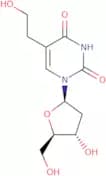
CAS:<p>5-(2-Hydroxyethyl)-2'-deoxyuridine is a regiospecific inhibitor of the enzyme thymidylate synthase. This drug inhibits the synthesis of thymine and uracil, which are used in DNA replication. 5-(2-Hydroxyethyl)-2'-deoxyuridine binds to the carbon chain of uracil, preventing its incorporation into DNA. 5-(2-Hydroxyethyl)-2'-deoxyuridine has been shown to be an effective inhibitor of thymidylate synthase in both prokaryotic and eukaryotic cells. The mechanism of action is thought to be competitive inhibition with respect to substrate binding at the active site of the enzyme. 5-(2-Hydroxyethyl)-2'-deoxyuridine can be synthesized by reacting acrylonitrile with 5-iodouridine chloride, followed by elimination reactions with methylene chloride or thionyl chloride. The product can then be</p>Formula:C11H16N2O6Purity:Min. 95%Color and Shape:PowderMolecular weight:272.25 g/molMethyl 2,3-anhydro-b-D-ribopyranoside
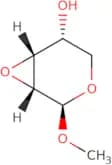
CAS:<p>Methyl 2,3-anhydro-b-D-ribopyranoside is a custom synthesis chemical with CAS No. 3150-13-8. This product is an oligosaccharide that is a polysaccharide and saccharide. It has fluorination and modification properties. This product is high purity and can be modified to suit the needs of customers. Methyl 2,3-anhydro-b-D-ribopyranoside is a monosaccharide sugar with a carbonyl group on the second carbon atom of the chain.</p>Formula:C6H10O4Purity:Min. 95%Molecular weight:146.1 g/molrac-Lotaustralin
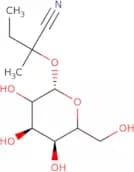
<p>Lotaustralin is a glycosylated, fluorinated, methylated, and modified synthetic compound. Lotaustralin has been shown to inhibit the growth of bacteria by binding to the ribosomes in bacterial cells. It also inhibits the production of inflammatory cytokines and lipopolysaccharide in mice. Lotaustralin is made synthetically through custom synthesis and modification. The purity of the drug exceeds 99%.</p>Formula:C11H19NO6Purity:Min. 95%Molecular weight:261.27 g/molL-Idaric acid
CAS:<p>L-Idaric acid is a novel anti-inflammatory agent that is a derivative of the endogenous compound d-glucuronic acid. It has been shown to have anti-inflammatory effects in animal studies as well as in human cell cultures and it has been shown to be safe for use in humans. L-Idaric acid inhibits the production of inflammatory mediators, such as prostaglandins, leukotrienes, and cytokines. L-Idaric acid also inhibits the activity of β-glucuronidase, which may be responsible for its ability to prevent the degradation of glucuronic acid derivatives.</p>Formula:C6H10O8Purity:Min. 95%Color and Shape:White to off-white solid.Molecular weight:210.14 g/mol2-Acetamido-2,4-dideoxy-4-fluoro-D-galactopyranose
CAS:<p>2-Acetamido-2,4-dideoxy-4-fluoro-D-galactopyranose (2ADF) is a synthetic ligand that binds to selectins, which are receptors expressed on the surface of cells. 2ADF has been shown to have a pharmacological effect in inhibiting inflammatory diseases by binding to and blocking the function of selectins. This drug has also been shown to inhibit leukocyte trafficking and chemotaxis by preventing the binding of selectins with their ligands, galectin 1 or galectin 3. 2ADF does not bind to glycan structures found on the cell membrane, but instead binds to glycan structures found on the surfaces of cells.</p>Formula:C8H14FNO5Purity:Min. 95%Molecular weight:223.2 g/mol1,2-O-Di-O-acetyl-5-O-benzoyl-3-O-methyl-D-ribofuranose
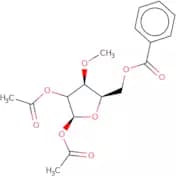
CAS:<p>1,2-O-Di-O-acetyl-5-O-benzoyl-3-O-methyl -D-ribofuranose is a custom synthesis of a fluorinated sugar. It has been modified through fluorination at the C5 position and methylation at the O1 and O2 positions. This product can be used in the synthesis of oligosaccharides and saccharides that are glycosylated with sugars.</p>Formula:C17H20O8Purity:Min. 95%Molecular weight:352.34 g/molXyloglucan
CAS:<p>Xyloglucans are members of a group of polysaccharides typically refered to as hemicelluloses. Hemicelluloses are plant cell wall polysaccharides that are not solubilized by water but are solubilized by aqueous alkali (e.g. 1 and 4M KOH). Other hemicellulosic polysaccharides include xylan, glucuronoxylan, arabinoxylan, mannan, glucomannan and galactoglucomannan. Hemicelluloses have a backbone of 1,4-linked β-D-pyranosyl residues in which O4 is in the equatorial orientation (e.g. Glc, Man, and Xyl). Xyloglucan is the predominant hemicellulose in the primary walls of dicots and non-graminaceous monocots and may account for up to 20% of the dry weight of the primary wall. Xyloglucan has a backbone composed of 1,4-linked β-D-Glcp residues. Up to 75% of these residues are substituted at O6 with mono-, di-, or triglycosyl side chains.</p>Purity:(Dry Basis) Min. 95%Color and Shape:PowderDaidzein 7-b-D-glucuronide 4'-sulfate disodium salt
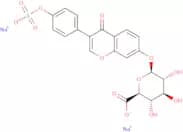
CAS:<p>Daidzein 7-b-D-glucuronide 4'-sulfate disodium salt (DAI) is a flavonoid that has significant antioxidant activity and is an inhibitor of the release of inflammatory cytokines. DAI has been shown to inhibit the production of necrotizing factor (NF)-κB and induce apoptosis in cultured dendritic cells. It also possesses anti-inflammatory properties, which may be due to its ability to inhibit phagocytosis and degranulation of mast cells. The major metabolites of DAI are glucuronides, sulfates, or sulfonates. These metabolites are excreted in urine and bile or hydrolyzed back into DAI by various enzymes such as esterases or glucuronidases.</p>Formula:C21H16Na2O13SPurity:Min. 95%Molecular weight:554.39 g/molPhenyl-3,4,6-tri-O-acetyl-2-deoxy-2-phthalimido-b-D-thioglucopyranoside
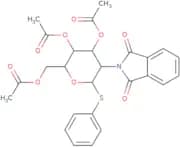
CAS:<p>Phenyl-3,4,6-tri-O-acetyl-2-deoxy-2-phthalimido-b-D-thioglucopyranoside is a glycosylation reagent that is used in the synthesis of complex carbohydrates. It reacts with an activated monosaccharide to form a glycosidic linkage between the sugar and the phenol group of the sugar. Phenyl 3,4,6 triacetate 2 deoxy 2 phthalimido B D thioglucopyranoside can be used for modifying polysaccharides and saccharides by fluorination or methylation. The compound has CAS No. 79528 49 7 and is available as custom synthesis. It is also available in high purity.</p>Purity:Min. 95%Methyl 2-deoxy-3,5-di-O-pivaloyl-a-D-ribofuranoside
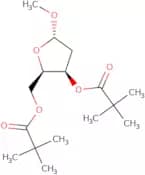
<p>Methyl 2-deoxy-3,5-di-O-pivaloyl-alpha-D-ribofuranoside is a custom synthesis of a complex carbohydrate that can be used in glycosylation and polysaccharide synthesis. This product is a sugar with a CAS No. that has been modified with methylation, fluorination, and click chemistry. <br>This product is synthesized by reacting the corresponding reactant monosaccharides with an acylating agent in the presence of a base to form 2,3,5-trihydroxybenzaldehyde esters. The 2,3,5-trihydroxybenzaldehyde esters are then reacted with an alcohol or phenol to form 2,4,6-trihydroxybenzalacetone derivatives which are converted into the desired product by hydrolysis.</p>Formula:C16H28O6Purity:Min. 95%Color and Shape:Oil.Molecular weight:316.39 g/molMethylphenyl 2,3,4-tri-O-benzyl-b-L-thiorhamnopyranose
<p>Methylphenyl 2,3,4-tri-O-benzyl-b-L-thiorhamnopyranose is a modification of the natural sugar thiorhamnopyranose. It has been synthesized by methylation and glycosylation of the monosaccharide. This carbohydrate has been custom synthesized with high purity and CAS number. The chemical formula is C18H22O11. Methylphenyl 2,3,4-tri-O-benzyl-b-L-thiorhamnopyranose is a complex carbohydrate that can be used in biomedical applications.</p>Purity:Min. 95%2N-Fmoc-4N-(2,3,4,6-tetra-O-acetyl-b-D-glucopyranosyl)-L-aparagine
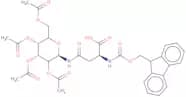
CAS:<p>2N-Fmoc-4N-(2,3,4,6-tetra-O-acetyl-b-D-glucopyranosyl)-L-aparagine is a modified carbohydrate that is used as a starting material for the synthesis of oligosaccharides and polysaccharides. It is synthesized by reacting 2N-Fmoc-L-serine with 4N-(2,3,4,6-tetraO-(acetyl)-bDglucopyranosyl)-Laparagine. The OAc group provides protection for the amino functions and can be removed in the presence of acid to yield an unprotected L(+)-serine. This product has high purity and can be purchased in various custom synthesis quantities.</p>Formula:C33H36N2O14Purity:Min. 95%Molecular weight:684.66 g/molMethyl 2,3,5-tri-O-benzyl-a-D-arabinofuranoside
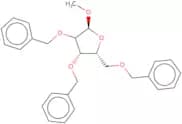
<p>Methyl 2,3,5-tri-O-benzyl-a-D-arabinofuranoside is a methylated sugar that belongs to the group of saccharides. It is often used as a Click modification and in custom synthesis of oligosaccharides. This product is also used for glycosylation and high purity modifications. Methyl 2,3,5-tri-O-benzyl-a-D-arabinofuranoside can be synthesized from arabinose and benzaldehyde with fluorination. The CAS number for this product is 51469-61-1.</p>Formula:C27H30O5Purity:Min. 95%Molecular weight:434.52 g/molNonyl b-D-thioglucopyranoside
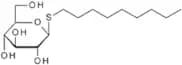
CAS:<p>Nonyl b-D-thioglucopyranoside is a methylating agent that can be used in the synthesis of oligosaccharides and polysaccharides. This compound is a fluorinated sugar that is used as an intermediate in the synthesis of saccharide derivatives. Nonyl b-D-thioglucopyranoside is also a highly pure, stable chemical that has been modified to meet customer specifications. It can be used for the preparation of glycosyl fluorides, which are used to modify monosaccharides and other carbohydrates.</p>Formula:C15H30O5SPurity:Min. 95%Molecular weight:322.46 g/molD-Myo-inositol-1,3,4,5-tetraphosphate
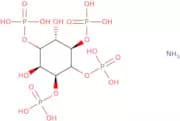
CAS:<p>D-myo-inositol-1,3,4,5-tetraphosphate (IP4) is a molecule that is involved in the regulation of cell metabolism and signal transduction. It is synthesized from myo-inositol by the enzyme inositol monophosphatase and hydrolyzed by inositol hexaphosphate kinase to form D-myo-inositol. IP4 can bind to receptors which span the plasma membrane and interact with intracellular Ca2+ channels. This binding results in an increase of cytosolic Ca2+ levels, which may be due to IP4’s ability to activate phosphatidylinositol turnover. IP4 is also involved in the regulation of neuronal death and infectious diseases such as HIV.</p>Purity:Min. 95%1-O-Acetyl-3,5-di-O-benzoyl-2-deoxy-D-ribofuranose
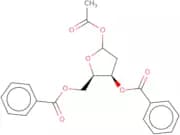
CAS:<p>1-O-Acetyl-3,5-di-O-benzoyl-2-deoxy-D-ribofuranose is a custom synthesis product. When fully synthesized and modified, it is a complex carbohydrate with glycosylation, methylation, click modification, fluorination and saccharide modifications. It has CAS No. 2155800-38-5 and Mw of 486.8 g/mol. 1-O-Acetyl-3,5-di-O-benzoyl--2--deoxy--D--ribofuranose can be used as an intermediate for the synthesis of oligosaccharides or monosaccharides or custom synthesis products. This product is available in high purity with >99% purity by HPLC analysis.</p>Formula:C21H20O7Purity:Min. 95%Molecular weight:384.38 g/mol5-O-tert-Butyldimethylsilyl-2,3-O-isopropylidene-D-ribono-1,4-lactone
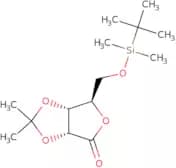
CAS:<p>5-O-tert-Butyldimethylsilyl-2,3-O-isopropylidene-D-ribono-1,4-lactone is a synthetic sugar. It is an intermediate used in the synthesis of oligosaccharides and saccharides. 5-O-tert-Butyldimethylsilyl-2,3-O-isopropylidene lactone is also used for click chemistry modifications for complex carbohydrates. The chemical compound is soluble in water and has high purity. This product does not contain any other substances that may be harmful to humans or the environment.</p>Formula:C14H26O5SiPurity:Min. 95%Molecular weight:302.44 g/mol4-Aminobenzyl b-D-thiogalactopyranoside
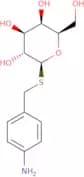
CAS:<p>4-Aminobenzyl b-D-thiogalactopyranoside is a chemical compound that belongs to the group of glycosylation, complex carbohydrate, Methylation, Click modification, Polysaccharide, Fluorination, saccharide, Modification and sugar. It is a synthetic product that can be modified according to customer requests. 4-Aminobenzyl b-D-thiogalactopyranoside is an oligosaccharide that has been custom synthesized for high purity. This product can be used in various applications such as pharmaceuticals and biochemistry research.</p>Formula:C13H19NO5SPurity:Min. 95%Color and Shape:PowderMolecular weight:301.36 g/molMaltohexaose
CAS:<p>Maltohexaose is a polysaccharide formed by 6 units of glucose and can be metabolised inside the cell to a substrate-based inhibitor of fucosyltransferases. It can also be converted to GDP-2-deoxy-2-fluoro-L-fucose, a competitive inhibitor of α-1,3-fucosyltransferase. Matohexaose is used as acceptor for measuring the activity of 4-Alpha-Glucanotransferase.</p>Formula:C36H62O31Purity:Min. 95.0 Area-%Molecular weight:990.86 g/mol