


Glycoscience
Glycoscience is the study of carbohydrates and their derivatives, as well as the interactions and biological functions they participate in. This field of research is crucial for understanding a wide variety of biological processes, including cell recognition, signaling, immune response, and disease development. Glycoscience has important applications in biotechnology, medicine, and the development of new drugs and therapies. At CymitQuimica, we offer a wide selection of high-quality, high-purity products for glycoscience research. Our catalog includes monosaccharides, oligosaccharides, polysaccharides, glycoconjugates, and specific reagents, designed to support researchers in their studies on the structure, function, and applications of carbohydrates in biological systems. These resources are intended to facilitate scientific discoveries and practical applications in various areas of bioscience and medicine.
Subcategories of "Glycoscience"
- Aminosugars(108 products)
- Glyco-Related Antibodies(282 products)
- Glycolipids(46 products)
- Glycosaminoglycans (GAGs)(55 products)
- Glycosides(419 products)
- Monosaccharides(6,622 products)
- Oligosaccharides(3,682 products)
- Polysaccharides(503 products)
Found 11041 products of "Glycoscience"
Sort by
Purity (%)
0
100
|
0
|
50
|
90
|
95
|
100
Dulcitol
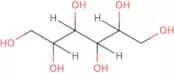
CAS:<p>Dulcitol is a sugar alcohol that is used in the food industry and as an alternative to sucrose. Dulcitol can be found in wastewater treatment and has been shown to be an inhibitor of wild-type strains of Escherichia coli and Bacteroides fragilis. It also inhibits the growth of Gram-positive bacteria, such as Staphylococcus aureus, by inhibiting their ability to synthesize DNA. Dulcitol is metabolized through a number of metabolic transformations, including hydrolysis by esterases or glucuronidases, oxidation by cytochrome P450 enzymes, reduction by glutathione reductase, or conjugation with glucuronic acid. Dulcitol can also inhibit the activity of certain enzymes such as protein kinase C (PKC).</p>Formula:C6H14O6Purity:Min. 99.0 Area-%Molecular weight:182.17 g/molRef: 3D-D-9500
1kgTo inquire5kgTo inquire10kgTo inquire25kgTo inquire2500gTo inquire-Unit-kgkgTo inquire2-Fluoroethyl a-L-fucopyranoside
<p>2-Fluoroethyl a-L-fucopyranoside is a custom synthesis that belongs to the class of methylated sugar derivatives. It is used as a glycosylation agent and has been shown to be useful in the synthesis of oligosaccharides, polysaccharides, and saccharides. 2-Fluoroethyl a-L-fucopyranoside can be fluorinated by heating with elemental fluorine or chlorine gas in an inert atmosphere. This modification can be used for the synthesis of high purity monosaccharides or sugars.</p>Formula:C8H15FO5Purity:Min. 95%Color and Shape:White to off-white solid.Molecular weight:210.2 g/molMethyl 4,6-dichloro-4,6-dideoxy-a-D-glucopyranoside
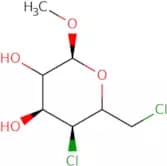
<p>Methyl 4,6-dichloro-4,6-dideoxy-a-D-glucopyranoside is a fluorinated carbohydrate that belongs to the class of monosaccharides and is synthetically produced. Methyl 4,6-dichloro-4,6-dideoxy-a-D-glucopyranoside is an oligosaccharide that has been modified with a click reaction. This product can be used in glycosylation reactions with polysaccharides or as an intermediate for the production of other modified sugars. Methyl 4,6-dichloro-4,6-dideoxy--D--glucopyranoside has high purity and CAS No. 8013695.</p>Formula:C7H12Cl2O4Purity:Min. 95%Molecular weight:231.08 g/mol1,3,6-Tri-O-acetyl-2,4-dideoxy-2-phthalimido-b-D-glucopyranose
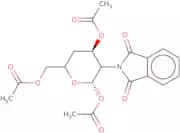
CAS:<p>1,3,6-Tri-O-acetyl-2,4-dideoxy-2-phthalimido-b-D-glucopyranose is a modification of the sugar molecule. This product is a custom synthesis and can be used in research to synthesize complex carbohydrates. It is also a synthetic carbohydrate that has been fluorinated and saccharides have been methylated and glycosylated. It has CAS No. 1260591-45-4 and can be used as a monosaccharide or polysaccharide.</p>Formula:C20H21NO9Purity:Min. 95%Molecular weight:419.38 g/mol2-Chloroethyl b-D-glucopyranoside
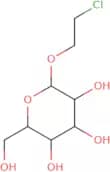
CAS:<p>2-Chloroethyl b-D-glucopyranoside is a custom synthesis, complex carbohydrate, and Oligosaccharide. It is modified with methylation, glycosylation, and fluorination. 2-Chloroethyl b-D-glucopyranoside has a CAS No. of 90318-86-8. It is synthesized in a high purity and has a high quality. This product contains sugar and can be found in Polysaccharides.</p>Formula:C8H15ClO6Purity:Min. 95%Molecular weight:242.65 g/mol3-Deoxy-L-arabinose
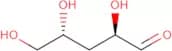
CAS:<p>3-Deoxy-L-arabinose is a purine, which is a type of nucleoside. It is structurally similar to ribose, but lacks the hydroxyl group at the 2' position. 3-Deoxy-L-arabinose has been shown to be an effective catalyst for the synthesis of nucleosides and nucleotides. The biological activity of this compound has not yet been researched extensively. This product can be used as a metal salt in research or as an acid catalyst in organic chemistry. 3-Deoxy-L-arabinose is often used as a precursor for purines and nucleotides that are found in DNA and RNA.</p>Formula:C5H10O4Purity:Min. 95%Molecular weight:134.13 g/mol1-D-a-Galactopyranosyl-4-O-[1-(2-octadecylthioethyl)-(b-D-galactopyranoside)]
<p>1-D-a-Galactopyranosyl-4-O-[1-(2-octadecylthioethyl)-(b-D-galactopyranoside)] is a complex carbohydrate that contains a fluorinated sugar. It is synthesized from a monosaccharide and an oligosaccharide and glycosylated with a polysaccharide. The compound has been modified to include methylation and click modification. 1-D-a-Galactopyranosyl-4-O-[1-(2-octadecylthioethyl)-(b-D-galactopyranoside)] can be purchased in high purity from the CAS registry number of 538570–75–6.</p>Purity:Min. 95%Di-a-D-galactosyl-mannopentaose
<p>Di-a-D-galactosyl-mannopentaose is a mannopentaose derivative that has been modified with a methyl group at the C2 position and fluorinated at the C6 position. This compound can be used as an intermediate in the production of oligosaccharides and polysaccharides, which are complex carbohydrates that contain many sugar molecules. The product is of high purity, with no detectable impurities. It was synthesized using a custom synthesis approach, which allows for modification of the chemical structure to produce desired properties. This product is stable when stored at room temperature and does not require refrigeration. It does not contain any organic solvents or volatile compounds and is free from endotoxins or heavy metals.</p>Purity:Min. 95%Molecular weight:1,153 g/mol6-O-Sulphated Lewisa-BSA
<p>Lewisa-BSA is a modified form of BSA that contains 6-O sulfated sugars. This carbohydrate is used in the treatment of diabetes and other metabolic disorders. Lewisa-BSA is synthesized by the modification of BSA with a series of oligosaccharide residues. The carbohydrate chains are then methylated, glycosylated, and finally sulfated. This process provides Lewisa-BSA with high purity and high stability.</p>Purity:Min. 95%1,2,3-Tri-O-acetyl-5-O-benzoyl-4-C-methyl-D-ribofuranose
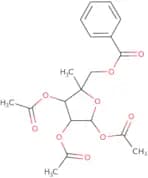
CAS:<p>1,2,3-Tri-O-acetyl-5-O-benzoyl-4-C-methyl-D-ribofuranose is a fluorinated carbohydrate that is synthesized by the click chemistry reaction. It is an oligosaccharide with three acetyl groups and four methyl groups on the sugar. This compound has a molecular weight of 514.92 g/mol and a CAS number of 503543-44-0.</p>Purity:Min. 95%N-Ethyl glucamine
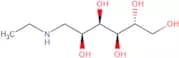
CAS:<p>N-Ethyl glucamine is a nonsteroidal anti-inflammatory drug (NSAID) that belongs to the class of drugs called salicylates. It is a prodrug that is hydrolyzed in vivo to form salicylic acid and ethylene glycol. The sub-effective dose of N-ethyl glucamine has been shown to be effective against various types of cancer cells, including lung, colon, breast, prostate, and skin cancers. This drug also has an effect on lipid metabolism and can be used for the treatment of metabolic disorders such as hyperlipidemia. N-Ethyl glucamine has been shown to have anti-inflammatory properties by inhibiting prostaglandin synthesis.</p>Formula:C9H19NO5Purity:Min. 95%Molecular weight:221.25 g/molBenzyl 2-acetamido-4,6-O-benzylidene-2-deoxy-a-D-galactopyranoside
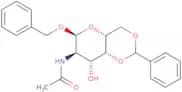
CAS:<p>Benzyl 2-acetamido-4,6-O-benzylidene-2-deoxy-a-D-galactopyranoside is a synthetic fluorinated carbohydrate that has been custom synthesized and modified with a click modification. This high purity product is available in the form of an oligosaccharide or a complex carbohydrate. It can be used in glycosylation and polysaccharide synthesis.</p>Formula:C22H25NO6Purity:Min. 95%Molecular weight:399.44 g/mol2-Deoxy-a-L-ribofuranose
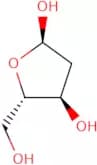
CAS:<p>2-Deoxy-a-L-ribofuranose is a monosaccharide that can be modified by either fluorination or methylation. It is an important building block in the synthesis of complex carbohydrates and saccharides, such as oligosaccharides and polysaccharides. 2-Deoxy-a-L-ribofuranose has been shown to have excellent purity, high quality, and custom synthesis for use in pharmaceuticals.<br>2-Deoxy-a-L-ribofuranose can be used in the production of nucleotides, which are essential for DNA replication and transcription. These nucleotides are also involved in protein synthesis, as they contain nitrogenous bases which provide the amino acids needed for proteins.</p>Formula:C5H10O4Purity:Min. 95%Molecular weight:134.13 g/molMethyl 2-deoxy-D-threo-pentofuranoside
CAS:<p>Methyl 2-deoxy-D-threo-pentofuranoside is a synthetic monosaccharide that has been modified by fluorination. It can be used for the synthesis of oligosaccharides and complex carbohydrates. Methyl 2-deoxy-D-threo-pentofuranoside can also be used for glycosylation, methylation, or click modification reactions. This product is available in high purity and will not contain any impurities.</p>Purity:Min. 95%6-Azido-a-D-galactose-1-dihydrogenphosphate
CAS:<p>6-Azido-a-D-galactose-1-dihydrogenphosphate is a custom synthesis that is a complex carbohydrate. It is an Oligosaccharide and CAS No. 1374984-64-1, Polysaccharide with Modification, saccharide and Methylation, Glycosylation, Carbohydrate. This compound can be modified with Click modification, sugar or High purity, Fluorination. 6-Azido-a-D-galactose-1-dihydrogenphosphate is synthesized by Synthetic methods and has high purity.</p>Formula:C6H12N3O8PPurity:Min. 95%Molecular weight:285.15 g/molRhamnolipids C8-C8
CAS:<p>Rhamnolipids C8-C8 are a group of lipids that are produced by the bacterium Burkholderia cepacia. They have been shown to have a strong ability to bind to and remove substances from water, such as heavy metals, lignin, and polychlorinated biphenyls. Rhamnolipids C8-C8 can be used in industrial settings for wastewater treatment or in the environment for bioremediation of pollutants. The physicochemical properties of rhamnolipids C8-C8 are determined by their composition of fatty acids and their degree of unsaturation. These properties can vary depending on the origin of the bacteria producing them.</p>Formula:C22H40O9Purity:Min. 95%Molecular weight:448.55 g/molDecyl glucose neopentyl glycol
CAS:<p>Decyl glucose neopentyl glycol is a molecule that is commonly used in cell-based assays to measure the hydrogen peroxide release by cells. It is also used to transport hydrogen peroxide, which is a reactive oxidative species, intracellularly and extracellularly. Decyl glucose neopentyl glycol has been shown to have a range of different isoforms in cellular systems. This allows it to be used as an effective fluorescent marker for the detection of hydrogen peroxide mediated events.</p>Formula:C35H68O12Purity:Min. 95%Molecular weight:680.91 g/molAtreleuton Glucuronide
<p>Atreleuton Glucuronide is a custom synthetic carbohydrate with an atreleuton core and a glucuronic acid moiety. It has been modified by fluorination, methylation, glycosylation, and click chemistry. Atreleuton Glucuronide is a high-purity product that can be synthesized in complex carbohydrate form or in monosaccharide form. This product is available for custom synthesis on request.</p>Formula:C22H22FN2O8SPurity:Min. 95%Molecular weight:493.48 g/molMaltosyl trehalose
CAS:<p>Maltosyltransferase, involved in the biosynthesis of α-glucans, has been genetically validated as a potential therapeutic target against Mycobacterium tuberculosis. Trehalose derivatives are potential tools for the targeting of trehalose pathways in the cell wall of Mycobacterium tuberculosis.</p>Formula:C24H42O21Purity:Min. 95%Color and Shape:PowderMolecular weight:666.58 g/molMethyl 6-[methyl-2,3,4-tri-O-acetyl-b-D-glucuronato]mycophenolate
CAS:<p>Methyl 6-[methyl-2,3,4-tri-O-acetyl-b-D-glucuronato]mycophenolate is a synthetic glycosylation reagent. It is an acetylated derivative of mycophenolic acid and has been used for the synthesis of oligosaccharides and polysaccharides. Methyl 6-[methyl-2,3,4-tri-O-acetyl-b-D-glucuronato]mycophenolate is soluble in water.</p>Formula:C30H36O15Purity:Min. 95%Molecular weight:636.6 g/mol


![1-D-a-Galactopyranosyl-4-O-[1-(2-octadecylthioethyl)-(b-D-galactopyranoside)]](/_next/image/?url=https%3A%2Fstatic.cymitquimica.com%2Fproducts%2F3D%2Fthumb-webp%2FOG12060.webp&w=3840&q=75)



![Methyl 6-[methyl-2,3,4-tri-O-acetyl-b-D-glucuronato]mycophenolate](/_next/image/?url=https%3A%2Fstatic.cymitquimica.com%2Fproducts%2F3D%2Fthumb-webp%2FMM04556.webp&w=3840&q=75)