Glycoscience
Glycoscience is the study of carbohydrates and their derivatives, as well as the interactions and biological functions they participate in. This field of research is crucial for understanding a wide variety of biological processes, including cell recognition, signaling, immune response, and disease development. Glycoscience has important applications in biotechnology, medicine, and the development of new drugs and therapies. At CymitQuimica, we offer a wide selection of high-quality, high-purity products for glycoscience research. Our catalog includes monosaccharides, oligosaccharides, polysaccharides, glycoconjugates, and specific reagents, designed to support researchers in their studies on the structure, function, and applications of carbohydrates in biological systems. These resources are intended to facilitate scientific discoveries and practical applications in various areas of bioscience and medicine.
Subcategories of "Glycoscience"
- Aminosugars(108 products)
- Glyco-Related Antibodies(282 products)
- Glycolipids(46 products)
- Glycosaminoglycans (GAGs)(55 products)
- Glycosides(419 products)
- Monosaccharides(6,622 products)
- Oligosaccharides(3,682 products)
- Polysaccharides(503 products)
Found 11041 products of "Glycoscience"
Sort by
Purity (%)
0
100
|
0
|
50
|
90
|
95
|
100
Phenyl 4,6-O-benzylidene-b-D-thiogalactopyranoside
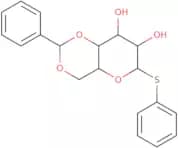
CAS:<p>Phenyl 4,6-O-benzylidene-b-D-thiogalactopyranoside is a synthetic monosaccharide that is custom synthesized. It has a CAS number of 138922-03-9 and can be used in the modification of complex carbohydrates, saccharides, oligosaccharides, and polysaccharides. It is also used for methylation and fluorination. Phenyl 4,6-O-benzylidene-b-D-thiogalactopyranoside has a molecular weight of 270.27 g/mol and a melting point of 221 degrees Celsius.</p>Formula:C19H20O5SPurity:Min. 95%Color and Shape:PowderMolecular weight:360.42 g/molMethyl 4,6-dichloro-4,6-dideoxy-a-D-galactopyranoside
CAS:<p>Methyl 4,6-dichloro-4,6-dideoxy-a-D-galactopyranoside is an innovative sweetener that can be used in food and drinks. It is a type of sugar alcohol with a sweet taste similar to sucrose. This substance is not metabolized by bacteria in the intestine or absorbed into the bloodstream. Methyl 4,6-dichloro-4,6-dideoxy-a-D-galactopyranoside has been shown to inhibit the activity of nerve cells by preventing the release of neurotransmitters such as glutamate and GABA. This inhibition mechanism is thought to be due to its ability to enhance the release of chloride ions from nerve cells. The model Euclidean was used to predict the potential stimulatory effect on tympanic membrane (eardrum) cells when exposed to methyl 4,6-dichloro-4,6-dideoxy-a-D</p>Formula:C7H12Cl2O4Purity:Min. 95%Molecular weight:231.08 g/molMethyl 3-amino-3,6-dideoxy-a-L-taloside
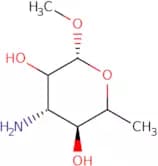
<p>Methyl 3-amino-3,6-dideoxy-a-L-taloside is a custom synthesis of a monosaccharide. It is modified with fluorine and methyl groups and may be used in click chemistry. The CAS number for this compound is 103614-34-8. Methyl 3-amino-3,6-dideoxy-a-L-taloside is an oligosaccharide that can be glycosylated or complexed with sugar. This compound has properties of a carbohydrate and can be classified as a saccharide or polysaccharide.</p>Formula:C7H15NO4Purity:Min. 95%Molecular weight:177.2 g/molAllyl 2,3-di-O-benzyl-a-D-glucopyranoside
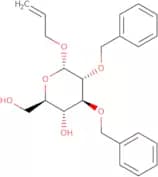
CAS:<p>Allyl 2,3-di-O-benzyl-a-D-glucopyranoside is a plant growth regulator that stimulates callus formation. It belongs to the group of auxins and has been shown to promote callus growth in Arabidopsis thaliana cultivars, such as glaberrima and kinetin. This compound has also been shown to stimulate the formation of calli from coconut explants.</p>Formula:C23H28O6Purity:Min. 95%Molecular weight:400.46 g/molCladinose
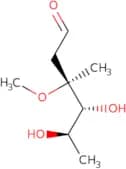
CAS:<p>Cladinose is a natural compound that has been shown to have potent inhibitory properties against microorganisms, such as bacteria and fungi. Cladinose has been shown to inhibit the growth of bacteria by reacting with the ribosomes of cells in the bacterial cytoplasm. It inhibits bacterial protein synthesis by binding to the ribosomal RNA and blocking access to the mRNA template. Cladinose also inhibits fungal growth by inhibiting ergosterol biosynthesis, which prevents fungal cell membrane formation. Cladinose has been shown to have antiinflammatory activity in mice with induced inflammation. This is due to its ability to bind to cyclooxygenase-2 (COX-2) and prevent its activation, thereby preventing prostaglandin synthesis.</p>Formula:C8H16O4Purity:Min. 95%Molecular weight:176.21 g/molMethyl a-N-acetyllactosamine
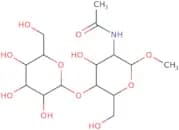
CAS:<p>Methyl a-N-acetyllactosamine is a custom synthesis of Methyl a-N-acetylgalactosamine. This compound has been modified by fluorination, methylation, and click modification to yield the desired product. The monosaccharide structure was synthesized from the corresponding glycosyl halide and protected amino acid. The glycosylation reaction between this monosaccharide and the oligosaccharide containing an unprotected hydroxyl group yields the desired product. The purity of this compound is greater than 99%.</p>Formula:C15H27NO11Purity:Min. 95%Molecular weight:397.38 g/mol1-Amino-1-deoxy-D-lyxitol hydrobromide
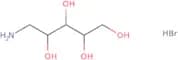
CAS:<p>1-Amino-1-deoxy-D-lyxitol hydrobromide is a synthetic monosaccharide with an aldehyde group at the 1 position. It belongs to the group of oligosaccharides and is a component of glycosyls, which are complex carbohydrates. This chemical has been modified by fluorination, methylation, and click chemistry. The chemical is available in high purity and can be custom synthesized to order.</p>Purity:Min. 95%Fructononasaccharide
<p>Fructononasaccharide is a modification of oligosaccharides that is synthesized from sucrose. It is a complex carbohydrate that has been modified with methylation and glycosylation. Fructononasaccharide is used in the synthesis of polysaccharides, as well as for the production of high-purity, custom-synthesized monosaccharides and disaccharides. Fructononasaccharide can be fluorinated or saccharified to produce different compounds.</p>Formula:C54H92O46Purity:Min. 95%Color and Shape:PowderMolecular weight:1,477.28 g/mol2,3-O-Isopropylidene-1,6-di-O-p-toluenesulfonyl-a-L-sorbofuranose
CAS:<p>2,3-O-Isopropylidene-1,6-di-O-p-toluenesulfonyl-a-L-sorbofuranose is a synthetic sugar that has been modified with fluorine. It has a molecular weight of 594.65 and melting point of 190°C. The compound is used as a precursor for the synthesis of oligosaccharides and polysaccharides.</p>Formula:C23H28O10S2Purity:Min. 95%Molecular weight:528.59 g/mol1,3-O-Benzylidene-L-arabitol
CAS:<p>1,3-O-Benzylidene-L-arabitol is an enantiomer of arabinitol. It has been shown to have cytotoxic effects on cultured human leukemia cells, but the mechanism of action is unclear. 1,3-O-Benzylidene-L-arabitol may inhibit glycosylation by inhibiting the formation of a key enzyme that catalyzes the transfer of glucose to serine in glycosphingolipids and glycosylation. 1,3-O-Benzylidene-L-arabitol also inhibits the synthesis of erythrosphingosine and psychosine by blocking galactosyl transferase.</p>Formula:C12H16O5Purity:Min. 95%Molecular weight:240.26 g/mol2N-Fmoc-4N-(2,3,4,6-tetra-O-acetyl-b-D-glucopyranosyl)-L-aparagine
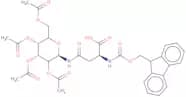
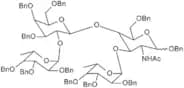
CAS:<p>2N-Fmoc-4N-(2,3,4,6-tetra-O-acetyl-b-D-glucopyranosyl)-L-aparagine is a modified carbohydrate that is used as a starting material for the synthesis of oligosaccharides and polysaccharides. It is synthesized by reacting 2N-Fmoc-L-serine with 4N-(2,3,4,6-tetraO-(acetyl)-bDglucopyranosyl)-Laparagine. The OAc group provides protection for the amino functions and can be removed in the presence of acid to yield an unprotected L(+)-serine. This product has high purity and can be purchased in various custom synthesis quantities.</p>Formula:C33H36N2O14Purity:Min. 95%Molecular weight:684.66 g/mol2-Acetamido-1,6-di-O-benzyl-3-O-(2,3,4-tri-O-benzyl-a-L-fucopyranosyl)-4-O-[2-O-(2,3,4-tri-O-benzyl-a-L-fucopyranosyl)-3,4,6-tri-O-b enzyl-b-D-galactopyranosyl]-2-deoxy-D-glucopyranoside
CAS:<p>The chemical compound 2-Acetamido-1,6-di-O-benzyl-3-O-(2,3,4-tri-O-benzyl-aL-fucopyranosyl)-4-O-[2-O-(2,3,4 -tri-O benzyl aL fucopyranosyl) 3,4,6 tri O benzyl bD galactopyranosyl]-2 deoxy D glucopyranoside has the CAS number 6092097. This is a synthetic monosaccharide that is not found in nature. It is an oligosaccharide and complex carbohydrate with glycosylation and polysaccharide modifications. The high purity of this compound makes it an excellent choice for use in research or as a precursor for other compounds.</p>Formula:C103H111NO19Purity:Min. 95%Molecular weight:1,667.03 g/molEthyl 2,4,6-tri-O-benzoyl-a-D-thiomannopyranoside
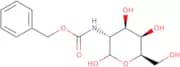
<p>Ethyl 2,4,6-tri-O-benzoyl-a-D-thiomannopyranoside is a modification of the oligosaccharide mannan. It is an important component of glycoproteins and glycolipids found in plants, fungi, and bacteria. In plants, this modification plays a role in seed dormancy and germination. In fungi, it is involved in the synthesis of cell walls. In bacteria, it has been shown to be involved in the synthesis of peptidoglycan cell walls. Ethyl 2,4,6-tri-O-benzoyl-a-D-thiomannopyranoside is also used as a reagent for the methylation of carbohydrates and to introduce fluorine atoms into saccharides.<br>Methylation: The introduction of a methyl group into a molecule by the addition of S-adenosyl methionine (SAM) to form S-(</p>Formula:C29H28O8SPurity:Min. 95%Molecular weight:536.59 g/mol2-(Benzyloxycarbonylamino)-2-deoxy-D-galactose
CAS:<p>2-(Benzyloxycarbonylamino)-2-deoxy-D-galactose is a synthetic, fluorinated carbohydrate. It is a monosaccharide with the chemical formula C6H11NO5 and is soluble in water. The glycosylation of 2-(benzyloxycarbonylamino)-2-deoxy-D-galactose has been shown to be more stable than that of other sugars, such as glucose or maltose. This modification can be accomplished by a click reaction. 2-(Benzyloxycarbonylamino)-2-deoxy-D-galactose can be used to modify proteins, such as antibodies and enzymes, by glycosylating amino acid residues on the protein surface.</p>Formula:C14H19NO7Purity:Min. 95%Molecular weight:313.3 g/mol4-Methoxyphenyl 4-O-[3,6-di-O-benzyl-2-deoxy-4-O-(4,6-O-benzylidene-2-O-levulinoyl-b-D-glucopyranosyl)-2-phthalimido-b-D-glucopyrano sy]-3-O-benzyl-2-deoxy-6-O-(4-methoxybenzyl)-2-phthalimido-b-D-glucopyranoside
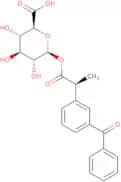
<p>4-Methoxyphenyl 4-O-[3,6-di-O-benzyl-2-deoxy-4-O-(4,6-O-benzylidene-2-O-levulinoyl)-bDglucopyranosyl]-2-phthalimido -bDglucopyranoside is a modification of the natural compound 3,6 di O benzyl 2 deoxy 4 O (4,6 O benzylidene 2 O levulinoyl) b D glucopyranosyld. It is a synthetic oligosaccharide that contains one monosaccharide and two polysaccharides. The synthesis of this product involves methylation and glycosylation. This compound has CAS number 5374031 and can be used as an intermediate in the synthesis of other products with fluorination or saccharide modifications.</p>Formula:C82H80N2O22Purity:Min. 95%Color and Shape:White to off-white crystalline powder.Molecular weight:1,445.51 g/mol(S)-Ketoprofen b-D-glucuronide
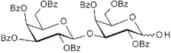
CAS:<p>(S)-Ketoprofen metabolite. Soluble in DMSO and methanol</p>Formula:C22H22O9Purity:Min. 95%Color and Shape:Off-White To Light (Or Pale) Yellow SolidMolecular weight:430.4 g/mol2,3,6,2',3',4',6'-Hepta-O-benzoyl-D-lactose
CAS:<p>2,3,6,2',3',4',6'-Hepta-O-benzoyl-D-lactose is a custom synthesis that can be modified in a variety of ways. It has a high degree of fluorination and methylation to provide protection against degradation by enzymes. The monosaccharide units are synthesized and then assembled into oligosaccharides with glycosylations. Modifications can include glycosylation at any position on the molecule as well as the addition of complex carbohydrates.<br>2,3,6,2',3',4',6'-Hepta-O-benzoyl-D-lactose is an example of a polysaccharide consisting of glucose units with other hexoses such as galactose or mannose.</p>Formula:C61H50O18Purity:Min. 95%Molecular weight:1,071.04 g/molBlood group A type 3/4 tetrasaccharide
<p>Gala1-3(Fuca1-2)Galb1-3GalNAc</p>Formula:C28H48N2O20Purity:Min. 95%Molecular weight:732.68 g/mol2-Acetamido-4-O-(2-acetamido-2-deoxy-b-D-glucopyranosyl)-2-deoxy-D-muramic acid
CAS:<p>2-Acetamido-4-O-(2-acetamido-2-deoxy-b-D-glucopyranosyl)-2-deoxy-D-muramic acid is a synthetic, monosaccharide that is used in the synthesis of complex carbohydrates. 2AA2DMUA has been modified with methylation, glycosylation, and fluorination. This product has a CAS No. 41137-10-4 and can be custom synthesized for your needs.</p>Formula:C19H32N2O13Purity:Min. 95%Molecular weight:496.46 g/molGlycyl-lacto-N-neotetraose
<p>Glycyl-lacto-N-neotetraose is a complex carbohydrate that is custom synthesized and has high purity. It is an Oligosaccharide, Carbohydrate, and Polysaccharide that can be modified with methylation and glycosylation. This product can be used in the synthesis of other monosaccharides or saccharides to form complex carbohydrates. Glycyl-lacto-N-neotetraose is also fluorinated on one of its hydroxyl groups to produce an active water soluble compound for use in research.</p>Formula:C28H49N3O21Purity:Min. 95%Molecular weight:763.7 g/mol