Glycoscience
Glycoscience is the study of carbohydrates and their derivatives, as well as the interactions and biological functions they participate in. This field of research is crucial for understanding a wide variety of biological processes, including cell recognition, signaling, immune response, and disease development. Glycoscience has important applications in biotechnology, medicine, and the development of new drugs and therapies. At CymitQuimica, we offer a wide selection of high-quality, high-purity products for glycoscience research. Our catalog includes monosaccharides, oligosaccharides, polysaccharides, glycoconjugates, and specific reagents, designed to support researchers in their studies on the structure, function, and applications of carbohydrates in biological systems. These resources are intended to facilitate scientific discoveries and practical applications in various areas of bioscience and medicine.
Subcategories of "Glycoscience"
- Aminosugars(108 products)
- Glyco-Related Antibodies(282 products)
- Glycolipids(46 products)
- Glycosaminoglycans (GAGs)(55 products)
- Glycosides(419 products)
- Monosaccharides(6,622 products)
- Oligosaccharides(3,682 products)
- Polysaccharides(503 products)
Found 11041 products of "Glycoscience"
Sort by
Purity (%)
0
100
|
0
|
50
|
90
|
95
|
100
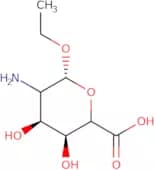
Ethyl 2-amino-b-D-glucuronide
<p>Ethyl 2-amino-b-D-glucuronide is a Carbohydrate, Modification, saccharide, Oligosaccharide, sugar. The CAS number for this compound is 6058-91-9. This product can be synthesized in the lab using Custom synthesis and High purity. Ethyl 2-amino-b-D-glucuronide is a Synthetic and Monosaccharide. This product has Click modification and Methylation. Ethyl 2-amino-b-D-glucuronide is also Glycosylated.</p>Formula:C8H15NO6Purity:Min. 95%Molecular weight:221.21 g/molN'-Nitrosonornicotine-N-b-D-glucuronide - Mixture Of Diastereomers
CAS:<p>N'-Nitrosonornicotine-N-b-D-glucuronide is a complex carbohydrate that has been modified with fluorination. It is synthesized from N'-nitrosonornicotine, which is a natural product found in tobacco. This synthetic molecule can be used to modify glycosylations and methylations as well as other modifications. The carbonyl group at the C3 position of the glucuronic acid moiety has been modified with an N-nitrosamine functional group. This modification makes it possible for this molecule to be used as a substrate for glycosylation reactions, such as the addition of oligosaccharides or monosaccharides to the sugar moiety. This synthesis is custom and can be ordered in high purity.</p>Formula:C15H19N3O7Purity:Min. 95%Molecular weight:353.33 g/mol2,3,4,6-Tetra-O-acetyl-b-D-thioglucopyranose sodium salt
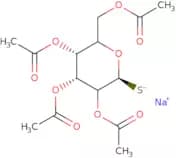
CAS:<p>2,3,4,6-Tetra-O-acetyl-b-D-thioglucopyranose sodium salt is a synthetic monosaccharide that can be used for glycosylation. This product is synthesized by the addition of acetyl groups to the 2-, 3-, 4-, and 6-positions on the glucose moiety. The resulting product has been shown to have a high degree of purity as well as a low content of impurities.</p>Formula:C14H19O9SNaPurity:Min. 95%Molecular weight:386.35 g/molSialylglycan
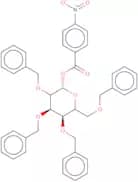
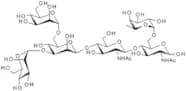
<p>Sialylglycan is a glycan that is found on the surface of cells and is important in cell-cell interactions. It is involved in the binding of influenza virus to its receptor, and sialylglycan has been shown to be bifunctional, meaning it can act as both an antigen and an antibody. Sialylglycan oligosaccharides are found in muscle tissue, which is where influenza viruses are most likely to attach. The molecule's fluorimetric properties have also been used to study outbreaks of avian influenza. <br>Sialylglycan has been used for gene analysis by attaching fluorescent tags to the molecule that can be detected using fluorescence microscopy techniques. In vivo assays have also been performed with sialylglycan as a model antigen.</p>Formula:C76H125N5O57Purity:Min. 95%Color and Shape:PowderMolecular weight:2,020.81 g/mol2,3,4,6-Tetra-O-benzyl-1-O-(4-nitrobenzoyl)-b-D-glucopyranose
<p>2,3,4,6-Tetra-O-benzyl-1-O-(4-nitrobenzoyl)-b-D-glucopyranose is a synthetic sugar that is the building block for oligosaccharides and polysaccharides. It has been modified with fluorination and methylation to produce a high purity product. The CAS number for this compound is 248940-24-5.</p>Formula:C41H39NO9Purity:Min. 95%Molecular weight:689.77 g/molPyridoxal galactoside
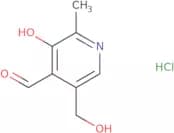
CAS:<p>Pyridoxal galactoside is a synthetic carbohydrate that is glycosylated and methylated. It is soluble in water and sparingly soluble in ethanol and acetone. Pyridoxal galactoside has a CAS number of 644-88-2. The chemical formula for pyridoxal galactoside is C6H7NO3, with a molecular weight of 171.12 g/mol. This product can be custom synthesized to meet customer specifications.</p>Formula:C14H19O8NPurity:Min. 95%Color and Shape:Pale brown solid.Molecular weight:329.31 g/molNeocarrahexaose-24,41,3,5-tetra-O-sulfate sodium salt
<p>Neocarrahexaose-24,41,3,5-tetra-O-sulfate sodium salt is a glycosylation agent that is used in the synthesis of polysaccharides and oligosaccharides. It is a complex carbohydrate that contains 24% of galactose, 41% of mannose, 3% of glucose and 5% of fructose. This compound has been modified by methylation, click modification and fluorination. Neocarrahexaose-24,41,3,5-tetra-O-sulfate sodium salt has CAS No. 66894-00-2 and can be custom synthesized to meet customer specifications.</p>Formula:C36H52Na4O40S4Purity:Min. 95%Color and Shape:White/Off-White SolidMolecular weight:1,345 g/mol3,4-Di-O-acetyl-1,6-anhydro-2-deoxy-2-iodo-b-D-glucopyranose
CAS:<p>3,4-Di-O-acetyl-1,6-anhydro-2-deoxy-2-iodo-b-D-glucopyranose is a synthetic sugar that is used in the synthesis of polysaccharides. It can be methylated at C3 and C4 to yield 3,4,5'-triacetyl 1,6 anhydro 2 deoxy 2 iodo b D glucopyranose. This compound has been shown to have antiulcerogenic activity due to its ability to inhibit gastric acid secretion and reduce the incidence of gastric ulcers. 3,4 Di acetyl 1 6 anhydro 2 deoxy 2 iodo b D glucopyranose has also been shown to selectively inhibit the growth of cancer cells. The compound is fluorinated at C3 and C4 with a high purity which allows for modification of the molecular structure.</p>Formula:C10H13IO6Purity:Min. 95%Molecular weight:356.11 g/mol8-Methoxycarbonyloctyl-6-O-(a-L-fucopyranosyl)-N,N'-diacetyl-chitobioside
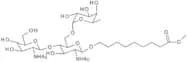
CAS:<p>8-Methoxycarbonyloctyl-6-O-(a-L-fucopyranosyl)-N,N'-diacetylchitobioside is a synthetic carbohydrate that has been fluorinated at the 8 position and acetylated at the 6 position. It is a custom synthesis that can be modified with methylation and other modifications. This compound is used in biochemical research as well as for medical purposes. It has a CAS number of 106445-35-6, and has been shown to have glycosylation, oligosaccharide, sugar, methylation, monosaccharide, polysaccharide, saccharide click modification properties.</p>Formula:C32H56N2O17Purity:Min. 95%Molecular weight:740.79 g/molD-Galactosamine-2-N-sulfate sodium
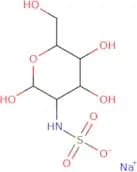
CAS:<p>D-Galactosamine-2-N-sulfate sodium is a chemical compound with potential applications in cancer treatment. It has been shown to enhance the cytotoxic effects of certain drugs, such as Tolvaptan and Luliconazole, in human cancer cells. Additionally, D-Galactosamine-2-N-sulfate sodium has been reported to inhibit kinase activity in Staphylococcus aureus and induce apoptosis in cancer cells. This compound may also have potential as an inhibitor of betamethasone-induced apoptosis and as an analog of cytisine and gossypol. Further research is needed to fully understand the potential therapeutic benefits of D-Galactosamine-2-N-sulfate sodium for cancer treatment.</p>Formula:C6H12NNaO8SPurity:Min. 95%Molecular weight:281.22 g/molL-Galacturonic acid
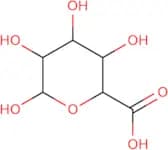
CAS:<p>L-Galacturonic acid is an acidic polysaccharide that is a constituent of many plants, especially in the cell walls of pectin. L-Galacturonic acid has biochemical properties, such as growth factor activity and anticoagulant properties. It also has nucleophilic properties, which means it can be used to extract other substances. The chemical structures of L-galacturonic acid are C6H8O7 with hydroxyl groups on both carbons 1 and 4. The hydroxyl group on carbon 1 makes it a good reactant for nucleophilic attack by sodium carbonate. This reaction increases the number of negative charges on the molecule, which make it a good carbohydrate chemistry reagent. L-Galacturonic acid is not soluble in water but can be dissolved in hydrochloric acid or sodium carbonate solution. It is not toxic when ingested orally and has been shown to have anti-coagulant properties in</p>Purity:Min. 95%Man-3-F N-Glycan
CAS:<p>Man-3-F N-Glycan is a custom synthesis of an oligosaccharide. It is a polysaccharide that is modified with methylation, glycosylation and click modification. Man-3-F N-Glycan is a high purity product that has been fluorinated for use in synthetic biology.</p>Formula:C40H68N2O30Purity:Min. 95%Molecular weight:1,056.96 g/molMaltotriose hydrate
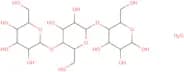
CAS:<p>Maltotriose hydrate is a Chinese-made inhibitor analog that has shown promising anticancer properties. It has been shown to inhibit kinases, which are proteins involved in cell signaling pathways that regulate cell growth and division. This inhibition leads to apoptosis, or programmed cell death, in cancer cells. Maltotriose hydrate has been found in human urine and may have potential as a medicinal agent for the treatment of various types of tumors and cancers. Its ability to target cancer cells specifically makes it a promising candidate for further research into cancer treatments.</p>Formula:C18H34O17Purity:Min. 95%Molecular weight:522.5 g/molPhenyl 3,4,6-tris-o-(phenylmethyl)-1-thio-B-D-glucopyranoside
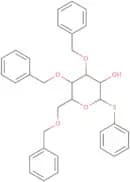
CAS:<p>Please enquire for more information about Phenyl 3,4,6-tris-o-(phenylmethyl)-1-thio-B-D-glucopyranoside including the price, delivery time and more detailed product information at the technical inquiry form on this page</p>Formula:C33H34O5SPurity:Min. 95%Molecular weight:542.7 g/mol1,2,3,4,6-Penta-O-pivaloyl-β-D-mannopyranose
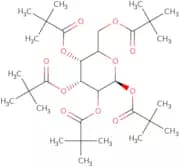
CAS:<p>1,2,3,4,6-Penta-O-pivaloyl-β-D-mannopyranose is an oligosaccharide which is a type of complex carbohydrate. It has the chemical formula C(13)H(22)O(12). 1,2,3,4,6-Penta-O-pivaloyl-β-D-mannopyranose can be synthesized by methylation and glycosylation of pentaerythritol. The molecular weight of 1,2,3,4,6-Penta-O-pivaloyl-β-D-mannopyranose is 391.5 g/mol. 1,2,3,4,6 -Penta -O -pivaloyl - β - D - mannopyranose has been shown to inhibit the growth of Staphylococcus aureus in vitro</p>Formula:C31H52O11Purity:Min. 95%Color and Shape:White PowderMolecular weight:600.74 g/molDelphinidin 3-glucoside chloride
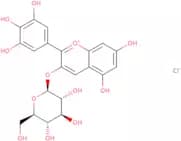
CAS:<p>Delphinidin 3-glucoside chloride is a natural, water-soluble compound that exhibits antimicrobial activity against Staphylococcus aureus. It has been shown to inhibit the growth of this bacteria by inhibiting detoxification enzymes and intracellular cGMP production. Delphinidin 3-glucoside chloride also inhibits uptake of this bacterium by human cells, which may be due to its synergistic interaction with other compounds such as cinnamic acid derivatives. This compound has been shown to have cardiac effects in animals and is being studied for its potential use in treating heart disease.</p>Formula:C21H21O12ClPurity:Min. 95%Color and Shape:PowderMolecular weight:500.84 g/molD-Mannose-6-13C
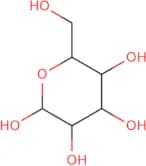
CAS:<p>Please enquire for more information about D-Mannose-6-13C including the price, delivery time and more detailed product information at the technical inquiry form on this page</p>Formula:C6H12O6Purity:Min. 95%Molecular weight:180.16 g/molHyaluronate rhodamine - Molecular Weight - 500kDa
<p>Hyaluronate is a naturally occurring glycosaminoglycan (GAG) found in the extracellular matrix of animal tissues. It is a linear polymer composed of alternating units of N-acetylglucosamine and glucuronic acid. The molecular weight of hyaluronate ranges from 10,000 Da to 1,000,000 Da. Hyaluronate has been modified by fluorination, methylation, and click modification reactions. These modifications affect the physical properties of hyaluronate, including its reactivity with other molecules. Click modification reactions are often used to link two different molecules together. This may include linking an oligosaccharide or saccharide to the hydroxyl groups on the glucuronic acid residues in hyaluronate.</p>Purity:Min. 95%Naringenin-7-O-b-D-glucuronide
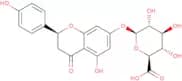
CAS:<p>Naringenin-7-O-b-D-glucuronide is a metabolite of naringenin. It has been shown to have hypoglycemic effects in mice and humans, as well as anti-oxidant properties. Naringenin 7-O-b-D-glucuronide is found in urine samples, which may be due to the ingestion of naringenin or from the metabolism of other drugs that contain it. Naringenin 7-O-b-D glucuronide is also found in the fruit fructus and has been associated with both diabetes and obesity. It was extracted from acetate extract and purified by LC/MS/MS. The method used for sample preparation included electrospray ionization quadrupole time of flight mass spectrometry (ESIQTOF). Clinical studies on this compound have shown that it can be used as a pharmacological treatment for metabolic disorders, such as diabetes</p>Formula:C21H20O11Purity:Min. 95%Color and Shape:PowderMolecular weight:448.38 g/mol5-Deoxy-5-iodo-1,2-o-(1-methylethylidene)pentofuranose
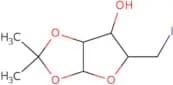
CAS:<p>5-Deoxy-5-iodo-1,2-o-(1-methylethylidene)pentofuranose is a synthetic sugar. It is a complex carbohydrate that can be custom synthesized and has high purity. This compound is an oligosaccharide with methylation, glycosylation, and polysaccharides. 5-Deoxy-5-iodo-1,2-o-(1-methylethylidene)pentofuranose has been fluorinated to give it saccharide properties.</p>Formula:C8H13IO4Purity:Min. 95%Molecular weight:300.09 g/mol