Glycoscience
Glycoscience is the study of carbohydrates and their derivatives, as well as the interactions and biological functions they participate in. This field of research is crucial for understanding a wide variety of biological processes, including cell recognition, signaling, immune response, and disease development. Glycoscience has important applications in biotechnology, medicine, and the development of new drugs and therapies. At CymitQuimica, we offer a wide selection of high-quality, high-purity products for glycoscience research. Our catalog includes monosaccharides, oligosaccharides, polysaccharides, glycoconjugates, and specific reagents, designed to support researchers in their studies on the structure, function, and applications of carbohydrates in biological systems. These resources are intended to facilitate scientific discoveries and practical applications in various areas of bioscience and medicine.
Subcategories of "Glycoscience"
- Aminosugars(108 products)
- Glyco-Related Antibodies(282 products)
- Glycolipids(46 products)
- Glycosaminoglycans (GAGs)(55 products)
- Glycosides(419 products)
- Monosaccharides(6,622 products)
- Oligosaccharides(3,682 products)
- Polysaccharides(503 products)
Found 11041 products of "Glycoscience"
Sort by
Purity (%)
0
100
|
0
|
50
|
90
|
95
|
100
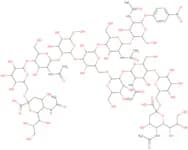
Disialylnonasaccharide-β-PNP
CAS:<p>Disialylnonasaccharide-β-PNP is a synthetic glycosylated oligosaccharide. It has a disialic acid residue at the reducing end and β-linked nonasaccharide residues at the nonreducing end. Disialylnonasaccharide-β-PNP is used as a monomer for the synthesis of polysaccharides, which are complex carbohydrates. Click modification of the saccharide unit can be carried out with an azido or nitro group. Disialylnonasaccharide-β-PNP is typically found in high purity and can be modified to suit your needs.</p>Formula:C90H141N7O64Purity:Min. 95%Molecular weight:2,345.1 g/mol1,3-a-1,6-a-D-Mannotriosyl trichloroacetimidate
<p>1,3-α-D-mannopyranosyl trichloroacetimidate (1,3-α-DMTCA) is a fluorinated monosaccharide that is used as a building block for the synthesis of oligosaccharides and polysaccharides. The synthesis of 1,3-α-DMTCA involves the reaction of α,β-unsaturated chloral hydrate with mannose in aqueous solution. This produces an intermediate product that undergoes glycosylation with glycosylation reagents like glycosyl chloride to yield 1,3-α-DMTCA. The chemical structure of 1,3-α-DMTCA can be modified by various reactions including methylation or click modification. 1,3 DMTCA is also available as a high purity material.<br>1,3 α - D - mannosyltetrahydrochlorofonuimidoksyl</p>Purity:Min. 95%NGA4F N-Glycan
CAS:<p>NGA4F N-Glycan is a modification of the N-glycan structure. It is an oligosaccharide composed of a single monosaccharide, methylated and glycosylated to form a polysaccharide with sugar groups on every other carbon. This product can be custom synthesized by our chemists at your request.</p>Formula:C72H120N6O50Purity:Min. 95%Molecular weight:1,869.73 g/molThiosophorose
CAS:<p>Thiosophorose is a nutrient that is found in microalgae. It is also known as d-arabinose and has been shown to be an inactivating agent for viruses, such as HIV-1. Thiosophorose has been used in skin care products due to its ability to produce fatty acids, which are important for healthy skin. It is also useful for the production of biofuels from microalgae. This molecule can be used to catalyze the reaction between amines and triflates and it is insoluble in water. The viscosity of this compound will increase with increasing temperature.</p>Formula:C12H22O10SPurity:Min. 95%Molecular weight:358.4 g/mol4-Glucopyranosylmannose
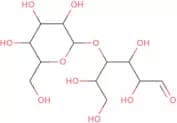
CAS:<p>4-Glucopyranosylmannose is a disaccharide compound, which is a synthetic carbohydrate derived from the enzymatic or chemical glycosylation processes. It consists of glucose and mannose units linked through a glycosidic bond. The compound is sourced through advanced synthetic methodologies involving specific glycosyltransferases or chemical catalysts that facilitate the precise attachment of these sugar moieties.</p>Formula:C12H22O11Purity:Min. 95%Molecular weight:342.3 g/molAzo-Xyloglucan
<p>Dyed and soluble azo-xyloglucan (tamarind) is used for the measurement of enzyme activity, research, biochemical enzyme assays and in vitro diagnostic analysis. It is a soluble chromogenic substrate for the assaying of endo-cellulase.</p>Purity:Min. 95%1-Deoxy-L-idonojirimycin hydrochloride
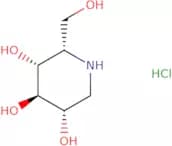
CAS:<p>1-Deoxy-L-idonojirimycin hydrochloride is a chaperone that is structurally related to the natural substrate, L-idonojirimycin. It has been found to interact with recombinant human Hsp70 and Hsp90. 1-Deoxy-L-idonojirimycin hydrochloride enhances the kinetic and thermodynamic parameters of these chaperones in vitro. The structural analysis of this compound revealed that it binds to both Hsp70 and Hsp90, which may be due to its ability to mimic the natural substrate's binding site on these chaperones.</p>Formula:C6H14ClNO4Purity:Min. 95%Molecular weight:199.63 g/mola1,6-Mannobiose-BSA
<p>a1,6-Mannobiose-BSA is a fluorinated monosaccharide that has been synthesized from mannose. It is a synthetic oligosaccharide that is used in glycosylation and polysaccharide modification. The compound has been modified with methyl groups and has undergone click chemistry to produce a reactive site on the sugar ring. This product has been synthesized using high purity reagents and has CAS No. 73978-99-2.</p>Purity:Min. 95%2-Acetamido-1,2-dideoxynojirimycin hydrochloride
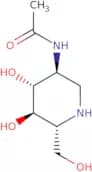
CAS:<p>2-Acetamido-1,2-dideoxynojirimycin hydrochloride is used in the treatment of human ovarian carcinoma. It has been shown to inhibit glycosidase enzymes with binding constants in the micromolar range. 2-Acetamido-1,2-dideoxynojirimycin hydrochloride has been shown to be a potential inhibitor of mammalian cell transport involving complex oligosaccharides. This drug also inhibits the enzymatic degradation of glycoproteins and other proteins by glycosidases. 2-Acetamido-1,2-dideoxynojirimycin hydrochloride is a synthetic analog of nijirimycin, which is a naturally occurring antibiotic obtained from cultures of Streptomyces nijirimensis. The clinical significance of this drug is that it can be used as an antiangiogenic agent and chemo sensitizing</p>Formula:C8H16N2O4·HClPurity:(%) Min. 97%Color and Shape:White PowderMolecular weight:204.22 g/molNeu5Acα(2-6)Galβ(1-4)GlcNAc-β-ethylamine
CAS:<p>Neu5Acα(2-6)Galβ(1-4)GlcNAc-β-ethylamine is a glycosylation agent that is used to modify complex carbohydrates, such as polysaccharides and oligosaccharides. This product is a custom synthesis, which may be modified according to customer specifications. These modifications include methylation, click modification, fluorination, and saccharide modification. The desired purity of this product can be determined by the level of fluorescence in the solution.</p>Formula:C27H47N3O19•NaPurity:Min. 95%Molecular weight:740.66 g/mol6-O-Benzyl-D-glucose
CAS:<p>6-O-Benzyl-D-glucose is an aglycon of 6-O-benzylglycosides, which are synthesized from glucose by alkaline hydrolysis in the presence of silver oxide. The benzyl group can be removed by a variety of methods, including treatment with hydrogen chloride gas. 6-O-Benzyl-D-glucose has been used in research to demonstrate that carbohydrates have a common structural feature that can be identified by looking at their molecular structure. This molecule has also been used to study the synthesis and reactivity of benzyl groups.</p>Formula:C13H18O6Purity:Min. 95%Molecular weight:270.28 g/mol7-Xylosyl-10-deacetyltaxol
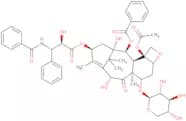
CAS:<p>7-Xylosyl-10-deacetyltaxol is a plant chemical that is found in the needles of the Taxus cuspidata tree. This compound has been shown to inhibit prostate cancer cells and has been clinically used as an adjuvant agent for cancer treatment. 7-Xylosyl-10-deacetyltaxol binds to prostate cancer cells and inhibits their growth, which may be due to its ability to inhibit cell cycle progression at the G2/M phase transition. It also has a strong inhibitory effect on test samples from human prostate cancer cells. In addition, it inhibits enzyme activities that are involved in the biosynthesis of membrane lipids, such as phospholipase A2, arachidonate 12-lipoxygenase, and cyclooxygenase 2. 7-Xylosyl-10-deacetyltaxol also inhibits enzyme activities in cell culture that are involved in the synthesis of carbon</p>Formula:C50H57NO17Purity:Min. 95%Molecular weight:943.98 g/mol2,4-O-Benzylidene-1-O-tosyl-D-threitol
CAS:<p>2,4-O-Benzylidene-1-O-tosyl-D-threitol is a synthetic sugar that has been modified. It can be used in the synthesis of oligosaccharides and monosaccharides as well as complex carbohydrates. 2,4-O-Benzylidene-1-O-tosyl-D-threitol is a high purity product with a purity level of 99%. This product can be custom synthesized to meet your needs.</p>Formula:C18H20O6SPurity:Min. 95%Molecular weight:364.41 g/mol3-Deoxy-1,2:5,6-di-O-isopropylidene-a-L-gulofuranose
<p>3-Deoxy-1,2:5,6-di-O-isopropylidene-a-L-gulofuranose is a synthetic monosaccharide that is used in the synthesis of oligosaccharides and polysaccharides. The chemical has been modified with fluorination, methylation, and click chemistry to produce a range of products. This product can be custom synthesized to meet the needs of customers. It has a CAS No. and purity of >99%.</p>Formula:C12H20O5Purity:Min. 95%Molecular weight:244.28 g/molL-Glycero-D-gluco-heptose
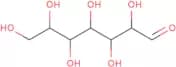
CAS:<p>L-Glycero-D-gluco-heptose is a hexadecanoic acid that is used as a synthetic intermediate. L-Glycero-D-gluco-heptose can be synthesized from benzyl alcohol and galactose in a two step process. The first step involves the esterification of benzyl alcohol with galactose to form an acetal, while the second step involves hydrolysis of this acetal to form L-Glycero-D-gluco-heptose. The chemical data for L-Glycero-D-gluco-heptose has been determined by gas chromatography (GC) and mass spectrometry (MS). GC allows for the separation and identification of fatty acids, oligosaccharides, and other organic compounds, which are then identified by MS.</p>Formula:C7H14O7Purity:Min. 95%Color and Shape:PowderMolecular weight:210.18 g/mol1,3,4,5,6-Penta-O-acetyl-2-keto-D-fructose
CAS:<p>1,3,4,5,6-Penta-O-acetyl-2-keto-D-fructose is a custom synthesis of monosaccharide. It has been modified by fluorination and methylation. The CAS number for 1,3,4,5,6-Penta-O-acetyl-2-keto-D-fructose is 494828–55–6. This product is a saccharide that is a sugar with a complex carbohydrate structure.</p>Formula:C16H22O11Purity:Min. 95%Molecular weight:390.34 g/molXyloglucan
CAS:<p>Xyloglucans are members of a group of polysaccharides typically refered to as hemicelluloses. Hemicelluloses are plant cell wall polysaccharides that are not solubilized by water but are solubilized by aqueous alkali (e.g. 1 and 4M KOH). Other hemicellulosic polysaccharides include xylan, glucuronoxylan, arabinoxylan, mannan, glucomannan and galactoglucomannan. Hemicelluloses have a backbone of 1,4-linked β-D-pyranosyl residues in which O4 is in the equatorial orientation (e.g. Glc, Man, and Xyl). Xyloglucan is the predominant hemicellulose in the primary walls of dicots and non-graminaceous monocots and may account for up to 20% of the dry weight of the primary wall. Xyloglucan has a backbone composed of 1,4-linked β-D-Glcp residues. Up to 75% of these residues are substituted at O6 with mono-, di-, or triglycosyl side chains.</p>Purity:(Dry Basis) Min. 95%Color and Shape:Powder2-Acetamido-3-O-(2,3,4,6-tetra-O-acetyl-b-D-galactopyranosyl)-2-deoxy-D-glucopyranose
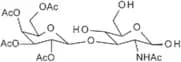
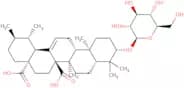
CAS:<p>2-Acetamido-3-O-(2,3,4,6-tetra-O-acetyl-b-D-galactopyranosyl)-2-deoxy-D-glucopyranose is a custom synthesis of an oligosaccharide. It is fluorinated at the 2 position and methylated on the 3 position. This glycosylation product has been shown to be resistant to degradation by enzymes that hydrolyze glycosidic bonds.</p>Formula:C22H33NO15Purity:Min. 95%Molecular weight:551.5 g/molQuinovic acid 3-O-b-D-glucoside
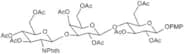
CAS:<p>Quinovic acid 3-O-b-D-glucoside is a fluorinated saccharide that has been synthesized in the laboratory. It is a high purity, synthetic sugar with an M+1 ion at m/z 571. The structure of this compound is O-α-D-mannopyranosyl-(1→2)-β-D-glucopyranosyl-(1→6)-β-D-glucopyranosyl-(1→2)-O-.</p>Purity:Min. 95%4-Methoxyphenyl 2,3,6-tri-O-acetyl-4-O-[2,4,6-tri-O-acetyl-3-O-(3,4,6-tri-O-acetyl-2-deoxy-2-phthalimido-b-D-glucopyranosyl)-b-D-gal actopyranosyl]-b-D-glucopyranose
<p>4-Methoxyphenyl 2,3,6-tri-O-acetyl-4-O-[2,4,6-tri-O-acetyl-3-O-(3,4,6-tri-O-acetyl-2-deoxy-2 -phthalimido)-bDglucopyranosyl]-bDgalactopyranoside is a high purity methylated glycoside of 4 methoxyphenol. The product has been modified by fluorination and Click chemistry to produce a complex carbohydrate. This modification can be used for the synthesis of oligosaccharides and polysaccharides.</p>Formula:C51H59NO27Purity:Min. 95%Molecular weight:1,118 g/mol