Glycoscience
Glycoscience is the study of carbohydrates and their derivatives, as well as the interactions and biological functions they participate in. This field of research is crucial for understanding a wide variety of biological processes, including cell recognition, signaling, immune response, and disease development. Glycoscience has important applications in biotechnology, medicine, and the development of new drugs and therapies. At CymitQuimica, we offer a wide selection of high-quality, high-purity products for glycoscience research. Our catalog includes monosaccharides, oligosaccharides, polysaccharides, glycoconjugates, and specific reagents, designed to support researchers in their studies on the structure, function, and applications of carbohydrates in biological systems. These resources are intended to facilitate scientific discoveries and practical applications in various areas of bioscience and medicine.
Subcategories of "Glycoscience"
- Aminosugars(108 products)
- Glyco-Related Antibodies(282 products)
- Glycolipids(46 products)
- Glycosaminoglycans (GAGs)(55 products)
- Glycosides(419 products)
- Monosaccharides(6,622 products)
- Oligosaccharides(3,682 products)
- Polysaccharides(503 products)
Found 11041 products of "Glycoscience"
Sort by
Purity (%)
0
100
|
0
|
50
|
90
|
95
|
100
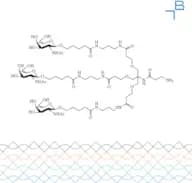
Tri-b-GalNAc-b-alanine-NH2
<p>Tri-b-GalNAc-b-alanine-NH2 boasts three terminal beta-N-acetylgalactosamine (GalNAc) sugars, mimicking natural ligands for efficient binding to Ashwell-Morell receptors (C-type lectin of ASGPR) on hepatocytes. The beta-alanine linker connects the GalNAc unit to a terminal amino group (NH2), a key conjugation site for attaching various therapeutic molecules via amide bond formation. This design validates tri-b-GalNAc-b-alanine-NH2 as a valuable tool in medicinal chemistry for developing liver-specific drug delivery systems, allowing researchers to exploit this ligand to create targeted conjugates, like drug-GalNAc conjugates, for specific delivery of therapeutics directly to hepatocytes, potentially improving treatment efficacy and reducing side effects.</p>Formula:C64H115N11O28Purity:Min. 95%Molecular weight:1,486.67 g/mol2-Methacryloxyethyl D-glucopyranoside - 25-50% in aqueous solution containing 200 ppm MEHQ inhibitor
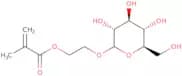
CAS:<p>alpha/beta mixture - ratio of mixture can be variable</p>Formula:C12H20O8Purity:Min. 95%Color and Shape:Yellow PowderMolecular weight:292.3 g/mol1,2-O-Isopropylidene-b-L-lyxofuranose
CAS:<p>1,2-O-Isopropylidene-b-L-lyxofuranose is a protected L-lyxose</p>Formula:C8H14O5Purity:Min. 95%Molecular weight:190.19 g/mol2,3-O-Isopropylidene-b-D-ribofuranosylamine p-toluenesulphonate salt
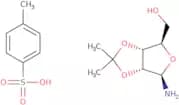
CAS:<p>2,3-O-Isopropylidene-b-D-ribofuranosylamine p-toluenesulphonate salt is an organic chemical that is a methylated sugar. It can be used in the synthesis of saccharides, polysaccharides, and oligosaccharides. This product is available for custom synthesis with a minimum order quantity of 10 grams and purity of >99%. CAS No. 29836-10-0</p>Formula:C8H15NO4·C7H8O3SPurity:Min. 95%Color and Shape:White PowderMolecular weight:361.41 g/molSuberoylanilide hydroxamic acid b-D-glucuronide
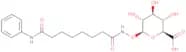
CAS:<p>Suberoylanilide hydroxamic acid b-D-glucuronide (SAHA) is a histone deacetylase inhibitor that is used in the treatment of colorectal adenocarcinoma. It is orally administered and can cross the blood-brain barrier to inhibit HDACs in human liver cells. SAHA has been shown to be effective against a number of cancer cell lines, including colon, prostate, breast, lung, and leukemia cell lines. SAHA has also been shown to have clinical benefits in various cancers and has been found to be safe at doses up to 1g/day when given for 24 months. The most common side effects are thrombocytopenia and anorexia.</p>Formula:C20H28N2O9Purity:Min. 95%Color and Shape:SolidMolecular weight:440.44 g/molGDP-L-[1-13C]fucose disodium salt
CAS:<p>Labelled substrate for fucosyltransferase</p>Purity:Min. 95%5-(Galactosylhydroxy)-L-lysine
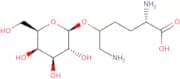
CAS:<p>5-(Galactosylhydroxy)-L-lysine is a metabolite that is found in human urine and serum. It is a basic compound with a hydroxyl group, which can be used as a biomarker for metabolic disorders and pharmacological treatments. 5-(Galactosylhydroxy)-L-lysine has been shown to have the potential to be used as a treatment for protein synthesis disorders. The mechanism of this reaction is still unknown, but it has been found that the optimum pH for this reaction is between 7 and 8.</p>Formula:C12H24N2O8Purity:Min. 95%Color and Shape:Off-White To Light Brown SolidMolecular weight:324.33 g/molD-[UL-13C6]cFructose 1-phosphate disodium salt
<p>D-[UL-13C6]cFructose 1-phosphate disodium salt is a synthetic compound that can be used for methylation, saccharide, Polysaccharide, Click modification and Modification. It can also be used for Glycosylation and Carbohydrate synthesis. This product is soluble in water and has a purity level of >98%. It is stable against heat and pH changes.</p>Purity:Min. 95%D-glucosyl--1,1' N-oleoyl-D-erythro-sphingosine
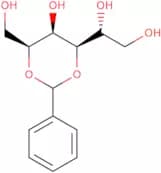
CAS:<p>D-glucosyl--1,1' N-oleoyl-D-erythro-sphingosine is a synthetic oligosaccharide with a fluorinated alpha-hydroxy group and a methylated nitrogen atom. It is also a complex carbohydrate that has been modified by glycosylation and polysaccharide modification. D-glucosyl--1,1' N-oleoyl-D-erythro-sphingosine can be used in custom synthesis, click modification, methylation, and sugar modification. This product has high purity and can be used in the synthesis of drugs or other chemical compounds.</p>Formula:C42H79NO8Purity:Min. 95%Molecular weight:726.08 g/mol2,4-O-Benzylidene-D-glucitol
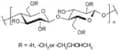
CAS:<p>2,4-O-Benzylidene-D-glucitol is a partially protected glucitol</p>Formula:C13H18O6Purity:Min. 95%Molecular weight:270.3 g/mol(Hydroxypropyl)methyl cellulose - USP, substitution type 2910 (viscosity 3000-5600mpa.s)
CAS:<p>Viscoelastic polymer; excipient; food additive</p>Disialyl, monofucosyllacto-N-hexaose
CAS:<p>Disialyl, monofucosyllacto-N-hexaose is a synthetic oligosaccharide also found in human milk</p>Formula:C68H112N4O51Purity:Min. 95%Molecular weight:1,801.61 g/mol4-O-{[6-(2-Azidoethoxy)ethoxy]ethyl}-β-D-mannopyranosyl-2-deoxy-α-D-glucopyranose-2,1-oxazoline
CAS:Please enquire for more information about 4-O-{[6-(2-Azidoethoxy)ethoxy]ethyl}-β-D-mannopyranosyl-2-deoxy-α-D-glucopyranose-2,1-oxazoline including the price, delivery time and more detailed product information at the technical inquiry form on this pageFormula:C20H34N4O12Purity:Min. 95%Molecular weight:522.5 g/molN-Acetyl-D-[UL-13C6,15N]glucosamine
CAS:<p>N-Acetyl-D-[U-13C6,15N]glucosamine is a custom synthesis of an oligosaccharide. It is a methylated form of glucosamine and has been modified with 13C 6, 15N atoms. N-Acetyl-D-[U-13C6,15N]glucosamine is used in the study of complex carbohydrate structures and can be used for the production of polysaccharides. This chemical contains a single monosaccharide sugar that can be easily modified with fluorine to produce complex carbohydrates for research purposes. The purity level of this chemical is greater than 99%.</p>Purity:Min. 95%Blood Group A type III/IV linear trisaccharide
<p>GalNAca1-3Galb1-3GalNAc</p>Formula:C22H38N2O16Purity:Min. 95%Molecular weight:586.54 g/molMethyl 2-deoxy-2-fluoro-β-D-glucopyranoside
CAS:<p>Methyl 2-deoxy-2-fluoro-b-D-glucopyranoside is a synthetic glycosylation product that is prepared by monosaccharide and polysaccharide modification. This fluorinated sugar has high purity and is easy to handle. It can be used in the synthesis of oligosaccharides, sugar chains, and other complex carbohydrate molecules. The CAS number for Methyl 2-deoxy-2-fluoro-b-D-glucopyranoside is 39110–58–2.</p>Formula:C7H13FO5Purity:Min. 95%Molecular weight:196.17 g/molZearalenone 14-glucuronide
CAS:<p>Zearalenone 14-glucuronide is a custom synthesis. It is a complex carbohydrate, which is an oligosaccharide that has been modified by methylation and glycosylation. Zearalenone 14-glucuronide is a polysaccharide with a saccharide backbone and various modifications at the ends of the sugar chains. This product has been fluorinated to provide high purity.</p>Formula:C24H30O11Purity:(%) Min. 95%Color and Shape:PowderMolecular weight:494.49 g/molButyl-y-cyclodextrin
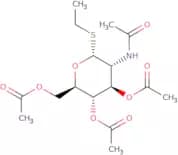
<p>This gamma-cyclodextrin (γ-CD) derivative is a modified cyclic oligosaccharide composed of eight glucose units, featuring a larger cavity size than α- and β-cyclodextrins. This structural characteristic allows γ-CDs to form inclusion complexes with a wider range of guest molecules, making it particularly versatile in various industries. In the food sector, it is used as a carrier and stabilizer for flavors, fat-soluble vitamins, and polyunsaturated fatty acids, protecting volatile compounds from evaporation. In pharmaceuticals, it enhances the solubility and bioavailability of poorly water-soluble drugs and, thanks to its larger ring size, allows for the encapsulation of larger molecules or even entire drug molecules. γ-CDs and derivatives are also used for environmental remediation and, in analytical chemistry, for the extraction and concentration of target substances.</p>Purity:Min. 95%Ethyl 2-acetamido-3,4,6-tri-O-acetyl-2-deoxy-a-D-thioglucopyranoside
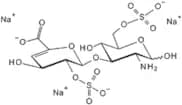
CAS:<p>Ethyl 2-acetamido-3,4,6-tri-O-acetyl-2-deoxy-a-D-thioglucopyranoside is a sugar derived from the condensation of two molecules of acetamide with three molecules of glucose. It is a synthetic compound that has been modified by fluorination, methylation, and monosaccharide synthesis. This product has been shown to be effective against bacteria and fungi in laboratory studies.</p>Formula:C16H25NO8SPurity:Min. 95%Color and Shape:White To Off-White SolidMolecular weight:391.44 g/molHeparin disaccharide I-H trisodium salt
CAS:<p>Heparin disaccharide I-H trisodium salt is a high purity, custom synthesis, methylated, glycosylated, fluorinated, complex carbohydrate with a CAS number of 136098-04-9. It has been modified by the addition of a saccharide group and can be used for research purposes.</p>Formula:C12H16NNa3O16S2Purity:Min. 95 Area-%Color and Shape:PowderMolecular weight:563.35 g/mol


![GDP-L-[1-13C]fucose disodium salt](/_next/image/?url=https%3A%2Fstatic.cymitquimica.com%2Fproducts%2F3D%2Fthumb-webp%2FMG170098.webp&w=3840&q=75)
![D-[UL-13C6]cFructose 1-phosphate disodium salt](/_next/image/?url=https%3A%2Fstatic.cymitquimica.com%2Fproducts%2F3D%2Fthumb-webp%2FMF167930.webp&w=3840&q=75)

![4-O-{[6-(2-Azidoethoxy)ethoxy]ethyl}-β-D-mannopyranosyl-2-deoxy-α-D-glucopyranose-2,1-oxazoline](/_next/image/?url=https%3A%2Fstatic.cymitquimica.com%2Fproducts%2F3D%2Fthumb-webp%2FOA183927.webp&w=3840&q=75)
![N-Acetyl-D-[UL-13C6,15N]glucosamine](/_next/image/?url=https%3A%2Fstatic.cymitquimica.com%2Fproducts%2F3D%2Fthumb-webp%2FMA15631.webp&w=3840&q=75)