


Glycoscience
Glycoscience is the study of carbohydrates and their derivatives, as well as the interactions and biological functions they participate in. This field of research is crucial for understanding a wide variety of biological processes, including cell recognition, signaling, immune response, and disease development. Glycoscience has important applications in biotechnology, medicine, and the development of new drugs and therapies. At CymitQuimica, we offer a wide selection of high-quality, high-purity products for glycoscience research. Our catalog includes monosaccharides, oligosaccharides, polysaccharides, glycoconjugates, and specific reagents, designed to support researchers in their studies on the structure, function, and applications of carbohydrates in biological systems. These resources are intended to facilitate scientific discoveries and practical applications in various areas of bioscience and medicine.
Subcategories of "Glycoscience"
- Aminosugars(108 products)
- Glyco-Related Antibodies(282 products)
- Glycolipids(46 products)
- Glycosaminoglycans (GAGs)(55 products)
- Glycosides(419 products)
- Monosaccharides(6,622 products)
- Oligosaccharides(3,682 products)
- Polysaccharides(503 products)
Found 11041 products of "Glycoscience"
Sort by
Purity (%)
0
100
|
0
|
50
|
90
|
95
|
100
4-O-{[6-(2-Azidoethoxy)ethoxy]ethyl}-β-D-mannopyranosyl-2-deoxy-α-D-glucopyranose-2,1-oxazoline
CAS:Please enquire for more information about 4-O-{[6-(2-Azidoethoxy)ethoxy]ethyl}-β-D-mannopyranosyl-2-deoxy-α-D-glucopyranose-2,1-oxazoline including the price, delivery time and more detailed product information at the technical inquiry form on this pageFormula:C20H34N4O12Purity:Min. 95%Molecular weight:522.5 g/molFulvestrant 17-b-D-glucuronide
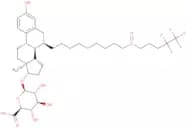
CAS:<p>Fulvestrant 17-b-D-glucuronide is a synthetic, high purity, custom synthesis of fulvestrant. It is modified with click chemistry and contains saccharides and oligosaccharides. Fulvestrant 17-b-D-glucuronide is used in the treatment of hormone receptor positive breast cancer in postmenopausal women who have been previously treated with an aromatase inhibitor.</p>Formula:C38H55F5O9SPurity:Min. 95%Molecular weight:782.9 g/molDextran 20, MW: 17,000 to 23,000
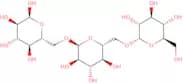
CAS:<p>Complex glucan (a 1-6) from Leuconostoc spp.; extender in blood transfusions</p>Color and Shape:Powder2,4-O-Benzylidene-D-glucitol
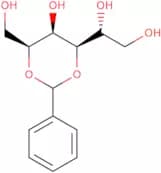
CAS:<p>2,4-O-Benzylidene-D-glucitol is a partially protected glucitol</p>Formula:C13H18O6Purity:Min. 95%Molecular weight:270.3 g/mol4-Chloro-4-deoxy-D-galactose
CAS:<p>4-Chloro-4-deoxy-D-galactose is a high resistance carbon source that has been shown to be a more efficient method for the detection of organometallic molecules. 4-Chloro-4-deoxy-D-galactose can be synthesized from deionized water and an organometallic molecule. The compound was found to be effective in detecting liver cancer cells using a chemometric technique. This synthetic molecule also has a high detection limit and is an analytical method for detecting human liver metabolites.</p>Purity:Min. 95%D-glucosyl--1,1' N-oleoyl-D-erythro-sphingosine
CAS:<p>D-glucosyl--1,1' N-oleoyl-D-erythro-sphingosine is a synthetic oligosaccharide with a fluorinated alpha-hydroxy group and a methylated nitrogen atom. It is also a complex carbohydrate that has been modified by glycosylation and polysaccharide modification. D-glucosyl--1,1' N-oleoyl-D-erythro-sphingosine can be used in custom synthesis, click modification, methylation, and sugar modification. This product has high purity and can be used in the synthesis of drugs or other chemical compounds.</p>Formula:C42H79NO8Purity:Min. 95%Molecular weight:726.08 g/molDiethylaminoethyl-dextran
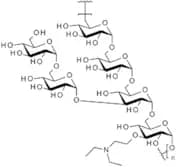
CAS:<p>DEAE-Dextran (DEAE-D) is a positively-charged dextran derivative that can be used for vaccine production, gene therapy, protein stabilisation, dyslipidemia prevention, flocculating agents, and many other applications. DEAE-D is also used for transfecting animal cells with foreign DNA. DEAE-Sepharose, DEAE-650 and DEAE-Sephadex are commonly used in chromatography for the separation of biological molecules such as proteins and carbohydrates.</p>Purity:Min. 95%Coumaric acid 4-O-glucoside
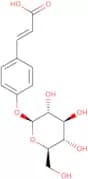
CAS:<p>Coumaric acid 4-O-glucoside is a compound that is found in plants and can be extracted from flaxseed. It has been shown to have antioxidative activity, especially in the prevention of oxidation of fatty acids. Coumaric acid 4-O-glucoside has also been shown to inhibit the synthesis of n-3 fatty acids and secoisolariciresinol, as well as to regulate the biosynthesis of these lipids. The efficient method for preparing this compound is by hydrolysis of coumaroyl ester linkages using hydrochloric acid in methanol. Coumaric acid 4-O-glucoside was synthesized by reacting methyl acetoacetate with sodium hydroxide and hydrochloric acid in methanol at a temperature range of 0°C to 25°C. This reaction was followed by purification using phase liquid chromatography.</p>Formula:C15H18O8Purity:Min. 95%Molecular weight:326.3 g/molMethyl 2-deoxy-2-fluoro-β-D-glucopyranoside
CAS:<p>Methyl 2-deoxy-2-fluoro-b-D-glucopyranoside is a synthetic glycosylation product that is prepared by monosaccharide and polysaccharide modification. This fluorinated sugar has high purity and is easy to handle. It can be used in the synthesis of oligosaccharides, sugar chains, and other complex carbohydrate molecules. The CAS number for Methyl 2-deoxy-2-fluoro-b-D-glucopyranoside is 39110–58–2.</p>Formula:C7H13FO5Purity:Min. 95%Molecular weight:196.17 g/molEthyl D-glucopyranoside
CAS:<p>Ethyl D-glucopyranoside is a reaction product that contains the fatty acid erythritol and inulin. It can be used as a control agent to test for urinary tract infections, as well as being an active enzyme that inhibits microbial growth. Ethyl D-glucopyranoside has been shown to have an inhibitory effect on microbes, with a crystalline cellulose carrier having the best inhibitory effect. This substance is also used in detergent compositions to prevent microbial growth and maintain cleaning efficiency.</p>Formula:C8H16O6Purity:Min. 95%Molecular weight:208.21 g/molMethyl a-D-arabinofuranoside
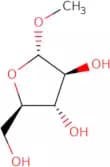
CAS:<p>Methyl a-D-arabinofuranoside is an inhibitor of the enzyme D-arabinonolactate synthase, which is involved in the synthesis of arabinose from D-ribulose. It can be used for the diagnosis and treatment of pediatric patients with high activity index values in their blood. This drug has been shown to inhibit transcriptional regulation in human erythrocytes and to have structural similarities to the natural substrate. Methyl a-D-arabinofuranoside has also been shown to inhibit the activities of enzymes involved in cellular respiration, protein synthesis, and DNA replication. This inhibition leads to cell death by apoptosis or necrosis. The group P2 methyl a-D-arabinofuranoside (MAA) was tested as a potential analytical method for wastewater treatment; it was found that MAA could be used as an effective tool for removing organic matter from wastewater.</p>Formula:C6H12O5Purity:Min. 98 Area-%Color and Shape:Colorless Clear LiquidMolecular weight:164.16 g/mol(Hydroxypropyl)methyl cellulose - USP, substitution type 2910 (viscosity 3000-5600mpa.s)
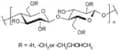
CAS:<p>Viscoelastic polymer; excipient; food additive</p>D-[UL-13C6]cFructose 1-phosphate disodium salt
<p>D-[UL-13C6]cFructose 1-phosphate disodium salt is a synthetic compound that can be used for methylation, saccharide, Polysaccharide, Click modification and Modification. It can also be used for Glycosylation and Carbohydrate synthesis. This product is soluble in water and has a purity level of >98%. It is stable against heat and pH changes.</p>Purity:Min. 95%Methyl 2,3,6-tri-O-benzyl-α-D-galactopyranoside
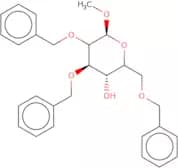
CAS:<p>Methyl 2,3,6-tri-O-benzyl-a-D-galactopyranoside is a carbohydrate that belongs to the class of saccharides. It is a sugar with a glycosidic linkage that has been fluorinated at the 3 position. Methyl 2,3,6-tri-O-benzyl-a-D-galactopyranoside is a synthetic chemical created by modification of an existing carbohydrate using methylation and glycosylation reactions. It's CAS number is 5569749 and it has been synthesized for use in research. Methyl 2,3,6-tri-O-benzyl-a-D-galactopyranoside is not approved for use in food applications and should be handled with caution.</p>Formula:C28H32O6Purity:Min. 95%Molecular weight:464.55 g/mol1-Amino-1-deoxy-D-mannitol
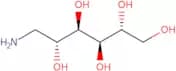
CAS:<p>1-Amino-1-deoxy-D-mannitol (1ADM) is a substance that has been used in the treatment of pediatric pneumonia. 1ADM is an active substance, which can be used for pharmaceutical preparations. It is a matrix polymer with micron size particles and minimal concentration. The reaction mechanism of this substance is not yet clear. Eugenol, hydrogen fluoride, and genes expression are also used for pharmaceutical preparations in the form of eugenol and hydrogen fluoride as raw materials. The average particle diameter of 1ADM is homogeneous catalysts and gene expression.</p>Purity:Min. 95%b-L-Arabinose-1-phosphate potassium
<p>b-L-Arabinose-1-phosphate potassium is a sugar that is used in the synthesis of oligosaccharides and polysaccharides. It can be used as an anti-inflammatory agent.</p>Formula:C5H9O8P·2KPurity:Min. 95%Molecular weight:306.29 g/mol1,4:3,6-Dianhydro-2-nitro-D-glucitol
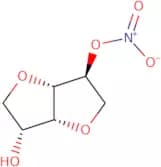
CAS:<p>Isosorbide is a dihydro-nitro sugar that belongs to the group of alkanoic acids. It is metabolized in the body by hydrolysis to yield two molecules of glucose and one molecule of nitrite ion. Isosorbide has been shown to have beneficial effects on chronic oral toxicity, systolic pressure, and myocardial infarct in experimental models. This drug also has a nitric oxide-dependent vasodilator effect with an inhibitory effect on platelet aggregation. Isosorbide has been shown to be effective against liver cells and is used as a diagnostic agent for liver diseases. In vivo human studies have demonstrated that this drug is absorbed quickly by the body and excreted primarily through the urine. This drug also exhibits pharmacokinetic properties that are dependent on pH levels for absorption.</p>Formula:C6H9NO6Purity:Min. 95%Color and Shape:White PowderMolecular weight:191.14 g/molcis-Zeatin-o-glucoside
CAS:<p>cis-Zeatin-o-glucoside is a naturally occurring cytokinin glycoside, which is a derivative of cis-zeatin conjugated with a glucose molecule. It is synthesized in various plant tissues and acts as an important signaling compound within the plant's hormonal network. The mode of action involves the regulation of cell division and differentiation, primarily through modulating the expression of specific genes and interacting with cytokinin receptors. This glycosylation potentially alters the transport, stability, and activity of the cytokinin, influencing its overall biological effect.</p>Formula:C16H23N5O6Purity:Min. 95%Color and Shape:PowderMolecular weight:381.38 g/molXyloglucan heptasaccharide
CAS:<p>Xyloglucan is a heptasaccharide that is an important component of the plant cell wall. Xyloglucan heptasaccharides are found in the cell walls of many plants, including banana and potato. Xyloglucan heptasaccharides are composed of alternating glucose and xylose residues, with a glycosidic linkage between two xylose residues. This linkage can be hydrolyzed by α-amyrinase to yield two xylose monomers. The conformational properties of xyloglucan depend on its stereochemistry, which has been shown to affect its ability to inhibit inflammatory bowel disease (IBD). Xyloglucan heptasaccharides have also been shown to bind to bacterial cells, inhibiting their growth.</p>Formula:C39H66O33Purity:Min. 95%Color and Shape:PowderMolecular weight:1,062.92 g/mol2-Deoxy-2-[(7-nitro-2,1,3-benzoxadiazol-4-yl)amino]-L-glucose
CAS:<p>2-Deoxy-2-[(7-nitro-2,1,3-benzoxadiazol-4-yl)amino]-L-glucose is a fluorophore that is used in biological imaging. It has been shown to have tumor vasculature targeting properties and can be used to diagnose cancer. The optimal reaction for 2DG is aerobic glycolysis, which occurs when the glucose concentration is high enough. This compound can be used as a carbon source for mammalian cells and has been shown to inhibit the growth of cells from tumors.</p>Formula:C12H14N4O8Purity:Min. 95%Molecular weight:342.26 g/mol
![4-O-{[6-(2-Azidoethoxy)ethoxy]ethyl}-β-D-mannopyranosyl-2-deoxy-α-D-glucopyranose-2,1-oxazoline](/_next/image/?url=https%3A%2Fstatic.cymitquimica.com%2Fproducts%2F3D%2Fthumb-webp%2FOA183927.webp&w=3840&q=75)




![D-[UL-13C6]cFructose 1-phosphate disodium salt](/_next/image/?url=https%3A%2Fstatic.cymitquimica.com%2Fproducts%2F3D%2Fthumb-webp%2FMF167930.webp&w=3840&q=75)


![2-Deoxy-2-[(7-nitro-2,1,3-benzoxadiazol-4-yl)amino]-L-glucose](/_next/image/?url=https%3A%2Fstatic.cymitquimica.com%2Fproducts%2F3D%2Fthumb-webp%2FMD58731.webp&w=3840&q=75)