Glycoscience
Glycoscience is the study of carbohydrates and their derivatives, as well as the interactions and biological functions they participate in. This field of research is crucial for understanding a wide variety of biological processes, including cell recognition, signaling, immune response, and disease development. Glycoscience has important applications in biotechnology, medicine, and the development of new drugs and therapies. At CymitQuimica, we offer a wide selection of high-quality, high-purity products for glycoscience research. Our catalog includes monosaccharides, oligosaccharides, polysaccharides, glycoconjugates, and specific reagents, designed to support researchers in their studies on the structure, function, and applications of carbohydrates in biological systems. These resources are intended to facilitate scientific discoveries and practical applications in various areas of bioscience and medicine.
Subcategories of "Glycoscience"
- Aminosugars(108 products)
- Glyco-Related Antibodies(282 products)
- Glycolipids(46 products)
- Glycosaminoglycans (GAGs)(55 products)
- Glycosides(419 products)
- Monosaccharides(6,622 products)
- Oligosaccharides(3,682 products)
- Polysaccharides(503 products)
Found 11041 products of "Glycoscience"
Sort by
Purity (%)
0
100
|
0
|
50
|
90
|
95
|
100
Blood Group A type III/IV linear trisaccharide
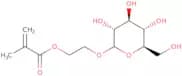
<p>GalNAca1-3Galb1-3GalNAc</p>Formula:C22H38N2O16Purity:Min. 95%Molecular weight:586.54 g/mol2-Methacryloxyethyl D-glucopyranoside - 25-50% in aqueous solution containing 200 ppm MEHQ inhibitor
CAS:<p>alpha/beta mixture - ratio of mixture can be variable</p>Formula:C12H20O8Purity:Min. 95%Color and Shape:Yellow PowderMolecular weight:292.3 g/molEthyl D-glucopyranoside
CAS:<p>Ethyl D-glucopyranoside is a reaction product that contains the fatty acid erythritol and inulin. It can be used as a control agent to test for urinary tract infections, as well as being an active enzyme that inhibits microbial growth. Ethyl D-glucopyranoside has been shown to have an inhibitory effect on microbes, with a crystalline cellulose carrier having the best inhibitory effect. This substance is also used in detergent compositions to prevent microbial growth and maintain cleaning efficiency.</p>Formula:C8H16O6Purity:Min. 95%Molecular weight:208.21 g/molAmmonium 8-azido-3,8-dideoxy-D-manno-octulosonate
<p>Ammonium 8-azido-3,8-dideoxy-D-manno-octulosonate is an oligosaccharide that is a modification of the natural polysaccharide mannoheptulose. It has been shown to be highly soluble in water and can be easily synthesized. Ammonium 8-azido-3,8-dideoxy-D-manno-octulosonate has been shown to inhibit the activity of glycosyltransferases and methyltransferases. This compound also has a high degree of purity, with minimal impurities or degradation products.</p>Purity:Min. 95%Methyl 6-O-p-toluenesulfonyl-a-D-glucopyranoside
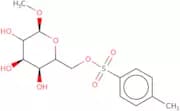
CAS:<p>Methyl 6-O-p-toluenesulfonyl-a-D-glucopyranoside is a custom synthesis. It is an oligosaccharide and polysaccharide that can be modified with methylation and glycosylation. The carbohydrate has a CAS number of 6619-09-6, and the purity is high. This product has been fluorinated for synthetic purposes.</p>Formula:C14H20O8SPurity:Min. 95%Molecular weight:348.37 g/molα-D-Galactose-1-phosphate
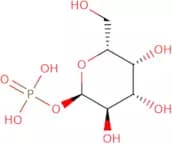
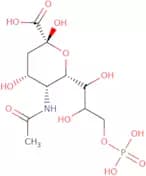
CAS:<p>α-D-Galactose-1-phosphate is a model organism for the study of galactose metabolism. It is an intermediate in the galactose pathway and provides a new approach to understanding the pathogenesis of metabolic disorders. α-D-Galactose-1-phosphate is involved in many enzymatic reactions, including the conversion of uridine diphosphoglucose (UDPG) to UDP glucose, which is a key step in glycolysis. The enzyme that catalyzes this reaction, UDP glucuronosyltransferase (UGT), has been shown to be defective in patients with galactosemia. α-D-Galactose 1 phosphate has also been used as a model for studying human gene expression, specifically protein genes. This molecule has been found to bind DNA polymerase II and inhibit transcriptional elongation at specific sites on DNA called RNA polymerase II pause sites.</p>Formula:C6H13O9PPurity:Min. 95%Color and Shape:PowderMolecular weight:260.14 g/molN-Acetylneuraminic acid 9-phosphate
CAS:<p>N-Acetylneuraminic acid 9-phosphate is a sugar phosphate</p>Formula:C11H20NO12PPurity:Min. 95%Molecular weight:389.25 g/molNA3F N-Glycan
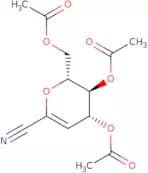
CAS:<p>NA3F is a N-glycan that is found on various glycoproteins and glycolipids. It consists of sialic acid, galactose, and fucose sugars in the ratio 3:2:1. NA3F N-glycans are synthesized by the removal of the terminal sialic acid residue from an Asn-linked oligosaccharide precursor. These types of glycans are found on high mannose (HMan) and hybrid (HHyb) glycans. The synthesis of NA3F N-glycan requires the activity of two enzymes: peptidase and sialyltransferase. The enzyme peptidase cleaves an α(1,4)-linked oligosaccharide at the nonreducing end to form a free α(1,6) linked oligosaccharide with a terminal α(1,2) linked mannose residue. This process releases the terminal</p>Formula:C82H137N5O60Purity:Min. 95%Molecular weight:2,152.96 g/mol4,5,7-Tri-O-acetyl-2,6-anhydro-3-deoxy-D-lyxo-hept-2-enononitrile
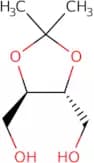
CAS:<p>4,5,7-Tri-O-acetyl-2,6-anhydro-3-deoxy-D-lyxo-hept-2-enononitrile is a modified sugar molecule that has been synthesized and fluorinated. It has a high purity and can be custom synthesized to order. Click modification of this molecule is possible with the addition of a methyl group. This product is used in the synthesis of oligosaccharides and polysaccharides for glycosylation studies.</p>Formula:C13H17NO7Purity:Min. 95%Molecular weight:299.28 g/mol(-)-2,3-O-Isopropylidene-D-threitol
CAS:<p>(-)-2,3-O-Isopropylidene-D-threitol is a chiral compound with two stereoisomers. It is a crystalline solid that melts at 71°C and has a population of 50%. (-)-2,3-O-Isopropylidene-D-threitol is an important intermediate for the synthesis of polyethers with chiral centers. The catalytic asymmetric synthesis of (-)-2,3-O-isopropylidene-D-threitol is achieved by alkylation of (+)-2,3-(dimethoxyphosphinyl)propane with isopropanol. This reaction can be used to produce polyethers with chiral centers in high yields and enantioselectivity.</p>Formula:C7H14O4Purity:Min. 95%Molecular weight:162.18 g/mol2,3,5-Tri-O-benzyl-D-arabinofuranose
CAS:<p>2,3,5-Tri-O-benzyl-D-arabinofuranose is a phosphorane that has been synthesised by the reaction of 2,3,5-trihydroxypentanoic acid and benzaldehyde. The synthesis of this compound involves the use of a stereoselective process to produce the desired product. This compound is able to inhibit both bacterial and fungal growth in vitro. Inhibition of bacterial growth is due to its ability to disrupt the synthesis of proteins and nucleic acids while the inhibition of fungal growth is due to its ability to interfere with chitin production.</p>Formula:C26H28O5Purity:Min. 95%Color and Shape:White PowderMolecular weight:420.5 g/molNeu5Ac(a2-6)Gal(b1-4)GalNAc
CAS:<p>Neu5Ac(a2-6)Gal(b1-4)GalNAc is a synthetic, fluorinated monosaccharide. It is an oligosaccharide that has been custom synthesized and glycosylated. It is a complex carbohydrate that has been modified with methylation and click chemistry. Neu5Ac(a2-6)Gal(b1-4)GalNAc has CAS number 383365-43-3. This product is available in high purity and can be used in the synthesis of polysaccharides.</p>Formula:C25H42N2O19Purity:Min. 95%Molecular weight:674.6 g/molXyloglucan heptasaccharide
CAS:<p>Xyloglucan is a heptasaccharide that is an important component of the plant cell wall. Xyloglucan heptasaccharides are found in the cell walls of many plants, including banana and potato. Xyloglucan heptasaccharides are composed of alternating glucose and xylose residues, with a glycosidic linkage between two xylose residues. This linkage can be hydrolyzed by α-amyrinase to yield two xylose monomers. The conformational properties of xyloglucan depend on its stereochemistry, which has been shown to affect its ability to inhibit inflammatory bowel disease (IBD). Xyloglucan heptasaccharides have also been shown to bind to bacterial cells, inhibiting their growth.</p>Formula:C39H66O33Purity:Min. 95%Color and Shape:PowderMolecular weight:1,062.92 g/molb-D-Fructofuranosyl a-D-glucopyranoside 6-octanoate
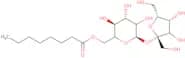
CAS:<p>b-D-Fructofuranosyl a-D-glucopyranoside 6-octanoate is a saccharide that is used as an intermediate for the synthesis of polysaccharides. This compound can be used to synthesize glycosylated oligosaccharides with high purity and good yields. It can also be used in the preparation of complex carbohydrates, including fluorinated sugar derivatives.</p>Purity:Min. 95%2-Thioethyl-β-D-glucopyranoside
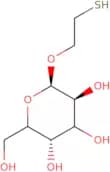
CAS:<p>2-Thioethyl-b-D-glucopyranoside is a methylated saccharide with a molecular weight of 228.2 g/mol. It is soluble in water and aqueous solutions, and has an odorless taste. This compound is used as a synthetic intermediate for the preparation of other saccharides, such as starch, cellulose, and glycogen. 2-Thioethyl-b-D-glucopyranoside can be custom synthesized to meet your specifications.</p>Formula:C8H16O6SPurity:Min. 95%Color and Shape:White PowderMolecular weight:240.28 g/molCellobiose-6'-phosphate
CAS:<p>produced as the sodium salt</p>Formula:C13H25O14PPurity:Min. 95%Molecular weight:436.3 g/mol1,2:4,5-Di-O-isopropylidene-b-D-erythro-2,3-hexodiulo-2,6-pyranose
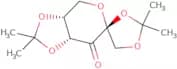
CAS:<p>1,2:4,5-Di-O-isopropylidene-b-D-erythro-2,3-hexodiulo-2,6-pyranose is an acidic compound that is a constituent of the ginseng plant. It has been shown to have biochemical properties as well as bioactivities. It can be synthesized in vivo from the amino acid L-lysine by the enzyme diammonium glyoxalate reductase. The compound has two chiral centers and four stereogenic centers. It is a trisubstituted diastereomer with oxygenated ring opening and chemical structures consisting of a pyranose ring and an ethylene glycol moiety.</p>Formula:C12H18O6Purity:Min. 95%Molecular weight:258.27 g/molNeolactotetraosylceramide
CAS:<p>Neolactotetraosylceramide (NT4) is a glycoconjugate that is found in human serum. It has been shown to bind to the receptor site of monoclonal antibodies and inhibit the binding of tumor necrosis factor-α (TNF-α), which is involved in immune system regulation. NT4 has also been shown to block the activity of receptors on human neutrophils, which may be due to its structural similarity to lactotetraosylceramide. NT4 has been implicated as a potential cause for autoimmune diseases and cancer tissues, due to its structural similarity with glycoproteins that are found on cell surfaces. The optimum pH for NT4 is 7.5 and its glycan structure consists of two mannose residues linked by an alpha-1,6 linkage. This glycoconjugate binds well with blood group A and B antigens, but not with blood group O antigen. NT4 elicits antibody response</p>Formula:C62H114N2O23Purity:Min. 95%Molecular weight:1,255.57 g/molGDP-6-deoxy-a-D-talose
<p>GDP-6-deoxy-a-D-talose is a synthetic oligosaccharide that can be modified to include fluorine, methylation, or other modifications. It has been synthesized for use in the modification of saccharides and complex carbohydrates. GDP-6-deoxy-a-D-talose is soluble in water and has a molecular weight of 519.</p>Purity:Min. 95%α,β-Trehalose
CAS:<p>α,β-Trehalose is a carbohydrate that is found in many organisms and has been shown to have biochemical properties such as energy metabolism, enzyme activities, and x-ray diffraction data. Trehalose has a phase transition temperature of around 98°C, which makes it an ideal sugar for food preservation. Trehalose can also be used as a sugar substitute with the same sweetness level as sucrose. The chemical stability of trehalose allows it to be used as a preservative in food and beverages. Trehalose has been shown to be nontoxic in animal studies with doses up to 2000 mg/kg body weight. It also has an optimum pH of 7 and is stable at high temperatures.</p>Formula:C12H22O11Purity:Min. 95 Area-%Color and Shape:White PowderMolecular weight:342.3 g/mol