Enzyme, Peptide and Protein Related Compounds
Enzyme, peptide, and protein-related compounds are critical for studying and manipulating biochemical pathways. These compounds include enzymes that catalyze biochemical reactions, peptides that serve as hormones and signaling molecules, and proteins that perform a wide array of functions within organisms. This category encompasses inhibitors, activators, substrates, and other reagents essential for enzymology, proteomics, and peptide research. At CymitQuimica, we offer a diverse selection of high-quality compounds to facilitate your research in enzyme kinetics, protein function, and peptide synthesis, ensuring precise and reliable results.
Subcategories of "Enzyme, Peptide and Protein Related Compounds"
- Amino Acids (AA)(40,509 products)
- Enzymes(3,559 products)
- Peptides(30,720 products)
- Proteins(15,023 products)
Found 1312 products of "Enzyme, Peptide and Protein Related Compounds"
Sort by
Purity (%)
0
100
|
0
|
50
|
90
|
95
|
100
Ref: IN-DA004I2C
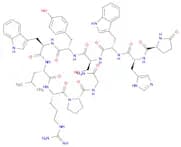
Discontinued productLuteinizing hormone-releasing factor (swine), 6-D-tryptophan-
CAS:Formula:C64H82N18O13Purity:98%Color and Shape:SolidMolecular weight:1311.4487Ref: IN-DA01DQA5
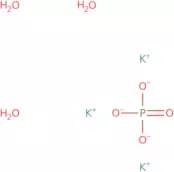
Discontinued productPotassium phosphate tribasic trihydrate
CAS:<p>Potassium phosphate tribasic trihydrate is an inorganic salt that is used as a buffer. It has a molecular weight of 266.08, and it is soluble in water. Potassium phosphate tribasic trihydrate can be used to treat acidosis and kidney stones due to its high potassium content. This compound also has biological properties that allow it to be used in the preparation of urine samples for gravimetric analysis and biological properties.</p>Formula:H6K3O7PColor and Shape:White PowderMolecular weight:266.31 g/molHydrazine monohydrate
CAS:Controlled Product<p>Hydrazine monohydrate is a hydrazine compound that is used in the oxidation of aromatic compounds. Hydrazine monohydrate is composed of a hydrazine skeleton and one hydroxyl group. It can be prepared by reacting hydrochloric acid with ammonium hydroxide, followed by crystallization of the product. Hydrazine monohydrate has been shown to inhibit brain infarction in an animal model, as well as infectious diseases such as tuberculosis and leprosy, due to its ability to inhibit bacterial growth. This compound also has an analytical method, which involves x-ray diffraction data for nitrogen atoms and flow system for x-ray crystal structures.</p>Formula:H4N2·H2OPurity:Min. 95%Color and Shape:PowderMolecular weight:50.06 g/molPhosphoenolpyruvate monosodium salt hydrate
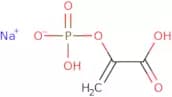
CAS:<p>PEP is a "high-energy phosphate" compound playing a vital role in enzymatic phosphate-transfer reactions involved in ATP synthesis. It is used in conjunction with pyruvate kinase as a phosphorylating agent for ATP generation. Substrate for phosphoenolpyruvate carboxylase. Reagent for determination of glycerol.</p>Formula:C3H4NaO6P·xH2OPurity:Min. 95%Color and Shape:PowderMolecular weight:190.02 g/molRef: 3D-FP29995
Discontinued productManganese dihydrogen phosphate dihydrate
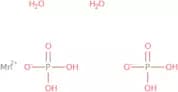
CAS:<p>Manganese dihydrogen phosphate dihydrate is a versatile building block and intermediate for the synthesis of complex compounds. It can be used as a reagent for research, in analytical chemistry, and as a speciality chemical. Manganese dihydrogen phosphate dihydrate is a high-quality product that can be used to synthesize many different compounds, including pharmaceuticals and agrochemicals. This product is also useful in the synthesis of new chemical scaffolds.</p>Formula:(H2PO4)2•Mn•(H2O)2Purity:Min. 95%Color and Shape:White to reddish solid.Molecular weight:284.94 g/molRef: 3D-FM33344
Discontinued productMagnesium hexafluorosilicate hexahydrate
CAS:<p>Magnesium hexafluorosilicate hexahydrate is a fine chemical that can be used as a versatile building block in the synthesis of organic compounds. It can also be used as a reaction component and provides a speciality chemical reagent for research purposes. Magnesium hexafluorosilicate hexahydrate is an intermediate in the synthesis of other chemicals and has been commercially available since 2006. This compound can also be used as a catalyst for the polymerization of polystyrene, polyurethane, and polyester resins. Magnesium hexafluorosilicate hexahydrate is high quality and is not hazardous to health or the environment.</p>Formula:F6Si•(H2O)6•MgPurity:Min. 95%Color and Shape:PowderMolecular weight:274.47 g/molRef: 3D-FH106107
Discontinued productPotassium fluoride dihydrate
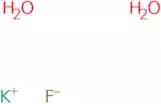
CAS:Controlled Product<p>Potassium fluoride is an inorganic chemical that is used in the water fluoridation process. It is also used as a source of fluoride ions for the synthesis of hydroxyapatite, a mineral found in teeth and bones. Fluoride ions are also used to treat certain infectious diseases, such as malaria. The asymmetric synthesis of potassium fluoride was first reported by M. S. Kharasch and J. A. Fink in 1943 using plasma mass spectrometry. This method has been widely adopted for commercial production of potassium fluoride because it can be scaled up easily and does not require specialized equipment.<br><br>Potassium fluoride has been shown to inhibit viral replication by hydrogen bonding with the guanine-cytosine base pairs on the viral dsDNA, which prevents the DNA from uncoiling and copying its genetic information into new viral particles. Potassium fluoride has also been shown to be effective against hepatitis B virus (HBV) and mammalian cells infected by HB</p>Formula:KF·2H2OPurity:Min. 95%Molecular weight:94.13 g/molRef: 3D-FP34794
Discontinued productRuthenium(III) nitrosyl nitrate, soluble in 10% dilute nitric acid
CAS:<p>Please enquire for more information about Ruthenium(III) nitrosyl nitrate, soluble in 10% dilute nitric acid including the price, delivery time and more detailed product information at the technical inquiry form on this page</p>Formula:RuN4O10Purity:Min. 95%Color and Shape:Clear LiquidMolecular weight:317.09 g/molAmmonium tetrafluoroborate
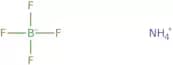
CAS:<p>Ammonium tetrafluoroborate is a salt of the organic compound tetrafluoroborate and ammonium. It is a colorless solid that can be used as a chemical reagent. Ammonium tetrafluoroborate has a higher chemical stability than other salts of tetrafluoroborate, such as ammonium hexafluorophosphate and ammonium hexafluoroarsenate. Ammonium tetrafluoroborate is used to make the dinucleotide phosphate, which is an important component in DNA synthesis. In a redox potential test, ammonium tetrafluoroborate showed no electrochemical activity in water vapor at pH 7. Ammonium tetrafluoroborate reacts with trifluoroacetic acid to produce hydrogen fluoride and ammonium chloride. This reaction is reversible, which means that it can be used for the synthesis of ammonia gas from hydrogen and nitrogen gases or for the</p>Formula:NH4BF4Purity:Min. 98%Color and Shape:White PowderMolecular weight:104.84 g/molRef: 3D-FA55588
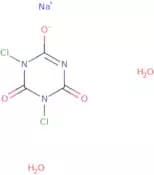
Discontinued productDichloroisocyanuric acid sodium dihydrate
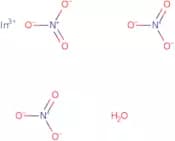
CAS:<p>Dichloroisocyanduric acid sodium salt (DCD) is a disinfectant that is used to control bacteria, fungi, and algae in wastewater treatment plants. DCD has been shown to be an effective antimicrobial agent against bacterial spores and the fungal plant pathogen "Botrytis cinerea" when used at concentrations of 0.1-0.3%. DCD also has a low toxicity for mammals, with LD50 values of 3.5g/kg for rats and 2g/kg for mice. The chemical stability of DCD can be increased by adding sodium carbonate or other alkaline substances in a neutral pH environment.</p>Formula:C3HCl2N3O3•(H2O)2•NaPurity:Min. 95%Color and Shape:PowderMolecular weight:256.98 g/molIndium(III) nitrate hydrate
CAS:<p>Indium(III) nitrate hydrate is an inorganic compound that reacts with aqueous solutions of potassium dichromate or malonic acid to produce a precipitate. The chemical stability of this compound has been demonstrated by reacting it with nitric acid, which produced a white solid. A structural analysis of this compound has shown that the reaction mechanism may involve the formation of InO particles and oxide anions. The particle size is between 1-2 microns and the morphology is spherical.</p>Formula:In(NO3)3•(H2O)xPurity:Min. 95%Molecular weight:300.83 g/molRef: 3D-FI106482
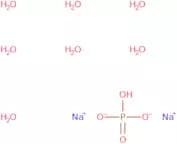
Discontinued productSodium phosphate dibasic heptahydrate
CAS:<p>The particle size of sodium phosphate dibasic heptahydrate is between 0.1 and 1.0 μm. It has a fluorescence detector that can be used to identify metabolic disorders in humans, such as autoimmune diseases and human immunoglobulin deficiency. The particle size of sodium phosphate dibasic heptahydrate is between 0.1 and 1.0 μm. It has a fluorescence detector that can be used to identify metabolic disorders in humans, such as autoimmune diseases and human immunoglobulin deficiency. The particle size of sodium phosphate dibasic heptahydrate is between 0.1 and 1.0 μm. It has a fluorescence detector that can be used to identify metabolic disorders in humans, such as autoimmune diseases and human immunoglobulin deficiency</p>Formula:Na2HPO4·7H2OPurity:Min. 95%Color and Shape:White PowderMolecular weight:268.07 g/molRef: 3D-FS47163
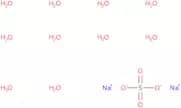
Discontinued productSodium sulphate decahydrate
CAS:Controlled Product<p>Sodium sulphate decahydrate is an inorganic salt that is a salt of sodium and sulfuric acid. It is used as a food additive, preservative, and to control the pH of water. Sodium sulfate decahydrate has been shown to be effective for the treatment of diarrhoea caused by infectious diseases such as rotavirus and enterotoxigenic Escherichia coli. This drug also has inhibitory effects on bacterial growth and may be useful for the prevention or treatment of bowel diseases such as Crohn's disease and ulcerative colitis. The intermolecular hydrogen bonding between the anions in this compound make it highly reactive, which can result in toxic side effects. However, this drug has not exhibited any toxic side effects at concentrations below 0.5%.</p>Formula:H22Na2O14SPurity:Min. 95%Color and Shape:PowderMolecular weight:324.21 g/molRef: 3D-FS35057
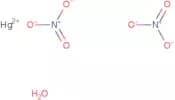
Discontinued productMercury(II) nitrate monohydrate
CAS:Controlled Product<p>Mercury(II) nitrate monohydrate (HgNO3·H2O) is a salt that is used in the synthesis of other mercury compounds. It is activated by reaction with ammonia or ammonium chloride to yield the mercury(II) nitrate. This compound can be used as a fluorescence probe for identification and quantification of nitrogen atoms in biological molecules. Monoclonal antibodies against human serum proteins can be prepared from HgNO3·H2O-treated mouse ascites fluid, which are then used for immunological detection of picolinic acid in human serum. The reaction solution for this procedure should contain benzalkonium chloride, light emission reagents, and halides. The IUPAC name for this compound is mercuric nitrate monohydrate and it has a kinetic data available.</p>Formula:Hg(NO3)2•H2OPurity:Min. 95%Molecular weight:342.62 g/molRef: 3D-FM43031
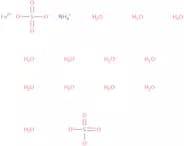
Discontinued productAmmonium iron(III) sulfate dodecahydrate
CAS:<p>Ammonium iron(III) sulfate dodecahydrate is a water-soluble inorganic salt that can be used as an oxidizing agent to reduce the color of stains. It has been shown to have good growth kinetics and is easy to use. Ammonium iron(III) sulfate dodecahydrate is an inorganic acid that can be used as a reagent for extractions. It has been found to have good extraction yield and particle size, which makes it ideal for use in polymer films. Ammonium iron(III) sulfate dodecahydrate reacts with hydroxyl groups and forms p-hydroxybenzoic acid, which can be used in clinical pathology tests.</p>Formula:NH4Fe(SO4)2•(H2O)12Purity:Min. 95%Color and Shape:PowderMolecular weight:482.19 g/molRef: 3D-FA40933
Discontinued productVanadium(IV) sulfate oxide hydrate
CAS:<p>Vanadium oxide hydrate is an oxidizing catalyst that is used in the production of polyvinyl chloride (PVC). It is also used as a catalyst in the oxidation of water vapor and in the preparation of hydroxide solutions. The catalytic activity of vanadium oxide hydrate depends on its pH, with a lower pH increasing the rate of oxidation. This compound was shown to induce DNA strand breaks and chromosomal aberrations when tested in vitro. Vanadium oxide hydrate has also been found to have genotoxic effects when tested in vivo, including induction of micronuclei and sister chromatid exchanges. Vanadium oxide hydrate can be used as a dietary supplement to increase growth factor levels, particularly when combined with molybdenum or monoclonal antibody. Vanadium oxide hydrate has a phase transition temperature at around 74°C, which makes it useful for regulating polymer film thickness during processing.</p>Formula:VOSO4·xH2OPurity:Min. 95%Color and Shape:Blue PowderMolecular weight:163 g/mol