Antifungals
Antifungals are compounds specifically designed to stop, prevent, and eliminate the growth of fungi. In this category, you will find a wide variety of antifungal agents essential for research and therapeutic applications. These compounds are crucial in treating fungal infections and preventing their recurrence, making them vital tools in both medical and agricultural settings. Researchers and healthcare professionals can explore numerous antifungals to understand their mechanisms, optimize their efficacy, and develop new treatments to combat resistant fungal strains. The extensive selection of antifungals supports ongoing advancements in fungal research and the development of effective antifungal therapies.
Found 894 products of "Antifungals"
Sort by
Purity (%)
0
100
|
0
|
50
|
90
|
95
|
100
Benzohydroxamic acid
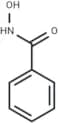
CAS:Benzohydroxamic acid (BHA) is a chitin deacetylase (CDA) inhibitor with notable antifungal properties. It displays Ki values of 8.31 μM against Verticillium dahliae CDA and 9.83 μM against Puccinia striiformis f. sp. tritici CDA. BHA can restore the defense responses in infected host plants by upregulating the expression of defense-related genes, thereby reducing fungal growth and proliferation within the plants. It is applicable in the research of agricultural fungal diseases, such as cotton wilt and wheat stripe rust, caused by pathogens like Verticillium dahliae and Puccinia striiformis.Formula:C7H7NO2Color and Shape:SolidMolecular weight:137.136Antibacterial agent 188
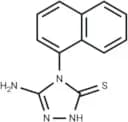
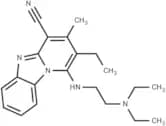
CAS:Compound 2d (Antibacterial agent 188) serves as an antibacterial agent that suppresses the activity of dermatophytes [1].Formula:C12H10N4SColor and Shape:SolidMolecular weight:242.3Complex III-IN-1
Complex III-IN-1 inhibits complex III, has antifungal properties, and an EC50 of 18.53 mg/L against S. sclerotiorum.Formula:C14H20ClNO2S2Color and Shape:SolidMolecular weight:333.9Complex III-IN-2
Complex III-IN-2 inhibits complex III, with antifungal EC50: 29.31 mg/L vs R. solani, 29.98 mg/L vs S. sclerotiorum.Formula:C15H21ClN2O2SColor and Shape:SolidMolecular weight:328.86Antifungal agent 127
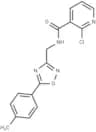
CAS:Antifungalagent 127 (Compound 6c) is an antifungal agent with potent inhibitory activity against Botrytis cinerea and Rhizoctonia solani.Formula:C13H12ClN3OColor and Shape:SolidMolecular weight:261.707CDA-IN-1
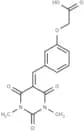
CAS:<p>CDA-IN-1 (Compound vs#2-1) is an inhibitor of chitin deacetylase (CDA) that exhibits antifungal activity. By inhibiting fungal CDA activity, it activates plant immune responses and leads to the accumulation of reactive oxygen species (ROS), hindering fungal growth. At a concentration of 100 μM, CDA-IN-1 achieves inhibition rates of 86.9% on P. xanthii's PxCDA1 and 74.5% on PxCDA2. CDA-IN-1 is applicable in research on fungal plant diseases, such as cucumber powdery mildew and tomato gray mold.</p>Formula:C15H14N2O6Color and Shape:SolidMolecular weight:318.281AnCDA-IN-1
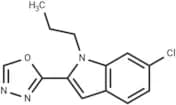
CAS:AnCDA-IN-1 (Compound J075-4187) is an inhibitor of chitin deacetylase (CDA) exhibiting antifungal properties. It possesses an IC50 of 4.24 μM against A. nidulans AnCDA. The compound demonstrates a minimum inhibitory concentration (MIC) of 260 μg/mL and a minimum fungicidal concentration (MFC) of 520 μg/mL for food spoilage fungi and plant pathogenic fungi. AnCDA-IN-1 is applicable for research in the antifungal domain.Formula:C16H13ClN4O2Color and Shape:SolidMolecular weight:328.753D75-4590
CAS:<p>D75-4590, a β-1,6-Glucan synthetase inhibitor, combats fungal infections by targeting cell walls.</p>Formula:C21H27N5Purity:98.56% - 98.85%Color and Shape:SolidMolecular weight:349.474-Hydroxyvoriconazole
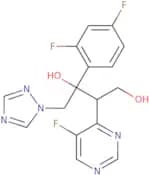
CAS:<p>Metabolite of voriconazole; sterol 14?-demethylase inhibitor</p>Purity:Min. 95%Tetraconazole
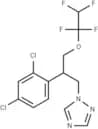
CAS:Tetraconazole is an agent of pesticides.Formula:C13H11Cl2F4N3OColor and Shape:Liquid ViscousMolecular weight:372.14Rhizocticin A
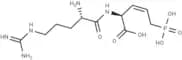
CAS:Rhizocticin A is a potential inhibitor of threonine synthase.Formula:C11H22N5O6PPurity:98%Color and Shape:SolidMolecular weight:351.32,7-Dihydroxynaphthalene
CAS:2,7-Dihydroxynaphthalene is a useful organic compound for research related to life sciences. The catalog number is T67338 and the CAS number is 582-17-2.Formula:C10H8O2Color and Shape:SolidMolecular weight:160.17Amphotericin A
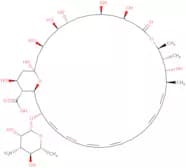
CAS:<p>Amphotericin A is a polyene macrolide antibiotic, which is derived primarily from the soil bacterium *Streptomyces nodosus*. This compound functions by binding to ergosterol, an essential component of fungal cell membranes. This binding creates pores in the membrane, increasing its permeability and ultimately leading to cell death. Unlike its more widely used counterpart Amphotericin B, Amphotericin A is less frequently utilized but is critical in the study and understanding of antifungal activity.</p>Formula:C47H75NO17Purity:Min. 95%Molecular weight:926.09 g/mol1-(6-Amino-3,5-difluoro-2-pyridinyl)-7-[3-[3-[[1-(6-amino-3,5-difluoro-2-pyridinyl)-3-carboxy-8-chloro-6-fluoro-1,4-dihydro-4-oxo-7- quinolinyl]amino]-2-hydroxypropoxy]-1-azetidinyl]-8-chloro-6-fluoro-1,4-dihydro-4-oxo-3-quinolinecarboxylic acid
CAS:<p>1-(6-Amino-3,5-difluoro-2-pyridinyl)-7-[3-[3-[[1-(6-amino-3,5-difluoro-2-pyridinyl)-3-carboxy-8-chloro-6-fluoro-1,4-dihydro-4-oxo-7-quinolinyl]amino]-2-hydroxypropoxy]-1-azetidinyl]-8-chloro-6-fluoro-1,4-dihydro-4-oxo-3-quinolinecarboxylic acid is a fluoroquinolone antibiotic, engineered through synthetic chemistry. It is derived from chemical sources involving complex organic synthesis, highlighting its intricate molecular architecture. Its mode of action is distinctive, as it inhibits bacterial DNA gyrase and topoisomerase IV, enzymes crucial for DNA replication and transcription. This interference with bacterial DNA processes results in bactericidal effects, effectively eliminating susceptible bacterial strains.</p>Formula:C36H24Cl2F6N8O8Purity:Min. 95%Molecular weight:881.52 g/molRef: 3D-AA184076
Discontinued product