Antimicrobials
Antimicrobials are agents that destroy or inhibit the growth of microorganisms, including bacteria, viruses, fungi, and parasites. These compounds are essential in the prevention and treatment of infections, playing a crucial role in medicine, agriculture, and the food industry. At CymitQuimica, we offer an extensive range of high-quality, high-purity antimicrobials suitable for various scientific and industrial applications. Our catalog includes antibiotics, antifungals, antivirals, and disinfectants, all designed to meet the needs of research and development, as well as clinical and production applications. With our products, professionals can ensure the effectiveness and safety in infection control and public health protection.
Subcategories of "Antimicrobials"
- Antibiotics(4,110 products)
- Antifungals(835 products)
- Antiparasitics(704 products)
- Antivirals(762 products)
Found 2422 products of "Antimicrobials"
Sort by
Purity (%)
0
100
|
0
|
50
|
90
|
95
|
100
Rifamycin PR-14
CAS:<p>Rifamycin PR-14 is a semi-synthetic antibiotic, which is derived from the naturally occurring antibiotic rifamycin. Originating from a fermentation process involving the bacterium Amycolatopsis mediterranei, rifamycin is modified to create the PR-14 variant to enhance its antibacterial properties and pharmacokinetic profile. This compound functions by inhibiting bacterial DNA-dependent RNA polymerase, effectively halting RNA synthesis and subsequent protein production, leading to bacterial cell death.</p>Formula:C43H54N2O12Purity:Min. 95%Molecular weight:790.9 g/mol3,4,5-Trichlorophenol acetate
CAS:<p>3,4,5-Trichlorophenol acetate is a chlorinated aromatic compound, which is a derivative of trichlorophenol. It is typically sourced from chemical synthesis involving the chlorination and acetylation of phenolic compounds. The mode of action involves its interaction and potential binding with biological molecules, making it a subject of interest for biochemical studies.</p>Formula:C8H5Cl3O2Purity:Min. 95%Molecular weight:239.5 g/molDicloxacillin sodium salt
CAS:<p>Dicloxacillin is a penicillin antibiotic that is used to treat bacterial infections of the gastrointestinal tract, skin, and urinary tract. It binds to the penicillin-binding proteins in bacterial cell walls by competitive inhibition. Dicloxacillin inhibits bacterial growth by binding to the enzyme cell wall synthesis that is required for cell wall biosynthesis, inhibiting protein synthesis and cell division. This drug also has a toxic effect on respiratory system cells, which may be due to its ability to induce apoptosis. Dicloxacillin sodium salt is available as tablets for oral administration or as an intravenous solution for injection. It can interact with other drugs, such as benzalkonium chloride and matrix effect; it also has analytical methods such as chromatographic analysis and rate constant.</p>Formula:C19H17Cl2N3O5S·NaPurity:Min. 95%Molecular weight:493.32 g/mol8-Fluoro erythromycin
CAS:<p>8-Fluoro erythromycin is a synthetic derivative of the macrolide antibiotic erythromycin. It is derived from the fermentation of *Streptomyces erythraeus*, a species known for producing erythromycin, which is chemically modified to include a fluorine atom at the eighth position. This modification enhances its pharmacokinetic properties, improving its stability and bioavailability compared to the parent compound.</p>Formula:C37H66FNO13Purity:Min. 95%Molecular weight:751.92 g/molWF-3681
CAS:<p>WF-3681 is a chemical compound utilized as an insecticide, which is synthesized from organic compounds through a controlled chemical process. The mode of action for WF-3681 involves the disruption of the neural pathways in target insects, leading to paralysis and eventual death. This mechanism specifically interferes with neurotransmitter functions, ensuring efficacy against a broad range of agricultural pests. The compound's specificity minimizes impacts on non-target organisms and the surrounding environment.</p>Formula:C13H12O5Purity:Min. 95%Molecular weight:248.23 g/molA2ti-2
CAS:<p>A2ti-2 is an advanced metallurgical alloy, which is a synthesized product combining high-grade titanium and aluminum elements. It is engineered through a precise metallurgical process that involves controlled alloying at elevated temperatures, optimizing the atomic structure for superior performance traits. The mode of action for A2ti-2 involves its exceptional ability to maintain stability under extreme temperatures, providing resistance to thermal degradation and mechanical stress.</p>Formula:C18H18N4O2SPurity:Min. 95%Molecular weight:354.4 g/molCyclopentylalbendazole
CAS:<p>Cyclopentylalbendazole is an anthelmintic compound, which is a synthetic derivative of benzimidazole, originally sourced from chemical synthesis processes. Its mode of action involves the selective binding to beta-tubulin, disrupting the polymerization of microtubules within the parasites. This inhibition of microtubule formation is crucial for cellular processes such as nutrient uptake and intracellular transport, eventually leading to immobilization and subsequent death of the parasites.</p>Formula:C14H17N3O2SPurity:Min. 95%Molecular weight:291.37 g/molLedipasvir diacetone
CAS:<p>Ledipasvir is a synthetic drug that inhibits the viral enzyme NS5A, which is necessary for viral replication. Ledipasvir has been shown to inhibit the growth of microorganisms such as bacteria and fungi. It also has antiviral properties, and is active against HIV-1. Ledipasvir can be used in chemotherapy to treat cancer and other diseases. This drug has high purity and is available at life science stores.</p>Formula:C55H66F2N8O8Purity:Min. 95%Molecular weight:1,005.2 g/molPerfluidone
CAS:<p>Perfluidone is a systematic herbicide, which is a synthetic chemical compound with a specific mode of action targeting pre-emergent weed growth. It functions by inhibiting the synthesis of carotenoids, essential pigments in photosynthesis, thereby disrupting the cellular processes required for plant growth. This inhibition leads to an accumulation of toxic intermediates, causing the bleaching and eventual death of susceptible plant tissues.</p>Formula:C14H12F3NO4S2Purity:Min. 95%Molecular weight:379.4 g/mol(+)-Oxanthromicin
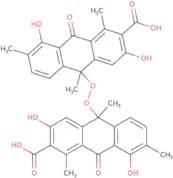
CAS:<p>(+)-Oxanthromicin is a natural compound classified as a polyketide antibiotic, which is derived from certain strains of soil-dwelling actinomycetes. These microorganisms are known to produce a variety of biologically active secondary metabolites. The mode of action of (+)-Oxanthromicin involves the inhibition of specific bacterial enzymes, disrupting essential processes within the microbial cells. This interference can lead to growth inhibition or cell death, showcasing its potential as a therapeutic agent.</p>Formula:C36H30O12Purity:Min. 95%Molecular weight:654.6 g/molNafcilllin sodium monohydrate
CAS:<p>Nafcillin sodium monohydrate is a beta-lactam antibiotic, which is derived from the penicillin class of antimicrobials. It is specifically a semi-synthetic penicillin and is commonly sourced through chemical synthesis to enhance its stability and spectrum of activity. Nafcillin primarily exerts its bactericidal effects by inhibiting bacterial cell wall synthesis. It achieves this through its strong affinity for penicillin-binding proteins (PBPs), which are essential for maintaining the bacterial cell wall structure. By disrupting the formation of peptidoglycan cross-links, nafcillin effectively weakens the bacterial cell wall, leading to cell lysis and death, especially in gram-positive bacteria such as Staphylococcus aureus, including methicillin-sensitive strains (MSSA).</p>Formula:C21H21N2O5SNa·H2OPurity:Min. 95%Color and Shape:White to off-white solid.Molecular weight:454.47 g/molCycloxydim-sulfone-glutaric acid
CAS:<p>Cycloxydim-sulfone-glutaric acid is a synthesized herbicide, which is a derivative of cycloxydim, a cyclohexanedione compound. It is characterized by its ability to effectively inhibit acetyl-CoA carboxylase, an enzyme crucial in fatty acid biosynthesis within plant systems. The source of this compound is primarily through complex chemical synthesis processes that combine its constituent elements to enhance its stability and efficacy as a herbicide.</p>Formula:C10H16O6SPurity:Min. 95%Molecular weight:264.3 g/molTigecycline hydrate
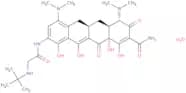
CAS:<p>Inhibitor of protein synthesis; glycylcycline class</p>Formula:C29H39N5O8Purity:Min. 95%Molecular weight:585.65 g/molFosravuconazole
CAS:<p>Fosravuconazole is an antifungal agent, classified as a triazole antifungal, which is developed from a synthetic chemical source. It operates as a prodrug of ravuconazole, meaning that after administration, fosravuconazole is converted into its active form in the body. This conversion enhances the absorption and bioavailability of the drug, providing improved treatment efficacy against fungal infections.</p>Formula:C23H20F2N5O5PSPurity:Min. 95%Molecular weight:547.5 g/molGanciclovir, Antibiotic for Culture Media Use Only
CAS:<p>Ganciclovir is an antiviral agent specifically designed for culture media use. It is a synthetic analogue of 2'-deoxy-guanosine, derived from nucleoside compounds, and operates primarily by inhibiting the replication of viral DNA. Its mode of action involves selective phosphorylation by viral kinases, which converts it into ganciclovir triphosphate, a potent inhibitor of viral DNA polymerase, ultimately preventing viral DNA synthesis.</p>Formula:C9H13N5O4Purity:Min. 98.0 Area-%Molecular weight:255.23 g/molNeticonazole
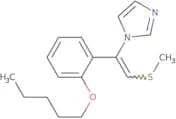
CAS:<p>Neticonazole is a synthetic antifungal compound, which is derived from pharmaceutical chemical synthesis. It functions primarily as an imidazole derivative, disrupting the synthesis of ergosterol, a crucial component of fungal cell membranes. This interference leads to increased cell membrane permeability, ultimately causing cell lysis and death of the fungal organism.</p>Formula:C17H22N2OSPurity:Min. 95%Molecular weight:302.4 g/molSulfadiazine
CAS:<p>Sulfadiazine is a sulfonamide antibiotic with action on bacterial folate synthesis inhibition and is used for treating toxoplasmosis and urinary tract infections.</p>Formula:C10H10N4O2SPurity:Min. 95%Color and Shape:PowderMolecular weight:250.28 g/molLoracarbef monohydrate
CAS:<p>Loracarbef monohydrate is a synthetic antibiotic, which is derived from carbacephem compounds with a mode of action that involves inhibiting bacterial cell wall synthesis. This is achieved by binding to penicillin-binding proteins, thereby blocking the cross-linking of peptidoglycan chains which are crucial for bacterial cell wall structural integrity.</p>Formula:C16H16ClN3O4·H2OPurity:Min. 95%Molecular weight:367.78 g/molNITD-916
CAS:<p>NITD-916 is an antiviral compound, which is a synthetic molecule designed for therapeutic purposes. Its source lies in medicinal chemistry, where it was developed through a detailed process of molecular optimization and testing to enhance its efficacy and pharmacokinetic properties. The mode of action of NITD-916 involves inhibiting viral replication by targeting specific non-structural proteins essential for the replication process of certain RNA viruses.</p>Formula:C20H25NO2Purity:Min. 95%Molecular weight:311.4 g/molKanamycin sulfate
CAS:<p>Kanamycin sulfate is an aminoglycoside antibiotic, derived from the bacterium *Streptomyces kanamyceticus*. Its mode of action involves binding to the 30S subunit of the bacterial ribosome, thereby inhibiting protein synthesis and ultimately leading to bacterial cell death. This mechanism is particularly effective against gram-negative bacteria and certain gram-positive bacteria.</p>Formula:C18H40N4O16SPurity:Min. 95%Molecular weight:600.6 g/mol