


Antimicrobials
Antimicrobials are agents that destroy or inhibit the growth of microorganisms, including bacteria, viruses, fungi, and parasites. These compounds are essential in the prevention and treatment of infections, playing a crucial role in medicine, agriculture, and the food industry. At CymitQuimica, we offer an extensive range of high-quality, high-purity antimicrobials suitable for various scientific and industrial applications. Our catalog includes antibiotics, antifungals, antivirals, and disinfectants, all designed to meet the needs of research and development, as well as clinical and production applications. With our products, professionals can ensure the effectiveness and safety in infection control and public health protection.
Subcategories of "Antimicrobials"
- Antibiotics(4,121 products)
- Antifungals(871 products)
- Antiparasitics(699 products)
- Antivirals(764 products)
Found 2422 products of "Antimicrobials"
Sort by
Purity (%)
0
100
|
0
|
50
|
90
|
95
|
100
Deacetoxycephalothin
CAS:<p>Deacetoxycephalothin is a cephalosporin antibiotic, which is derived from the fungus Acremonium. It functions by inhibiting bacterial cell wall synthesis. This bactericidal activity is primarily focused on gram-positive bacteria, where it interferes with the final transpeptidation step of peptidoglycan synthesis, an essential component of the bacterial cell wall structure. By doing so, deacetoxycephalothin compromises cell wall integrity, leading to the lysis and death of bacterial cells.</p>Formula:C14H14N2O4S2Purity:Min. 95%Molecular weight:338.4 g/molSofosbuvir - Bio-X ™
CAS:<p>Sofosbuvir is an antiviral agent that is used for the treatment of hepatitis C infections and is used in combination with other antiviral agents. This drug is an inhibitor of viral RNA polymerase called non-structural protein 5B (NS5B). As a result, it inhibits viral RNA replication.</p>Formula:C22H29FN3O9PPurity:Min. 95%Color and Shape:PowderMolecular weight:529.45 g/molStavudine sodium
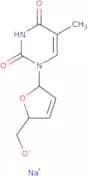
CAS:<p>Stavudine sodium is an antiretroviral medication, which is a synthetic nucleoside analogue. It is primarily sourced from chemical synthesis processes, enabling precise control over its molecular structure to ensure efficacy in its intended application. The mode of action for stavudine sodium involves its incorporation into viral DNA through reverse transcription. Once integrated, it acts as a chain terminator, inhibiting the elongation of the viral DNA and thus effectively halting the replication of the human immunodeficiency virus type 1 (HIV-1).</p>Formula:C10H11N2NaO4Purity:Min. 95%Molecular weight:246.19 g/molFinafloxacin
CAS:<p>Finafloxacin is a fluoroquinolone antibacterial agent, which is a synthetic compound derived from the quinolone family. It functions through the inhibition of bacterial DNA gyrase and topoisomerase IV, crucial enzymes in the replication, transcription, and repair of bacterial DNA. This mechanism leads to the prevention of bacterial cell division and ultimately results in cell death.</p>Formula:C20H19FN4O4Purity:Min. 95%Molecular weight:398.39 g/molPristinamycin IA
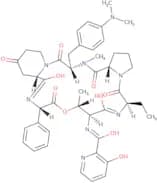
CAS:<p>Pristinamycin IA is a streptogramin antibiotic, which is a natural product derived from the bacterium *Streptomyces pristinaespiralis*. It operates by inhibiting bacterial protein synthesis through the disruption of ribosomal function, specifically targeting the 50S ribosomal subunit. This mode of action is effective in halting bacterial growth, making it particularly significant in combating resistant strains.</p>Formula:C45H54N8O10Purity:Min. 95%Molecular weight:866.96 g/molIsoflucypram
CAS:<p>Please enquire for more information about Isoflucypram including the price, delivery time and more detailed product information at the technical inquiry form on this page</p>Formula:C19H21ClF3N3OPurity:Min. 95%Molecular weight:399.8 g/molDimidazon
CAS:Dimidazon is a synthetic herbicide, which is derived from chemical synthesis processes involving aromatic and heterocyclic compounds. It possesses a mode of action that primarily inhibits specific enzymatic pathways required for plant growth, targeting essential biosynthesis mechanisms within the plant's cellular structure. This disruption leads to the cessation of vital processes, eventually causing plant death.Formula:C12H12N2O3Purity:Min. 95%Molecular weight:232.23 g/molRibocil B
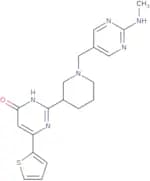
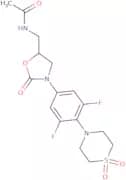
CAS:<p>Ribocil B is an analog of riboflavin, functioning as a synthetic antibiotic. It is derived from chemical synthesis, designed to mimic the structure of natural riboflavin analogs which are crucial for bacterial growth. Ribocil B acts by specifically inhibiting riboswitches, a type of non-coding RNA that regulates gene expression in response to small molecules. This inhibition disrupts RNA synthesis in bacteria by targeting the flavin mononucleotide (FMN) riboswitch.</p>Formula:C19H22N6OSPurity:Min. 95%Molecular weight:382.5 g/molN-((3-(4-(1,1-Dioxidothiomorpholin-4-yl)-3,5-difluorophenyl)-2-oxo-1,3-oxazolidin-5-yl)methyl)acetamide
CAS:<p>N-((3-(4-(1,1-Dioxidothiomorpholin-4-yl)-3,5-difluorophenyl)-2-oxo-1,3-oxazolidin-5-yl)methyl)acetamide is a synthetic compound, often considered within the realm of small-molecule pharmacology. This compound is derived through complex organic synthesis, involving the incorporation of dioxidothiomorpholine and oxazolidinone rings, as well as fluorination, which are critical for its biochemical properties.</p>Formula:C16H19F2N3O5SPurity:Min. 95%Molecular weight:403.4 g/molClofoctol
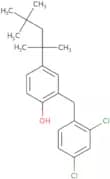
CAS:<p>Clofoctol is an antibacterial agent, which is derived from synthetic origins, specifically designed for therapeutic applications in bacterial infections. Its mode of action involves inhibiting bacterial protein synthesis, thereby preventing the growth and proliferation of harmful bacteria. This compound is particularly effective against Gram-positive bacteria.</p>Formula:C21H26Cl2OPurity:Min. 95%Molecular weight:365.34 g/molBesifloxacin hydrochloride
CAS:<p>Besifloxacin hydrochloride is a fourth-generation fluoroquinolone antibiotic, which is a synthetic derivative of the broad-spectrum quinolone class. Its origin can be traced to laboratory chemical synthesis, tailored specifically to target bacterial infections in ocular applications. The mode of action of besifloxacin involves the inhibition of bacterial enzymes DNA gyrase and topoisomerase IV. These enzymes play crucial roles in bacterial DNA replication, transcription, repair, and recombination. By disrupting these processes, besifloxacin effectively impedes bacterial cell division, leading to the death of the bacterial cells.</p>Formula:C19H21ClFN3O3·HClPurity:Min. 95%Molecular weight:430.3 g/molNeoaureothin
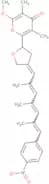
CAS:<p>Neoaureothin is a natural antibiotic product, which is derived from marine actinomycetes with a complex polyketide structure. Its mode of action involves the inhibition of bacterial protein synthesis by binding selectively to the ribosomal subunits, thereby obstructing the translation process in susceptible microbial strains. The specificity of its action allows it to target a broad spectrum of Gram-positive bacteria while presenting a lower risk of resistance development compared to traditional antibiotics.</p>Formula:C28H31NO6Purity:Min. 95%Molecular weight:477.5 g/molPolymyxin B nonapeptide hydrochloride
CAS:<p>Polymyxin B nonapeptide hydrochloride is a potent antibiotic compound derived from the bacterium *Bacillus polymyxa*. As a cationic polypeptide, it exhibits its antibacterial activity by interacting with the lipopolysaccharides and phospholipids in the bacterial cell membrane, leading to increased permeability and ultimately causing cell lysis. The compound is specifically effective against a broad range of Gram-negative bacteria, making it crucial in studying antibiotic resistance mechanisms.</p>Formula:C43H74N14O11•(HCl)xPurity:Min. 95%Molecular weight:963.14 g/molPentosan polysulfate
CAS:<p>Pentosan polysulfate is a semi-synthetic polysaccharide, which is derived from xylan, sourced from beechwood hemicellulose. It functions as a heparin-like compound with anticoagulant and fibrinolytic properties. Its sulfated polysaccharide form allows it to adhere to the urothelium of the bladder, forming a protective layer that can prevent irritating solutes in urine from reaching bladder cells. Through this mechanism, it mitigates the pain and discomfort associated with interstitial cystitis (IC), a chronic condition characterized by bladder pain and urinary urgency.</p>Formula:C10H18O21S4Purity:Min. 95%Molecular weight:602.5 g/molButirosin disulfate
CAS:<p>Butirosin disulfate is an aminoglycoside antibiotic, which is derived from a strain of *Bacillus circulans*. Its primary mode of action involves binding to the 30S subunit of the bacterial ribosome, leading to the inhibition of protein synthesis. This interaction results in the misreading of mRNA, ultimately causing bactericidal effects.</p>Formula:C21H45N5O20S2Purity:Min. 95%Molecular weight:751.7 g/molCefluprenam
CAS:<p>Cefluprenam is a cephalosporin antibiotic, which is a synthetic derivative of the fungus Cephalosporium. It functions by inhibiting bacterial cell wall synthesis, effectively disrupting the peptidoglycan cross-linking process essential for bacterial structural integrity. This inhibition leads to cell lysis and ultimately bacterial death.</p>Formula:C20H25FN8O6S2Purity:Min. 95%Molecular weight:556.60 g/molCefoxitin EP impurity B
<p>Cefoxitin EP impurity B is a chemical reference standard, which is derived from the synthesis and purification processes involved in producing Cefoxitin. As an impurity standard, its primary role is to serve as a benchmark for quality control in pharmaceutical formulations. The mode of action of Cefoxitin EP impurity B involves the structural analysis and quantification of impurity levels, ensuring that the primary pharmaceutical products meet necessary safety and efficacy criteria.</p>Formula:C16H17N3O7S2Purity:Min. 95%Molecular weight:427.45 g/molSpiro-oxanthromicin A
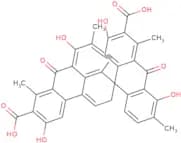
CAS:<p>Spiro-oxanthromicin A is a novel antibiotic compound, which is derived from a rare species of actinomycete bacteria. The unique structure of Spiro-oxanthromicin A integrates spiroketal and oxanthrone moieties, facilitating its distinctive antimicrobial properties. It operates by selectively binding to bacterial ribosomal subunits, inhibiting protein synthesis and effectively curbing pathogenic proliferation.</p>Formula:C36H26O10Purity:Min. 95%Molecular weight:618.6 g/molNigericin sodium
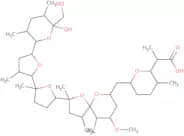
CAS:<p>Nigericin transports cations across the membrane of the cell and it is used to study anion transport. It can be used as a buffer to control pH value inside of the cell.</p>Formula:C40H67NaO11Purity:Min. 95%Molecular weight:746.94 g/mol(2S)-2-[N-(Furan-2-carbonyl)-2,6-dimethylanilino]propanoic acid
CAS:<p>(2S)-2-[N-(Furan-2-carbonyl)-2,6-dimethylanilino]propanoic acid is a synthetic compound classified as a potentially bioactive molecule. It is derived through a series of organic synthesis steps that involve the coupling of furan-2-carbonyl chloride with 2,6-dimethylaniline, followed by modification with a chiral propanoic acid moiety.</p>Formula:C16H17NO4Purity:Min. 95%Molecular weight:287.31 g/mol








![(2S)-2-[N-(Furan-2-carbonyl)-2,6-dimethylanilino]propanoic acid](/_next/image/?url=https%3A%2Fstatic.cymitquimica.com%2Fproducts%2F3D%2Fthumb-webp%2FTEA59719.webp&w=3840&q=75)