Antimicrobials
Subcategories of "Antimicrobials"
- Antibiotics(4,133 products)
- Antifungals(888 products)
- Antiparasitics(692 products)
- Antivirals(765 products)
Found 2436 products of "Antimicrobials"
Cladosporin
CAS:Cladosporin is a secondary metabolite and natural product, specifically a fungal cyclodepsipeptide, which is isolated from the fungus *Cladosporium cladosporioides*. It exhibits its mode of action by selectively inhibiting the lysyl-tRNA synthetase enzyme in the Plasmodium species, the causative agent of malaria. This inhibition disrupts the protein synthesis pathway crucial for the survival and proliferation of the parasite.
Formula:C16H20O5Purity:Min. 95%Molecular weight:292.33 g/molRef: 3D-KBA81831
Discontinued productButirosin disulfate
CAS:Butirosin disulfate is an aminoglycoside antibiotic, which is derived from a strain of *Bacillus circulans*. Its primary mode of action involves binding to the 30S subunit of the bacterial ribosome, leading to the inhibition of protein synthesis. This interaction results in the misreading of mRNA, ultimately causing bactericidal effects.
Formula:C21H45N5O20S2Purity:Min. 95%Molecular weight:751.7 g/molRef: 3D-BCA02298
Discontinued productClindamycin 2-palmitate sulfoxide
CAS:Clindamycin 2-palmitate sulfoxide is a semisynthetic antibiotic, which is a derivative of clindamycin. It originates from lincomycin, a natural antibiotic produced by the bacterium *Streptomyces lincolnensis*. This compound functions as a prodrug, which is converted into its active form in the body. Its mode of action involves inhibiting bacterial protein synthesis by binding to the 50S subunit of the ribosome, thereby preventing the growth and replication of susceptible bacteria.
Formula:C34H64Cl2N2O7SPurity:Min. 95%Molecular weight:715.9 g/molRef: 3D-BKD92892
Discontinued productFormycin A
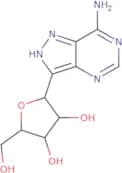
CAS:Formycin A is a nucleoside analog, which is an antibiotic product derived from certain Streptomyces species. Its mode of action involves mimicking adenosine, one of the four nucleosides in RNA. By doing so, it interferes with the RNA processing of certain microorganisms, ultimately disrupting their ability to synthesize proteins effectively. This interference results in the inhibition of bacterial and parasitic growth.
Formula:C10H13N5O4Purity:Min. 95%Molecular weight:267.24 g/molSofosbuvir impurity I
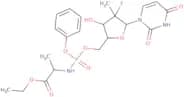
CAS:Sofosbuvir impurity I is an organic chemical impurity often associated with the active pharmaceutical ingredient (API) Sofosbuvir, which is used in the treatment of hepatitis C. This impurity arises during the manufacturing process of Sofosbuvir as a byproduct. It is crucial to monitor and identify such impurities to ensure the safety, efficacy, and quality of the final pharmaceutical product.
Formula:C21H27FN3O9PPurity:Min. 95%Molecular weight:515.4 g/molBromobutide-desbromo
CAS:Bromobutide-desbromo is a chemical compound that functions as a selective herbicide. It is derived from synthetic sources and is specifically formulated to interfere with photosynthesis in target plants. The mode of action of bromobutide-desbromo involves inhibiting photosystem II, a crucial component of the photosynthetic electron transport chain in plants. This inhibition disrupts the energy conversion process, leading to a decrease in ATP and NADPH production, which are essential for plant growth.
Formula:C15H23NOPurity:Min. 95%Molecular weight:233.35 g/molRef: 3D-ADA46373
Discontinued productAntimicrobial compound 1
CAS:Antimicrobial Compound 1 is a broad-spectrum antimicrobial agent, which is derived from natural sources, specifically from marine bacteria with known potent antimicrobial properties. This compound acts by targeting and disrupting the synthesis of bacterial cell walls, specifically inhibiting peptidoglycan cross-linking, which ultimately leads to cell lysis and death due to osmotic instability. Such a mechanism offers a robust approach to tackling Gram-positive and Gram-negative bacteria.
Formula:C18H30BrNO2Purity:Min. 95%Molecular weight:372.3 g/molRef: 3D-QAA23783
Discontinued productSofosbuvir impurity N
CAS:Sofosbuvir impurity N is a chemical impurity found as a byproduct in the synthesis of sofosbuvir, a nucleotide analog used as an antiviral drug. Its origin is directly linked to the complex chemical processes involved in producing the active pharmaceutical ingredient. This impurity is specifically identified and analyzed to ensure the purity and efficacy of the sofosbuvir drug. Impurities like these are of significant interest in pharmaceutical development, as they provide insights into the synthetic pathways and potential degradation products.
Formula:C20H25FN3O9PPurity:Min. 95%Molecular weight:501.4 g/molThiadiazin
CAS:Thiadiazin is a synthetic compound, belonging to the class of heterocyclic chemical substances, which is primarily derived from chemical synthesis processes involving sulfur, nitrogen, and carbon atoms. It is characterized by a five-membered ring structure containing both sulfur and nitrogen atoms, which contributes to its diverse chemical properties.
Formula:C12H22N4S4Purity:Min. 95%Molecular weight:350.6 g/molRef: 3D-DAA77349
Discontinued productCephamycin C
CAS:Cephamycin C is a cephalosporin antibiotic, which is a type of β-lactam antibiotic. It is derived from the fermentation process of certain Streptomyces species and other actinomycetes. Its mode of action involves inhibiting bacterial cell wall synthesis by binding to penicillin-binding proteins (PBPs). This inhibition disrupts the structural integrity of the bacterial cell wall, leading to cell lysis and death.
Formula:C16H22N4O9SPurity:Min. 95%Color and Shape:PowderMolecular weight:446.4 g/molRef: 3D-AC09776
Discontinued productPC 190723
CAS:PC 190723 is a synthetic chemical compound, which is derived through targeted chemical synthesis processes involving precise organic reactions. Its mode of action involves disrupting cellular division by inhibiting specific protein functions essential for the mitotic process. This molecular interaction results in potent effects on cell division, making it a valuable tool for studying cellular mechanics and developing therapeutic strategies.
Formula:C14H8ClF2N3O2SPurity:Min. 95%Molecular weight:355.75 g/molRef: 3D-FC99088
Discontinued productOxohongdenafil
CAS:Please enquire for more information about Oxohongdenafil including the price, delivery time and more detailed product information at the technical inquiry form on this page
Formula:C25H32N6O4Purity:Min. 95%Molecular weight:480.6 g/molRef: 3D-WHC14470
Discontinued productInteriotherinA
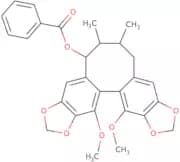
CAS:InteriotherinA is a bioactive compound, which is derived from specific strains of bacteria. It operates through a sophisticated mode of action that involves modulating the activity of nerve cells by binding to particular receptors on their membranes. This interaction can alter ion channel function, thereby influencing the electrochemical signaling within these cells.
Formula:C29H28O8Purity:Min. 95%Molecular weight:504.5 g/molRef: 3D-GHA70106
Discontinued product2-(2-Methyl-4-nitro-1H-imidazol-1-yl)ethyl benzoate
CAS:2-(2-Methyl-4-nitro-1H-imidazol-1-yl)ethyl benzoate is a synthetic chemical compound, classified as an organic ester. It originates from the reaction between benzoic acid and a derivative of nitroimidazole, a class of compounds known for their bioactivity. The molecular framework includes a benzoate ester linked to an imidazole ring, which is substituted with nitro and methyl groups, contributing to its unique characteristics.
Formula:C13H13N3O4Purity:Min. 95%Molecular weight:275.26 g/molRef: 3D-MDA00972
Discontinued productParvodicin C2
CAS:Parvodicin C2 is a natural antibiotic compound, which is derived from the fermentation of specific actinomycete strains. This antibiotic functions through the inhibition of bacterial protein synthesis, specifically targeting the ribosomal subunits and leading to disruption in the peptide chain elongation process. The targeted mode of action allows it to effectively limit the replication and survival of susceptible bacterial strains.
Formula:C83H88Cl2N8O29Purity:Min. 95%Molecular weight:1,732.5 g/molRef: 3D-KEA88285
Discontinued product(E)-Ceftriaxone disodium
CAS:(E)-Ceftriaxone disodium is a broad-spectrum cephalosporin antibiotic, which is derived from the fermentation of the fungus Acremonium. This semi-synthetic antibiotic works by inhibiting bacterial cell wall synthesis. It achieves this by binding to the penicillin-binding proteins (PBPs) in the bacterial cell membrane, which ultimately interferes with peptidoglycan cross-linking, leading to cell lysis and death.
Formula:C18H16N8Na2O7S3Purity:Min. 95 Area-%Molecular weight:598.54 g/molRef: 3D-XDA16454
Discontinued product2-Amino-5-(4-hydroxy-3,5-dimethoxybenzyl)pyrimidin-4-ol
CAS:2-Amino-5-(4-hydroxy-3,5-dimethoxybenzyl)pyrimidin-4-ol is a synthetic pyrimidine derivative, which is meticulously engineered through organic synthesis pathways. This compound emerges from a tailored chemical reaction involving the strategic manipulation of a pyrimidine core to incorporate specific functional groups. The unique structural configuration of this molecule allows it to interact with biological macromolecules, primarily through hydrogen bonding and pi-pi interactions, potentially influencing biochemical pathways.
Formula:C13H15N3O4Purity:Min. 95%Molecular weight:277.28 g/molRef: 3D-XCA92013
Discontinued product(Z)-Azoxystrobin
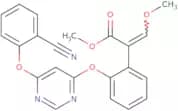
CAS:(Z)-Azoxystrobin is a strobilurin fungicide, which is a synthetic derivative of naturally occurring antifungal compounds produced by fungi such as *Strobilurus tenacellus*. Its mode of action involves the inhibition of mitochondrial respiration in target fungi, specifically by binding to the Qo site of the cytochrome bc1 complex. This disrupts electron transport in the mitochondria, leading to the cessation of ATP production and subsequent cell death.
Formula:C22H17N3O5Purity:Min. 95%Molecular weight:403.4 g/molRef: 3D-TFA13094
Discontinued productTelavancin
CAS:Telavancin is a lipoglycopeptide antibiotic, which is a semi-synthetic derivative of vancomycin. Its source is derived through modifications of the glycopeptide antibiotic, specifically aimed to enhance antibacterial activity. Telavancin functions by inhibiting cell wall synthesis in Gram-positive bacteria, including methicillin-resistant Staphylococcus aureus (MRSA). It does this by binding to the D-alanyl-D-alanine terminus of cell wall precursors, disrupting peptidoglycan polymerization and, consequently, cell wall integrity. Additionally, Telavancin increases membrane permeability and disrupts membrane potential, further enhancing its bactericidal activity.
Formula:C80H106Cl2N11O27PPurity:Min. 95%Molecular weight:1,755.64 g/molRef: 3D-AT58720
Discontinued product