Antimicrobials
Subcategories of "Antimicrobials"
- Antibiotics(4,133 products)
- Antifungals(888 products)
- Antiparasitics(692 products)
- Antivirals(765 products)
Found 2436 products of "Antimicrobials"
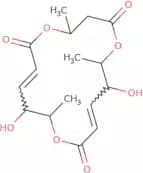
Macrosphelide A
CAS:Macrosphelide A is a bioactive macrocyclic lactone, which is a secondary metabolite derived from the culture of certain fungal species. It functions primarily through the disruption of cell adhesion processes, which is facilitated by its ability to interfere with the function of specific cell surface receptors. This mode of action underlies its potential as an immunosuppressive agent, where it can inhibit the activities of immune cells by altering cellular communication and adhesion.
Formula:C16H22O8Purity:Min. 95%Molecular weight:342.34 g/molRef: 3D-XGA92377
Discontinued productCoronarin D ethyl ether
CAS:Coronarin D ethyl ether is a diterpenoid compound, which is derived from the plant Hedychium coronarium, also known as white ginger lily. This compound belongs to a class of naturally occurring chemicals with complex polycyclic structures. The source of Coronarin D ethyl ether is the rhizome of Hedychium coronarium, which is part of the Zingiberaceae family. These plants are often studied for their bioactive properties and potential therapeutic applications.
Formula:C22H34O3Purity:Min. 95%Molecular weight:346.5 g/molRef: 3D-NFA96589
Discontinued productTuberculosis inhibitor 3
CAS:Tuberculosis inhibitor 3 is a synthesized chemical compound designed to target the Mycobacterium tuberculosis bacterium, which is the causative agent of tuberculosis. This inhibitor is derived through advanced chemical synthesis techniques, involving the modification of specific molecular structures to enhance its binding affinity and specificity toward the bacterial cellular targets.
Formula:C21H22F6N4O3SPurity:Min. 95%Molecular weight:524.5 g/molRef: 3D-UND32528
Discontinued productMetolachlor mercapturate
CAS:Metolachlor mercapturate is a metabolite of the herbicide Metolachlor, which is derived from the degradation of the primary active ingredient found in various agricultural herbicide formulations. It is formed through biotransformation processes in plants, soil, and water, where the parent compound undergoes enzymatic reactions leading to its metabolic products. The primary mode of action involves the inhibition of elongase enzymes, which are crucial for the synthesis of fatty acids in plants, thus preventing cell division and impacting weed growth effectively.
Formula:C20H30N2O5SPurity:Min. 95%Molecular weight:410.5 g/molRef: 3D-JGA95664
Discontinued productDioxohongdenafil
CAS:Dioxohongdenafil is a synthetic compound, which is a type of pharmaceutical analog. It is derived from sildenafil, a well-known phosphodiesterase type 5 (PDE5) inhibitor, originally conceptualized through chemical modification of the parent compound. The mode of action of Dioxohongdenafil involves competitive inhibition of the PDE5 enzyme, leading to an increase in cyclic guanosine monophosphate (cGMP) levels. This biochemical alteration results in vasodilation and increased blood flow, mimicking the therapeutic mechanism observed in sildenafil.
Formula:C25H30N6O5Purity:Min. 95%Molecular weight:494.5 g/molRef: 3D-JPC40533
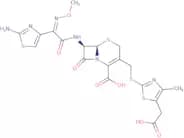
Discontinued productCefodizime
CAS:Cefodizime is a third-generation cephalosporin antibiotic, which is derived from the fungus Acremonium. It exerts its bactericidal effects by inhibiting bacterial cell wall synthesis. This action is achieved through binding to penicillin-binding proteins (PBPs), leading to the interruption of peptidoglycan cross-linking essential for the bacterial cell wall integrity. The breakdown of cell wall synthesis results in the lysis and death of the bacterial cell.
Purity:Min. 95%Ref: 3D-FC35157
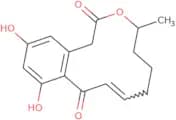
Discontinued product10, 11-Dehydrocurvularin
CAS:10, 11-Dehydrocurvularin is a fungal phytotoxin with heat shock response and immune-modulatory activitie. Curvularins inhibit the expression of the inducible nitric oxide synthase (iNOS), thereby acting as anti-inflammatory agents and immune system modulators
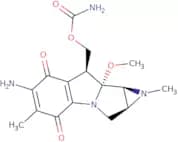
Purity:Min. 95%Color and Shape:PowderPorfiromycin
CAS:Porfiromycin is an antineoplastic antibiotic with action on DNA alkylation and cross-linking and is used for research on cancer treatment, particularly for hypoxic tumors.
Formula:C16H20N4O5Purity:Min. 95 Area-%Color and Shape:PowderMolecular weight:348.35 g/molRef: 3D-AP27106
Discontinued productUrdamycin B
CAS:Urdamycin B is an anthracycline antibiotic, which is derived from the bacterium *Streptomyces fradiae*. This compound acts by intercalating into DNA, disrupting the replication and transcription processes, leading to cell death. Its mode of action involves inhibiting topoisomerase II, an enzyme critical for DNA replication and cell cycle progression. This mechanism impairs cellular proliferation, making it effective against rapidly dividing cells.
Formula:C37H44O13Purity:Min. 95%Molecular weight:696.70 g/molRef: 3D-EEA54246
Discontinued productCarbovir monophosphate
CAS:Carbovir monophosphate is an antiviral agent, which is a metabolite derived from the prodrug abacavir. It functions as a nucleotide analog that interferes with viral replication. The source of Carbovir monophosphate is the metabolic conversion of abacavir, an antiretroviral medication used in the treatment of HIV. This conversion occurs primarily in the liver, facilitated by cellular enzymes.
Formula:C11H14N5O5PPurity:Min. 95%Molecular weight:327.23 g/molRef: 3D-UFA49073
Discontinued productLoracarbef monohydrate
CAS:Loracarbef monohydrate is a synthetic antibiotic, which is derived from carbacephem compounds with a mode of action that involves inhibiting bacterial cell wall synthesis. This is achieved by binding to penicillin-binding proteins, thereby blocking the cross-linking of peptidoglycan chains which are crucial for bacterial cell wall structural integrity.
Formula:C16H16ClN3O4·H2OPurity:Min. 95%Molecular weight:367.78 g/mol2-Sec-butyl-1-(decyloxy)-4-tritylbenzene
CAS:2-Sec-butyl-1-(decyloxy)-4-tritylbenzene is a synthetic organic compound, typically utilized in chemical research and development. It is sourced through a series of organic synthesis reactions, involving alkylation, etherification, and aromatic substitution, primarily in a controlled laboratory environment.
Formula:C39H48OPurity:Min. 95%Molecular weight:532.8 g/molRef: 3D-EGC19037
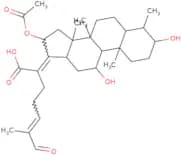
Discontinued product26-Oxofusidic acid
CAS:26-Oxofusidic acid is a derivative of fusidic acid, which is a potent antibacterial compound originally isolated from the fungus Fusidium coccineum. This compound exhibits a unique mode of action by inhibiting bacterial protein synthesis through interference with the elongation factor G (EF-G), a critical component in the translocation step of translation. By targeting this specific aspect of bacterial metabolism, 26-Oxofusidic acid effectively disrupts the growth of gram-positive bacteria, making it an invaluable tool in combating resistant bacterial strains.
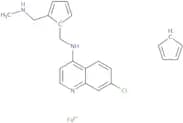
Formula:C31H46O7Purity:Min. 95%Molecular weight:530.69 g/molDesmethyl ferroquine
CAS:Desmethyl ferroquine is an antimalarial compound, which is a derivative of ferroquine. It is synthesized through chemical modification processes, specifically designed to enhance its pharmacokinetic and pharmacodynamic properties. This compound exhibits its mode of action by compromising the integrity of the Plasmodium parasite's digestive vacuole. By doing so, it disrupts heme detoxification, which is crucial for the parasite’s survival within red blood cells.
Formula:C22H22ClFeN3Purity:Min. 95%Molecular weight:419.7 g/molRef: 3D-DLB54618
Discontinued product(R)-Ambrisentan
CAS:(R)-Ambrisentan is an endothelin receptor antagonist, which is a pharmacological agent derived synthetically to target and inhibit specific cellular pathways. It is primarily utilized in the treatment of pulmonary arterial hypertension (PAH), where it plays a crucial role in modulating vascular function. The mode of action of (R)-Ambrisentan involves selective antagonism of the endothelin type A (ETA) receptors, which are responsible for vasoconstriction and proliferation of vascular smooth muscle cells. By blocking these receptors, it mitigates the effects of endothelin, a potent vasoconstrictor, thus reducing blood pressure and improving blood flow in pulmonary arteries.
Formula:C22H22N2O4Purity:Min. 95%Molecular weight:378.40 g/molRef: 3D-HQB35876
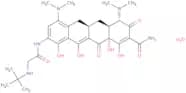
Discontinued productTigecycline hydrate
CAS:Inhibitor of protein synthesis; glycylcycline class
Formula:C29H39N5O8Purity:Min. 95%Molecular weight:585.65 g/molRef: 3D-FT162672
Discontinued productVebufloxacin
CAS:Vebufloxacin is an antibacterial agent, which is synthesized as a member of the fluoroquinolone class of antibiotics. This compound is derived from chemical synthesis, specifically designed to target and inhibit bacterial DNA gyrase and topoisomerase IV. These enzymes play crucial roles in DNA replication and transcription, making them ideal targets for disrupting bacterial cell function.
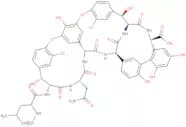
Formula:C19H22FN3O3Purity:Min. 95%Molecular weight:359.4 g/molVancomycin aglycon
CAS:Vancomycin aglycon is a glycopeptide antibiotic, which is a derivative of vancomycin. It is sourced from the fermentation products of certain Amycolatopsis species, a genus of actinobacteria. The mode of action of vancomycin aglycon involves the inhibition of bacterial cell wall synthesis. It specifically binds to the D-Ala-D-Ala terminus of nascent peptidoglycan chains, thereby preventing the cross-linking that is crucial for maintaining cell wall integrity.
Formula:C53H52Cl2N8O17Purity:Min. 95%Molecular weight:1,143.93 g/molOfloxacin methyl ester
CAS:Ofloxacin methyl ester is a chemical compound, which is a derivative utilized in scientific research, particularly in the synthesis of ofloxacin-related compounds. It is a synthetic ester, derived from chemical synthesis involving ofloxacin, a fluoroquinolone antibiotic. The mode of action of ofloxacin methyl ester is based on its role as an intermediate compound. It facilitates the creation of active forms or analogs that can be tested for their pharmacological properties. Although not directly used as a therapeutic agent, it plays a crucial role in the development and modification of molecules for antibacterial applications.
Formula:C19H22FN3O4Purity:Min. 95%Molecular weight:375.4 g/molRef: 3D-IEA22482
Discontinued productPolymyxin B nonapeptide hydrochloride
CAS:Polymyxin B nonapeptide hydrochloride is a potent antibiotic compound derived from the bacterium *Bacillus polymyxa*. As a cationic polypeptide, it exhibits its antibacterial activity by interacting with the lipopolysaccharides and phospholipids in the bacterial cell membrane, leading to increased permeability and ultimately causing cell lysis. The compound is specifically effective against a broad range of Gram-negative bacteria, making it crucial in studying antibiotic resistance mechanisms.
Formula:C43H74N14O11•(HCl)xPurity:Min. 95%Molecular weight:963.14 g/molRef: 3D-AP182838
Discontinued product