Antiparasitics
Antiparasitics are compounds designed to treat and prevent parasitic infections by inhibiting the growth and survival of parasites. This category includes a range of antiparasitic agents intended exclusively for laboratory use and not for human consumption. These products are essential for research purposes, allowing scientists to study parasitic life cycles, mechanisms of action, and the development of resistance. The use of antiparasitics in laboratory settings aids in the discovery and optimization of new treatments for parasitic diseases, contributing to advancements in medical and veterinary parasitology. Researchers rely on these products to enhance their understanding of parasitic infections and to develop more effective therapies.
Found 704 products of "Antiparasitics"
Sort by
Purity (%)
0
100
|
0
|
50
|
90
|
95
|
100
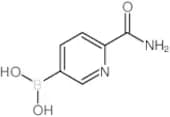
6-(Aminocarbonyl)pyridine-3-boronic Acid
CAS:Controlled Product<p>Applications 6-(Aminocarbonyl)pyridine-3-boronic Acid is a reagent in the identification of highly potent compounds against human malaria parasite Plasmodium falciparum.<br>References Le Manach, C., et al.: J. Med. Chem., 59, 9890-9905 (2016);<br></p>Formula:C6H7BN2O3Color and Shape:NeatMolecular weight:165.941-Undecyne
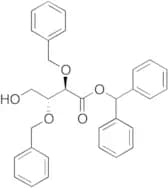
CAS:Controlled Product<p>Applications 1-Undecyne is a reagent used in organic chemical synthesis. Used in the synthesis of antimalarial and antitrypanosomal agents.<br>References Wube, A. et al.: Molecule, 19, 14204 (2014); Sun, S. et al.: Chin. Chem. Polym. Sci., 33, 184 (2015);<br></p>Formula:C11H20Color and Shape:NeatMolecular weight:152.28(2R,3R)-Benzhydryl 2,3-bis(benzyloxy)-4-hydroxybutanoate
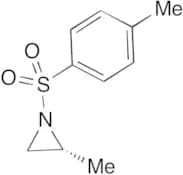
Controlled Product<p>Applications (2R,3R)-Benzhydryl 2,3-bis(benzyloxy)-4-hydroxybutanoate is an intermediate in synthesizing 4-Phospho D-Erythronate (P355000), which is an intermediate in the synthesis of pyridoxal 5'-phosphate in some bacteria and an inhibitor of ribose 5-phosphate isomerase. Phosphorylated aldonic acids are strong inhibitors of 6-phosphogluconate dehydrogenase, and 4-phospho-D-erythronate (4PE) and 4-phospho-D-erythronohydroxamate are two of the strongest inhibitors of the Trypanosoma brucei enzyme.<br>References Tanaka, N., et al.: J. Mol. Biol., 324, 519 (2002); Fitzpatrick, T., et al.: Biochem. J., 407, 1 (2007); Kalliri, E., et al.: J. Bacteriol., 190, 3793 (2008)<br></p>Formula:C31H30O5Color and Shape:NeatMolecular weight:482.567(R)-2-Methyl-1-tosylaziridine
CAS:Controlled Product<p>Applications (R)-2-Methyl-1-tosylaziridine can be used to synthesize tetrahydropyridines, morpholines, chiral β-and γ-amino ethers, and (ent)-korupensamine D. Korupensamine D is a natural product that exhibits antimalarial properties.<br>References Ghorai, M. K., et al.: J. Org. Chem. 77, 3740 (2012); Pattenden, L. C., et al.: Org. Lett. 8, 3089 (2006); Hallock, Y. F., et al.: J. Nat. Prod. 60, 677 (1997)<br></p>Formula:C10H13NO2SColor and Shape:NeatMolecular weight:211.281-[4-(1H-Indol-3-Yl)Piperidino]Ethan-1-One
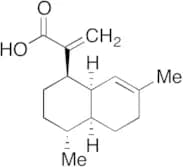
CAS:Controlled Product<p>Applications 1-[4-(1h-Indol-3-Yl)Piperidino]Ethan-1-One (cas# 30030-83-2) is a useful research chemical.<br></p>Formula:C15H18N2OColor and Shape:NeatMolecular weight:242.31Artemisic Acid
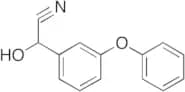
CAS:<p>Applications Artemisic Acid is a derivative of Artemisinin (A777500), an antimalarial constituent of the tradional Chinese medicinal herb Artemisia annua L., Compositae, which has been known for almost 2000 years as Qinghao. Antimalarial.<br>References Klayman, D.L., et al.: Science, 228, 1049 (1985), Price, R.N., et al.: Expert Opin. Invest. Drugs, 9, 1815 (2000), Meshnick, S.R., et al.: Int. J., Parasitol., 32, 1655 (2002),<br></p>Formula:C15H22O2Color and Shape:NeatMolecular weight:234.33α-Hydroxy-3-phenoxybenzeneacetonitrile (>90%)
CAS:Controlled ProductFormula:C14H11NO2Purity:>90%Color and Shape:NeatMolecular weight:225.24(E)-4-Hydroxycrotonoic Acid Ethyl Ester (~85%)
CAS:Controlled Product<p>Stability No Date Available<br>Applications (E)-4-Hydroxycrotonoic Acid Ethyl Ester is an intermediate in the preparation of unusual amino acids that are potential Michael acceptor based antiplasmodial and antitrypanosomal cysteine protease inhibitors.<br>References Breuning, A., et al.: J. Med. Chem., 53, 1951 (2010);<br></p>Formula:C6H10O3Purity:~85%Color and Shape:NeatMolecular weight:130.142-Acetamido-2-deoxy-4-O-(β-D-galactofuranosyl)-α,β-D-glucopyranose
CAS:Controlled Product<p>Applications Synthetic galactofuranose-containing oligosaccharides could be useful for the identification of strains of T. cruzi as well as for studies on the inhibition of the biosynthesis of these unique O-linked chains.<br>References Gallo-Rodriguez, C., et al.: J. Org. Chem., 61, 1886 (1996)<br></p>Formula:C14H25NO11Color and Shape:NeatMolecular weight:383.348N-Decylaminoethanol
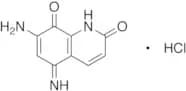
CAS:Controlled Product<p>Applications Used in the antileishmanial activity of lipidic amino alcohols.<br>References Coimbra, E.: Chem. Biol. Drug Des. 75, 233 (2010).<br></p>Formula:C12H27NOColor and Shape:NeatMolecular weight:201.357-Amino-1,5-dihydro-5-imino-2,8-quinolinedione Hydrochloride
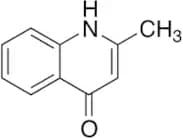
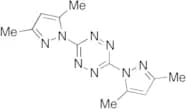
CAS:Controlled Product<p>Applications 7-Amino-1,5-dihydro-5-imino-2,8-quinolinedione is a quinoline derivative. The principle use of Quinoline is the preparation of 8-hydroxyquinoline (H953265), a versatile chelating agent and precursor to certain antimalarial and anticancer drugs.<br>References Pettit, G.R., et al.: J. Org. Chem., 33, 1089 (1968);<br></p>Formula:C9H8ClN3O2Color and Shape:NeatMolecular weight:225.633,6-Bis(3,5-dimethyl-1H-pyrazol-1-yl)-1,2,4,5-tetrazine
CAS:Controlled ProductFormula:C28H38O19Color and Shape:NeatMolecular weight:678.59p-Cyanoacetophenone
CAS:Controlled Product<p>Applications Used in the preparation of antimalarial isonitriles.<br>References Singh, C. et al.; Bioorgan. Med. Chem. Lett. 12, 2277 (2002)<br></p>Formula:C9H7NOColor and Shape:NeatMolecular weight:145.16Methyl 1-[[2-N-(5-Nitrothiazolyl)carboxamido]phenyl]-2,3,4- tri-O-acetyl-β-D-glucopyranuronate
CAS:Controlled Product<p>Applications An intermediate in the synthesis of the metabolite of Nitazoxanide.<br>References Honma, K., et al.: Chem. Pharm. Bull., 24, 394 (1976), Dubreuil, L., et al.: Antimicrob. Agents Chemother., 40, 2266 (1996), Stockis, A., et al.: Int. J. Clin. Pharmacol. Ther., 34, 349 (1996),<br></p>Formula:C23H23N3O13SColor and Shape:YellowMolecular weight:581.51Canthin-6-one
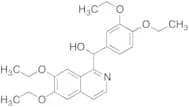
CAS:Controlled Product<p>Applications Canthin-6-one is used as an anticancer agent compromising cancer cells showing multi-drug resistance. Also used in the synthesis of β-carbolinium compounds as antimalarial agents.<br>References Murakami, C. et al.: Bioorg. Med. Chem., 12, 4963 (2004); Takasu, K. et al.: Chem. Pharm. Bull., 53, 653 (2005);<br></p>Formula:C14H8N2OColor and Shape:NeatMolecular weight:220.23α-(3,4-Diethoxyphenyl)-6,7-diethoxy-1-isoquinolinemethanol
CAS:Controlled Product<p>Applications α-(3,4-Diethoxyphenyl)-6,7-diethoxy-1-isoquinolinemethanol is an intermediate in synthesizing Ethaverine (E676700), which is an analogue of Papaverine (P190500), an antispasmodic. An isoquinoline derivative with the potential for antimicrobial, antimalarial and cytotoxic antiviral agents.<br>References Kaplan, D., et al.: Biochem. J., 201, 605 (1982), Hifnawy, M.S., et al.: Anal. Profiles Drug Subs., 17, 367 (1988); Iwasa, K. et al.: Bioorg. Med. Chem., 9, 2871 (2001);<br></p>Formula:C24H29NO5Color and Shape:NeatMolecular weight:411.491,2-Diamino-2-methyl Propane
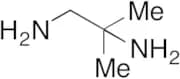
CAS:Controlled Product<p>Applications 1,2-Diamino-2-methyl Propane is a reactant used in the preparation of neocryptolepine analogs with antimalarial activity.<br>References Shaban, E., et. al.: Heterocycles, 89, 1055 (2014)<br></p>Formula:C4H12N2Color and Shape:NeatMolecular weight:88.15Ethaverine
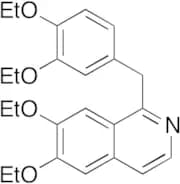
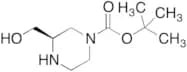
CAS:<p>Applications Ethaverine is an analogue of Papaverine (P190500), an antispasmodic. An isoquinoline derivative with the potential for antimicrobial, antimalarial and cytotoxic antiviral agents.<br>References Kaplan, D., et al.: Biochem. J., 201, 605 (1982), Hifnawy, M.S., et al.: Anal. Profiles Drug Subs., 17, 367 (1988); Iwasa, K. et al.: Bioorg. Med. Chem., 9, 2871 (2001);<br></p>Formula:C24H29NO4Color and Shape:NeatMolecular weight:395.49(R)-1-Boc-3-hydroxymethylpiperazine
CAS:Controlled ProductFormula:C10H20N2O3Color and Shape:NeatMolecular weight:216.28


![1-[4-(1H-Indol-3-Yl)Piperidino]Ethan-1-One](/_next/image/?url=https%3A%2Fstatic.cymitquimica.com%2Fproducts%2FTR%2Fthumb-webp%2FI655845.webp&w=3840&q=75)




![Methyl 1-[[2-N-(5-Nitrothiazolyl)carboxamido]phenyl]-2,3,4- tri-O-acetyl-β-D-glucopyranuronate](/_next/image/?url=https%3A%2Fstatic.cymitquimica.com%2Fproducts%2FTR%2Fthumb-webp%2FM325820.webp&w=3840&q=75)