Antiparasitics
Antiparasitics are compounds designed to treat and prevent parasitic infections by inhibiting the growth and survival of parasites. This category includes a range of antiparasitic agents intended exclusively for laboratory use and not for human consumption. These products are essential for research purposes, allowing scientists to study parasitic life cycles, mechanisms of action, and the development of resistance. The use of antiparasitics in laboratory settings aids in the discovery and optimization of new treatments for parasitic diseases, contributing to advancements in medical and veterinary parasitology. Researchers rely on these products to enhance their understanding of parasitic infections and to develop more effective therapies.
Found 704 products of "Antiparasitics"
Sort by
Purity (%)
0
100
|
0
|
50
|
90
|
95
|
100
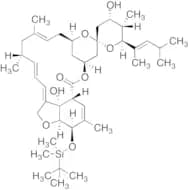
23-Des(methoxyimino)-23-hydroxy Moxidectin O-TBS
CAS:Controlled ProductFormula:C42H66O8SiColor and Shape:NeatMolecular weight:727.05Canthin-6-one
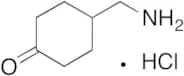
CAS:Controlled Product<p>Applications Canthin-6-one is used as an anticancer agent compromising cancer cells showing multi-drug resistance. Also used in the synthesis of β-carbolinium compounds as antimalarial agents.<br>References Murakami, C. et al.: Bioorg. Med. Chem., 12, 4963 (2004); Takasu, K. et al.: Chem. Pharm. Bull., 53, 653 (2005);<br></p>Formula:C14H8N2OColor and Shape:NeatMolecular weight:220.234-(Aminomethyl)-cyclohexanone Hydrochloride
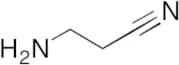
CAS:Controlled Product<p>Applications 4-(Aminomethyl)-cyclohexanone Hydrochloride is used to prepare dispiro-1,2,4-trioxolanes with antimalarial activities. It is also used to synthesize aminopyrimidines as SYK inhibitors useful in the treatment of SYK-mediated diseases.<br>References Tang, Y., et al.: Bioorg. Med. Chem. Lett., 17, 1260 (2007); Altman, M., et al.: PCT Int. Appl. (2011), WO 2011075515 A1 20110623<br></p>Formula:C7H13NO·HClColor and Shape:NeatMolecular weight:127.18 + 36.463-Aminopropionitrile (Stabilized with K2CO3)
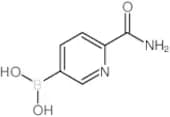
CAS:Controlled ProductFormula:C3H6N2Color and Shape:NeatMolecular weight:70.096-(Aminocarbonyl)pyridine-3-boronic Acid
CAS:Controlled Product<p>Applications 6-(Aminocarbonyl)pyridine-3-boronic Acid is a reagent in the identification of highly potent compounds against human malaria parasite Plasmodium falciparum.<br>References Le Manach, C., et al.: J. Med. Chem., 59, 9890-9905 (2016);<br></p>Formula:C6H7BN2O3Color and Shape:NeatMolecular weight:165.94Methyl 1-[[2-N-(5-Nitrothiazolyl)carboxamido]phenyl]-2,3,4- tri-O-acetyl-β-D-glucopyranuronate
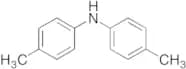
CAS:Controlled Product<p>Applications An intermediate in the synthesis of the metabolite of Nitazoxanide.<br>References Honma, K., et al.: Chem. Pharm. Bull., 24, 394 (1976), Dubreuil, L., et al.: Antimicrob. Agents Chemother., 40, 2266 (1996), Stockis, A., et al.: Int. J. Clin. Pharmacol. Ther., 34, 349 (1996),<br></p>Formula:C23H23N3O13SColor and Shape:YellowMolecular weight:581.514,4'-Dimethyldiphenylamine
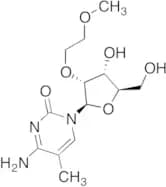
CAS:Controlled Product<p>Applications 4,4'-Dimethyldiphenylamine is a reagent used in the comparative studies of the analgesic and anti-inflammatory properties of N-phenylanthranilic acids and mefenamic acid, and the anti parasitic activities of some substituted diphenylamines.<br>References Izard-Verchere, C., et al.: Chimica Therapeutica, 6, 346 (1971)<br></p>Formula:C14H15NColor and Shape:NeatMolecular weight:197.282'-O-(2-Methoxyethyl)-5-methylcytidine (~90%)
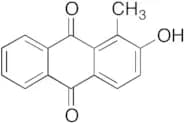
CAS:Controlled ProductFormula:C13H21N3O6Purity:~90%Color and Shape:NeatMolecular weight:315.322-Hydroxy-1-methyl-9,10-anthracenedione
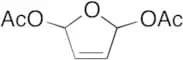
CAS:Controlled ProductFormula:C15H10O3Color and Shape:NeatMolecular weight:238.242,5-Diacetoxy-2,5-dihydrofuran (Mixture of Isomers) (>90%)
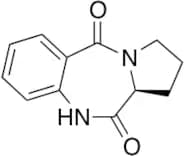
CAS:Controlled Product<p>Applications 2,5-Diacetoxy-2,5-dihydrofuran is used as a reagent to synthesize Mexicanin H, a biologically active sesquiterpene lactone that exhibits antiparasitic activity against Trypanosoma cruzi (a parasite that causes Chagas disease)<br>References Jimenez-Ortiz, V., et al.: Parasitology, 91, 170 (2005); Romo, J., et al.: Tetrahedron Lett., No vol. given, 1029 (1966)<br></p>Formula:C8H10O5Purity:>90%Color and Shape:NeatMolecular weight:186.16PBD-5,11-dione
CAS:Controlled Product<p>Applications PBD-5,11-dione (cas# 18877-34-4) is a useful research chemical.<br></p>Formula:C12H12N2O2Color and Shape:NeatMolecular weight:216.243-[(Dimethylamino)methyl]-2-hexanone
CAS:Controlled ProductFormula:C9H19NOColor and Shape:ColourlessMolecular weight:157.25(E)-4-Hydroxycrotonoic Acid Ethyl Ester (~85%)
CAS:Controlled Product<p>Stability No Date Available<br>Applications (E)-4-Hydroxycrotonoic Acid Ethyl Ester is an intermediate in the preparation of unusual amino acids that are potential Michael acceptor based antiplasmodial and antitrypanosomal cysteine protease inhibitors.<br>References Breuning, A., et al.: J. Med. Chem., 53, 1951 (2010);<br></p>Formula:C6H10O3Purity:~85%Color and Shape:NeatMolecular weight:130.14Benzenebutanoic Acid Ethyl Ester
CAS:Controlled Product<p>Applications Benzenebutanoic Acid Ethyl Ester is used in the synthesis of thiazolium salts with potent antimalarial activity. Also used in the preparation of novel lactate dehydrogenase A inhibitors. This compound is suitable for lactate dehydrogenase (LDH) related research.<br>References Hamze, A. et al.: J. Med. Chem., 48, 3639 (2005); Ward, R. et al.: J. Med. Chem., 55, 3285 (2012);<br></p>Formula:C12H16O2Color and Shape:NeatMolecular weight:192.25Diethyl Isobutylmalonate
CAS:Controlled Product<p>Applications Diethyl Isobutylmalonate is used as a reagent in the synthesis of quinoline-based zinc metallo-aminopeptidase inhibitors which have antimalarial activity.<br>References Flipo, M., et al.: Bioorg. Med. Chem. Lett., 13, 2659 (2003)<br></p>Formula:C11H20O4Color and Shape:NeatMolecular weight:216.27Oxfendazole
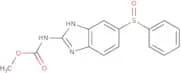
CAS:<p>Oxfendazole is a benzimidazole anthelmintic with action on microtubule formation in parasitic worms and is used for treating gastrointestinal parasites in livestock.</p>Formula:C15H13N3O3SPurity:Min. 98 Area-%Color and Shape:White PowderMolecular weight:315.35 g/molHalofuginone
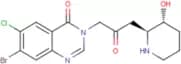
CAS:<p>Halofuginone (RU-19110) inhibits prolyl-tRNA synthetase (Ki=18.3 nM), down-regulates Smad3, and blocks TGF-β at 10 ng/ml.</p>Formula:C16H17BrClN3O3Purity:99.53%Color and Shape:Off-White SolidMolecular weight:414.68Satranidazole
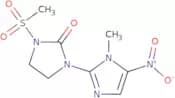
CAS:<p>Satranidazole is an antimicrobial agent that falls under the category of synthetic nitroimidazoles. It is derived from chemical synthesis and is designed to combat infections caused by specific organisms. The mode of action involves the reduction of the nitro group within the organism, creating reactive intermediates that disrupt DNA synthesis and lead to cell death. This mode of action is notably effective against protozoal infections and anaerobic bacterial infections.</p>Formula:C8H11N5O5SPurity:Min. 95%Molecular weight:289.27 g/molTizoxanide - 98%
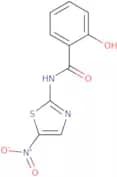
CAS:<p>Anti-parasitic; pyruvate ferredoxin oxidoreductase inhibitor</p>Formula:C10H7N3O4SPurity:Min. 95%Molecular weight:265.01573


![Methyl 1-[[2-N-(5-Nitrothiazolyl)carboxamido]phenyl]-2,3,4- tri-O-acetyl-β-D-glucopyranuronate](/_next/image/?url=https%3A%2Fstatic.cymitquimica.com%2Fproducts%2FTR%2Fthumb-webp%2FM325820.webp&w=3840&q=75)
![3-[(Dimethylamino)methyl]-2-hexanone](/_next/image/?url=https%3A%2Fstatic.cymitquimica.com%2Fproducts%2FTR%2Fthumb-webp%2FD462285.webp&w=3840&q=75)