Steroids
Subcategories of "Steroids"
Found 1696 products of "Steroids"
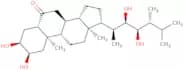
Brassinolide
CAS:Plant hormoneFormula:C28H48O6Purity:Min. 95 Area-%Color and Shape:White PowderMolecular weight:480.68 g/molHyodeoxycholic Acid
CAS:Formula:C24H40O4Purity:>98.0%(T)Color and Shape:White to Orange to Green powder to crystalMolecular weight:392.58Halcinonide
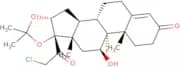
CAS:Halcinonide is a potent topical corticosteroid, which is a synthetically derived compound from hydrocortisone. It operates by penetrating the cell membranes and binding to cytoplasmic receptors, leading to a subsequent translocation to the nucleus where it modulates genetic expression. This action results in diminished synthesis of pro-inflammatory cytokines, thereby exerting strong anti-inflammatory, antipruritic, and vasoconstrictive effects.
Formula:C24H32ClFO5Purity:Min. 95%Color and Shape:PowderMolecular weight:454.96 g/molTomatine from Tomato
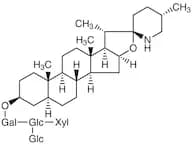
CAS:Formula:C50H83NO21Purity:>80.0%(HPLC)Color and Shape:White to Yellow to Orange powder to crystalMolecular weight:1,034.20Gestrinone
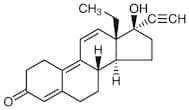
CAS:Formula:C21H24O2Purity:>98.0%(T)Color and Shape:Light yellow to Yellow powder to crystalMolecular weight:308.42Lanosterol - 90%
CAS:Controlled ProductLanosterol - 90% is a sterol compound, which is a biochemical precursor to steroids. It is derived from various animal and plant sources, typically synthesized through the enzymatic conversion of squalene. Lanosterol functions through a significant role in the biosynthetic pathway of cholesterol and other essential sterols. This involves the cyclization process, where lanosterol is metabolized into cholesterol through a series of reactions catalyzed by specific enzymes.Formula:C30H50OPurity:Min. 95%Color and Shape:White Off-White PowderMolecular weight:426.72 g/molMedroxyprogesterone
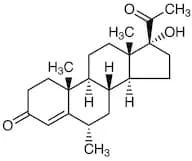
CAS:Formula:C22H32O3Purity:>98.0%(HPLC)Color and Shape:White to Almost white powder to crystalMolecular weight:344.508'-Hydroxyformononetin
CAS:8'-Hydroxyformononetin is a phytoestrogen compound, which is derived from plant sources, particularly from legumes, including red clover and soy. As a naturally occurring isoflavone, it falls within the class of flavonoids, a group of polyphenolic compounds with varied biological activities. Its mode of action primarily involves binding to estrogen receptors, where it can mimic or modulate the action of estrogen in the body. This interaction can result in either estrogenic or anti-estrogenic effects, depending on the presence of endogenous estrogen and other factors within the target tissues.Formula:C16H12O5Purity:Min. 95%Molecular weight:284.26 g/molGinsenoside Rd
CAS:Formula:C48H82O18Purity:>98.0%(HPLC)Color and Shape:White to Almost white powder to crystalMolecular weight:947.1724-epi-castasterone
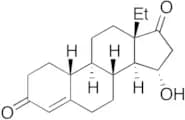
CAS:Controlled Product24-epi-Castasterone is a brassinosteroid, which is a class of plant steroids, often extracted from various plant tissues synthesized in small quantities. This compound is primarily derived from plant sources such as seeds, pollen, and young vegetative tissues. It functions by binding to specific receptor kinases on plant cell membranes, thereby initiating a cascade of intracellular signaling that regulates gene expression. These pathways are crucial for the modulation of plant growth and development processes.Formula:C28H48O5Purity:Min. 95%Molecular weight:464.68 g/mol15Alpha-Hydroxy-13Beta-ethyl-4-gonene-3,17-dione
CAS:Controlled ProductFormula:C19H26O3Color and Shape:NeatMolecular weight:302.41(5α)-Androstane-3,6,17-trione
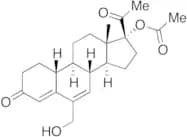
CAS:Controlled ProductFormula:C19H26O3Color and Shape:NeatMolecular weight:302.40817α-Acetoxy-6-hydroxymethyl-3,20-dioxo-19-nor-pregna-4,6-diene
CAS:Controlled ProductFormula:C23H30O5Color and Shape:NeatMolecular weight:674.9476α-Hydroxy-21-desacetyl Deflazacort
CAS:Controlled ProductApplications The minor metabolite of Deflazacort.
References Bernareggi, A., et al.: J. Pharma. Biomed. Anal., 5, 177-81 (1987), Assandri, A., et al.: Xenobiotica, 13(3), 185 (1983), Martinelli, E., et al.: Drug Metab. Dispos., 7, 335 (1979),Formula:C23H29NO6Color and Shape:NeatMolecular weight:415.4810β-Hydroperoxy Norethindrone Acetate
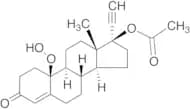
CAS:Controlled ProductApplications 10β-Hydroperoxy Norethindrone Acetate is a derivative of Norethindrone (N676000), a progesterone in combination with acetate used as an oral contraceptive (1,2). It is reasonably anticipated to be a human carcinogen.
References 1. Shroff, A. et al.: Anal. Profiles Drug Subst. 1975 ; 4;268-293;Formula:C9H22SiColor and Shape:NeatMolecular weight:158.35716β-Hydroxy Stanozolol (1 mg/ml in Methanol)
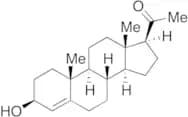
CAS:Controlled ProductFormula:C21H32N2O2Color and Shape:ColourlessMolecular weight:344.493β-Hydroxy Progesterone
CAS:Controlled ProductApplications 3β-Hydroxy Progesterone is a biotransformation product of Progesterone (P755900), by Chlorella spp. Progesterone is a steroid hormone produced by the corpus luteum. Induces maturation and secretory activity of the uterine endothelium; suppresses ovulation. Progesterone is implicated in the etiology of breast cancer
References Pollio, A., et al.: Phytochem., 42, 685 (1996); Anderson, E., et al.: Breast Cancer Res., 4, 197 (2002); Lanari, C., et al.: Breast Cancer Res., 4, 240 (2002); Albrecht, E.D., et al.: Front. Biosci., 8, 416 (2003); Qiu, M., et al.: J. Steroid Biochem. Mol. Biol., 85, 147 (2003);Formula:C21H32O2Color and Shape:NeatMolecular weight:316.4811,12-Dehydroxy-Betamethasone
CAS:Controlled ProductApplications 11,12-Dehydroxy-Betamethasone is an impurity of the steroid Betamethasone (B327000) which is a glucocorticoid used as an anti-inflammatory agent.
References Ferrante, M.G., et al.: Anal. Profiles Drug Subs., 6, 43 (1977), Li, A., et al.: Chem. Biol. Interact., 142, 7 (2002), Cruz-Monteagudo, M., et al.: Eur. J. Med. Chem., 40, 1030 (2005), Rothfuss, A., et al.: Chem. Res. Toxicol., 19, 1313 (2006),Formula:C22H27FO4Color and Shape:NeatMolecular weight:374.4466-α-Hydroxy Stanozolol (1.0mg/ml in Methanol)
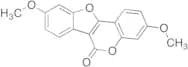
CAS:Controlled ProductFormula:C21H32N2O2Color and Shape:Single SolutionMolecular weight:344.49Coumestrol dimethyl ether
CAS:Controlled ProductFormula:C17H12O5Color and Shape:NeatMolecular weight:296.27