Terpenoids
Subcategories of "Terpenoids"
- Diterpenes (C₂₀)(671 products)
- Hemiterpenes (C₅)(21 products)
- Monoterpenes (C₁₀)(709 products)
- Sesquiterpenes (C₂₅)(452 products)
- Tetraterpenes (C₄₀)(63 products)
- Triterpenes (C₃₀)(1,128 products)
Found 1423 products of "Terpenoids"
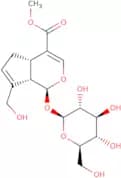
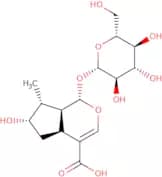
Geniposide
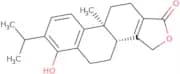
CAS:Geniposide is an iridoid glycoside compound, which is primarily sourced from the fruit of Gardenia jasminoides Ellis, a traditional medicinal plant. This compound is a significant component of various herbal preparations and plays a pivotal role in the plant's reputed therapeutic properties. Geniposide’s mode of action involves multiple biochemical pathways, notably including anti-inflammatory, antioxidant, and cholagogue effects. Its ability to influence these pathways allows it to modulate various physiological and pathological processes in the body.Formula:C17H24O10Purity:Min. 95 Area-%Color and Shape:White PowderMolecular weight:388.37 g/molTriptophenolide
CAS:Triptophenolide is a bioactive compound, which is a diterpenoid lactone extracted from the plant Tripterygium wilfordii. This compound is characterized by its ability to modulate various molecular targets and pathways associated with inflammation and immune response. The mode of action of triptophenolide involves the inhibition of nuclear factor kappa B (NF-κB) signaling, a pivotal transcription factor that regulates genes involved in inflammation, immunity, cell proliferation, and survival. By disrupting NF-κB activity, triptophenolide effectively decreases the expression of pro-inflammatory cytokines and other mediators.
Formula:C20H24O3Purity:Min. 95%Molecular weight:312.4 g/molAsiaticoside B
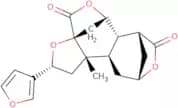
CAS:Asiaticoside B is a natural saponin compound, which is extracted from the plant Centella asiatica. This compound predominantly acts through modulating collagen synthesis and activating fibroblasts, which are crucial for wound healing. Additionally, Asiaticoside B exhibits anti-inflammatory properties by inhibiting pro-inflammatory cytokines, thereby reducing inflammation at the cellular level.Formula:C48H78O20Purity:Min. 95%Color and Shape:PowderMolecular weight:975.12 g/molDiosbulbin B
CAS:Diosbulbin B is a naturally occurring sesquiterpene lactone, which is derived primarily from the plant Dioscorea bulbifera, commonly known as "air potato" or "bitter yam." As a bioactive compound, Diosbulbin B demonstrates a mode of action that involves the induction of cytotoxicity in malignant cells, primarily through the disruption of microtubule dynamics, leading to cell cycle arrest and apoptosis.Formula:C19H20O6Purity:Min. 98 Area-%Color and Shape:PowderMolecular weight:344.36 g/molProsaikogenin A
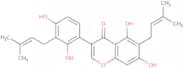
CAS:Prosaikogenin A is a bioactive compound that belongs to the category of ginsenosides, which are saponins derived from the roots of the Panax ginseng plant. This compound is recognized for its significant pharmacological properties, primarily sourced from this traditional medicinal herb used extensively in East Asian medicine.Formula:C36H57O7Purity:Min. 95%Color and Shape:PowderMolecular weight:601.83 g/mol2'-Hydroxylupalbigenin
CAS:2'-Hydroxylupalbigenin is a naturally occurring flavonoid, which is isolated from the plant species Lupinus. This compound is characterized by its hydroxylated structure, which contributes to its diverse bioactivities. Flavonoids, as a class of polyphenolic compounds, are well-known for their potential roles in plant defense and have significant pharmacological profiles.Formula:C25H26O6Purity:Min. 95%Molecular weight:422.47 g/molLoganic acid
CAS:Loganic acid is a natural iridoid glycoside, which is primarily derived from plants belonging to the Loganiaceae family, such as the genus Strychnos. As a bioactive compound, it plays a significant role in plant defense mechanisms and possesses potential therapeutic properties that are of great interest to the scientific community.Formula:C16H24O10Purity:Min. 95%Color and Shape:PowderMolecular weight:376.36 g/molSaikosaponin B2
CAS:Saikosaponin B2 is a naturally occurring triterpenoid saponin, which is a secondary metabolite primarily sourced from the roots of Bupleurum species. These plants are widely used in traditional Chinese medicine, valued for their diverse pharmacological activities. The mode of action of Saikosaponin B2 involves modulation of inflammatory pathways, specifically through the inhibition of pro-inflammatory cytokines and reduction of oxidative stress. It also exhibits potential in modulating immune responses and possesses hepatoprotective effects.Formula:C42H68O13Purity:Min. 95%Color and Shape:White Off-White PowderMolecular weight:780.98 g/molCantharidin
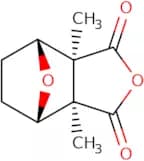
CAS:Natural toxin; protein phosphatase inhibitorFormula:C10H12O4Purity:Min. 98 Area-%Color and Shape:White/Off-White SolidMolecular weight:196.2 g/molSterebin A - Stevia rebaudiana
CAS:Sterebin A is a natural sweetener, which is derived from the plant Stevia rebaudiana, a species native to South America. The primary source of Sterebin A is the leaves of this plant, which contain glycosides such as stevioside and rebaudioside. These glycosides interact with taste receptors on the tongue, providing a sweetness that is significantly more intense than sucrose, without the caloric content. The biochemical mechanism involves the binding of these compounds to specific receptor sites, simulating the perception of sweetness in humans.Formula:C18H30O4Purity:90%MinColor and Shape:PowderMolecular weight:310.43 g/molBetulin diacetate
CAS:Betulin diacetate is a synthesized compound derived from betulin, a naturally occurring triterpenoid. Betulin is primarily sourced from the bark of birch trees, specifically Betula species. The compound undergoes acetylation to form betulin diacetate, which enhances its solubility and bioavailability compared to its precursor.Formula:C34H54O4Purity:Min. 95%Color and Shape:White Off-White PowderMolecular weight:526.79 g/molUrsolic acid - 90%
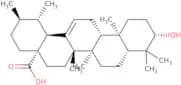
CAS:Controlled ProductUrsolic acid - 90% is a natural compound classified as a pentacyclic triterpenoid, which is derived predominantly from the waxy coating of apples, as well as other fruits and herbs such as rosemary and thyme. This highly concentrated form ensures a purity level suited for scientific research and application.Formula:C30H48O3Color and Shape:White Off-White PowderMolecular weight:456.7 g/molSantalol, alpha and beta isomers
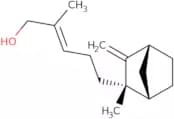
CAS:Santalol, alpha and beta isomers are terpenes that belong to the class of natural compounds. They are found in the essential oils of sandalwood tree (Santalum album) and have been shown to have various biological activities, including anti-skin cancer activity in vivo models. Santalol has been shown to inhibit the production of epidermal growth factor by human prostate cancer cells. This compound also has an effect on oral pathogens, such as Streptococcus mutans and Lactobacillus acidophilus, which may be due to its ability to bind with bacterial receptors.Formula:C15H24OPurity:(%) Min. 70%Color and Shape:Colorless Clear LiquidMolecular weight:220.35 g/mol(+)-Aromadendrene
CAS:(+)-Aromadendrene is a sesquiterpene, which is a type of hydrocarbon compound found in the essential oils of various plants, particularly those within the Myrtaceae family. This compound is primarily sourced from the leaves and branches of Eucalyptus species, where it contributes to the plant’s aromatic profile.
Formula:C15H24Purity:Min. 80 Area-%Color and Shape:Yellow Clear LiquidMolecular weight:204.35 g/molGinsenoside F11
CAS:Ginsenoside F11 is a saponin compound, which is a bioactive component derived from Panax quinquefolius, commonly known as American ginseng. This compound is extracted from the roots of the plant, where it naturally occurs as part of its complex phytochemical profile. Ginsenoside F11 acts through multiple biochemical pathways, primarily by modulating neurotransmitter systems and exhibiting antioxidant properties. It influences cellular mechanisms by interacting with specific receptors and enzymes, thereby affecting signal transduction processes.
Purity:Min. 95%(R)-(-)-Carvone
CAS:Applications (R)-(-)-Carvone, is an antinociceptive monoterpene found as the main active constituent of essential oils obtained from plants of the genus Mentha. It is a novel agonist of TRPV1 channels. It can also be used as a chiral starting material.
References Goncalves, J.C., et al.: Cytometry part A., 83(2), 212 (2013); Liebigs ann., Chem., 403 (1993);Formula:C10H14OColor and Shape:ColourlessMolecular weight:150.22Monoammonium Glycyrrhizinate
CAS:Formula:C42H65NO16Purity:>75.0%(HPLC)Color and Shape:White to Light yellow powder to crystalMolecular weight:839.97Lycopene
CAS:Formula:C40H56Purity:>85.0%(qNMR)Color and Shape:Red to Dark red powder to crystalMolecular weight:536.89Ginsenoside Rd
CAS:Formula:C48H82O18Purity:>98.0%(HPLC)Color and Shape:White to Almost white powder to crystalMolecular weight:947.17Ginsenoside Rb1 - 94%
CAS:Ginsenoside Rb1 - 94% is a bioactive compound, which is a major ginsenoside found in Panax ginseng, a plant species with a long history of medicinal use. It is extracted through meticulous processes to ensure high purity, focusing on the retention of its bioactive properties.Formula:C54H92O23Purity:Min. 95%Color and Shape:PowderMolecular weight:1,109.29 g/mol