Phenylpropanoids
Subcategories of "Phenylpropanoids"
Found 1293 products of "Phenylpropanoids"
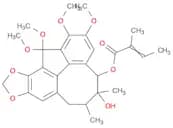
2-BUTENOIC ACID, 2-METHYL-, (5S,6S,7S,13AS)-5,6,7,8-TETRAHYDRO-6-HYDROXY-1,2,3,13-TETRAMETHOXY-6,7-DIMETHYLBENZO[3,4]CYCLOOCTA[1,2-F][1,3]BENZODIOXOL-5-YL ESTER, (2Z)-
CAS:Formula:C28H34O9Purity:98%Color and Shape:SolidMolecular weight:514.5642Ref: IN-DA00EBE3
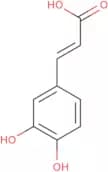
Discontinued productCaffeic acid - Natural
CAS:Caffeic acid is naturally produced by the metabolism of plants and fungi. Caffeic acid has an antioxidant activity that can be higher than tocopherol in oil-in-water emulsions. Caffeic acid has proven antimicrobial activity against Staphylococcus aureus. In mice, caffeic acid inhibits the enzyme 5-lipoxygenase thus inhibititing the biosynthesis of the inflammatory mediators leukotrienes.
Formula:C9H8O4Purity:Min. 95%Molecular weight:180.16 g/molNepetoidin B
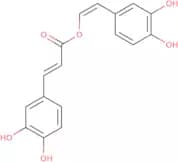
CAS:Nepetoidin B is a natural compound, specifically a type of iridoid, which is isolated from plants belonging to the Nepeta genus, commonly known as catmint or catnip. These plants are well-known for producing a variety of iridoid compounds that have ecological roles, especially in plant-insect interactions. Nepetoidin B acts primarily as a natural repellent and deterrent against various insect species. Its effectiveness stems from its ability to interfere with the sensory receptors of insects, altering their behavior and reducing their interaction with the plant.
Purity:Min. 95%Molecular weight:314.29 g/molRef: 3D-FN137333
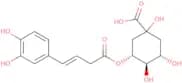
Discontinued productChlorogenic acid
CAS:Chlorogenic acid is a derivative of caffeic acid and quinic acid; it has an antioxidant activity. Chlorogenic acid has been combined with gadolinium to develop a therapeutic and diagnostic nanodelivery system for MRI imaging. In a rat model of diabetes mellitus, chlorogenic acid counteracted the alterations in lipid profiles typical of type-2 diabetes, especially when administered in combination with tetrahydrocurcumin. In mice fed with a high-fat diet, the consumption of chlorogenic acid resulted in an anti-obesity action that lowered the blood levels of cholesterol and triglycerides. In humans, it is readily absorbed in the intestinal tract.
Formula:C16H18O9Molecular weight:354.32 g/molCurcumin
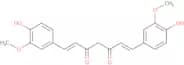
CAS:Antioxidant; anti-inflammatory; anti-cancer agent; HSP90 inhibitor
Formula:C21H20O6Purity:Min. 95 Area-%Color and Shape:Slightly Yellow PowderMolecular weight:368.39 g/mol4-Hydroxy-3-methoxycinnamaldehyde
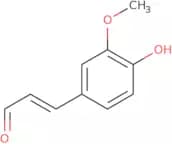
CAS:4-Hydroxy-3-methoxycinnamaldehyde is a phenolic aldehyde, which is commonly found as a major component of certain essential oils, such as those extracted from cinnamon bark. This compound is notable for its prominent role in biological and chemical processes, sourced chiefly from the bark of Cinnamomum species.
Formula:C10H10O3Purity:Min. 95%Color and Shape:PowderMolecular weight:178.18 g/molRef: 3D-FH74153
Discontinued productConiferyl alcohol
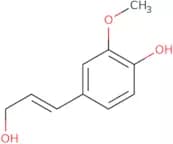
CAS:Coniferyl alcohol is a monolignol compound, which is a significant precursor in the biosynthesis of lignin, a major structural component of plant cell walls. It is primarily sourced from the metabolic pathways of various vascular plants, where it plays a crucial role in lignin polymerization. The mode of action involves its enzymatic conversion into lignin through oxidative coupling reactions catalyzed by peroxidases and laccases. This process contributes to the rigidity and impermeability of the plant cell walls, enhancing the plant's structural integrity and resistance to pathogens.
Formula:C10H12O3Purity:90%Color and Shape:White PowderMolecular weight:180.2 g/mol3,4-Dicaffeoylquinic acid
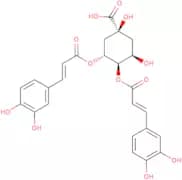
CAS:3,4-Dicaffeoylquinic acid is a naturally occurring polyphenolic compound, which is predominantly found in various plants and herbal sources such as artichokes, echinacea, and certain species of coffee. Its structure consists of quinic acid esterified with two caffeic acid moieties, making it a member of the chlorogenic acid family. This compound is well-recognized for its potent antioxidant properties, exerting its effects by scavenging free radicals and reducing oxidative stress within biological systems.
Formula:C25H24O12Purity:Min. 98 Area-%Color and Shape:PowderMolecular weight:516.45 g/molRef: 3D-FD40706
Discontinued productMalabaricone B
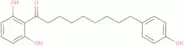
CAS:Malabaricone B is a bioactive compound, which is a phenolic compound sourced from the seeds of the Myristica malabarica plant, commonly known as Indian bay leaf. This compound exhibits significant pharmacological activity, particularly in its ability to inhibit various inflammatory mediators.
Formula:C21H26O4Purity:Min. 95%Color and Shape:White Off-White PowderMolecular weight:342.43 g/molRef: 3D-XM172957
Discontinued productPodophyllotoxone
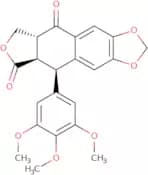
CAS:Podophyllotoxone is a potent antimitotic compound derived from the rhizomes and roots of the Podophyllum plant, predominantly Podophyllum peltatum and Podophyllum hexandrum. It functions primarily by binding to and destabilizing microtubules, which are essential components of the cell division process. This action hinders the polymerization of tubulin, effectively arresting cells in the metaphase of mitosis, leading to the inhibition of cellular proliferation.
Formula:C22H20O8Purity:Min. 95%Molecular weight:412.39 g/molCordifolioside A
CAS:Cordifolioside A is a bioactive compound, specifically a natural glycoside, which is isolated from the plant Tinospora cordifolia, commonly known as Guduchi. This plant is a significant source of various pharmacologically active constituents. Cordifolioside A functions primarily through immunomodulatory and antioxidant mechanisms, contributing to its therapeutic effects.
Formula:C22H32O13Purity:Min. 95%Molecular weight:504.50 g/molRef: 3D-FGA17920
Discontinued productCalceolarioside A
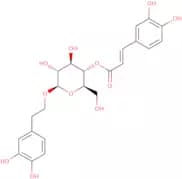
CAS:Calceolarioside A is a phenylethanoid glycoside, which is a biologically active compound obtained from natural plant sources, specifically from species within the Calceolaria family. This compound exhibits significant antioxidant activity, primarily through its ability to scavenge free radicals and inhibit oxidative stress. The mode of action involves the modulation of oxidative pathways, offering protective effects against cellular damage.
Formula:C23H26O11Purity:Min. 95%Color and Shape:PowderMolecular weight:478.4 g/molRef: 3D-XC180735
Discontinued productMethyl trans-p-coumarate 4-glucoside
CAS:Methyl trans-p-coumarate 4-glucoside is a chemical compound, which is a glucoside derivative sourced primarily from plant materials. It functions by modulating biochemical pathways related to oxidative stress and inflammation, as it may influence enzymatic activities and cellular signaling processes. This compound's glucoside linkage suggests it might undergo hydrolysis to release the active aglycon, facilitating its absorption and subsequent biological activity.
Formula:C16H20O8Purity:Min. 95%Color and Shape:PowderMolecular weight:340.33 g/molRef: 3D-FM166069
Discontinued product