Lignans
Lignans are a class of phenolic compounds found in plants, particularly in seeds, whole grains, and vegetables. They are known for their antioxidant and estrogenic properties, making them a focus of research in cancer prevention and cardiovascular health. Lignans are also involved in plant defense mechanisms and have potential therapeutic applications in hormone-related diseases and oxidative stress.
Found 295 products of "Lignans"
Sort by
Purity (%)
0
100
|
0
|
50
|
90
|
95
|
100
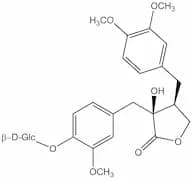
Tracheloside
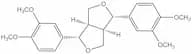
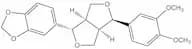
CAS:Natural glycosideFormula:C27H34O12Purity:≥ 95.0 % (HPLC)Color and Shape:PowderMolecular weight:550.56(+)-eudesmin
CAS:Oxygen-heterocyclic compoundFormula:C22H26O6Purity:≥ 98.0 % (HPLC)Color and Shape:PowderMolecular weight:386.44Schizandrin b
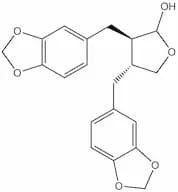
CAS:Ether phenolFormula:C23H28O6Purity:≥ 95.0 % (HPLC)Color and Shape:PowderMolecular weight:400.47Cubebin
CAS:Oxygen-heterocyclic compoundFormula:C20H20O6Purity:≥ 98.0 % (HPLC)Color and Shape:PowderMolecular weight:356.37Manassantin a
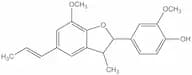
CAS:Compound with non-condensed furan ringFormula:C42H52O11Purity:≥ 98.0 % (HPLC)Color and Shape:PowderMolecular weight:732.87Dehydrodiisoeugenol
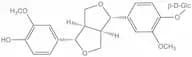
CAS:Oxygen-heterocyclic compoundFormula:C20H22O4Purity:≥ 95.0 % (HPLC)Molecular weight:326.39Pinoresinol 4-glucoside
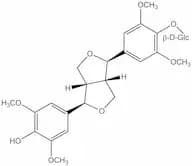
CAS:Natural glycosideFormula:C26H32O11Purity:≥ 95.0 % (HPLC)Color and Shape:PowderMolecular weight:520.53(-)-syringaresinol 4-o-β-d-glucoside
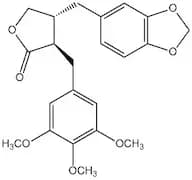
CAS:Natural glycosideFormula:C28H36O13Purity:≥ 98.0 % (HPLC)Color and Shape:PowderMolecular weight:580.58(-)-yatein
CAS:LactoneFormula:C22H24O7Purity:≥ 98.0 % (HPLC)Color and Shape:SirupMolecular weight:400.42Fargesin
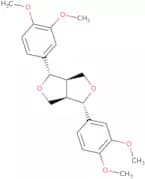
CAS:Oxygen-heterocyclic compoundFormula:C21H22O6Purity:≥ 98.0 % (HPLC)Color and Shape:PowderMolecular weight:370.4Pinoresinol dimethyl ether
CAS:Pinoresinol dimethyl ether is a lignan compound, which is a type of polyphenolic substance. It is naturally sourced from various plant materials, prominently found in seeds, bark, and roots of certain plant species. The compound exhibits significant antioxidant activity, which is attributed to its ability to scavenge free radicals and protect cells from oxidative stress.Formula:C22H26O6Purity:Min. 95%Color and Shape:PowderMolecular weight:386.44 g/mol(+)-Lariciresinol
CAS:(+)-Lariciresinol is a lignan, a type of polyphenolic compound, which is primarily derived from plant sources such as flaxseeds, sesame seeds, and whole grains. As a naturally occurring compound in these plants, it plays a role in their defense mechanisms against pathogens.
Formula:C20H24O6Purity:Min. 95 Area-%Color and Shape:White PowderMolecular weight:360.4 g/molArctiin
CAS:Arctiin is a lignan compound, which is a naturally occurring polyphenolic substance. It is extracted primarily from the seeds of plants in the Asteraceae family, such as Arctium lappa, commonly known as burdock. Arctiin acts as a bioactive compound that interacts with various biological pathways, exhibiting antioxidant, anti-inflammatory, and anti-carcinogenic properties.Formula:C27H34O11Purity:Min. 95%Color and Shape:PowderMolecular weight:534.55 g/molSyringaresinol-di-O-glucoside
CAS:Syringaresinol-di-O-glucoside is a lignan-derived glucoside, which is a naturally occurring compound found predominantly in the Syringa plant, part of the Oleaceae family. This compound is classified as a plant lignan glycoside, which is obtained through extraction from natural botanical sources, specifically those of the Syringa genus. Its mode of action primarily involves antioxidant activity, where it scours and neutralizes free radicals, protecting cellular structures from oxidative stress. This mechanism is vital in mitigating the damage caused by reactive oxygen species within biological systems.Formula:C34H46O18Purity:Min. 95%Color and Shape:PowderMolecular weight:742.72 g/mol(-)-Matairesinol
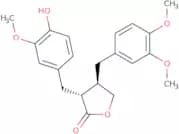
CAS:(-)-Matairesinol is a polyphenolic lignan compound, which is primarily sourced from various plants, including flaxseeds, sesame seeds, and whole grains. This compound belongs to a group of plant-derived molecules known as phytoestrogens, which exhibit structural similarity to estrogen hormones.Formula:C20H22O6Purity:Min. 95%Color and Shape:White PowderMolecular weight:358.39 g/molSalvadoraside
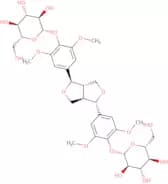
CAS:Salvadoraside is a glycosylated natural compound, which is derived from the plant Salvadora persica, commonly known as the toothbrush tree. This compound is primarily extracted from the stems and roots of the plant. Its mode of action involves a variety of biochemical pathways, including potential antioxidative, antimicrobial, and anti-inflammatory activities. Salvadoraside interacts with cellular pathways by modulating the expression of specific enzymes and receptors, offering promising avenues in medicinal chemistry.Formula:C34H48O18Purity:Min. 95 Area-%Color and Shape:PowderMolecular weight:744.73 g/mol(-)-Syringaresinol diglucoside
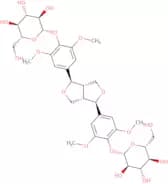
CAS:(-)-Syringaresinol diglucoside is a naturally occurring lignan glycoside, which is predominantly found in certain plant species, such as the roots of Eleutherococcus senticosus (Siberian ginseng) and other similar sources. This compound is categorized as a phytoestrogen due to its ability to elicit weak estrogenic activity by binding to estrogen receptors, which may influence various biological processes.Formula:C34H46O18Purity:Min. 95%Color and Shape:PowderMolecular weight:742.72 g/mol(+)-Syringaresinol, 98%
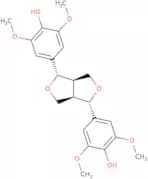
CAS:(+)-Syringaresinol, 98% is a lignan compound, which is a type of phenolic compound found in a variety of plant sources. It is primarily derived from the wood and bark of specific plant species, most notably those within the Syringa genus. The mode of action of (+)-Syringaresinol involves its function as an antioxidant, where it can scavenge free radicals and inhibit oxidative stress within biological systems.Formula:C22H26O8Purity:Min. 95%Color and Shape:White PowderMolecular weight:418.44 g/mol(-)-Arctigenin
CAS:(-)-Arctigenin is a natural lignan, which is an active compound isolated from plants such as Arctium lappa (greater burdock) and other members of the Asteraceae family. It acts via several biochemical pathways, notably by inhibiting cellular proliferation and inducing apoptosis in certain cancer cell lines. Additionally, (-)-Arctigenin can modulate immune responses and possesses anti-inflammatory and antiviral properties by interfering with viral replication processes.Formula:C21H24O6Purity:Min. 95%Color and Shape:White PowderMolecular weight:372.41 g/molSecoisolariciresinol diglucoside
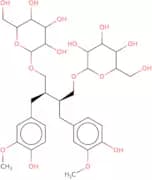
CAS:Secoisolariciresinol diglucoside is a plant lignan, which is primarily sourced from flaxseed. As a type of phytoestrogen, SDG is known for its antioxidant properties and ability to influence estrogen metabolism. The mode of action involves the conversion of SDG into mammalian lignans such as enterolactone and enterodiol by intestinal microflora, which then exhibit biological activity. These metabolites can bind to estrogen receptors, thereby exerting weak estrogenic or antiestrogenic effects depending on endogenous estrogen levels.Formula:C32H46O16Purity:Min. 95%Color and Shape:PowderMolecular weight:686.71 g/mol