Flavonoids
Flavonoids are a group of plant metabolites with antioxidant properties that contribute to the color of fruits and flowers. They play a significant role in protecting plants from UV radiation and pathogens. Flavonoids are studied for their potential health benefits, including anti-inflammatory, antiviral, and anticancer properties. They are widely researched in the fields of pharmacology, nutrition, and molecular biology.
Subcategories of "Flavonoids"
- Anthocyanidins(46 products)
- Anthocyanin(46 products)
- Catechin(88 products)
- Chalcones(237 products)
- Pterocarpan(28 products)
Found 2404 products of "Flavonoids"
Sort by
Purity (%)
0
100
|
0
|
50
|
90
|
95
|
100
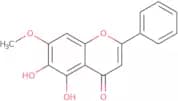
5,6-Dihydroxy-7-methoxyflavone
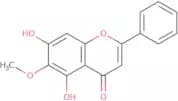
CAS:<p>5,6-Dihydroxy-7-methoxyflavone is a naturally occurring flavonoid compound, which is predominantly sourced from various plants, often found in the leaves, stems, or roots. This compound belongs to the broader class of flavonoids, which are known for their diverse biochemical activities. As a flavone derivative, its structure includes hydroxyl and methoxy functional groups that contribute to its biological activity.</p>Formula:C16H12O5Purity:Min. 95%Color and Shape:Yellow PowderMolecular weight:284.26 g/molTilianin
CAS:<p>Tilianin is a flavonoid glycoside, which is a natural compound derived from the plant **Dracocephalum moldavica**. It is primarily sourced from the leaves and flowers of this herbaceous plant, belonging to the Lamiaceae family. Tilianin exerts its effects through several biochemical pathways, most notably by inhibiting inflammatory mediators and modulating oxidative stress pathways. This mode of action suggests its potential as an anti-inflammatory and antioxidant agent.</p>Formula:C22H22O10Purity:Min. 98 Area-%Color and Shape:White Off-White PowderMolecular weight:446.4 g/molIriskashmirianin
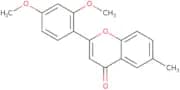
CAS:<p>Iriskashmirianin is a naturally occurring flavonoid derivative, which is isolated from specific plant sources. It belongs to the broader class of flavonoids, compounds known for their bioactive properties. The mode of action of Iriskashmirianin involves its interaction with cellular pathways, where it functions primarily as an antioxidant and anti-inflammatory agent. It neutralizes free radicals and modulates inflammatory responses by influencing various signaling pathways at the molecular level.</p>Formula:C18H14O7Purity:Min. 95%Molecular weight:342.3 g/mol2',4'-Dimethoxy-6-methylflavanol
CAS:<p>2',4'-Dimethoxy-6-methylflavanol is a specialized flavonoid compound, which is a type of secondary metabolite primarily found in various plants. These compounds are often extracted from plants recognized for their rich phytochemical profiles, such as those in the Fabaceae or Rutaceae families. Flavonoids, including 2',4'-Dimethoxy-6-methylflavanol, are known for their diverse biological activities, including antioxidant, anti-inflammatory, and potential anti-cancer properties.</p>Formula:C18H16O4Purity:Min. 95%Molecular weight:296.32 g/molGenistein-5,4'-dimethyl ether
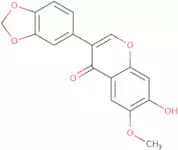
CAS:<p>Genistein-5,4'-dimethyl ether is a methylated isoflavone, which is a naturally occurring compound primarily extracted from various plant sources, particularly legumes. This bioactive compound is a derivative of the well-known isoflavone genistein, with methyl groups added at specific positions on the aromatic ring structure, altering its chemical properties and biological activity.</p>Formula:C17H14O5Purity:Min. 95%Molecular weight:298.29 g/mol3-Hydroxy-6,2',4',5'-tetramethoxyflavone
CAS:<p>3-Hydroxy-6,2',4',5'-tetramethoxyflavone is a naturally occurring flavone, which is a type of polyphenolic compound predominantly found in certain plants. This compound belongs to the broader class of flavonoids, often isolated from plant sources like tropical herbs and medicinal plants renowned for their rich bioactive profiles.</p>Formula:C19H18O7Purity:Min. 95%Molecular weight:358.34 g/mol3',4'-Dihydroxyflavanone
<p>3',4'-Dihydroxyflavanone is a type of flavonoid, which is a class of polyphenolic compounds known for diverse biological activities. This compound is primarily sourced from various plants, where it plays a role in plant defense mechanisms due to its antioxidant properties. The mode of action of 3',4'-Dihydroxyflavanone involves the scavenging of free radicals, thereby mitigating oxidative stress at the cellular level. This activity is facilitated by its dihydroxy structure, which allows it to donate hydrogen atoms to neutralize reactive oxygen species.</p>Formula:C15H10O4Purity:Min. 95%Molecular weight:254.24 g/mol7-O-Prenyloxyflavanone
CAS:<p>7-O-Prenyloxyflavanone is a bioactive compound, specifically a flavanone, which is isolated from various plant sources known for their rich flavonoid content. The compound is characterized by the attachment of a prenyl group at the 7-O position of the flavanone structure, which imparts unique biological activities.</p>Formula:C20H20O3Purity:Min. 95%Molecular weight:308.37 g/mol6-Methylflavone
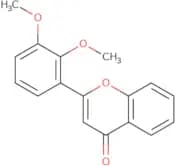
CAS:<p>6-Methylflavone is a synthetic flavonoid, which is derived from the structural modification of natural flavonoids commonly found in various plants. This compound has garnered interest due to its pharmacological potential, particularly as a modulator of the central nervous system. The mode of action of 6-Methylflavone involves its interaction with the GABA_A receptors, where it is believed to function as a positive allosteric modulator. This interaction enhances the inhibitory effects of GABA, a primary neurotransmitter in the brain, thereby potentially exerting anxiolytic (anxiety-reducing) effects.</p>Formula:C16H12O2Purity:Min. 95%Color and Shape:PowderMolecular weight:236.27 g/mol2',3'-Dimethoxyflavone
CAS:<p>2',3'-Dimethoxyflavone is a synthetic flavone derivative, which is naturally sourced from plants, particularly those containing flavonoid compounds. Its mode of action involves modulating various biochemical pathways, including enzyme inhibition and interaction with cellular receptors. This modulation can alter cell signaling, affecting processes such as inflammation and cancer cell proliferation.</p>Formula:C17H14O4Purity:Min. 95%Color and Shape:PowderMolecular weight:282.29 g/molFujikinetin
CAS:<p>Isoflavone from processed leaves and stems of Cyclopia intermedia</p>Formula:C17H12O6Purity:Min. 95%Color and Shape:PowderMolecular weight:312.27 g/molChrysoeriol
CAS:<p>Chrysoeriol is a flavonoid compound, which is derived from various plant sources, including many herbs and flowers such as chamomile and tarragon. It functions through inhibition of certain cellular pathways that lead to inflammation, such as the suppression of NF-kB and cyclooxygenase activity. Additionally, chrysoeriol exhibits antioxidative effects by scavenging free radicals and enhancing the body's natural antioxidant enzyme systems.</p>Formula:C16H12O6Purity:Min. 95%Color and Shape:Yellow PowderMolecular weight:300.26 g/molOroxylin A
CAS:<p>Oroxylin A is a natural flavonoid compound, which is derived from the root of Scutellaria baicalensis, commonly known as Baikal skullcap. It is primarily recognized for its bioactive properties, attributed to its modulation of various biochemical pathways. Oroxylin A acts by inhibiting the activity of certain enzymes, such as cyclooxygenase, and influencing signaling pathways like NF-kB, which are integral to inflammatory responses. It also exhibits potent neuroprotective effects by interacting with GABA_A receptors, thereby influencing neurotransmission.</p>Formula:C16H12O5Purity:Min. 98 Area-%Color and Shape:PowderMolecular weight:284.26 g/mol3-Hydroxy-2',4',5'-trimethoxyflavone
CAS:<p>3-Hydroxy-2',4',5'-trimethoxyflavone is a naturally occurring flavone, which is a type of polyphenolic compound. This compound is typically derived from plant sources, where it is biosynthesized as part of the plant’s secondary metabolism. The mode of action for flavones like 3-Hydroxy-2',4',5'-trimethoxyflavone involves modulating various biochemical pathways, including antioxidant activity and enzyme inhibition, which may affect various metabolic and cellular processes.</p>Formula:C18H16O6Purity:Min. 95%Molecular weight:328.32 g/mol7,2'-Dibenzyloxy-4'-methoxyisoflavone
CAS:<p>7,2'-Dibenzyloxy-4'-methoxyisoflavone is a synthetic isoflavone compound, which is derived from chemical synthesis processes rather than natural sources. Isoflavones are a class of flavonoids often studied for their diverse biological activities, including antioxidant, anti-inflammatory, and potential anticancer properties. This compound is characterized by its unique chemical structure that incorporates benzyl and methoxy groups, possibly enhancing its pharmacokinetic profile and efficacy.</p>Formula:C30H24O5Purity:Min. 95%Molecular weight:464.51 g/molNeoschaftoside
CAS:<p>Neoschaftoside is a naturally occurring bioactive compound, which is an acylated flavonoid C-glycoside. It is primarily sourced from various plant species, including members of the Poaceae and Fabaceae families. The compound functions through its antioxidant and anti-inflammatory properties, interacting with cellular pathways to mitigate oxidative stress and modulate immune responses. These actions make neoschaftoside a compound of interest in pharmacological research, particularly in the study of chronic diseases where inflammation and oxidative damage are key pathological features. Its applications extend to potential therapeutic development in areas such as cardiovascular health, neuroprotection, and metabolic disorders. The ongoing investigation into its modes of action and bioavailability continues to reveal insights into its efficacy and potential as a natural therapeutic agent.</p>Formula:C26H28O14Purity:Min. 95%Molecular weight:564.49 g/molNaringin
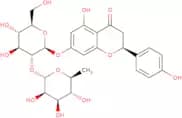
CAS:<p>Naringin is a bioflavonoid, which is a secondary metabolite predominantly found in citrus fruits, particularly in grapefruits and oranges. This compound is sourced from the peels and juices of these fruits, where it serves as a major constituent contributing to their distinct bitter taste.</p>Formula:C27H32O14Purity:Min. 95.0 Area-%Color and Shape:White PowderMolecular weight:580.53 g/molPyraclostrobin
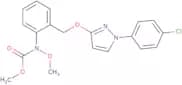
CAS:<p>Pyraclostrobin is a fungicide, which is a synthetic compound derived from the strobilurin class of fungicidal chemistry. It is characterized as a product of chemical synthesis designed to inhibit fungal growth through its unique mode of action. Pyraclostrobin functions by disrupting mitochondrial respiration in the targeted fungi, specifically inhibiting electron transfer at the cytochrome bc1 complex. This interference halts ATP production, ultimately leading to the death of the fungal cells.</p>Formula:C19H18ClN3O4Purity:Min. 95%Color and Shape:PowderMolecular weight:387.82 g/mol8-Prenylgenistein
CAS:<p>8-Prenylgenistein is a prenylated isoflavone, which is a type of naturally occurring polyphenolic compound. It is primarily sourced from plants, particularly legumes, and is a derivative of genistein, an isoflavone commonly found in soy products. The addition of a prenyl group distinguishes 8-prenylgenistein from its parent compound, potentially enhancing its bioactivity and pharmacokinetics.</p>Formula:C20H18O5Purity:Min. 95%Color and Shape:PowderMolecular weight:338.35 g/molIsorhoifolin
CAS:<p>Anti-diabetic; anti-hyperlipidemic; antioxidantImage taken by Jin-Yao Ong 台灣山豆根 Euchresta formosana (Hayata) OhwiOhwi, J. Jap. Bot. 12(9): 659. 1936.</p>Formula:C27H30O14Purity:Min. 98 Area-%Color and Shape:White PowderMolecular weight:578.52 g/mol