Flavonoids
Flavonoids are a group of plant metabolites with antioxidant properties that contribute to the color of fruits and flowers. They play a significant role in protecting plants from UV radiation and pathogens. Flavonoids are studied for their potential health benefits, including anti-inflammatory, antiviral, and anticancer properties. They are widely researched in the fields of pharmacology, nutrition, and molecular biology.
Subcategories of "Flavonoids"
- Anthocyanidins(46 products)
- Anthocyanin(46 products)
- Catechin(88 products)
- Chalcones(237 products)
- Pterocarpan(28 products)
Found 2404 products of "Flavonoids"
Sort by
Purity (%)
0
100
|
0
|
50
|
90
|
95
|
100
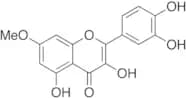
7-O-Methyl Quercetin
CAS:<p>Applications O-Methylated metabolite of the flavanoid Quercertin (Q509500) with antioxidant activity.<br>References Soobrattee, M.A. et al.: Mut. Res. Fund. Mol. Mech. Mutagen., 579, 200 (2005); Yamamoto, N. et al.: Arch. Biochem. Biophys., 372, 347 (1999);<br></p>Formula:C16H12O7Color and Shape:NeatMolecular weight:316.262,3-Dehydrokievitone
CAS:<p>2,3-Dehydrokievitone is a phytoalexin, which is a naturally occurring antimicrobial compound. It is derived from leguminous plants, such as those in the Fabaceae family. Phytoalexins are synthesized de novo by plants in response to pathogen attack, and 2,3-Dehydrokievitone plays a role in the plant’s defense mechanisms.</p>Formula:C20H18O6Purity:Min. 95%Molecular weight:354.35 g/molAromadendrin 7-O-methyl ether
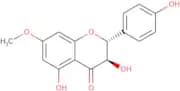
CAS:<p>Aromadendrin 7-O-methyl ether is a flavonoid compound, which is a type of bioactive molecule. It is sourced primarily from plant materials, where it occurs naturally as a secondary metabolite. The mode of action of Aromadendrin 7-O-methyl ether involves interaction with various biological pathways, potentially affecting enzyme activity and cell signaling mechanisms. Such interactions may contribute to its reported antioxidant and anti-inflammatory properties.</p>Formula:C16H14O6Purity:Min. 95%Color and Shape:PowderMolecular weight:302.28 g/mol5,7-Dihydroxy-3',4',5'-trimethoxyflavanone
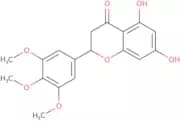
CAS:<p>5,7-Dihydroxy-3',4',5'-trimethoxyflavanone is a flavanone compound, which is a type of polyphenolic compound found predominantly in the plant kingdom. This compound can be sourced from various plants, where it often occurs as part of the natural defense mechanisms to protect the organism from environmental stressors.</p>Formula:C18H18O7Purity:Min. 95%Molecular weight:346.33 g/mol5,7,3'-Trihydroxy-6,4',5'-trimethoxyflavone
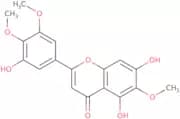
CAS:<p>5,7,3'-Trihydroxy-6,4',5'-trimethoxyflavone is a methoxylated flavonoid, which is a type of polyphenolic compound. This compound is typically sourced from certain plant species known for their high antioxidant content. Flavonoids are widely studied for their diverse biological activities and are often isolated from traditional medicinal plants.</p>Purity:Min. 95%Petanin
CAS:<p>Petanin is a natural compound isolated from the fruit of Lycium barbarum. It has been shown to have anti-inflammatory and antioxidant properties, as well as protective effects against UV radiation. Petanin is used in dietary supplements and works in synergy with other nutrients to help protect cells and repair skin damage.</p>Purity:Min. 95%3'-Methoxydaidzein
CAS:<p>3'-Methoxydaidzein is an isoflavone compound, which is typically isolated from soybean sources. This compound belongs to a class of phytoestrogens, naturally occurring plant-derived compounds with estrogenic activity. 3'-Methoxydaidzein exhibits various biological activities due to its structural similarity to human estrogens, allowing it to bind to estrogen receptors. Its mode of action primarily involves modulating estrogen receptor activity, potentially influencing gene expression in estrogen-responsive tissues.</p>Purity:Min. 95%7-Hydroxy-5-methoxyflavanone
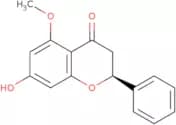
CAS:<p>7-Hydroxy-5-methoxyflavanone is a naturally occurring flavanone compound, which is derived from various plant sources. These sources often include fruits, vegetables, and certain medicinal herbs, known for their rich flavonoid content. The mode of action of 7-Hydroxy-5-methoxyflavanone primarily involves its role as an antioxidant. It helps in scavenging free radicals and reducing oxidative stress, which is a common pathway in cellular protection against damage.</p>Formula:C16H14O4Purity:Min. 95 Area-%Color and Shape:PowderMolecular weight:270.28 g/mol3',4',7-Trihydroxyflavanone
CAS:<p>3',4',7-Trihydroxyflavanone is a natural flavonoid compound, which is predominantly found in various plant sources, such as flowers, fruits, and leaves. This compound is known for its significant antioxidative properties, attributed to its polyphenolic structure. The mechanism of action involves the scavenging of free radicals, thereby reducing oxidative stress within biological systems. Additionally, its molecular configuration allows it to interact with various cellular pathways that modulate inflammation and cellular signaling.</p>Formula:C15H12O5Purity:Min. 95%Molecular weight:272.25 g/mol6,7,2',3',4'-Pentamethoxyisoflavone
CAS:<p>6,7,2',3',4'-Pentamethoxyisoflavone is a naturally occurring flavonoid compound, which is derived from certain plant sources known for their rich polyphenolic content. As part of the isoflavone family, this compound is structurally similar to estrogen, allowing it to potentially interact with estrogen receptors in the body. Its mode of action includes modulating various biochemical pathways, including antioxidant and anti-inflammatory pathways, due to its ability to influence enzyme activities and cell signaling processes.</p>Formula:C20H20O7Purity:Min. 95%Color and Shape:PowderMolecular weight:372.37 g/mol3,7,4'-Trihydroxy-5-methoxy-8-prenylflavanone, (2R,3S)-
<p>3,7,4'-Trihydroxy-5-methoxy-8-prenylflavanone, (2R,3S)- is a naturally occurring prenylated flavanone, which is primarily sourced from various plant species. This compound is part of the larger flavonoid family and is often found in certain medicinal plants known for their wide range of therapeutic properties. Its structure comprises a flavanone backbone, modified by hydroxyl, methoxy, and prenyl groups that contribute to its distinctive chemical profile.</p>Purity:Min. 95%Sideritoflavone
CAS:<p>Sideritoflavone is a flavonoid compound, which is a type of secondary metabolite derived from the *Sideritis* plant species. These plants, commonly found in the Mediterranean region, are traditionally used in herbal remedies. The compound is known for its potential biological and pharmacological activities, which stem from its interaction with various biochemical pathways.</p>Formula:C18H16O8Purity:Min. 95%Molecular weight:360.31 g/mol6,2',4'-Trimethoxyflavone
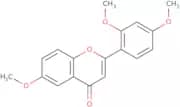
CAS:<p>6,2',4'-Trimethoxyflavone is a flavonoid compound, which is a type of phytochemical found in various plant species. It is derived from natural sources, including certain medicinal herbs and plants known for their bioactive properties. This specific flavone is characterized by its three methoxy groups attached at distinct positions on the flavonoid backbone, which confer unique chemical properties and biological activities.</p>Formula:C18H16O5Purity:Min. 95%Molecular weight:312.32 g/molBavachin
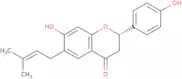
CAS:<p>Phytoestrogen; estrogen receptor agonist; PPARγ ligand</p>Formula:C20H20O4Purity:Min. 95%Color and Shape:SolidMolecular weight:324.37 g/molCuneatin-7-methyl ether
CAS:<p>Cuneatin-7-methyl ether is a naturally occurring compound, classified as a flavonoid derivative. It is primarily sourced from certain plant species known for producing bioactive flavonoids. These plants are typically found in specific geographical regions, and the compound can be extracted through meticulous phytochemical methods.</p>Formula:C18H14O6Purity:Min. 95%Color and Shape:PowderMolecular weight:326.3 g/mol3'-Hydroxyflavanone
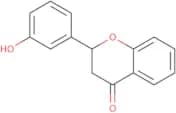
CAS:<p>3'-Hydroxyflavanone is a naturally occurring flavanone, which is a type of polyphenolic compound found in various plants and fruits. Known for its presence in citrus fruits and certain herbal sources, 3'-Hydroxyflavanone is characterized by its unique structural configuration, featuring a hydroxyl group that is crucial for its bioactivity.</p>Formula:C15H12O3Purity:Min. 95%Molecular weight:240.26 g/molKaempferol-3-rutinoside-7-rhamnoside
CAS:<p>Kaempferol-3-rutinoside-7-rhamnoside is a flavonoid glycoside, which is an organic compound derived from specific plant species like tea, onions, and broccoli. It primarily exists as a complex molecule formed by the bonding of kaempferol with sugar moieties—rutinoside and rhamnoside. This compound functions by modulating various cellular signaling pathways, including those involved in oxidation-reduction processes, apoptosis, and inflammation. It combats oxidative stress by scavenging free radicals, thereby providing a protective effect against cellular damage.</p>Formula:C33H40O19Purity:Min. 95%Color and Shape:Off-White PowderMolecular weight:740.66 g/molDaidzein diacetate
CAS:<p>Daidzein diacetate is a synthetic derivative of the isoflavone daidzein, which is a bioactive compound found primarily in soybeans and other legumes. The acetylation process enhances the compound's stability and solubility, potentially improving its bioavailability compared to its parent compound. Daidzein itself is naturally occurring and has been studied for its various health-promoting properties, including estrogenic and antioxidant activities.</p>Formula:C19H14O6Purity:Min. 95%Molecular weight:338.31 g/mol4'-O-Hexanoyldaidzein
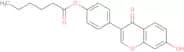
CAS:<p>4'-O-Hexanoyldaidzein is a chemically modified isoflavone, which is a derivative of daidzein. This compound is sourced from soybeans, renowned for being rich in naturally occurring isoflavones. The modification entails the addition of a hexanoyl group to the daidzein molecule, altering its physicochemical properties and potentially enhancing its biological activity.</p>Formula:C21H20O5Purity:Min. 95%Molecular weight:352.38 g/molRetusin tlc
CAS:<p>Retusin TLC is a flavonoid compound, which is derived from natural plant sources. Flavonoids are known for their diverse biological activities, primarily due to their antioxidant properties. The mode of action of Retusin TLC involves its ability to scavenge free radicals, thereby reducing oxidative stress at the cellular level. This activity plays a crucial role in modulating various biochemical pathways, potentially leading to anti-inflammatory and anti-cancer effects.</p>Formula:C16H12O5Purity:Min. 95%Molecular weight:284.26 g/mol