Flavonoids
Flavonoids are a group of plant metabolites with antioxidant properties that contribute to the color of fruits and flowers. They play a significant role in protecting plants from UV radiation and pathogens. Flavonoids are studied for their potential health benefits, including anti-inflammatory, antiviral, and anticancer properties. They are widely researched in the fields of pharmacology, nutrition, and molecular biology.
Subcategories of "Flavonoids"
- Anthocyanidins(46 products)
- Anthocyanin(46 products)
- Catechin(88 products)
- Chalcones(237 products)
- Pterocarpan(28 products)
Found 2404 products of "Flavonoids"
Sort by
Purity (%)
0
100
|
0
|
50
|
90
|
95
|
100
Cupressuflavone-7,7”-dimethyl ether
CAS:<p>Biflavonyl pigment; anti-inflammatory; analgesic</p>Formula:C32H22O10Purity:Min. 95%Color and Shape:solid.Molecular weight:566.51 g/molTricetin
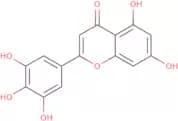
CAS:<p>Tricetin is a naturally occurring flavonoid compound, which is primarily sourced from various plant species. Its molecular structure comprises multiple hydroxyl groups, contributing to its biological activity. Tricetin functions by modulating several biochemical pathways; it exhibits antioxidant properties through scavenging of reactive oxygen species and chelation of metal ions. Additionally, Tricetin possesses anti-inflammatory effects, as it can inhibit the synthesis of pro-inflammatory cytokines and downregulate the expression of enzymes involved in inflammation, such as cyclooxygenase and lipoxygenase.</p>Formula:C15H10O7Purity:Min. 95%Color and Shape:Yellow PowderMolecular weight:302.24 g/mol3-(3,4-Dimethoxyphenyl)-1H-benzo[f]chromen-1-one
CAS:<p>3',4'-Dimethoxy-beta-naphthoflavone is a synthetic chemical compound, which is a selective aryl hydrocarbon receptor (AhR) agonist, derived from flavonoid structures. With its capacity to modulate xenobiotic metabolism, this compound acts as an inducer of cytochrome P450 enzymes, specifically CYP1A1 and CYP1A2, through the activation of the AhR pathway. Upon binding to AhR, 3',4'-Dimethoxy-beta-naphthoflavone translocates to the nucleus, where it influences gene expression involved in xenobiotic metabolism.</p>Formula:C21H16O4Purity:Min. 95%Molecular weight:332.35 g/molScutellarein-6,4'-dimethyl ether
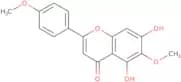
CAS:<p>Scutellarein-6,4'-dimethyl ether is a flavonoid derivative, which is a type of polyphenolic compound widely found in the plant kingdom. It is primarily sourced from various species within the genus Scutellaria, known for their rich flavonoid content. Scutellarein-6,4'-dimethyl ether demonstrates an affinity for interacting with key biological pathways, including exerting possible antioxidant activities by scavenging free radicals and modulating redox states, as well as potential anti-inflammatory effects through the regulation of inflammatory mediators.</p>Formula:C17H14O6Purity:Min. 95%Color and Shape:PowderMolecular weight:314.29 g/molKaempferol-3-O-rhamnoside
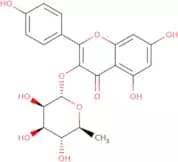
CAS:<p>Kaempferol-3-O-rhamnoside is a naturally occurring flavonoid glycoside, which is derived from various plants, particularly those in the families Rosaceae and Brassicaceae. This compound is a significant bioactive component found in herbs, fruits, and vegetables. Its mode of action primarily involves the scavenging of free radicals, inhibition of oxidative stress, and modulation of various signaling pathways related to inflammation and apoptosis.</p>Formula:C21H20O10Purity:Min. 95 Area-%Color and Shape:Yellow PowderMolecular weight:432.38 g/molMucronulatol
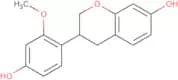
CAS:<p>Mucronulatol is a naturally occurring compound, which is derived from certain plant species known for their rich array of bioactive compounds. As a product of natural origin, mucronulatol is classified as a polyphenolic compound. Its biosynthesis in plants is a part of the complex secondary metabolism, playing roles in defense mechanisms against environmental stressors and pathogens. The mode of action of mucronulatol involves modulation of various biochemical pathways, which may include antioxidant activity, enzyme inhibition, or signaling pathway regulation. This capacity makes mucronulatol a subject of interest in pharmacological and therapeutic research.</p>Formula:C17H18O5Purity:Min. 95%Molecular weight:302.32 g/molKaempferol-3,4'-diglucoside
CAS:<p>Kaempferol-3,4'-diglucoside is a glycosylated flavonoid, which is a type of chemical compound found abundantly in various plants. This product is derived from natural sources, particularly from several edible and medicinal plants known for their health benefits. Kaempferol-3,4'-diglucoside functions through mechanisms related to its antioxidant properties, scavenging free radicals and reducing oxidative stress within biological systems.</p>Formula:C27H30O16Purity:Min. 95%Molecular weight:610.52 g/molNaringenin trimethyl ether
CAS:<p>Naringenin trimethyl ether is a flavonoid compound, which is typically derived from citrus fruits and other plant sources. This compound is part of the larger class of polyphenolic compounds known as flavonoids, which are prominent for their presence in various plant species, contributing to a variety of physiological activities.</p>Formula:C18H18O5Purity:Min. 95%Color and Shape:PowderMolecular weight:314.33 g/mol4',7-Dihydroxy-2-methoxyisoflavone
CAS:<p>4',7-Dihydroxy-2-methoxyisoflavone is a naturally occurring isoflavone, which is a type of phytochemical compound typically found in the Leguminosae family of plants. These plants are well-known for their rich source of bioactive compounds. This specific isoflavone is primarily isolated from plants like red clover or soybeans, which are renowned for their beneficial bioactive constituents.</p>Formula:C16H12O5Purity:Min. 95%Molecular weight:284.26 g/mol2'-Hydroxyflavonol
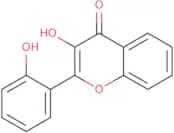
CAS:<p>2'-Hydroxyflavonol is a flavonoid derivative, which is a polyphenolic compound commonly found in plants. This compound is derived from natural sources, particularly various fruits, vegetables, and roots. Its mode of action is primarily through its role as an antioxidant, where it scavenges free radicals, thereby reducing oxidative stress. Furthermore, it can modulate multiple signaling pathways, contributing to its various bioactivities.</p>Formula:C15H10O4Purity:Min. 95%Molecular weight:254.24 g/mol7,8,3'-Trihydroxyflavone
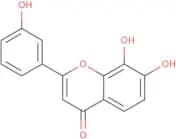
CAS:<p>7,8,3'-Trihydroxyflavone is a type of flavonoid, which is a class of polyphenolic compounds. It is primarily derived from various plant sources, including certain fruits, vegetables, and herbs known for their antioxidant properties. Its mode of action involves selective agonism of the tropomyosin receptor kinase B (TrkB), a receptor associated with the brain-derived neurotrophic factor (BDNF).</p>Formula:C15H10O5Purity:Min. 95%Color and Shape:PowderMolecular weight:270.24 g/mol3,4'-Dihydroxy-7-methoxyflavone
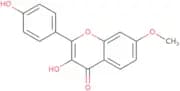
CAS:<p>3,4'-Dihydroxy-7-methoxyflavone is a specialized flavonoid compound, which is naturally occurring in certain plant species. As a type of flavonoid, it is part of a larger group of polyphenolic compounds widely found in fruits, vegetables, and other plant-derived foods. These compounds are well-known for their potential health benefits, primarily due to their antioxidant and anti-inflammatory properties. The mode of action of 3,4'-Dihydroxy-7-methoxyflavone involves scavenging free radicals and modulating various signaling pathways that influence inflammation and oxidative stress at the cellular level.</p>Formula:C16H12O5Purity:Min. 95%Molecular weight:284.26 g/mol5,7,2'-Trimethoxyflavone
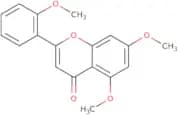
CAS:<p>5,7,2'-Trimethoxyflavone is a synthetic flavonoid compound, which is typically sourced from the chemical modification of natural flavonoids. Derived from various plant sources, flavonoids are known for their diverse biological activities. The mode of action of 5,7,2'-Trimethoxyflavone involves the modulation of various cellular pathways, potentially impacting enzyme activity, signal transduction, and gene expression.</p>Formula:C18H16O5Purity:Min. 95%Molecular weight:312.32 g/mol4',7-Dimethoxyisoflavone
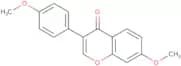
CAS:<p>4',7-Dimethoxyisoflavone is a synthetic isoflavone, which is structurally related to compounds naturally found in certain plants, particularly legumes. This compound is engineered to mimic the bioactive properties of naturally occurring isoflavones, which have been studied for their potential health benefits. The mode of action of 4',7-Dimethoxyisoflavone involves modulating signaling pathways that are related to cellular growth and hormonal activity. It may influence pathways such as estrogen receptor signaling, although it possesses distinct properties compared to phytoestrogens found in soy products.</p>Formula:C17H14O4Purity:Min. 95%Color and Shape:PowderMolecular weight:282.29 g/molCalycosin
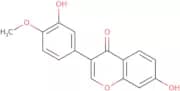
CAS:<p>Calycosin is a naturally occurring isoflavone, which is a class of organic compounds. It is derived primarily from the root of Astragalus membranaceus, a plant widely used in traditional Chinese medicine. As a prominent phytoestrogen, Calycosin exhibits a mode of action that includes binding to estrogen receptors, thereby influencing various estrogen-mediated biological processes.</p>Formula:C16H12O5Purity:Min. 95%Color and Shape:White PowderMolecular weight:284.26 g/mol7-Methoxyflavonol
CAS:<p>7-Methoxyflavonol is a naturally-occurring flavonoid with intriguing biochemical properties, identified primarily in various plant species. This compound is derived from natural sources such as herbs and fruits, where it contributes to the plant's defense mechanisms. The mode of action of 7-Methoxyflavonol involves modulation of enzymatic activities and interaction with cellular signaling pathways, exhibiting potential antioxidant and anti-inflammatory effects.</p>Formula:C16H12O4Purity:Min. 95%Molecular weight:268.26 g/mol2'-Hydroxyflavone
CAS:<p>2'-Hydroxyflavone is a flavonoid compound that is naturally derived from various plant sources and is commonly found in certain fruits, vegetables, and herbs. Its structure is characterized by the presence of a hydroxyl group at the 2' position, which significantly influences its biological activity.</p>Formula:C15H10O3Color and Shape:PowderMolecular weight:238.24 g/mol5-Methyl-7-hydroxyisoflavone ethylcarbonate ester
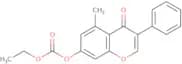
CAS:<p>5-Methyl-7-hydroxyisoflavone ethylcarbonate ester is a synthetic isoflavone derivative, which is structurally derived from naturally occurring flavonoids commonly found in plants such as soy and red clover. This compound is designed to retain the biological activity of its parent isoflavones while enhancing certain pharmacokinetic properties, particularly stability and bioavailability.</p>Formula:C19H16O5Purity:Min. 95%Color and Shape:PowderMolecular weight:324.33 g/molOrobol 7-O-glucoside
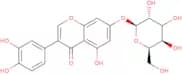
CAS:<p>Orobol 7-O-glucoside is a flavonoid glucoside, which is a type of phenolic compound widely studied in the scientific community for its potential biological activities. It is derived from natural plant sources, particularly legumes, where it occurs as a conjugate of the isoflavone orobol. The mode of action of Orobol 7-O-glucoside involves its ability to scavenge free radicals, providing potent antioxidant effects. This compound exhibits the ability to modulate signaling pathways relevant to oxidative stress and inflammation, suggesting possible therapeutic roles in related disorders.</p>Formula:C21H20O11Purity:Min. 95%Color and Shape:PowderMolecular weight:448.38 g/mol3',4'-Dihydroxy-α-napthoflavone
CAS:<p>3',4'-Dihydroxy-α-napthoflavone is a synthetic flavonoid derivative, which is primarily recognized as a potent inhibitor of certain cytochrome P450 enzymes. Derived through chemical synthesis, its structure is akin to natural flavonoids but modified to enhance its biochemical interactions. This compound exhibits strong inhibitory effects on CYP1A1, CYP1A2, and CYP1B1 enzymes, which are key players in the metabolism of various xenobiotics and endogenous compounds.</p>Formula:C19H12O4Purity:Min. 95%Color and Shape:PowderMolecular weight:304.3 g/mol


![3-(3,4-Dimethoxyphenyl)-1H-benzo[f]chromen-1-one](/_next/image/?url=https%3A%2Fstatic.cymitquimica.com%2Fproducts%2F3D%2Fthumb-webp%2FFD65660.webp&w=3840&q=75)