Flavonoids
Flavonoids are a group of plant metabolites with antioxidant properties that contribute to the color of fruits and flowers. They play a significant role in protecting plants from UV radiation and pathogens. Flavonoids are studied for their potential health benefits, including anti-inflammatory, antiviral, and anticancer properties. They are widely researched in the fields of pharmacology, nutrition, and molecular biology.
Subcategories of "Flavonoids"
- Anthocyanidins(46 products)
- Anthocyanin(46 products)
- Catechin(88 products)
- Chalcones(237 products)
- Pterocarpan(28 products)
Found 2404 products of "Flavonoids"
Sort by
Purity (%)
0
100
|
0
|
50
|
90
|
95
|
100
7,3',4',5'-Tetra methoxyflavone
CAS:<p>7,3',4',5'-Tetra methoxyflavone is a polymethoxyflavone, which is a type of flavonoid compound. This compound is typically derived from various plant sources, particularly those in the Citrus genus. It possesses structural complexity due to its four methoxy groups, which contribute to its biological activity.</p>Formula:C19H18O6Purity:Min. 95%Molecular weight:342.34 g/molQuercetin-3-arabinoglucoside
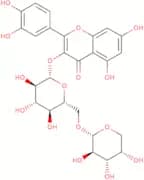
CAS:<p>Quercetin-3-arabinoglucoside is a flavonoid glycoside, which is a phytochemical derived primarily from a variety of plant sources, including fruits, vegetables, and medicinal plants. This compound acts as a potent antioxidant by scavenging free radicals, thereby protecting cells from oxidative stress, which can lead to cellular damage and various diseases.</p>Formula:C26H28O16Purity:Min. 95%Color and Shape:PowderMolecular weight:596.49 g/molEriodictyol - 90%
CAS:<p>Eriodictyol - 90% is a highly purified flavonoid, specifically a flavanone, commonly derived from the Eriodictyon californicum plant, also known as yerba santa. This compound, noted for its significant antioxidant properties, interacts with cellular signaling pathways by modulating oxidative stress and inhibiting inflammatory enzymes. Eriodictyol achieves these effects primarily through its ability to scavenge free radicals and modulate the activity of various kinases and transcription factors involved in the inflammatory response.</p>Formula:C15H12O6Purity:Min. 95%Color and Shape:White PowderMolecular weight:288.25 g/molCampylosaurone
CAS:<p>Campylosaurone is a synthetic antimicrobial compound, which is derived from chemical synthesis. Its mode of action involves the disruption of bacterial cell wall synthesis, ultimately leading to cell lysis and death. This compound exhibits broad-spectrum activity against a variety of gram-positive and gram-negative bacteria, making it versatile in combating resistant strains.</p>Formula:C30H20O12Purity:Min. 95%Molecular weight:572.47 g/mol4',5,7-Trimethoxyflavone
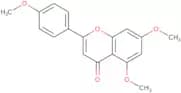
CAS:<p>4',5,7-Trimethoxyflavone is a polymethoxyflavone, which is a type of naturally occurring flavonoid compound. It is primarily sourced from various plants, notably within the Rutaceae family. These compounds are characterized by the presence of multiple methoxy groups attached to the flavone core structure.</p>Formula:C18H16O5Purity:Min. 95%Color and Shape:White PowderMolecular weight:312.32 g/molAcacetin-7-neohesperidoside
CAS:<p>Acacetin-7-neohesperidoside is a chemical compound that is classified as a flavonoid glycoside. Derived from various plant sources, particularly those within the Asteraceae family, it serves as a key subject in scientific investigations due to its diverse biological activities. The mode of action is primarily linked to its ability to modulate signaling pathways within cells, exhibiting potential anti-inflammatory and antioxidant effects. As a researcher, understanding its interaction with cellular pathways is crucial for advancing therapeutic applications.</p>Formula:C28H32O14Purity:Min. 98 Area-%Color and Shape:Pale yellow solid.Molecular weight:592.55 g/mol3,2',4',5',6-Pentahydroxyflavone
CAS:<p>3,2',4',5',6-Pentahydroxyflavone is a flavonoid compound, often studied for its intricate chemical properties. It is derived from various plant sources, where it occurs naturally as a secondary metabolite. As a flavonoid, it is notable for its polyphenolic structure, contributing to its role as an antioxidant. The mode of action involves neutralizing free radicals and chelating metal ions, thereby reducing oxidative stress within biological systems.</p>Formula:C15H10O7Purity:Min. 95%Color and Shape:PowderMolecular weight:302.24 g/mol7,2'-Dimethoxy-4'-hydroxyisoflavone
CAS:<p>7,2'-Dimethoxy-4'-hydroxyisoflavone is a naturally occurring isoflavone, which is a type of phytochemical commonly found in various plants. Isoflavones are known for their structural similarity to estrogens and their presence in legumes like soy. The source of 7,2'-Dimethoxy-4'-hydroxyisoflavone is primarily plant-based, particularly from species known for high isoflavone content.</p>Formula:C17H14O5Purity:Min. 95%Molecular weight:298.29 g/molDihydrodaidzein-7,4'-dimethylether
CAS:<p>Dihydrodaidzein-7,4'-dimethylether is a synthetic compound that falls under the category of isoflavone derivatives. Isoflavones are naturally occurring compounds typically sourced from soybeans and other legumes. Their structural similarity to estrogen allows them to exert estrogenic or anti-estrogenic effects, depending on the context and biological system.</p>Formula:C17H16O4Purity:Min. 95%Color and Shape:PowderMolecular weight:284.31 g/molApigenin-7-O-glucronide
CAS:<p>Apigenin-7-O-glucronide is a flavonoid derivative, which is a bioactive compound found naturally in various plants, particularly in those used medicinally or as nutritional supplements. Its source includes a variety of plant species, where it exists as part of the plant's secondary metabolites, often contributing to the plant's defense mechanisms.</p>Formula:C21H18O11Purity:Min. 98 Area-%Color and Shape:PowderMolecular weight:446.36 g/mol6,4'-Dimethoxyflavone
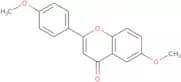
CAS:<p>6,4'-Dimethoxyflavone is a naturally occurring flavone, which is a type of polyphenolic compound typically found in various plants. It is derived from natural sources such as certain species of citrus fruits and other flavonoid-rich plants. The compound is characterized by the presence of two methoxy groups attached to its flavone backbone.</p>Formula:C17H14O4Purity:Min. 95%Molecular weight:282.29 g/mol3-Hydroxy-7,2',3'-trimethoxyflavone
CAS:<p>3-Hydroxy-7,2',3'-trimethoxyflavone is a naturally occurring flavonoid, which is a type of polyphenolic compound commonly found in plants. These compounds are typically sourced from various plant species where they are known to contribute to pigmentation and offer protective functions.</p>Formula:C18H16O6Purity:Min. 95%Molecular weight:328.32 g/mol3-Hydroxy-7,8-dimethoxyflavone
CAS:<p>3-Hydroxy-7,8-dimethoxyflavone is a synthetic flavonoid derivative, which is structurally sourced from the broader class of naturally occurring flavonoids found in various plants. It functions primarily as a potent and selective ligand for the TrkB receptor, a receptor for brain-derived neurotrophic factor (BDNF). This interaction mimics the effects of BDNF, promoting neuronal survival, synaptic plasticity, and neurogenesis, thereby facilitating neuroprotective and neurorestorative processes.</p>Formula:C17H14O5Purity:Min. 95%Molecular weight:298.29 g/mol5,7,8,4'-Tetramethoxyflavone
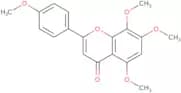
CAS:<p>5,7,8,4'-Tetramethoxyflavone is a naturally occurring flavone, which is a type of plant-derived polyphenolic compound. It is found in various plants, particularly those belonging to the genus Scutellaria. The compound acts primarily by modulating various cellular signaling pathways, including those involved in inflammation, apoptosis, and oxidative stress. Through its interaction with these pathways, it exhibits potential anti-inflammatory, antioxidant, and anti-cancer properties.</p>Formula:C19H18O6Purity:Min. 95%Color and Shape:White PowderMolecular weight:342.34 g/molPratensein
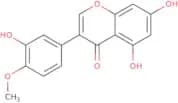
CAS:<p>Pratensein is an isoflavone compound that is derived primarily from plants such as red clover (Trifolium pratense). This natural product belongs to the class of phytochemicals known for their diverse biological activities. Pratensein is sourced through the extraction and purification processes that involve isolating the bioactive components from plant materials rich in flavonoids.</p>Formula:C16H12O6Purity:Min. 95%Color and Shape:PowderMolecular weight:300.26 g/molTexasin 7-O-glucoside
CAS:<p>Texasin 7-O-glucoside is a flavonoid glycoside, which is a plant-derived compound with significant antioxidant properties. This glycoside is sourced primarily from plants, where it naturally occurs as a secondary metabolite. It is composed of the flavonoid backbone, texasetin, conjugated with a glucose molecule at the 7-O position, enhancing its solubility and bioavailability in biological systems.</p>Formula:C22H22O10Purity:Min. 95%Molecular weight:446.4 g/mol5,3',4'-Trihydroxyflavone
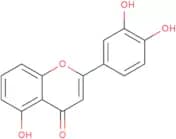
CAS:<p>5,3',4'-Trihydroxyflavone is a natural flavonoid compound often found in a variety of plants. This compound is derived from numerous botanical sources, including fruits and vegetables known to contain flavonoids, which are secondary metabolites widely distributed in the plant kingdom. The mode of action of 5,3',4'-Trihydroxyflavone involves its ability to interact with diverse biological pathways, often exhibiting antioxidant, anti-inflammatory, and potential anti-cancer effects. This interaction occurs through the modulation of enzyme activity and signaling pathways, as well as the scavenging of free radicals, thereby protecting cells from oxidative stress and damage.</p>Formula:C15H10O5Purity:Min. 95%Color and Shape:Slightly Yellow PowderMolecular weight:270.24 g/molEupatorin - 98%
CAS:<p>Eupatorin - 98% is a high-purity flavonoid compound, which is extracted primarily from various plant species such as Eupatorium. This compound is renowned for its bioactive properties, engaging in numerous biochemical interactions that contribute to its therapeutic potentials. Eupatorin operates through multiple biochemical pathways as an inhibitor of specific enzymes like cytochrome P450s and as a modulator of cellular signaling pathways. This enables it to exert anti-inflammatory, anticancer, and antioxidant effects, making it a valuable subject of study in pharmaceutical and clinical research.</p>Formula:C18H16O7Purity:Min. 95%Color and Shape:White PowderMolecular weight:344.32 g/mol3'-Benzyloxy-5,7-dihydroxy-3,4'-dimethoxyflavone
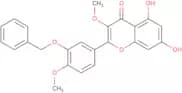
CAS:<p>3'-Benzyloxy-5,7-dihydroxy-3,4'-dimethoxyflavone is a synthetic flavone derivative, which is primarily obtained through targeted chemical synthesis in laboratory settings. This compound belongs to a broader class of polyphenolic flavonoids, which are known for their potential bioactive properties.</p>Formula:C24H20O7Purity:Min. 95%Molecular weight:420.41 g/molSwertisin
CAS:<p>Swertisin is a naturally occurring flavonoid, which is extracted primarily from medicinal plants like Swertia and Enicostemma species. This compound is a C-glycosyl flavone, found in various herbs traditionally used in different cultural medicinal practices. The mode of action of Swertisin involves its interaction with cellular pathways, leading to anti-inflammatory, antioxidant, and potential anti-diabetic effects. These bioactivities are primarily mediated through modulation of enzyme activity and gene expression related to oxidative stress and inflammation.</p>Formula:C22H22O10Purity:Min. 98 Area-%Color and Shape:PowderMolecular weight:446.4 g/mol