Flavonoids
Subcategories of "Flavonoids"
- Anthocyanidins(46 products)
- Anthocyanin(46 products)
- Catechin(88 products)
- Chalcones(237 products)
- Pterocarpan(28 products)
Found 2410 products of "Flavonoids"
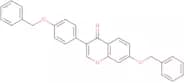
7,4'-Dibenzyl daidzein
CAS:7,4'-Dibenzyl daidzein is a synthetic isoflavonoid, derived from the modification of natural isoflavones commonly found in soy products. These isoflavones are known for their estrogenic activity and potential therapeutic benefits. The source of inspiration for this compound lies in natural phytoestrogens, which exhibit significant interaction with human estrogen receptors. This synthetic analog is designed to enhance specific bioactivities beyond those of its natural counterparts.
Formula:C29H22O4Purity:Min. 95%Molecular weight:434.48 g/molRef: 3D-FD21537
Discontinued productSideritoflavone
CAS:Sideritoflavone is a flavonoid compound, which is a type of secondary metabolite derived from the *Sideritis* plant species. These plants, commonly found in the Mediterranean region, are traditionally used in herbal remedies. The compound is known for its potential biological and pharmacological activities, which stem from its interaction with various biochemical pathways.
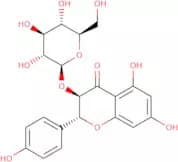
Formula:C18H16O8Purity:Min. 95%Molecular weight:360.31 g/molDihydrokaempferol-3-glucoside
CAS:Dihydrokaempferol-3-glucoside is a flavonoid glucoside, which is primarily derived from various plant sources including fruits, vegetables, and certain medicinal herbs. Its molecular structure consists of a kaempferol core attached to a glucose moiety, enhancing its solubility and stability in biological systems. This compound exhibits antioxidant activity, acting to scavenge free radicals and reduce oxidative stress within cells. By neutralizing reactive oxygen species, dihydrokaempferol-3-glucoside helps to protect cellular components such as DNA, proteins, and lipids from oxidative damage.
Formula:C21H22O11Purity:Min. 95%Color and Shape:White PowderMolecular weight:450.39 g/molKazinol B
CAS:Kazinol B is an isoprenylated flavonoid, which is a secondary metabolite derived from plants, predominantly found in members of the Moraceae family. It is synthesized through the plant's natural biochemical pathways, involving the modification of basic flavonoid structures via prenylation, resulting in increased lipophilicity and potential bioactivity.
Formula:C25H28O4Purity:Min. 95%Molecular weight:392.49 g/molRef: 3D-FK159345
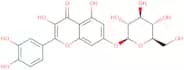
Discontinued productQuercetin-7-O-β-D-glucopyranoside
CAS:Quercetin-7-O-β-D-glucopyranoside is a flavonoid glycoside, which is a specialized type of bioactive compound found predominantly in various plants. Structurally, it constitutes quercetin—a well-known flavonoid—conjugated with a glucose molecule, specifically at the 7th position of the quercetin structure. This compound is primarily sourced from fruits, vegetables, and various herbs.
Formula:C21H20O12Purity:Min. 95%Color and Shape:Yellow PowderMolecular weight:464.38 g/mol(S)-Naringenin
CAS:(S)-Naringenin is a naturally occurring flavonoid compound, which is found predominantly in citrus fruits, such as grapefruits and oranges. Its source lies within the plant secondary metabolites known for their diverse biological activities. As a flavanone, (S)-naringenin acts primarily as an antioxidant, effectively scavenging reactive oxygen species and thereby protecting cells from oxidative stress. Additionally, it exhibits anti-inflammatory actions by modulating various signaling pathways and inhibiting the production of pro-inflammatory cytokines.
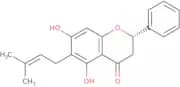
Formula:C15H12O5Purity:Min. 95%Color and Shape:Grey SolidMolecular weight:272.25 g/mol6-Prenylpinocembrin
CAS:6-Prenylpinocembrin is a prenylated flavonoid compound, which is derived from various natural sources, particularly plants such as those found in the Leguminosae family. This compound is characterized by the addition of a prenyl group to the flavonoid pinocembrin, enhancing its lipophilicity and potential biological activity.
Formula:C20H20O4Purity:Min. 95%Molecular weight:324.37 g/molSumatrol
CAS:Sumatrol is a selective herbicide, which is a compound derived from synthetic sources designed to inhibit the growth of unwanted vegetation. It functions primarily by disrupting specific physiological processes in plants, specifically targeting the enzymatic pathways critical for the growth of broadleaf weeds and grasses. Its action mechanism involves the inhibition of key enzymes that lead to the cessation of cellular division and growth within the targeted plant species.
Formula:C23H22O7Purity:(%) Min. 95%Color and Shape:White PowderMolecular weight:410.42 g/molCajanol
CAS:Cajanol is a naturally occurring compound, which is a flavonoid isolated from the plant *Cajanus cajan* (commonly known as pigeon pea). This compound is primarily extracted from the leaves and seeds of the plant through various chromatographic techniques, ensuring high purity and bioactive consistency. Cajanol functions by interacting with cellular pathways, exhibiting antioxidant and anti-inflammatory properties. It achieves this through the scavenging of free radicals and modulation of signaling pathways involved in cellular stress responses.
Formula:C17H16O6Purity:Min. 95%Color and Shape:PowderMolecular weight:316.31 g/molRef: 3D-XC161666
Discontinued productCalopogoniumisoflavone B
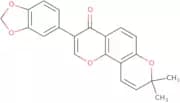
CAS:Calopogoniumisoflavone B is a naturally occurring isoflavone, which is a type of phytochemical compound derived primarily from Calopogonium species. This product is isolated from the plant's roots and stems, where it functions as a secondary metabolite. Isoflavones are well known for their phytoestrogenic properties, meaning they can mimic or modulate the action of estrogen in the body by binding to estrogen receptors. This mode of action allows isoflavones to potentially influence various biological pathways related to hormone regulation and cellular growth.
Formula:C21H16O5Purity:Min. 95%Molecular weight:348.35 g/mol