Flavonoids
Flavonoids are a group of plant metabolites with antioxidant properties that contribute to the color of fruits and flowers. They play a significant role in protecting plants from UV radiation and pathogens. Flavonoids are studied for their potential health benefits, including anti-inflammatory, antiviral, and anticancer properties. They are widely researched in the fields of pharmacology, nutrition, and molecular biology.
Subcategories of "Flavonoids"
- Anthocyanidins(46 products)
- Anthocyanin(46 products)
- Catechin(88 products)
- Chalcones(237 products)
- Pterocarpan(28 products)
Found 2404 products of "Flavonoids"
Sort by
Purity (%)
0
100
|
0
|
50
|
90
|
95
|
100
Wighteone
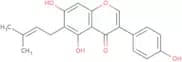
CAS:<p>Please enquire for more information about Wighteone including the price, delivery time and more detailed product information at the technical inquiry form on this page</p>Formula:C20H18O5Purity:Min. 95%Molecular weight:338.35 g/molIso-Osajin
CAS:<p>Iso-Osajin is a naturally occurring compound that falls under the category of prenylated flavonoids. It is isolated from the seeds of Psoralea corylifolia, a plant traditionally used in various medicinal systems. The compound exhibits its mode of action primarily through antimicrobial activities, potentially disrupting microbial cell membranes or inhibiting essential enzymes. Iso-Osajin has been of considerable interest due to its promising pharmacological effects, including antibacterial, antifungal, and possibly antiviral properties.</p>Formula:C25H24O5Purity:Min. 95%Color and Shape:PowderMolecular weight:404.46 g/mol5,7,2',4'-Tetrahydroxy-8,3'-di(γ,γ-dimethylallyl)-isoflavanone
CAS:<p>5,7,2',4'-Tetrahydroxy-8,3'-di(gamma,gamma-dimethylallyl)-isoflavanone is a prenylated isoflavanone, which is a type of flavonoid compound extensively studied in natural product chemistry. It is primarily sourced from specific plant species known for their rich secondary metabolite profiles, often within the Fabaceae family. The mode of action of this compound involves its interaction at the molecular level with various biological targets, potentially leading to antioxidant, anti-inflammatory, or antimicrobial effects. These actions are mediated through the compound’s ability to modulate enzyme activities, interact with cellular membranes, and influence signaling pathways.</p>Formula:C25H28O6Purity:Min. 95%Molecular weight:424.50 g/molKaempferol -3,7-di-O-glucoside
CAS:<p>Kaempferol-3,7-di-O-glucoside is a naturally occurring flavonoid, which is commonly derived from various plant sources, including fruits, vegetables, and medicinal herbs. As a flavonoid, it appears predominantly in the form of glycosides, where kaempferol is conjugated with sugar moieties, enhancing its solubility and bioavailability.</p>Formula:C27H30O16Purity:Min. 95%Molecular weight:610.52 g/molGardenin B
CAS:<p>Gardenin B is a microbial biocontrol agent that originates from Streptomyces bacteria. It functions as a secondary metabolite deriving from its microbial source. The mode of action involves inhibiting the growth of plant-pathogenic fungi by disrupting their cellular processes and interfering with spore germination or hyphal proliferation. Gardenin B is primarily utilized in agricultural settings to control fungal diseases in crops, reducing reliance on synthetic chemical fungicides. Its application is integrated into plant protection programs to enhance agricultural sustainability and improve crop yields while minimizing the environmental impact. Scientists are investigating its mechanisms and potential for broader applications.</p>Formula:C19H18O7Purity:Min. 95%Molecular weight:358.34 g/mol7-Benzyloxy-3',4'-dimethoxyisoflavone
CAS:<p>7-Benzyloxy-3',4'-dimethoxyisoflavone is a synthetic isoflavone derivative, which is a specialized compound designed for research and potential pharmacological applications. Isoflavones are naturally occurring compounds found predominantly in plants like soybeans and are studied for their biological activities. This particular compound is synthetically modified with methoxy groups, enhancing its stability and bioavailability.</p>Formula:C24H20O5Purity:Min. 95%Molecular weight:388.41 g/molWarangalone
CAS:<p>Warangalone is a type of flavonoid compound, which is derived from the roots of the medicinal plant Abrus precatorius. This compound is characterized by its polyphenolic structure, making it an excellent candidate for various biochemical interactions. Warangalone exhibits its mode of action primarily through the disruption of microbial cell walls, leading to effective antimicrobial activity. Its interactions with microbial membranes result in altered permeability, ultimately inhibiting the growth and replication of various bacterial and fungal species.</p>Formula:C25H24O5Purity:Min. 95%Molecular weight:404.46 g/molHomoferreirin
CAS:<p>Homoferreirin is a biochemical siderophore, which is a low-molecular-weight iron-chelating compound derived from plant sources. Its mechanism of action involves binding ferric iron (Fe^3+) ions with high affinity, forming a stable complex. This complex aids in the solubilization and transport of iron across cellular membranes, which is crucial in environments where iron availability is limited, such as in soil and certain biological niches.</p>Formula:C17H16O6Purity:Min. 95%Molecular weight:316.31 g/molFurano(2,3:7,6)-4'-hydroxyflavanone
CAS:<p>Furano(2,3:7,6)-4'-hydroxyflavanone is a sophisticated flavonoid compound, which is a type of polyphenolic molecule commonly found in various plant species. As a naturally derived substance, it originates from the complex biosynthetic pathways in plants, specifically contributing to their defense mechanisms and pigmentation. The mode of action of Furano(2,3:7,6)-4'-hydroxyflavanone involves its interaction with cellular processes, potentially exhibiting antioxidant properties by scavenging free radicals and modulating enzymatic activity related to oxidative stress pathways.</p>Formula:C17H12O4Purity:Min. 95%Molecular weight:280.27 g/mol5,7,4’-Trihydroxy-8-methylflavanone
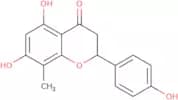
CAS:<p>5,7,4’-Trihydroxy-8-methylflavanone is a flavanone, which is a type of flavonoid compound. Flavonoids are secondary metabolites commonly found in plants and are responsible for a variety of biological activities. This particular compound can be sourced from various plant species known for their rich content of natural phenolic substances.</p>Formula:C16H14O5Purity:Min. 95%Molecular weight:286.28 g/molErythrinin A
CAS:<p>Erythrinin A is an alkaloid compound, which is an isolated bioactive substance derived from the Erythrina plant species. This compound is primarily sourced from the beans and bark of Erythrina plants, which are native to tropical and subtropical regions. Erythrinin A exhibits its mode of action by interacting with neurotransmitter systems within the central nervous system, possessing properties that may influence receptors such as GABA and others related to neuromodulation.</p>Formula:C20H16O4Purity:Min. 95%Molecular weight:320.34 g/molCirsimarin
CAS:<p>Cirsimarin is a natural flavonoid compound, which is extracted from certain plant species, primarily in the Asteraceae family. It functions by modulating various biochemical pathways through its potent anti-inflammatory, antioxidant, and hepatoprotective activities. Cirsimarin exerts its effects by scavenging free radicals, inhibiting inflammatory mediators, and supporting liver function through upregulation of detoxifying enzymes.</p>Formula:C23H24O11Purity:Min. 95%Color and Shape:PowderMolecular weight:476.43 g/mol(E)-Deschlorophenyl fluoxastrobin
CAS:<p>(E)-Deschlorophenyl fluoxastrobin is a synthetic fungicide, which is derived from the strobilurin class of compounds, originally sourced from natural fungal metabolites. It functions by inhibiting mitochondrial respiration in fungal cells through disruption of the cytochrome bc1 complex, specifically at the Qo site. This mode of action effectively curtails the energy supply of the pathogen, leading to its death, and is integral in managing resistance issues known to occur with other fungicide groups.</p>Formula:C15H13FN4O5Purity:Min. 95%Molecular weight:348.29 g/molGrosvenorine
CAS:<p>Grosvenorine is a biochemical compound, which is a natural glycoside extracted from the fruit of Siraitia grosvenorii, commonly known as monk fruit. This compound is primarily sourced from the cucurbitaceae family of plants, renowned for their sweet-tasting fruits. The mode of action of grosvenorine involves its interaction with various metabolic pathways, exhibiting antioxidant and anti-inflammatory properties.</p>Purity:Min. 95%3',5,5',7-Tetrahydroxyflavanone
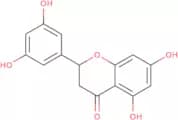
CAS:<p>3',5,5',7-Tetrahydroxyflavanone is a flavonoid compound, which is a type of naturally occurring polyphenolic. It is primarily derived from certain plants, often found in those with known medicinal properties. Flavonoids are secondary metabolites in plants and play crucial roles in various biological activities.</p>Formula:C15H12O6Purity:Min. 95%Molecular weight:288.25 g/mol6-Chloroflavone
CAS:<p>6-Chloroflavone is a synthetic flavonoid derivative, which is a modified chemical compound originating from naturally occurring flavonoids found in various plants. Structurally, it is characterized by the substitution of a chlorine atom at the 6th position on the flavone backbone. This chemical modification is designed to alter its physicochemical properties and enhance its biological activity.</p>Formula:C15H9ClO2Purity:Min. 95%Molecular weight:256.68 g/mol(2R)-5,7-Dimethoxyflavanone
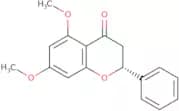
CAS:<p>(2R)-5,7-Dimethoxyflavanone is a natural flavonoid, which is a type of polyphenolic compound. It is derived from various plant sources, commonly found in fruits, vegetables, and certain medicinal herbs. Its structure includes a flavanone backbone with methoxy groups at specific positions, which modulate its biological activity.</p>Formula:C17H16O4Purity:Min. 95%Molecular weight:284.31 g/molPenduletin
CAS:<p>Penduletin is a flavonoid compound, which is a type of natural phenolic product, primarily sourced from various plant species. This compound occurs naturally as part of the plant's secondary metabolites and plays a crucial role in defense mechanisms. Penduletin exerts its effects primarily through its antioxidant activity, modulating various signaling pathways involved in cellular protection processes. It acts by scavenging free radicals and reducing oxidative stress, which is pivotal in its therapeutic applications.</p>Formula:C18H16O7Purity:Min. 95%Color and Shape:White PowderMolecular weight:344.32 g/molDihydrokaempferol-3-glucoside
CAS:<p>Dihydrokaempferol-3-glucoside is a flavonoid glucoside, which is primarily derived from various plant sources including fruits, vegetables, and certain medicinal herbs. Its molecular structure consists of a kaempferol core attached to a glucose moiety, enhancing its solubility and stability in biological systems. This compound exhibits antioxidant activity, acting to scavenge free radicals and reduce oxidative stress within cells. By neutralizing reactive oxygen species, dihydrokaempferol-3-glucoside helps to protect cellular components such as DNA, proteins, and lipids from oxidative damage.</p>Formula:C21H22O11Purity:Min. 95%Color and Shape:White PowderMolecular weight:450.39 g/molIsoetin
CAS:<p>Rare natural product belonging to the flavone sub-group of flavonoids</p>Formula:C15H10O7Purity:Min. 95%Molecular weight:302.24 g/mol