Flavonoids
Flavonoids are a group of plant metabolites with antioxidant properties that contribute to the color of fruits and flowers. They play a significant role in protecting plants from UV radiation and pathogens. Flavonoids are studied for their potential health benefits, including anti-inflammatory, antiviral, and anticancer properties. They are widely researched in the fields of pharmacology, nutrition, and molecular biology.
Subcategories of "Flavonoids"
- Anthocyanidins(46 products)
- Anthocyanin(46 products)
- Catechin(88 products)
- Chalcones(237 products)
- Pterocarpan(28 products)
Found 2404 products of "Flavonoids"
Sort by
Purity (%)
0
100
|
0
|
50
|
90
|
95
|
100
7,4'-Dihydroxyhomoisoflavanone
CAS:Controlled Product<p>7,4'-Dihydroxyhomoisoflavanone is a naturally occurring compound, classified as a homoisoflavanone, which is a type of polyphenolic compound. It is primarily sourced from plants, specifically found in certain species of the Fabaceae family. The compound is characterized by its unique structural configuration, which contributes to its bioactivity.</p>Formula:C16H14O4Purity:Min. 95%Molecular weight:270.28 g/mol2'-Methoxyflavone
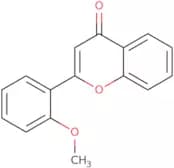
CAS:<p>Enhances TRAIL-induced apoptosis in MOLT-4- cells</p>Formula:C16H12O3Purity:Min. 95%Color and Shape:White PowderMolecular weight:252.26 g/molR,S equol 4'-sulfate sodium salt
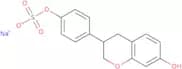
CAS:<p>R,S equol 4'-sulfate sodium salt is a synthetic derivative of equol, which is a type of flavonoid metabolite. This compound is primarily sourced from the biotransformation of the isoflavone daidzein through gut microbiota activity. As a sulfate salt, it is more soluble in aqueous environments, which may facilitate its use in various biological contexts.</p>Formula:C15H13NaO6SPurity:Min. 95%Molecular weight:344.32 g/molSteppogenin
CAS:<p>Steppogenin is a metabolic modulator, which is derived from natural plant sources known for their enzymatic properties. Its mode of action involves the induction of cytochrome P450 enzymes, facilitating various oxidative reactions within biological systems. As an enzyme inducer, Steppogenin modulates metabolic pathways, making it invaluable for the study of drug metabolism and pharmacokinetics.</p>Formula:C15H12O6Purity:Min. 95%Molecular weight:288.25 g/molKaempferol-3-rhamnoglucoside-7-glucoside
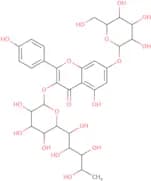
CAS:<p>Kaempferol-3-rhamnoglucoside-7-glucoside is a flavonoid glycoside, which is a type of bioactive compound. It is commonly derived from plant sources such as certain fruits, vegetables, and herbs, where it occurs naturally as part of the plant’s secondary metabolites. This compound is structurally characterized by its glycosidic linkages, where sugar moieties such as rhamnose and glucose are attached to the kaempferol backbone.</p>Formula:C33H40O20Purity:Min. 95%Molecular weight:756.66 g/molEuchrestaflavanone A
CAS:<p>Euchrestaflavanone A is a naturally occurring flavanone, which is a type of polyphenolic compound. It is sourced from plants, specifically derived from the roots of Euchresta formosana, a species used traditionally in herbal medicine. The mode of action of Euchrestaflavanone A involves its interaction with various molecular pathways, influencing antioxidant activity and modulating enzyme function. It exhibits bioactive properties, including anti-inflammatory, antioxidant, and potential anticancer effects.</p>Formula:C25H28O5Purity:Min. 95%Molecular weight:408.50 g/molVitexin-2''-xyloside
CAS:<p>Vitexin-2''-xyloside is a bioactive flavonoid glycoside, which is derived from various plant sources such as Hawthorn and Passiflora species. This compound is part of a class of natural products known for their significant pharmacological activities. The mode of action primarily involves antioxidative mechanisms, where it mitigates oxidative stress by scavenging free radicals and modulating antioxidant enzyme activity. Additionally, it exhibits anti-inflammatory effects through the inhibition of pro-inflammatory cytokines and pathways.</p>Formula:C26H28O14Purity:Min. 95%Molecular weight:564.49 g/molLimocitrin
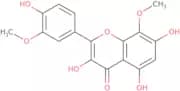
CAS:<p>Limocitrin is a flavonoid compound, which is a naturally occurring plant secondary metabolite. Flavonoids are widely distributed in the plant kingdom and are known for their diverse biological activities. Limocitrin, specifically, has been isolated from various plant sources, including certain fruits and flowers. Its mode of action involves interacting with cellular signaling pathways, affecting processes such as oxidative stress response and gene expression regulation.</p>Purity:Min. 95%Maackiaflavanone
CAS:<p>Maackiaflavanone is a specialized flavanone, which is a type of natural compound. It is derived from the Maackia plant species, particularly found in temperate regions and known for its rich phytochemical profile. The flavanone exhibits its activity primarily through its interaction with cellular pathways associated with oxidative stress and inflammation, modulating various biochemical signals that can influence cell behavior.</p>Formula:C26H30O6Purity:Min. 95%Molecular weight:438.50 g/molLupinalbin B
CAS:<p>Lupinalbin B is a bioactive compound, specifically classified as an alkaloid, which is derived from the seeds of the Lupinus plant species. These plants, commonly known as lupins, are a part of the legume family and are cultivated primarily for their seeds that contain high protein content. The presence of alkaloids like Lupinalbin B in lupin seeds is a result of the plant's secondary metabolism, which serves various ecological functions, including defense against herbivores.</p>Formula:C20H16O6Purity:(%) Min. 95%Color and Shape:PowderMolecular weight:352.34 g/mol5-Hydroxy-7,8-dimethoxyflavone
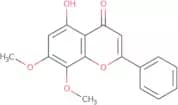
CAS:<p>5-Hydroxy-7,8-dimethoxyflavone is a naturally occurring flavonoid compound, which is typically isolated from plant sources, most notably citrus fruits. The compound functions primarily as a modulator of various biological pathways through its interaction with enzyme systems and receptor sites. This includes the modulation of signaling pathways involved in inflammation, oxidative stress, and cellular apoptosis.</p>Formula:C17H14O5Purity:Min. 95%Molecular weight:298.29 g/mol5,6,7,2'-Tetrahydroxyflavone
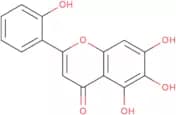
CAS:<p>5,6,7,2'-Tetrahydroxyflavone is a naturally occurring flavonoid, which is commonly found in various plants. As a bioactive compound, it is typically derived from the leaves, stems, or fruits of these plants, where it plays a crucial role in plant defense. The mode of action of 5,6,7,2'-Tetrahydroxyflavone is primarily through its potent antioxidant activity. It scavenges free radicals and reduces oxidative stress, thereby contributing to cellular protection and stability.</p>Formula:C15H10O6Purity:Min. 95%Molecular weight:286.24 g/molOsajin
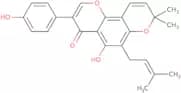
CAS:<p>Osajin is a natural flavonoid compound, which is derived from the fruit of Maclura pomifera, also known as the Osage orange. This compound is characterized by its distinctive isoflavone structure, which is central to its biological activity. The mode of action of Osajin involves modulation of various biochemical pathways, predominantly exhibiting antioxidant properties. It acts by scavenging free radicals and enhancing cellular defense mechanisms against oxidative stress, thereby contributing to its potential therapeutic efficacy.</p>Formula:C25H24O5Purity:Min. 95%Color and Shape:PowderMolecular weight:404.46 g/molEuropetin
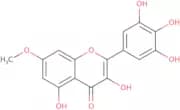
CAS:<p>Europetin is a flavonoid, a type of naturally occurring compound, which is derived from various plant sources. The compound functions as an anti-inflammatory agent by modulating signaling pathways involved in inflammatory responses, such as the NF-kB pathway. Its efficacy in reducing inflammatory mediators makes it a subject of interest for exploring therapeutic interventions.</p>Formula:C16H12O8Purity:Min. 95%Molecular weight:332.26 g/molPinobanksin acetate
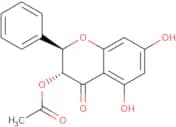
CAS:<p>Pinobanksin acetate is a flavonoid compound, which is naturally sourced from bee propolis. Propolis, a resinous substance collected by bees from tree buds, is renowned for its complex chemical composition integrated from various botanical sources. Pinobanksin acetate is one of the active polyphenolic constituents identified within propolis, exhibiting intriguing bioactive properties.</p>Formula:C17H14O6Purity:Min. 95%Molecular weight:314.29 g/molFarnisin
CAS:<p>Please enquire for more information about Farnisin including the price, delivery time and more detailed product information at the technical inquiry form on this page</p>Formula:C16H12O5Purity:Min. 95%Molecular weight:284.26 g/molGlyasperin C - Glycyrrhiza uralensis (liquorice)
CAS:<p>Glyasperin C is a bioactive compound derived from Glycyrrhiza uralensis, commonly known as liquorice. This product is a phytochemical isolated from the roots of the liquorice plant, a member of the Fabaceae family. Glycyrrhiza uralensis has been traditionally utilized in various medicinal practices, primarily due to its diverse range of biologically active constituents.</p>Formula:C21H24O5Purity:Min. 95%Molecular weight:356.41 g/molPlantanone B
CAS:<p>Plantanone B is a naturally-derived compound, which is an anti-inflammatory agent sourced from the Plantago species. It is known for its distinct bioactive properties attributed to its unique phytochemical structure. The compound primarily functions by modulating inflammatory pathways, specifically targeting the downregulation of pro-inflammatory cytokines and inhibiting the production of reactive oxygen species. This mode of action underscores its potential in addressing inflammation-associated cellular processes.</p>Formula:C33H40O20Purity:Min. 95%Molecular weight:756.66 g/molBiochanin A-7-O-glucoside
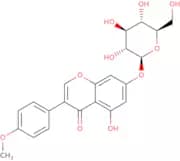
CAS:<p>Biochanin A-7-O-glucoside is a naturally occurring isoflavone glucoside, which is derived from various plants, particularly red clover and soy. It is a secondary metabolite, commonly found in legumes and other related species. The mode of action of Biochanin A-7-O-glucoside involves its structural ability to act as an antioxidant, scavenging free radicals and mitigating oxidative stress. This biochemical property allows it to influence various molecular pathways related to cell signaling and gene expression.</p>Formula:C22H22O10Purity:Min. 95%Color and Shape:SolidMolecular weight:446.4 g/mol(S)-4',7-Dimethyl equol
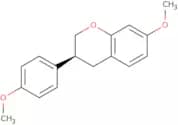
CAS:<p>(S)-4',7-Dimethyl equol is an isoflavandiol, which is a metabolite of the soy isoflavone daidzein. It is produced in the human gut by bacterial metabolism, provided the individual has the appropriate intestinal microbiota capable of this transformation. The compound exhibits estrogenic activity, primarily due to its structural similarity to the endogenous hormone 17β-estradiol, allowing it to bind to estrogen receptors.</p>Formula:C17H18O3Purity:Min. 95%Molecular weight:270.32 g/mol