Flavonoids
Flavonoids are a group of plant metabolites with antioxidant properties that contribute to the color of fruits and flowers. They play a significant role in protecting plants from UV radiation and pathogens. Flavonoids are studied for their potential health benefits, including anti-inflammatory, antiviral, and anticancer properties. They are widely researched in the fields of pharmacology, nutrition, and molecular biology.
Subcategories of "Flavonoids"
- Anthocyanidins(46 products)
- Anthocyanin(46 products)
- Catechin(88 products)
- Chalcones(237 products)
- Pterocarpan(28 products)
Found 2408 products of "Flavonoids"
Sort by
Purity (%)
0
100
|
0
|
50
|
90
|
95
|
100
Robinetin
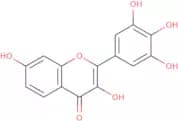
CAS:Robinetin is a flavonoid, which is a type of polyphenolic compound, isolated primarily from the black locust tree (Robinia pseudoacacia). As a naturally occurring compound, it is biosynthesized within the plant's tissues and is responsible for various physiological activities. The mode of action of Robinetin primarily involves its antioxidant properties, where it interacts with free radicals to neutralize oxidative stress, thus protecting cells from damage. Additionally, it has been observed to modulate enzyme activities and may influence signaling pathways related to inflammation and cellular responses.Formula:C15H10O7Purity:Min. 95%Color and Shape:Yellow PowderMolecular weight:302.24 g/molAbyssinone IV
CAS:<p>Abyssinone IV is a naturally occurring isoflavonoid, which is derived from plants, particularly those in the genus Erythrina. Isoflavonoids are a class of secondary metabolites known for their diverse pharmacological properties. The source of Abyssinone IV is primarily the Erythrina species, which have been traditionally used in various ethnomedicinal practices.</p>Formula:C25H28O4Purity:Min. 95%Molecular weight:392.49 g/molGenistin
CAS:<p>Genistin is a naturally occurring isoflavone glycoside, which is derived primarily from soybeans and other legumes. It serves as a glycoside form of genistein, a well-known phytoestrogen. The mode of action of Genistin involves its bioconversion into genistein through hydrolysis. Once converted, it functions by binding to estrogen receptors, exhibiting estrogenic activity that can modulate various biological pathways.</p>Formula:C21H20O10Purity:Min. 97 Area-%Color and Shape:Off-White PowderMolecular weight:432.38 g/mol7,2',4'-Trimethoxyisoflavone
CAS:<p>7,2',4'-Trimethoxyisoflavone is a naturally occurring isoflavone, which is primarily found in certain plant species. As a derivative of the isoflavone family, it is sourced from botanical origins known for their rich content of phytoestrogens. The mode of action of 7,2',4'-Trimethoxyisoflavone is linked to its potential antioxidant properties, where it may interact with cellular mechanisms to mitigate oxidative stress by neutralizing free radicals.</p>Formula:C18H16O5Purity:Min. 95%Molecular weight:312.32 g/molDihydropunctatin
CAS:<p>Dihydropunctatin is a natural compound, which is an organic molecule derived from specific fungal sources. The biosynthesis of Dihydropunctatin typically occurs in endophytic fungi, which inhabit the internal tissues of plants and contribute to the host's adaptability and survival. These fungi are known for producing a diverse range of secondary metabolites with potential bioactive properties.</p>Formula:C20H26O7Purity:Min. 95%Molecular weight:378.42 g/mol3,3',4',5,7-Pentamethoxyflavone
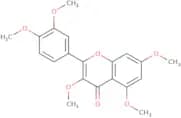
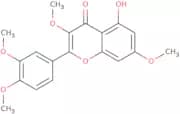
CAS:<p>3,3',4',5,7-Pentamethoxyflavone is a naturally occurring flavonoid compound, which is often extracted from specific plant sources. As a member of the flavonoid family, it is typically found in various plant extracts and contributes to the chemical diversity observed in phytochemistry.</p>Formula:C20H20O7Purity:Min. 98 Area-%Color and Shape:Slightly Yellow PowderMolecular weight:372.37 g/molNeohesperidin
CAS:<p>Neohesperidin is a flavonoid-based natural sweetener, which is derived from the bitter orange and other citrus fruits. The mode of action of neohesperidin involves its conversion into neohesperidin dihydrochalcone (NHDC), which is an intensely sweet compound. This transformation occurs through hydrogenation, enhancing its sweetening properties. As a sweetener, NHDC exhibits around 1,500 to 1,800 times the sweetness of sucrose depending on the concentration and pH of the medium.</p>Formula:C28H34O15Purity:Min. 95 Area-%Color and Shape:White PowderMolecular weight:610.56 g/molIsorhoifolin
CAS:<p>Anti-diabetic; anti-hyperlipidemic; antioxidantImage taken by Jin-Yao Ong 台灣山豆根 Euchresta formosana (Hayata) OhwiOhwi, J. Jap. Bot. 12(9): 659. 1936.</p>Formula:C27H30O14Purity:Min. 98 Area-%Color and Shape:White PowderMolecular weight:578.52 g/molRetusin
CAS:<p>Retusin is an alkaloid compound, which is derived from organic botanical sources, specifically certain plant species known for their medicinal properties. It functions primarily through a bactericidal mode of action by interfering with bacterial cell wall synthesis and disrupting critical metabolic pathways essential for bacterial survival. This interference effectively inhibits bacterial growth and proliferation, leading to cell death.</p>Formula:C19H18O7Purity:Min. 95%Color and Shape:SolidMolecular weight:358.34 g/mol3'-Methoxy-β-naphthoflavone
CAS:3'-Methoxy-β-naphthoflavone is a synthetic compound, classified as a flavonoid derivative, which is widely utilized in scientific research as a potent inducer and modulator of cytochrome P450 enzymes, particularly CYP1A1 and CYP1A2. Its source is entirely chemical synthesis, allowing for controlled study of its physiological effects without interference from naturally occurring impurities.Formula:C20H14O3Purity:90%Color and Shape:PowderMolecular weight:302.32 g/molCarthamidin tetramethyl ether
CAS:<p>Carthamidin tetramethyl ether is a chemical compound classified as a flavonoid, which is a naturally occurring phytochemical. It is derived from the safflower plant (Carthamus tinctorius), which belongs to the Asteraceae family. The primary mode of action of Carthamidin tetramethyl ether involves its antioxidant properties, which allow it to scavenge free radicals and reduce oxidative stress. Additionally, it may interact with specific cellular pathways, influencing gene expression and enzyme activities related to inflammatory responses and cellular metabolism.</p>Formula:C19H20O6Purity:Min. 95%Molecular weight:344.36 g/mol7,8,4'-Trihydroxyflavone
CAS:7,8,4'-Trihydroxyflavone is a synthetic flavonoid compound, which is a type of polyphenolic molecule derived through chemical synthesis. Its structure mimics naturally occurring flavonoids found in various plants but is specifically designed and manufactured in laboratory settings to achieve precise molecular composition and enhanced activity.Formula:C15H10O5Purity:Min. 95%Color and Shape:PowderMolecular weight:270.24 g/molChrysin dimethyl ether
CAS:<p>Chrysin dimethyl ether is a methylated flavonoid derivative, which is naturally sourced from various plants. This compound is synthesized by methylation of the hydroxyl groups on the chrysin molecule, a process often accomplished using organic synthesis methods. The mode of action for Chrysin dimethyl ether involves modulation of various biological pathways, including antioxidant activity and interaction with cell signaling pathways. Its phenolic structure confers radical scavenging properties, potentially influencing oxidative stress processes in biological systems.</p>Formula:C17H14O4Purity:Min. 95%Color and Shape:White PowderMolecular weight:282.29 g/mol6,3'-Dihydroxyflavone
CAS:<p>6,3'-Dihydroxyflavone is a naturally occurring flavonoid, which is a type of polyphenolic compound. It is sourced from various plant species known for their beneficial phytochemicals. This compound acts primarily as a selective TrkB agonist, mimicking the effects of brain-derived neurotrophic factor (BDNF), thereby influencing neurotrophic signaling pathways. By promoting TrkB phosphorylation, 6,3'-Dihydroxyflavone supports neuronal survival, differentiation, and synaptic plasticity.</p>Formula:C15H10O4Purity:Min. 95%Color and Shape:PowderMolecular weight:254.24 g/mol3,6,2',3'-Tetrahydroxyflavone
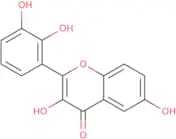
CAS:3,6,2',3'-Tetrahydroxyflavone is a naturally occurring flavonoid, which is a type of phytochemical found in various plants. As a secondary metabolite, flavonoids like this one are primarily sourced from the polyphenolic compounds prevalent in fruits, vegetables, and certain herbs.Formula:C15H10O6Purity:Min. 95%Molecular weight:286.24 g/mol5,6,7-Trihydroxyflavone
CAS:Baicalein is a natural compound found in Scutellaria baicalensis, a medicinal plant used in the Chinese traditional medicine. Baicalein has anti-tumoral properties as it was shown to interact with several molecular targets involved in tumour biology, such as Erk, ROS, MMP-2/-9, p53 and MAPK. Baicalein was also reported as a non-covalent, non-peptidomimetic inhibitors of the main protease Mpro (3CLpro) from SARS-CoV-2 with IC50 of 0.94 μM and EC50 of 1.69 μM.Formula:C15H10O5Purity:Min. 95%Color and Shape:Yellow PowderMolecular weight:270.24 g/molWogonin
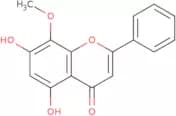
CAS:<p>Wogonin is a bioactive flavonoid compound, which is isolated from the roots of the plant Scutellaria baicalensis, commonly known as Baikal skullcap. Its mode of action involves modulating various signaling pathways, including the inhibition of pro-inflammatory cytokines and the suppression of cancer cell proliferation through the induction of apoptosis and cell cycle arrest. By influencing these molecular pathways, Wogonin exhibits significant pharmacological potential.</p>Formula:C16H12O5Purity:Min. 98 Area-%Color and Shape:Yellow PowderMolecular weight:284.26 g/mol4'-Hydroxyflavonol
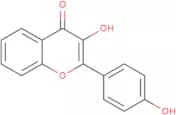
CAS:<p>4'-Hydroxyflavonol is a flavonoid compound, which is a naturally occurring phenolic structure commonly found in various plants. It is derived from sources such as fruits, vegetables, and certain medicinal herbs known for their rich polyphenolic content. The mode of action of 4'-Hydroxyflavonol primarily involves its antioxidant properties. It is capable of scavenging free radicals and chelating metal ions, thus protecting cells from oxidative stress and potential damage. Additionally, it may influence signaling pathways related to inflammation and immune response.</p>Formula:C15H10O4Color and Shape:Slightly Yellow PowderMolecular weight:254.24 g/mol5',8''-Biluteolin
CAS:<p>5',8''-Biluteolin is a naturally occurring flavonoid, which is a specific type of plant-derived polyphenolic compound. It is primarily sourced from various plant species known for their rich flavonoid content, including certain herbs and fruits. This compound exerts its effects by modulating key signaling pathways, including the inhibition of specific kinases and transcription factors, which are critical in the regulation of cellular inflammation and proliferation.</p>Formula:C30H18O12Purity:Min. 95%Color and Shape:Orange PowderMolecular weight:570.46 g/molHispidulin
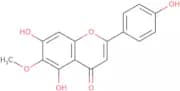
CAS:Hispidulin is a naturally occurring flavonoid compound, which is predominantly derived from plants such as Salvia and Artemisia species. This bioactive compound exhibits a broad spectrum of pharmacological activities that have garnered attention in the scientific community. Its mode of action involves the modulation of cellular pathways, including the inhibition of enzymes like cyclooxygenases, which are pivotal in inflammatory responses. Furthermore, Hispidulin has been shown to influence neurotransmitter systems, including GABAergic activity, indicating potential neuroprotective effects.Formula:C16H12O6Purity:Min. 98 Area-%Color and Shape:Off-White PowderMolecular weight:300.26 g/mol